“```html
Continuous Cell Monitoring as the New Standard in Cell Culture Research
In the dynamic field of life sciences, continuous cell monitoring is emerging as the new standard in cell culture research. As researchers increasingly seek precise and reproducible results, the ability to monitor live cells over extended periods without disruption is becoming critical. This article explores the significance of continuous monitoring, addressing traditional challenges and detailing the role of advanced live-cell imaging technologies. Readers will gain insights into technological advances in automation, practical applications of these innovations in the laboratory, and the profound impact on research outcomes.
Traditional Challenges in Cell Culture Research
Limitations of Conventional Techniques
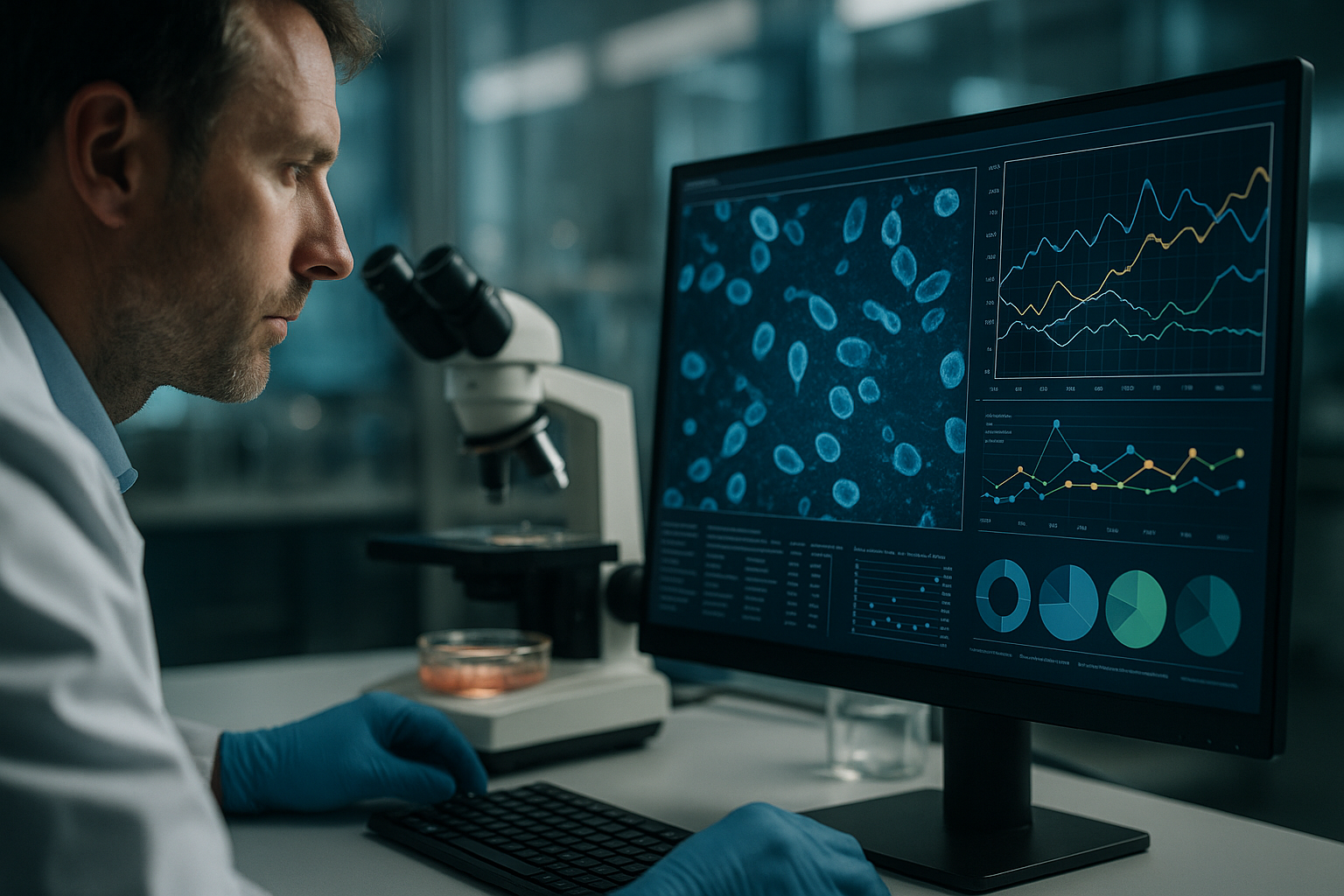
Historically, cell culture research has relied heavily on manual observation and periodic sampling. While these methods have laid the foundation for countless scientific discoveries, they present notable limitations. Manual monitoring disrupts cell environments each time a sample is taken for observation, which can lead to stress responses that affect cell behavior and viability. Moreover, such sporadic snapshots fail to capture transient phenomena, leading to incomplete datasets.
This methodological gap underscores the need for continuous monitoring to reduce environmental disturbances and collect comprehensive data sets that are more reflective of true cell behavior under physiological conditions.
- Environmental disturbances during manual sampling
- Incomplete data from intermittent observations
- Stress responses affecting cell viability
Technologische Fortschritte und Automatisierungstrends
Integrating Live-Cell Imaging and Automation
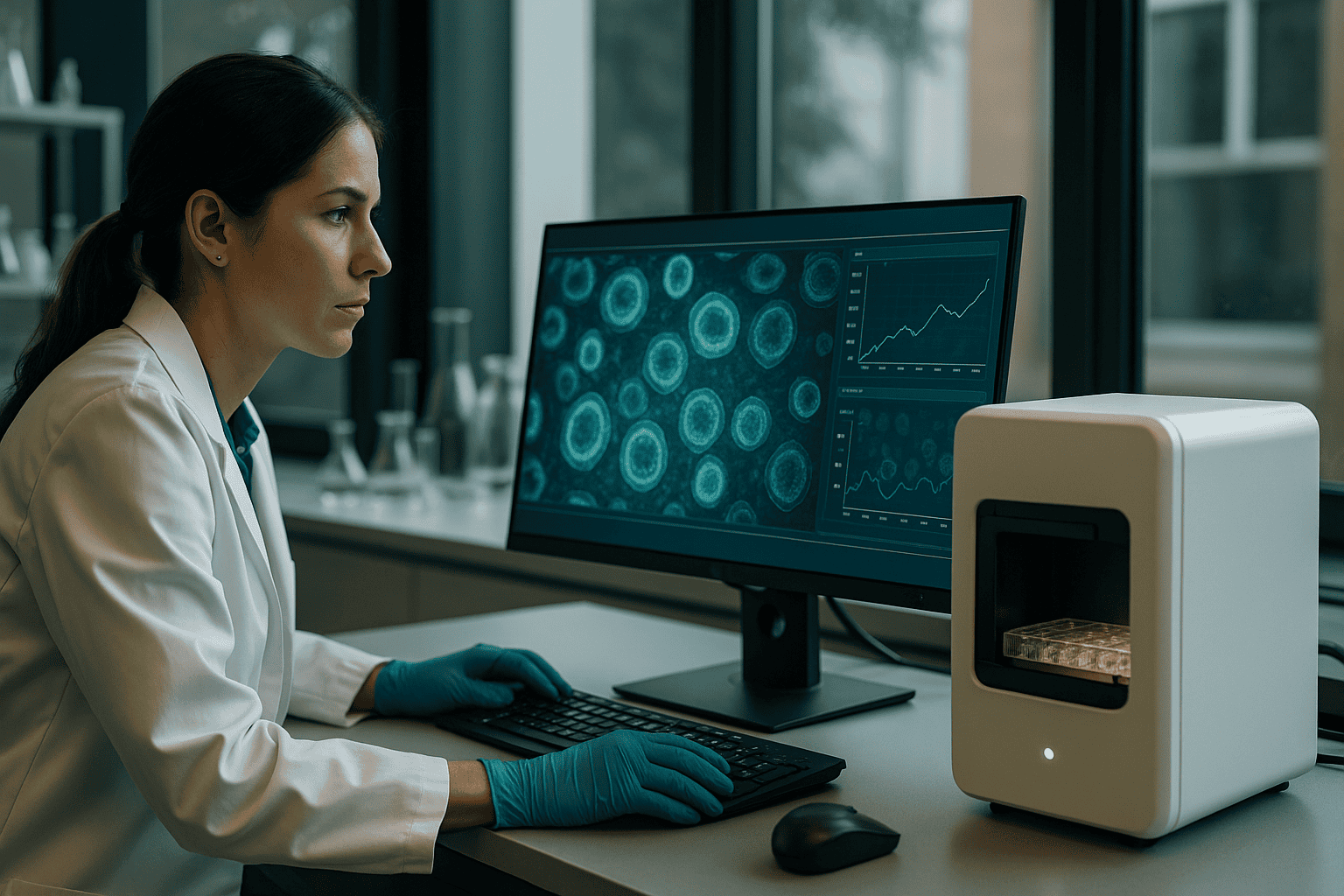
The advent of automated live-cell imaging systems has revolutionized cell culture research. These systems are designed to operate within incubators, offering a seamless way to capture images and data without the need to manually handle cultures. Automation not only enhances reproducibility by minimizing human error but also facilitates long-term studies by enabling uninterrupted observation.
The zenCELL owl exemplifies these advances with its compact and incubator-compatible design. This system ensures that cultures remain in optimal conditions while being continuously monitored, helping researchers gather high-quality, reliable data over time.
- Reduced manual intervention enhances data quality
- Automation supports high-throughput screening (HTS)
- Incubator integration maintains stable conditions
Implementing Live-Cell Imaging Workflows
Examples of Practical Applications
Live-cell imaging and continuous monitoring have opened new horizons for specific applications in cell biology. Researchers conducting migration assays and organoid studies can benefit significantly from these technologies. For instance, continuous imaging enables the precise tracking of cell movement and growth, which is critical in understanding cancer metastasis and tissue regeneration.
Furthermore, proliferation assays and high-throughput screenings (HTS) greatly benefit from the ability to collect time-lapse data, yielding insights into cellular kinetics under varying conditions.
- Improved understanding of cancer cell migration
- Enhanced data quality in tissue regeneration studies
- Time-lapse data enrich HTS outcomes
Lesen Sie weiter, um tiefere Einblicke und Strategien zu gewinnen.
“`
“```html
Streamlining Laboratory Efficiency with Automation
Allocating Resources for Maximum Productivity
Automation in continuous cell monitoring not only improves data reliability but also liberates valuable human resources. Researchers previously tasked with repetitive and time-consuming tasks now have the opportunity to focus on more complex aspects of experimental design and data interpretation. Real-world examples illustrate how laboratories with integrated automation systems report a significant increase in throughput and a concurrent reduction in labor costs. Additionally, the utilization of advanced imaging techniques facilitates collaborative research, enabling seamless data sharing and multi-site collaborations.
- Automation allows researchers to allocate time to more critical tasks
- Increased data throughput and reduction in human error
- Facilitates collaborative research projects and data sharing
Enhancing Data Accuracy and Insights
Achieving Consistent and Repeatable Results
Automatic systems make it possible to capture precise timing intervals and conditions without deviation, a feat often challenging with manual methods. This consistency ensures that experiments are reproducible, a cornerstone of scientific validity. For example, in drug development studies, precise monitoring can reveal critical timepoints where a compound’s influence varies, leading to new therapeutic insights. Enabling real-time data capture helps in drawing robust conclusions and refining hypotheses for successive experiments.
- Consistency in monitoring intervals enhances experimental reproducibility
- Real-time data allows for refined hypothesis development
- Insights from precise timing improve understanding in therapeutic research
Integrating Machine Learning and AI
Leveraging Technology for Advanced Data Analysis
The fusion of live-cell imaging with machine learning and artificial intelligence (AI) has created new opportunities for dynamic data analysis. AI algorithms can process large volumes of imaging data far beyond human capability, identifying patterns and generating predictive models. In specific cases, this capability aids in identifying drug resistance patterns in cancer cells, allowing for tailored treatment strategies. The integration of ML and AI into cell monitoring processes is increasingly being recognized for its potential to push the boundaries of personalized medicine.
- Machine learning boosts data analysis capabilities beyond human limits
- AI helps identify patterns, aiding in predictive model creation
- Promotes advancements in personalized medicine approaches
Real-World Case Studies: Success Stories
Implementations and Outcomes in Leading Laboratories
Several groundbreaking studies have demonstrated the impact of continuous cell monitoring systems. A prominent example is a research group focused on neurodegenerative diseases. By continuously monitoring neuronal cells, they discovered previously undetected cellular responses to potential treatments. This breakthrough may pave the way for preventive strategies in the treatment of Alzheimer’s disease. Similarly, in industrial biotechnology, companies apply these techniques to optimize microbial cultures, significantly boosting biofuel production efficiency.
- Continuous monitoring reveals new cellular responses in neurons
- Advances in Alzheimer’s research pave way for new treatments
- Enhanced biofuel production efficiency through microbe optimization
Mastering Data Management in Modern Labs
Strategizing Storage and Utilization
As live-cell imaging devices generate vast amounts of data, efficient data management is paramount. Laboratories integrate robust data storage solutions, often employing cloud-based systems for real-time data access and sharing. Analytical tools are applied to ensure data integrity, facilitating seamless synthesis of results for publication or regulatory compliance. Effective data management not only aids in maintaining an orderly research process but also supports compliance with data protection laws like GDPR in Europe and HIPAA in the United States.
- Cloud storage facilitates effective data sharing and real-time access
- Management tools ensure data integrity and regulatory compliance
- Efficient strategies support compliance with international data laws
Combining Traditional and Modern Approaches
Blending Established Techniques with Technological Advancements
Balancing traditional cell culture methodologies with modern technological advancements allows researchers to harness the benefits of both. Incorporating the depth of knowledge derived from traditional practices with cutting-edge technologies leads to more informed experimental designs. Continuous feedback from the live-cell imaging complements traditional qualitative observations, resulting in a comprehensive understanding of cellular pathways and interactions.
- Combining strategies leads to more comprehensive experimental designs
- Technological advancements complement traditional knowledge
- Continuous feedback enriches understanding of cellular processes
Navigating Common Pitfalls in Implementation
Avoiding Challenges for Successful Integration
Integrating new technologies into existing workflows can present challenges. Identifying potential pitfalls, such as technological incompatibilities or user training requirements, is crucial for successful adoption. Ensuring compatibility between novel systems and existing laboratory infrastructure is a common concern. Additionally, investing in adequate personnel training can prevent disruptions in experimental continuity, helping laboratories make the most of new technology.
- Identify and address technological incompatibilities proactively
- Emphasis on user training prevents experimental disruptions
- Successful integration maximizes technological benefits
Im Anschluss fassen wir die wichtigsten Erkenntnisse, Kennzahlen und eine wirkungsvolle Schlussfolgerung zusammen.
“`
“```html
Future Prospects and Innovations
Continual Evolution in Cellular Research
The future of continuous cell monitoring is paving the way for even more groundbreaking scientific explorations. As technology advances, laboratories can expect the development of more sophisticated imaging techniques and enhanced AI-driven analytics. These innovations will open doors to deeper insights into cellular behavior, pushing forward the frontiers of personalized medicine and tailored therapeutic approaches. Researchers are now capable of dynamically adapting their methodologies based on evolving data trends, ensuring that scientific inquiry remains a continuously advancing field.
- Emerging imaging technologies promise deeper insights
- AI-driven analytics enhance research precision
- Adaptive methodologies drive continuous scientific progress
Standardizing Practices Across Laboratories
Creating Consistency in Research Methods
A major step towards maximizing the benefits of continuous cell monitoring is the standardization of practices across different laboratories. Building a unified framework for data collection and analysis will allow for greater collaboration and comparability of results. Setting industry standards not only ensures quality control and enhances the reproducibility of experiments but also fosters an environment of shared innovation and collective progression in scientific research.
- Standardized practices enhance data comparability
- Quality control ensures reliable and reproducible experiments
- Industry standards foster collaborative innovation
Overcoming Ethical and Compliance Challenges
Ensuring Responsible Technological Integration
While technological advancements offer tremendous opportunities, they also bring forth ethical and compliance challenges that laboratories must navigate. Ensuring transparency in data handling and patient data confidentiality is paramount. Laboratories need to adopt guidelines that align with international data protection standards, instilling trust and confidence among stakeholders. This ensures that while we push the boundaries of research capabilities, we remain ethically sound and compliance-focused.
- Transparency in data handling strengthens trust
- Aligning with international guidelines protects data integrity
- Ethical practices support sustainable scientific progress
Schlussfolgerung
In conclusion, continuous cell monitoring stands at the forefront of transforming cell culture research into a more dynamic, efficient, and insightful endeavor. By seamlessly integrating automation, machine learning, and AI, research laboratories are not only enhancing data accuracy and experimental productivity but are also paving the way towards personalized medicine and novel therapeutic discoveries. With these advancements, the ability to delve deeper into cellular mechanisms creates vast potential for breakthroughs in understanding and treating complex diseases.
The standardization of practices further empowers this scientific evolution, establishing mechanisms for greater consistency and reproducibility across global laboratories. Coupled with overcoming ethical and compliance challenges, continuous cell monitoring encourages responsible and innovative research practices that benefit the entire scientific community and ultimately, society at large.
As we look to the future, we find ourselves on the cusp of limitless possibilities with these cutting-edge technologies. The responsibility lies in harnessing their true potential while upholding the foundations of scientific integrity and transparency. Let us embrace this revolution, encourage collective growth, and continuously strive to unlock the mysteries of the smallest units of life for a healthier, more informed world. Together, we forge a promising path toward remarkable discoveries, inspiring future generations to carry on this legacy of innovation and excellence.
Join us in this transformative journey and be part of the forefront in the evolution of cell culture research.
“`