Toxicity Screening with Impedance
“`html
Toxicity Screening with Impedance
The advancement of biotechnology and pharmaceuticals has revolutionized the way we approach drug development and safety assessment. Among the myriad techniques developed, toxicity screening with impedance emerges as a pivotal methodology. This article delves into its significance in modern cell culture research, presenting an in-depth examination tailored for biotech professionals and researchers.
Relevance of Impedance-Based Toxicity Screening
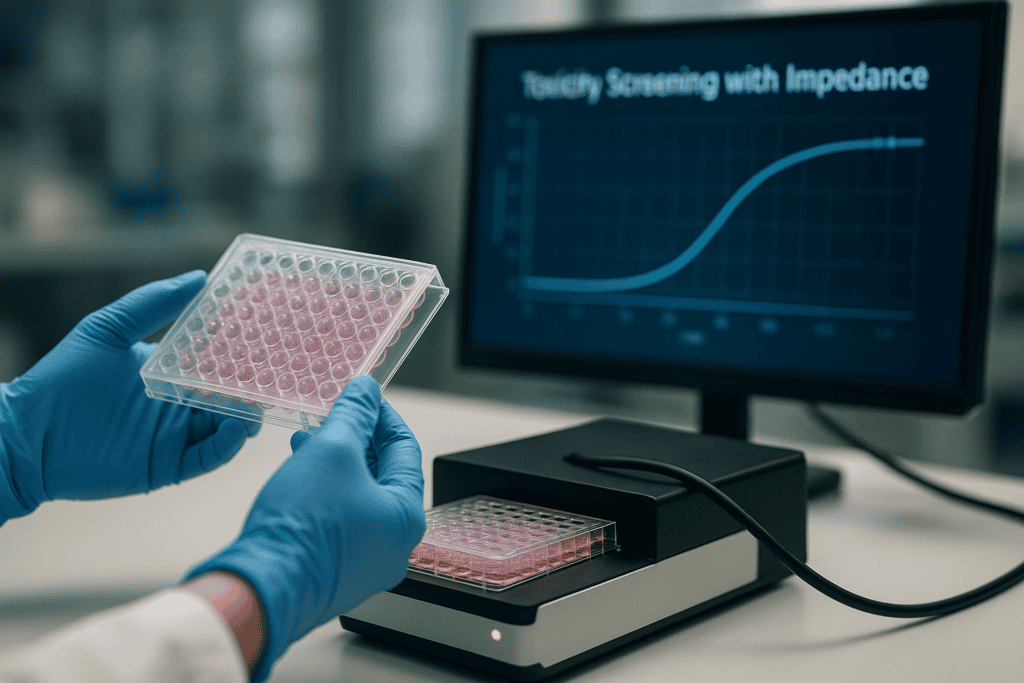
In the quest for new pharmaceuticals, understanding the toxicity of a substance is paramount. Traditional methods, while effective, often fall short in providing real-time cellular responses. Impedance-based toxicity screening offers a continuous, non-invasive method to assess cellular behavior, thereby enhancing the precision of toxicity evaluations.
- Non-destructive monitoring of live cells
- Real-time analysis capability
- High throughput and scalability potential
Challenges of Traditional Toxicity Screening Methods
Conventional toxicity testing, typically reliant on biochemical assays and end-point analyses, presents several limitations:
Limitations in Endpoint Analyses
Traditional approaches often require sample destruction, preventing ongoing observation of cellular responses. Furthermore, these methods may not effectively depict temporal changes in cell viability or morphology, leading to incomplete insight into cellular processes and toxicity effects.
- Sample destruction prohibiting longitudinal study
- Inadequate portrayal of dynamic cellular reactions
- Inability to capture early onset cellular distress
Technological Advances in Impedance Measurement
Innovation in Sensor Technology
Recent innovations have paved the way for sophisticated sensor designs that enhance the sensitivity and range of impedance measurements. These sensors, integrated within multiwell plates and cell culture vessels, support high-resolution data acquisition, catering to a wide array of cell types and experimental conditions.
- Enhanced sensitivity and resolution with advanced sensors
- Compatibility with varied cell culture formats
Integration with Automated Systems
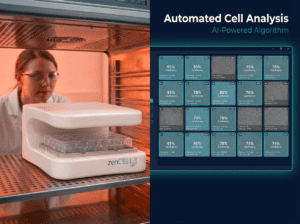
The marriage of impedance technology with automated systems fortifies its application in modern laboratories. Devices like the zenCELL owl exemplify this integration, offering compact, incubator-compatible live-cell imaging systems that bolster reproducibility and data quality through continuous monitoring and automated imaging.
- Continuous data acquisition during automated processes
- Reduced labor via automation
Practical Applications and Workflows
Applications in High-Throughput Screening (HTS)
Impedance-based systems are particularly adept at supporting high-throughput screening setups, enabling rapid assessment of compound libraries with minimal user intervention. This capability aids in identifying potential toxicities early in pharmaceuticals and biologics development.
- Rapid analysis of vast compound arrays
- Early identification of toxic candidates in drug development
Innovative Assays with Impedance
Beyond standard toxicity assays, impedance measurements find utility in sophisticated analyses such as migration assays and organoid studies. These applications enhance experimental robustness, providing greater insight into cellular dynamics and interaction in real-time environments.
- Migration assays to study cell motility and invasion
- Organoid studies for complex tissue modeling
Continue reading to explore more advanced insights and strategies.
“`
“`html
Advanced Cell Interaction Analysis
Deciphering Complex Cell Dynamics
Impedance-based toxicity screening has propelled forward the ability to analyze intricate cell interactions. By continuously tracking changes in cellular confluence, impedance technology provides unparalleled insights into cell proliferation, differentiation, and interactions within mixed cell populations. This is especially valuable in studies focusing on cancer research, where understanding the tumor microenvironment is crucial.
- Utilize impedance data to monitor the influence of drug candidates on tumor cells
- Integrate with co-culture systems for comprehensive interaction analysis
Optimizing Data Collection and Interpretation
Leveraging Data Science in Toxicity Testing
With the abundance of data generated from impedance measurements, the integration of data science techniques is becoming increasingly important to extract meaningful conclusions. Employing machine learning algorithms or statistical models can enhance the predictability and accuracy of toxicity outcomes, thus accelerating the decision-making process in drug development.
- Incorporate machine learning to decode complex datasets and predict cellular responses
- Apply statistical tools to refine data interpretation and report generation
Case Study: Impedance Applications in Oncology
Real-World Success and Insights
An impressive application of impedance screening is seen in oncology drug development. Researchers at the University of California employed impedance technology to evaluate chemotherapy responses across various cancer cell lines. The method allowed them to monitor the real-time effects of drugs, revealing differential cellular responses that were not evident through traditional end-point assays.
- Leverage impedance to reveal unique drug responses in cancer therapy
- Capitalize on this method to refine patient-specific treatment plans
Enhancing Experimental Resolution
Improvement with Multiwell Plate Integration
Advances in multiwell plate design have reinforced the scalability and resolution of impedance measurements. New-generation plates accommodate high-density screening, which is crucial for large-scale experiments. This configuration supports diverse cell-based assays, paving the way for comprehensive mapping of toxicity across a range of test conditions.
- Employ high-density plates for expansive and detailed screening
- Facilitate diverse experimental setups with tailored plate configurations
Cross-Disciplinary Collaborations
Collaborative Efforts Across Scientific Fields
The efficacy of impedance technology is significantly enhanced through collaborative efforts across disciplines such as bioengineering, computational biology, and pharmacology. By sharing expertise and resources, these collaborations catalyze the development of novel applications and contribute to the innovation of more targeted, effective therapies.
- Establish interdisciplinary partnerships to expand research horizons
- Share insights to foster innovation and improve scientific outcomes
Future Directions and Innovations
The Next Frontier in Toxicity Screening
Looking ahead, the future of impedance-based toxicity screening is riddled with immense potential, including the development of portable devices and incorporation of AI-driven technologies. Anticipated innovations focus on enhancing user accessibility and increasing the efficiency of screening methods to meet the growing demands of personalized medicine.
- Explore the feasibility of portable impedance devices for on-site testing
- Incorporate AI to streamline complex data processing and result accuracy
Next, we’ll wrap up with key takeaways, metrics, and a powerful conclusion.
“`
“`html
Addressing Limitations
Challenges and Solutions in Impedance Technology
Even as impedance-based toxicity screening surges in popularity, attention must be paid to its inherent limitations. Variables such as electrode configuration, signal processing, and environmental factors can impact measurement accuracy. Addressing these challenges requires meticulous calibration and validation, ensuring data integrity and consistency across experiments.
- Implement rigorous calibration protocols to enhance data reliability
- Continue refining electrode designs to optimize signal clarity
Education and Training Initiatives
Building Expertise for the Future
As the field evolves, investing in education and training becomes pivotal. By equipping upcoming researchers with comprehensive knowledge in impedance technologies and data interpretation, we can ensure the proliferation of expertise. Workshops, online resources, and academic curricula are essential for maintaining momentum and fostering innovation among the next generation of scientists.
- Develop targeted educational programs to boost impedance literacy
- Promote continuous learning through professional development courses
Sustainability and Ethical Considerations
Aligning with Global Scientific Standards
In the push towards advanced methodologies, aligning with sustainability and ethical standards is paramount. The miniaturization of devices and reduction of material waste in multiwell plates are steps in the right direction. Emphasizing ethical practices in toxicity testing, particularly regarding human and animal cell lines, fosters global trust and adherence to scientific responsibilities.
- Innovate sustainable solutions to reduce the environmental footprint
- Commit to ethical practices in research and development
Conclusion
In conclusion, the advancement of impedance-based toxicity screening represents a significant stride forward in biomedical research. By providing a non-invasive, real-time analysis method, impedance technology offers invaluable insights into cellular behavior, drug efficacy, and potential toxicological impacts. As discussed, this technology empowers researchers to probe deeper into cellular interactions, optimize data processing through machine learning, and ultimately drive forward personalized medicine.
Throughout this article, we have explored the numerous applications of impedance screening, from oncology to cross-disciplinary collaborations. The use of enhanced multiwell plates and integration with cutting-edge data science techniques highlights the versatility and scalability of this approach. Furthermore, addressing the challenges associated with impedance technology will ensure its continued reliability and accuracy, setting the stage for future innovations.
As we look to the future, the potential to develop portable devices and harness AI-driven insights holds the promise of transforming the landscape of toxicity screening. The efforts in education, sustainability, and interdisciplinary partnerships underscore our collective commitment to advancing scientific standards and fostering robust research environments.
We invite scientists, researchers, and stakeholders to embrace these innovations and continue to push the boundaries of what is possible. By staying informed and collaboratively harnessing these powerful tools, we can significantly enhance our understanding of cellular dynamics and improve therapeutic outcomes. Together, we can inspire a new era of precision medicine that is informed, adaptive, and responsive to the needs of patients worldwide.
Join us in this exciting journey of discovery and innovation, and let us pave the way for a future where scientific ingenuity knows no bounds.
“`