Live-Cell Monitoring of Sensitive Cell Types: iPSCs, Primary & Immune Cells
Live-Cell Monitoring of Sensitive Cell Types: iPSCs, Primary & Immune Cells
In the ever-evolving field of cell culture research, the need for precise and real-time monitoring of sensitive cell types is more pressing than ever. Induced pluripotent stem cells (iPSCs), primary cells, and immune cells are pivotal in advancing our understanding of developmental biology, disease modeling, and therapeutic treatments. However, these cell types are notoriously challenging to work with due to their delicate nature and specific environmental requirements. In this article, we delve into the significance of live-cell monitoring, exploring how technological innovations are reshaping this domain and providing actionable insights into enhancing laboratory workflows.
Common Challenges and Limitations of Traditional Approaches
The Intricacies of Handling Sensitive Cells
Handling delicate cell types such as iPSCs, primary cells, and immune cells poses several challenges, primarily due to their inherent sensitivity to environmental changes. Traditional cell culture techniques often fall short in maintaining the optimal conditions required for their growth and differentiation. Frequent manual observations can disturb the cellular microenvironment, potentially leading to inaccurate data and compromised cell health.
- Environmental instability caused by manual intervention
- Potential for contamination during observation
- Inconsistent data acquisition and analysis
These challenges underscore the necessity for more refined and less invasive methods to observe cellular behavior, particularly over extended periods.
Technological Advances and Automation Trends
The Rise of Automated Live-Cell Imaging
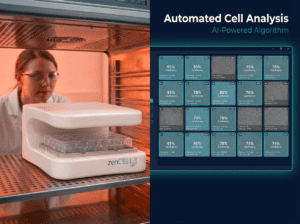
Recent years have witnessed significant advancements in automated live-cell imaging systems, which have revolutionized the way researchers study cell cultures. These technologies enable continuous, real-time monitoring without the need for frequent manual intervention, thus preserving the integrity of the cell culture environment. Systems like the zenCELL owl, specifically designed to be compact and incubator-compatible, exemplify the shift towards automation and efficient data collection in cell culture labs.
- Reduced manual intervention lowers risks of contamination
- Continuous monitoring improves data robustness and reliability
- Integration with data analytics for enhanced insights
Automation not only addresses many of the limitations of traditional methods but also paves the way for new insights through consistent and precise data acquisition.
Practical Examples and Workflows Using Live-Cell Imaging
Streamlining Cell Culture with Continuous Monitoring
The application of live-cell imaging systems within the laboratory context has been transformative. By employing continuous monitoring technologies, researchers can observe dynamic cellular processes such as proliferation, migration, and differentiation in real-time. For instance, with iPSCs, live-cell imaging offers unprecedented insight into the kinetics of cellular reprogramming and differentiation, crucial for applications in regenerative medicine and drug discovery.
- Real-time insights into cell migration and invasion assays
- Tracking differentiation pathways of iPSCs
- Minimizing experimental variability and enhancing data reproducibility
The practical integration of live-cell monitoring systems allows for more informed decision-making and timely adjustments in experimental protocols.
Continue reading to explore more advanced insights and strategies.
Enhancing Data Accuracy with Quantitative Image Analysis
Utilizing Advanced Image Processing Techniques
In the realm of live-cell monitoring, quantitative image analysis is a powerful tool for extracting precise data from cellular images. By employing sophisticated algorithms and image processing software, researchers can measure cellular components with high fidelity, offering invaluable insights into cell behavior. For instance, software such as CellProfiler and ImageJ are popular choices for automating the analysis of complex image-based data sets, converting qualitative observations into quantitative metrics.
- Automates the quantification of cell proliferation and morphology
- Facilitates objective comparisons between different cell culture conditions
- Enhances reproducibility through standardized analysis protocols
Leveraging Machine Learning for Predictive Analysis
AI-Driven Insights in Cell Monitoring
The integration of machine learning (ML) into live-cell imaging platforms is pushing the boundaries of what researchers can achieve. ML algorithms can identify patterns and predict cellular behaviors more quickly and accurately than ever before. In practice, such systems have been utilized to forecast the outcomes of cell differentiation processes or predict potential cellular anomalies before they manifest visually. Projects leveraging AI-driven solutions, such as the DeepCell framework, exemplify this approach by offering tools that assist in high-throughput cellular analysis.
- Trains models with large datasets to enhance predictive accuracy
- Identifies subtle phenotypic changes indicative of cellular state transitions
- Supports the development of personalized treatment strategies in medicine
Integrating Multimodal Data for a Holistic View
Combining Varied Data Sources for Comprehensive Analysis
To fully understand the complexities of cell biology, researchers are increasingly turning to multimodal data integration. By combining datasets from diverse modalities—such as imaging, genomics, and proteomics—a more complete picture of cellular mechanisms is achieved. For example, integrating data from live-cell imaging with single-cell RNA sequencing has provided deeper insights into cellular heterogeneity, advancing fields like precision oncology, where each cell’s role in tumor progression can be discerned with greater clarity.
- Enables cross-validation of results, increasing confidence in conclusions
- Correlates morphological data with genomic and transcriptomic profiles
- Offers insights into systems biology by revealing interconnected pathways
Case Study: Real-World Application in Drug Discovery
Revolutionizing Pharmaceutical Research with Live-Cell Monitoring
One of the most impactful applications of live-cell monitoring and imaging technologies is in drug discovery. For instance, pharmaceutical companies are employing these technologies to accelerate the screening of drug candidates. By observing how potential drugs influence cell behavior in real-time, researchers can more efficiently identify promising compounds. In a recent study, live-cell imaging was used to assess the effect of a novel compound on immune cell migration, leading to insights that advanced the drug to clinical trials.
- Improves the throughput of drug screening processes
- Reduces costs associated with failed drug trials by early intervention
- Identifies cellular targets and mechanisms of drug action
Optimizing Laboratory Workflows Through Modular Systems
Building Flexible and Efficient Research Environments
Incorporating modular live-cell monitoring systems into laboratory workflows can dramatically enhance operational flexibility. These systems enable scientists to tailor their setup according to specific research needs, integrating various technologies such as automatic imaging, environmental controls, and data analysis modules. Laboratories using such modular setups have reported greater efficiency in workflow and reduced downtime, as components can be individually managed and upgraded.
- Adapts to a wide range of experimental conditions
- Facilitates the rapid prototyping and testing of new hypotheses
- Streamlines data management and increases throughput
Strategies for Implementing Live-Cell Monitoring in Small Labs
Cost-Efficient Solutions Without Sacrificing Quality
While live-cell monitoring systems are invaluable, their implementation can be daunting for smaller labs with limited budgets. However, strategies exist to make these technologies accessible without compromising research quality. Partnering with larger institutions for shared resources, investing in scalable platforms, and utilizing open-source software solutions are effective approaches. For instance, consortia-based models where multiple labs share high-cost equipment have allowed many small labs to conduct cutting-edge research at a fraction of the cost.
- Collaborate with peers to maximize resource usage and minimize costs
- Invest in scalable systems that grow with your research needs
- Adopt open-source tools to enhance accessibility and customization
Ensuring Compliance and Data Security in Cell Monitoring
Maintaining Ethical and Secure Research Practices
As with any data-intensive process, live-cell monitoring raises important considerations regarding compliance and data security. Ensuring that imaging and data analysis practices meet regulatory standards is paramount, particularly in biomedical research. Labs need robust data management protocols to protect sensitive information, and bioethics committees play a crucial role in overseeing practice standards. Utilizing cloud-based platforms with strong security features can assist in achieving these goals while ensuring data integrity.
- Implement compliance checks across all research phases
- Utilize secure, robust data storage solutions to prevent unauthorized access
- Engage with bioethics teams regularly to align on best practices
Next, we’ll wrap up with key takeaways, metrics, and a powerful conclusion.
Addressing Challenges in Live-Cell Monitoring
Troubleshooting and Overcoming Technical Barriers
While live-cell monitoring technologies have evolved significantly, they are not without challenges. Technical issues such as phototoxicity, image drift, and data storage can impede research progress. Addressing these obstacles requires a combination of advanced technology and innovation. Employing strategies such as optimized imaging protocols, real-time drift correction software, and robust data storage frameworks can mitigate these issues. Researchers continue to innovate by developing compensatory algorithms and imaging techniques that reduce cell stress, thereby enhancing the quality and accuracy of data collected.
- Implements anti-drift technologies to ensure stable imaging
- Utilizes advanced imaging modalities to minimize phototoxic effects
- Establishes comprehensive data management systems to handle large datasets
Future Directions in Live-Cell Imaging
Innovations in Technology and Technique
The future of live-cell imaging holds promise with the advent of novel technologies like super-resolution microscopy and optogenetics. These advancements allow scientists to visualize cellular processes with unprecedented detail and precision. By synergizing these techniques with existing monitoring systems, researchers can explore cellular dynamics on a molecular level, unraveling new insights into biological processes. Developing miniaturized, high-performance imaging systems also remains a key focus, offering portability and functionality crucial for field research and point-of-care applications.
- Explores the use of super-resolution techniques for fine structures
- Incorporates optogenetic tools for precise modulation of cell activities
- Designs compact, portable systems for diverse research environments
Conclusion
In the rapidly advancing field of cell biology, live-cell monitoring technologies have become indispensable tools for researchers seeking to understand the intricacies of cellular processes. From enhancing data accuracy with quantitative image analysis to leveraging machine learning for predictive analysis, these technologies are reshaping how scientists study and interpret cellular dynamics. The integration of multimodal data provides a comprehensive view of cell biology, contributing significantly to fields such as drug discovery, where real-time insights into cellular responses can streamline the development of new therapies.
Additionally, by optimizing laboratory workflows and tailoring modular systems to specific research needs, laboratories—both large and small—are improving efficiency and reducing operational costs. Importantly, these innovations are being adopted without compromising the quality of research, thanks to scalable solutions and international collaborations.
Moreover, as ethical concerns and data security become increasingly paramount in scientific research, ensuring compliance remains a critical priority. By implementing strict data management protocols and engaging regularly with bioethics committees, labs safeguard sensitive data, thus maintaining the integrity and trustworthiness of their research outcomes.
As we look to the future, the potential of live-cell monitoring is boundless. Innovations in technology and technique promise exciting new insights and advancements across a multitude of scientific disciplines. It is a call to action for researchers and institutions to invest in these cutting-edge technologies and to embrace the evolving landscape of cell monitoring. By doing so, we not only enhance our understanding of the natural world but also contribute to a future where scientific breakthroughs can improve lives and societies worldwide.
In conclusion, embracing the latest advancements in live-cell monitoring and overcoming existing challenges equips researchers with the tools necessary to drive innovation and discovery. The journey does not stop here; rather, it sets a stage for further exploration and development. By continuing to support scientific endeavors and collaborations, we can unlock mystery doors in biology, laying the foundation for advancements that have the potential to reshape fields like medicine, pharmacology, and beyond.