From supplier qualification to experimental confidence: closing the loop
Reproducibility challenges in cell-based research are increasingly linked to upstream decisions made during the procurement and qualification of biological materials. From fetal bovine serum (FBS) to human plasma, reagent variability can introduce subtle but significant deviations in experimental outcomes. This article explores the scientific and operational framework required to move from supplier qualification to experimental confidence: closing the loop between raw material sourcing and reliable laboratory performance. Readers will gain insights into biological variability, lot-specific testing, and risk-reduction strategies applied across cell culture, immunology, and antibody development workflows.
Understanding the Biological Impact of Raw Material Variability
Beyond the label: Biologicals are not uniform commodities
Unlike synthetic chemicals or defined media components, biological materials inherently reflect the physiological and environmental factors of their source organisms. Fetal bovine serum, human serum, and animal-derived plasma exhibit batch-to-batch differences in growth factor levels, protein content, and contaminant presence—each of which can impact downstream cellular responses.
- FBS composition varies based on collection region, processing method, and age of the fetus.
- Human-derived materials include donor-dependent variability in cytokines, antibodies, and metabolic enzymes.
- Plasma and serum immunoglobulin levels can influence T cell activation, antibody production, and assay background.
These variations are especially critical in sensitive applications such as hybridoma development, PBMC-based immunological assays, or primary cell cultures, where undefined components can lead to inconsistent proliferation or phenotypic shifts.
Continue reading to explore more advanced insights and strategies.
Supplier Qualification as a Scientific Process
Setting baseline expectations for biologics
Effective supplier qualification extends beyond regulatory documentation—it incorporates scientific scrutiny of both quality parameters and suitability for experimental use. When qualifying sources of biological reagents, researchers should consider assays designed to evaluate functional performance in intended cell types or models.
- Chemical and biological profile: Sterility, endotoxin levels, protein concentration, and osmolality.
- Lot-specific testing: Screening multiple serum lots with target cell lines for proliferation, morphology, and viability.
- Traceability: Verification of origin (country of collection, donor screening), processing method, and transport history.
Established platforms such as shop.seamlessbio.de offer detailed product categories and technical specifications for both animal- and human-derived sera. These resources can support scientific due diligence when selecting biologics fit for purpose.
Continue reading to explore more advanced insights and strategies.
Implementing Lot Pre-testing and Reservation Strategies
Closing variability gaps through proactive material control
Once candidate lots are screened for performance, batch reservation and locked allocations are effective tools to secure continuous reproducibility. Laboratories conducting long-term experiments—such as cell line development, vaccine response assays, or monoclonal antibody production—benefit from minimizing lot changes and pre-validating batches for critical performance metrics.
- FBS lots validated with engineered cell lines can be reserved for extended experimental series.
- Human plasma with known cytokine backgrounds supports antibody screening workflows by ensuring consistent stimulation.
- Paired use of density gradient reagents and tailored sera allows standardized cell separation protocols in immunology assays.
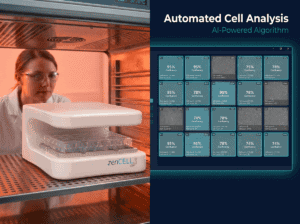
Pre-testing protocols can be strengthened by incorporating systems such as incubator-compatible live-cell imaging platforms (e.g., the zenCELL owl) to monitor growth kinetics, morphodynamics, and cytotoxicity in real time, enabling quantitative comparison of material performance across lots.
Continue reading to explore more advanced insights and strategies.
Documentation, QC, and Data Integration across the Workflow
Building an audit-ready and scientifically robust material traceability chain
Quality assurance for biological reagents does not end with initial procurement. Maintaining traceable metadata—certificate of analysis (CoA), lot validation reports, storage conditions, and expiration tracking—is vital for both regulatory compliance and data reproducibility. Integration of these records with experimental protocols and laboratory information management systems (LIMS) streamlines retrospective analysis and audit readiness.
- Documentation should align CoA parameters (e.g., total protein, hemoglobin, pH) with empirical cell performance data.
- Batch-specific impacts on experimental readouts should be annotated in assay records and publication methods.
- QC sample retention enables comparative testing when future variability is observed.
For laboratories using plastics or vessels known to influence binding or surface charge (especially in immunological assays), sourcing high-quality consumables—such as those available from shop.innome.de—can further standardize culture conditions and minimize cross-experimental deviations.
Continue reading to explore more advanced insights and strategies.
Service-Integrated Strategies for Biological Reagent Control
Custom sourcing and development as precision tools for experimental stability
In complex workflows—such as antibody generation, primary immune cell assays, or diagnostic reagent qualification—customized service support can enable targeted control of biological variability. Scientific services that coordinate donor screening, serum or plasma collection, and tailored testing parameters are increasingly used to align reagent properties with experimental design.
- For antibody development, consistent serum background reduces selection artifacts or clone suppression.
- Sera processed to exclude specific immunoglobulin classes can fine-tune adaptive immune cell responses.
- Custom biological sourcing supports niche applications, including rare-donor plasma or age-matched human serum pools.
Integrated services facilitate long-term stability by assisting with batch reservation, real-time documentation, and QC continuity—even as experimental designs evolve over time. This end-to-end approach supports the transition from supplier qualification to experimental confidence: closing the loop in biological sourcing and research reliability.
Validating Cell and Assay Performance Against Material Variability
Functional benchmarking provides biologically relevant validation
While physical and chemical QC metrics offer critical baseline validation for biological materials, functional compatibility testing is the definitive measure of a reagent’s suitability. This involves deliberately exposing the target system—such as specific cell types or immunoassays—to different raw material lots to assess outcomes against biological performance benchmarks.
For example, in T cell activation assays using human serum, researchers often measure CD69 or CD25 expression levels alongside cytokine secretion (e.g., IL-2, IFNγ). Variability in donor-derived serum lot can shift these immune activation markers. Similarly, for monoclonal antibody production using hybridomas, inconsistent immunoglobulin synthesis or isotype switching can be traced back to serum-derived inhibitors or nutrient deficiencies.
- Implement multi-parameter analysis (e.g., flow cytometry + ELISA) to complement visual evaluation of cell viability or morphology.
Establishing Cross-Laboratory Standardization Platforms
Internal consistency and collaboration-driven benchmarking
Research institutions and CROs handling multiple teams or locations benefit from cross-lab standardization strategies to harmonize biological material usage. This includes establishing centralized pre-tested serum banks, unified documentation templates, and cross-team validation protocols to reduce variability even when different users or instruments are involved.
For instance, a biotechnology company running parallel T cell assays in both Europe and North America aligned serum usage by pre-qualifying donor-matched human plasma sourced through one global supplier. By aligning their procurement window, batch lot, and freeze-thaw cycles, they reduced geographic variability in assay outcomes by 40% over a 6-month campaign.
- Create internal reference lots with verified performance to serve as internal controls across labs and timepoints.
Developing Custom Performance Protocols for High-Impact Reagents
Match test criteria to experiment sensitivity
Not all raw materials require the same level of qualification. Instead, labs should stratify reagents based on their expected biological impact, developing customized pre-testing and performance protocols accordingly. For example, reagents involved in cell activation, differentiation, or metabolic modulation (e.g., plasma, sera, cytokine cocktails) warrant more rigorous functional testing than basal maintenance media or PBS solutions.
High-resolution applications—such as genome editing with CRISPR-Cas9, immune polarization assays, or precision tissue engineering—demand that even subtle batch effects be quantified and controlled. In these cases, standardized performance assays (e.g., Cas9 activity, cytokine-induced polarization markers) should be embedded into the qualification workflow.
- Define a reagent criticality matrix to segment biological inputs into high-, medium-, and low-impact groups for targeted effort.
Digital Tools for Reagent Metadata Management and Decision Support
Leveraging informatics to optimize lot decisions and traceability
Modern laboratory information management systems (LIMS), ELNs (electronic lab notebooks), and cloud-based QC repositories enable better decision-making when comparing reagents across time or experiments. Integration of reagent metadata—including lot history, performance data, and supplier feedback—provides real-time access for scientific and procurement teams.
Some platforms provide decision tree tools or dashboards that align functional assay results with material sources, streamlining lot selection or reordering processes. For example, integrating a centralized lot performance database allows researchers to immediately determine which FBS batches supported optimal CHO cell growth over the past year, improving project initiation speed and continuity.
- Use barcode tracking and digital CoA storage to link every plate or assay with the exact reagent batch used.
Proactive Risk Scoring and Contingency Planning in Reagent Supply
Map biological dependencies to avoid mid-experiment disruptions
Risk mapping adds resilience to experimental design by evaluating the dependency of critical assays on specific reagent properties or supply continuity. Establishing backup suppliers, identifying alternative reagent formulations, or storing validated reserves are essential components of a robust continuity plan.
For instance, primary dendritic cell expansion protocols may require human AB serum from select donors. If specific cytokine backgrounds are essential for phenotypic stability, labs should reserve additional aliquots mid-study and periodically re-test functionality under ‘true-to-use’ conditions. Some suppliers also offer long-term storage agreements or annual lot renewals under reserved product SKUs to reduce the threat of supply gaps.
- Create a reagent risk register to categorize high-dependency assays and track associated batch details and alternates.
Combining Supplier Collaboration with In-House Optimization
Bridge scientific gaps through shared knowledge and testing protocols
Proactive communication with suppliers adds value beyond transactional purchasing—especially when suppliers maintain robust scientific support teams. By sharing experimental goals and assay systems, suppliers can provide expert recommendations, propose fit-for-purpose lots, or even execute in-house compatibility testing.
For example, a pharmaceutical group performing chronic Treg expansion worked with their human plasma supplier to identify donors with consistently low IL-6 and TNFα profiles, enabling stable TGF-β-mediated differentiation. Supplier-prequalified material directly matched the lab’s internal cytokine specifications, eliminating repeat testing and reducing batch-out failure rates by over 25%.
- Involve suppliers early in project planning to align biological specifications and reduce time lost to trial-and-error sourcing.
Building Reagent Performance Libraries for Future Experimental Design
Retrospective learning supports predictive sourcing and process control
As laboratories accumulate performance data across material lots, compiling this knowledge into searchable reagent performance libraries enables future projects to benefit from past insights. These internal databases can include metrics such as proliferation rates, activation thresholds, or cytokine outputs from prior experiments using specific lots or sourcing strategies.
By correlating these biological outputs with details like donor demographics or serum processing methods, trends can emerge that reveal high-performing sources or risk-prone material profiles. Some academic core facilities, for example, have begun building FBS lot scoring tools that integrate growth curve data across dozens of historical hybridoma runs—allowing new users to predict expected performance before running compatibility tests.
- Maintain structured data logs linking reagent properties with experimental success/failure rates to guide future sourcing.
Training Teams on Reagent Qualification Protocols and Variability Awareness
Scientific training empowers consistency in complex biological workflows
Ensuring experimental reproducibility is not just about systems and sourcing—it requires educating personnel at all levels, from technicians to senior researchers, about reagent variability and qualification protocols. Training programs should include recognition of biological batch effects, documentation procedures, and hands-on validation strategies.
Workshops, e-learning modules, or integrated onboarding sessions are effective ways to enforce best practices. Laboratories under ISO or GMP compliance structures often reinforce this through SOP-linked training workflows and lot change impact assessments. In translational research settings, aligning teams on reagent qualification expectations minimizes rework and enhances data validity.
- Incorporate reagent qualification checkpoints into internal training programs and SOP walkthroughs.
Next, we’ll wrap up with key takeaways, metrics, and a powerful conclusion.
Establishing Metrics-Driven Evaluation of Reagent Impact
Quantify influence to prioritize validation efforts
To systematically manage biological variability introduced by reagents, laboratories must implement metrics-driven frameworks that objectively quantify the impact of material inputs on assay outputs. Key performance indicators (KPIs) such as cell viability percentages, cytokine levels, doubling times, signal-to-noise ratios, or genome editing efficiency provide quantifiable insight into reagent performance.
By correlating these KPIs with reagent lot usage, procurement date, or supplier metadata, researchers can construct evidence-based sourcing strategies. For example, T cell differentiation cultures may be evaluated across multiple serum lots using a combination of surface marker expression (e.g., CD45RA/CD45RO, CCR7) and secretome analysis (e.g., multiplexed Luminex panels). Metrics thresholds for successful activation or polarization can then be codified into compatibility criteria for future sourcing decisions.
- Embed critical KPIs into assay QC checkpoints to flag reagent-related deviations in real time.
Aligning Qualification Practices to Regulatory and Translational Goals
Support scalability and compliance through early vigilance
In clinical and translational research contexts, variability in reagent behavior can have far-reaching implications—from invalidating preclinical data packages to creating manufacturing bottlenecks. For therapies involving live cells, engineered tissues, or gene editing systems, regulators increasingly expect that all reagent inputs be qualified and source-traceable.
This necessitates that reagent qualification protocols be designed not only to ensure scientific rigor but also to align with Good Laboratory Practice (GLP), ISO standards, or GMP expectations based on the target application. Initiating this alignment early in the research pipeline supports future scalability by avoiding reformulation or retesting due to overlooked batch effects.
Biotech ventures preparing for IND filings, for instance, often pre-screen growth media and exogenous proteins through GLP-compliant QC pipelines, supported by full reagent history and supplier documentation. Such efforts directly feed into regulatory submissions, accelerating approval timelines and enhancing investor confidence.
- Engage quality and regulatory teams during reagent evaluation to future-proof research and facilitate clinical transition.
Conclusion
Across increasingly complex biological systems, the integrity of experimental results hinges on the consistency and compatibility of foundational reagents. From human serum and growth factors to cytokine cocktails and CRISPR enzymes, the biological variability introduced by these materials can profoundly shift assay outcomes—confounding interpretation, undermining reproducibility, and delaying translational progress.
This article has outlined a holistic approach to managing reagent variability, emphasizing the integration of functional benchmarking, cross-site standardization, risk mapping, digital traceability, and training. No single strategy is sufficient alone; instead, a layered framework—starting from proper categorization of critical inputs, expanding through supplier collaboration, and culminating in data-driven decision support—enables laboratories to build robust material pipelines across both early discovery and later-stage development.
Critically, tracking reagent performance across time and experiments transforms variability from a hidden liability into a measurable, manageable variable. Centralized metadata repositories, risk registers, and KPI dashboards turn historical datapoints into predictive tools, shortening the distance between procurement and biological confidence. Likewise, embedding reagent qualification checkpoints into onboarding exercises and SOPs ensures that scientific rigor is not left to chance—but is instead championed through institutional memory and shared accountability.
As biological systems and technologies grow more sensitive and dependent on precise inputs, the time invested in reagent qualification pays dividends in experimental clarity, resource efficiency, and organizational confidence. Whether a team is fine-tuning immunopolarization assays, scaling gene therapies, or executing patient-specific cell expansions, proactive material management now stands as a cornerstone of translational success.
Ultimately, closing the loop between supplier capability, experimental demands, and internal performance data empowers researchers to move beyond reactionary QC, establishing strategic foresight in their sourcing behavior. By treating reagents not merely as consumables but as critical determinants of outcome fidelity, research teams can reclaim control over variability and unlock the full potential of their biology.
Commit to robust reagent qualification. Elevate your science with every lot.