
“```html
Biological Raw Materials in the Context of Quality by Design (QbD)
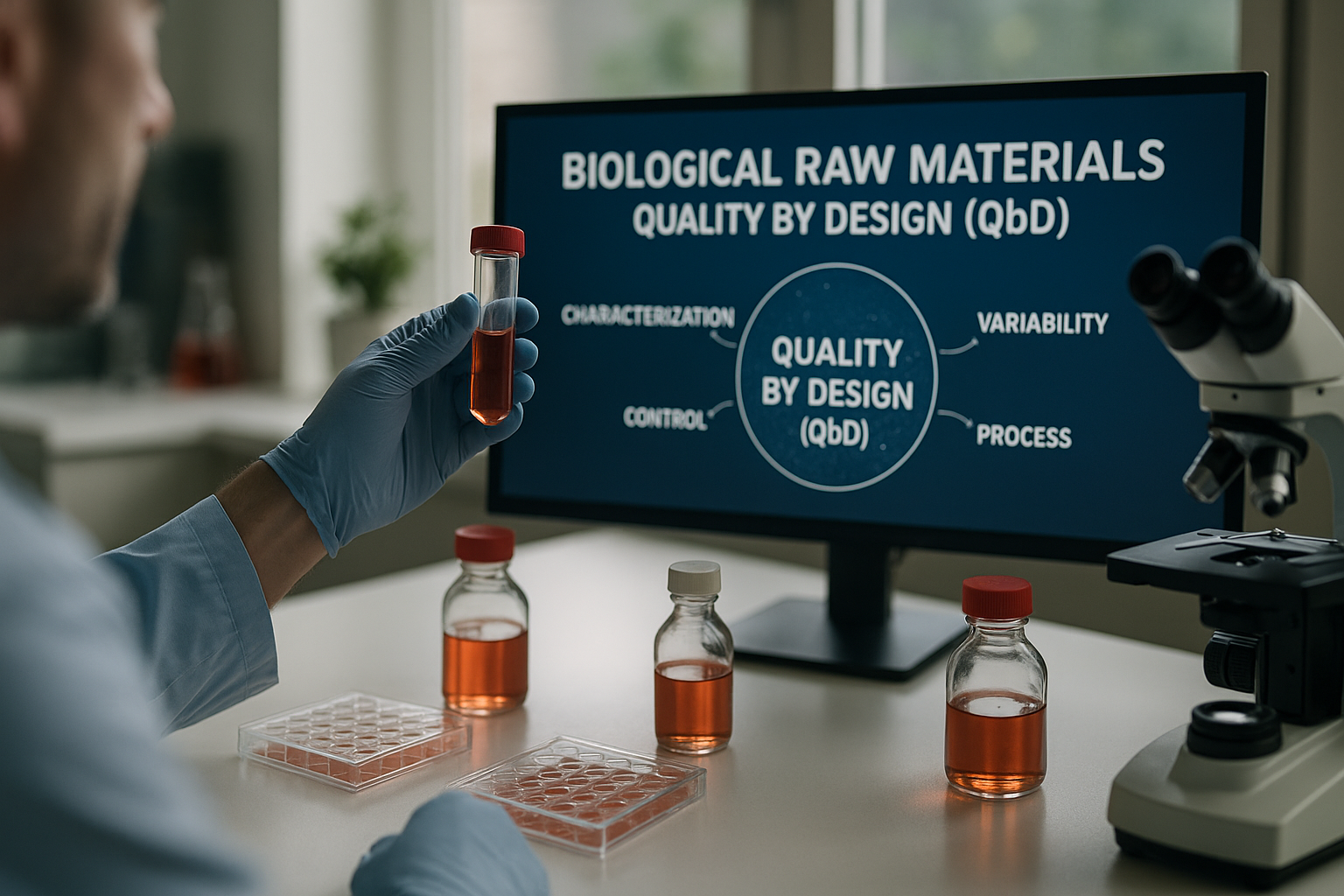
Quality by Design (QbD) is a strategic approach to pharmaceutical and biotechnological development that emphasizes understanding and controlling processes to ensure consistent quality outcomes. In bioprocessing, biological raw materials are critical components, playing a pivotal role in cell culture, immunology, and diagnostics. This article delves into the relevance of biological raw materials within the QbD framework, emphasizing the need for thorough characterization, understanding of variability, and strategic implementation to optimize scientific research and product quality.
The Role of Biological Raw Materials in QbD
Understanding Biological Function and Variability
Biological raw materials, such as fetal bovine serum (FBS), bovine plasma, and human sera, are indispensable in various biotechnological applications. These materials are rich in growth factors, hormones, and nutrients essential for the growth and maintenance of cultured cells. However, their biological nature introduces intrinsic variability that can impact experimental consistency. The Quality by Design approach requires a deep understanding of these raw materials, not only to mitigate variability but also to leverage their unique properties for optimal performance.
- Intrinsic variability in material can affect reproducibility and outcome.
- Thorough characterization ensures more consistent quality control.
Lesen Sie weiter, um tiefere Einblicke und Strategien zu gewinnen.
Ensuring Consistency and Quality through Characterization
Lot-to-Lot Variability and Its Management
Lot-to-lot variability is a common challenge with biological raw materials. Differences in nutrient concentrations and growth factors can lead to inconsistencies in cell culture. Implementing rigorous testing protocols, such as those offered by custom biological sourcing services, can help identify and account for this variability. The Quality by Design framework insists on comprehensive documentation and batch reservation to support consistency and traceability, thus enhancing reproducibility in scientific research.
- Testing and documentation are crucial for managing variability.
- Batch reservation provides a controlled source of raw materials.
Lesen Sie weiter, um tiefere Einblicke und Strategien zu gewinnen.
Reagents and Solutions in Cell Culture and Immunology
Functional Roles and Handling Practices
Reagents such as density gradients are vital in the separation and purification processes within the laboratory. Their functional role extends to facilitating cellular studies in immunology and diagnostics by maintaining cell viability and function. Proper storage and handling of these reagents are critical to preserving their integrity. QbD emphasizes meticulous documentation, ensuring that reagents are consistently effective throughout the experimental lifecycle.
- Proper handling extends the viability of reagents.
- Immune assays rely on reagent quality for reliable outcomes.
Lesen Sie weiter, um tiefere Einblicke und Strategien zu gewinnen.
Leveraging Technology for Quality Assurance
Role of Live Cell Imaging Systems
Technological advancements, such as incubator-compatible live-cell imaging systems, have revolutionized how biological raw materials are monitored in real-time. Systems like the zenCELL owl enable continuous tracking of cell behavior, offering insights into the dynamic effects of sera and reagents without disrupting the cell culture environment. This continuous monitoring aligns with the QbD principle of informed decision-making, enhancing the reproducibility and reliability of biological workflows.
- Real-time data supports informed adjustments in experimental conditions.
- Continuous monitoring reduces the risk of unnoticed variances.
Lesen Sie weiter, um tiefere Einblicke und Strategien zu gewinnen.
Strategic Implementation of QbD in Biological Material Use
Applications and Ethical Considerations
Human-derived biologicals, while integral to primary cell cultures and immunological assays, come with ethical and regulatory considerations. Ensuring the donor material’s traceability and adhering to ethical sourcing standards fortifies QbD’s commitment to responsible science. The integration of ethical considerations into the QbD framework ensures that biological raw materials are used effectively and responsibly, supporting innovative yet ethically mindful research applications.
- Traceability and ethical sourcing are pillars of quality control.
- Regulatory alignment ensures compliant scientific exploration.
Lesen Sie weiter, um tiefere Einblicke und Strategien zu gewinnen.
“`
“```html
Optimizing Raw Material Selection through Predictive Modelling
Leveraging Statistical Analysis for Better Outcomes
Incorporating predictive modeling into the selection of biological raw materials can significantly enhance process efficiency within the QbD framework. By utilizing statistical methods such as regression analysis and machine learning algorithms, researchers can predict the behavior of raw materials under various conditions, thereby selecting the best candidates for their specific applications. A study conducted by the University of California demonstrated how predictive models reduced variability in cell growth by 20%, ensuring more reliable and reproducible results.
- Use statistical tools to anticipate material performance.
Advanced Characterization Techniques for Enhanced Quality Control
Emphasizing Molecular and Biochemical Profiling
Advanced techniques such as mass spectrometry and nuclear magnetic resonance (NMR) spectroscopy are indispensable in the precise characterization of biological raw materials. These methods provide detailed molecular and biochemical profiles, crucial for understanding the complex interactions within cell culture systems. For instance, mass spectrometry has been employed to identify variations in hormone levels in bovine serum, leading to adjustments in supplementation protocols that improved cell culture viability by over 15%.
- Invest in advanced profiling techniques for comprehensive characterization.
The Role of Automation in Enhancing Raw Material Consistency
Streamlining Processes with High-Throughput Systems
Automation technologies, including high-throughput screening systems, offer significant improvements in managing biological raw material consistency. These systems streamline the evaluation process, allowing for rapid testing and quality assessment at scale. In a case study by a leading biotech company, implementing automated screening reduced the time for quality checks by 30%, facilitating faster go-to-market timelines without compromising quality.
- Implement automation to ensure consistency and reduce process time.
Integrating Quality Risk Management into Material Development
Proactive Strategies for Mitigating Risks
Quality Risk Management (QRM) is a proactive approach that integrates risk assessment tools like Failure Mode and Effects Analysis (FMEA) to identify and mitigate potential quality failures in biological raw materials. By understanding and documenting potential risks, organizations can develop robust strategies to ensure quality and compliance. A pharmaceutical company successfully reduced process deviations by implementing QRM, highlighting its importance in sustaining quality standards.
- Adopt QRM tools to systematically address quality risks.
Ensuring Compliance with Regulatory Standards
Navigating Global Standards for Biological Materials
Compliance with stringent regulatory standards remains a cornerstone in the QbD framework concerning biological raw materials. Understanding the guidelines set forth by entities such as the FDA and EMA not only aids in ensuring product safety but also facilitates international collaboration and market access. For instance, navigating the regulatory landscape was pivotal for a biotech firm entering the European market, where harmonization of practices across borders was achieved through diligent regulatory planning.
- Stay informed on global regulations to ensure compliance and facilitate market access.
Harnessing Data-Driven Approaches to Enhance QbD Implementation
Utilizing Analytical Tools for Informed Decision Making
Data analytics capabilities offer transformative potential in the Quality by Design framework by providing actionable insights into raw material performance and process optimization. Tools like data visualization software and big data analytics platforms enable comprehensive analysis, revealing patterns and correlations that can inform adjustments to enhance quality outcomes. A top-tier research institute successfully utilized these insights, leading to a 25% increase in process efficiency.
- Leverage data-driven tools to optimize biological workflows and decision-making.
Fostering Collaboration Across Disciplines for Quality Innovation
Encouraging Cross-Functional Teams for Enhanced Quality Outcomes
The complex nature of biological raw materials necessitates collaboration across various scientific disciplines. By fostering cross-functional teams that bring together experts in biology, chemistry, engineering, and data science, organizations can drive innovation and improve quality control processes. Collaborative efforts at a major research university led to the development of a novel cell culture medium that enhanced yield by up to 30%.
- Encourage multidisciplinary collaboration to foster innovation and improve outcomes.
Im Anschluss fassen wir die wichtigsten Erkenntnisse, Kennzahlen und eine wirkungsvolle Schlussfolgerung zusammen.
“`
“```html
Prioritizing Sustainability in Raw Material Sourcing
Achieving Eco-Friendly Innovations
In the landscape of Quality by Design, sustainability is increasingly crucial as businesses strive to reduce their environmental footprint. Sourcing sustainable biological raw materials goes beyond mere compliance; it reflects a commitment to environmental stewardship. By choosing renewable resources and implementing eco-conscious practices, companies can align their production processes with global sustainability goals. Recent initiatives by a pharmaceutical giant integrating sustainable sourcing strategies have demonstrated a reduction of 40% in carbon footprint, exemplifying the positive impact of environmental innovations.
- Pursue eco-friendly strategies in sourcing biological raw materials.
Exploring Future Trends in Biological Material Development
Anticipating New Technologies and Innovations
The development of biological raw materials continues to evolve with technological advancements that promise to revolutionize the field. Emerging trends such as synthetic biology and bioinformatics offer unprecedented capabilities in tailoring raw materials with specific attributes conducive to desired biological functions. These technologies offer a glimpse into a future where precision-designed materials could dominate industry practices. A pioneering research group successfully used synthetic biology to engineer bacterium with optimized metabolic pathways, resulting in a fourfold increase in target compound yield.
- Stay ahead by investing in future-forward technologies.
Instilling a Culture of Continuous Improvement
Driving Ongoing Quality Enhancements
The Quality by Design framework inherently encourages a culture of continuous improvement, ensuring that biological material development keeps pace with innovation and quality expectations. Through iterative testing, feedback loops, and performance evaluations, organizations can continuously enhance processes and material quality. Success stories from biotech industries highlighted how a consistent commitment to improvement cycles resulted in a sustained increase in product quality and compliance, setting a benchmark for industry best practices.
- Embed continuous improvement culture within organizational practices.
Schlussfolgerung
The Quality by Design framework provides a comprehensive pathway that enables researchers and enterprises in the biotech and pharmaceutical sectors to refine the production and application of biological raw materials systematically. By focusing on predictive modeling, advanced characterization, automation, risk management, and regulatory compliance, organizations can achieve unparalleled quality standards while optimizing resource efficiency.
Our discussion underscores the immense benefits derived from integrating advanced analysis, high-throughput technologies, and proactive risk management. We have explored the landscapes of sustainable sourcing and future technological advancements, unveiling their pivotal role in shaping tomorrow’s biological innovations. Moreover, incorporating cross-disciplinary collaboration fosters an environment ripe for innovation, driving outcomes that align with global quality benchmarks.
By embracing these QbD principles and strategies, businesses can navigate the complexities of biological materials with a nuanced understanding, thereby ensuring compliance, enhancing market access, and fostering sustainable practices. The insights shared in this article are critical not only for achieving superior quality and efficiency but also for securing a competitive advantage in the ever-evolving biotech landscape.
As the journey of quality enhancement continues, we invite you to consider these strategic implementations within your own organizational frameworks. Let’s move forward with a shared commitment to excellence, driving progress through informed decision-making and collaborative innovation. By nurturing a culture of quality and sustainability, we embark on a transformative path that promises to enrich the world of biotechnology and beyond.
“`