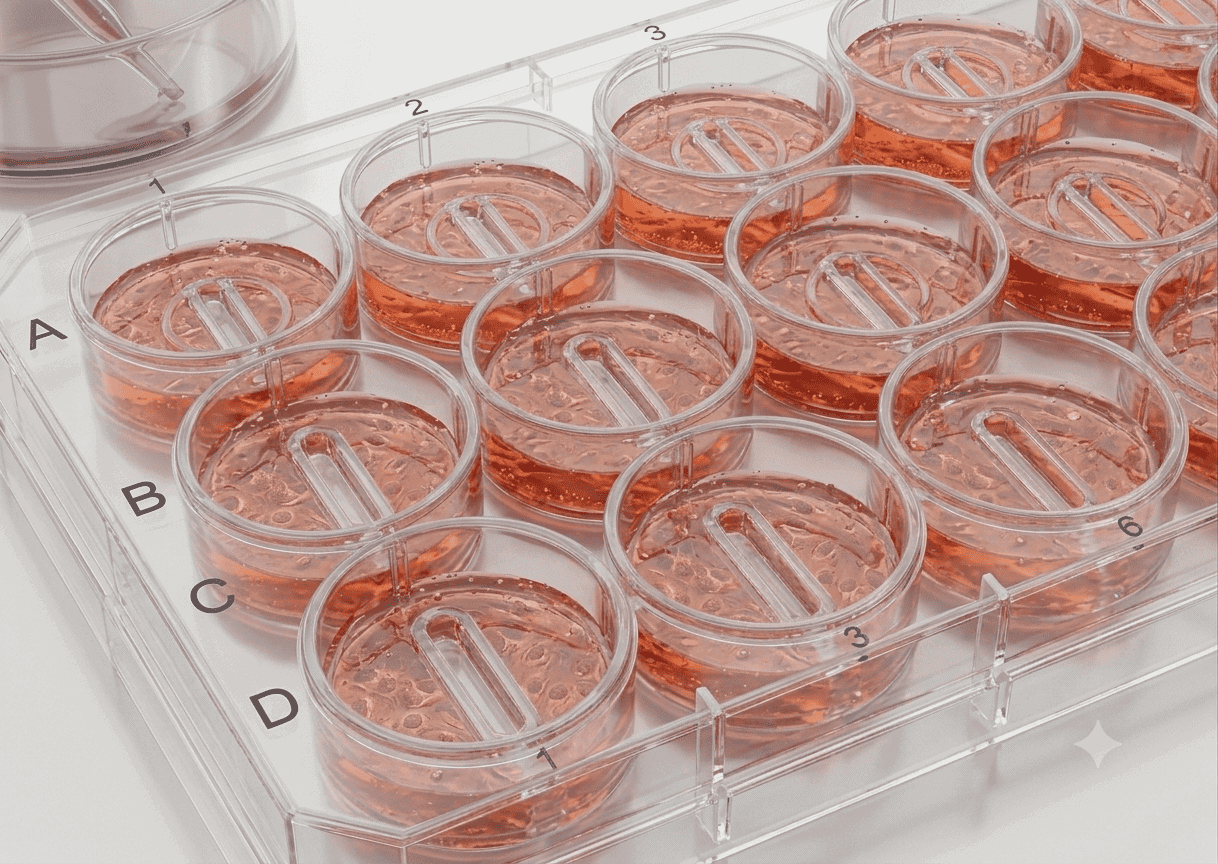
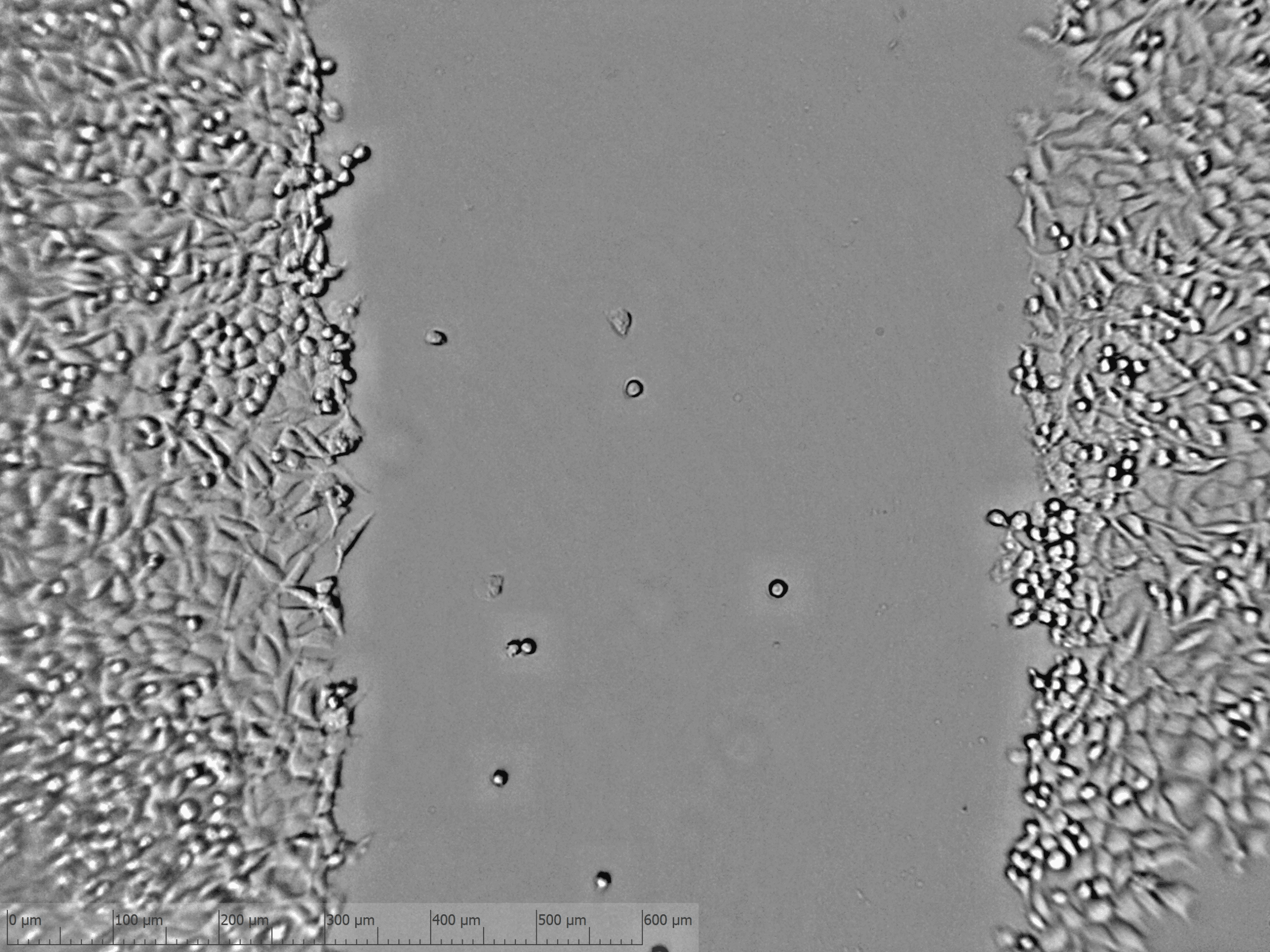
ScratchMaker scratch assay plates feature photosensitizer-coated glass bottoms for standardized, reproducible wound healing assays. Available in 6-, 24-, and 96-well format. Requires a fluorescence microscope as light source – at a distance of 3 cm between light and plate. No washing step required.
The method you use to create a wound determines what biology you can study. Not all scratch assay plates are equal – the wound type matters. Studies on cell migration assays consistently show that physiological relevance is the critical differentiator between insert-based and photochemical wound models.
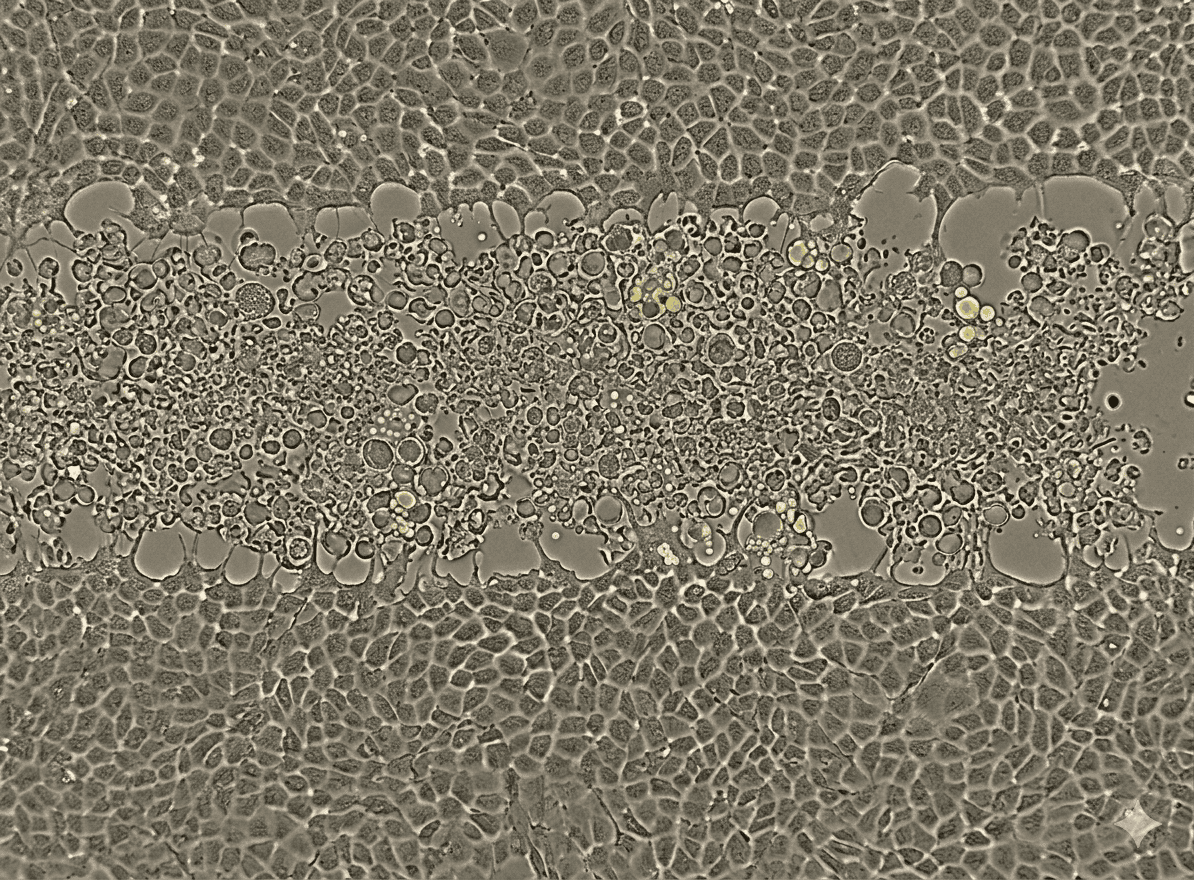
"The cells, when they move towards the wound, they not only close the wound, but also digest the cell bodies which are on the way. So we believe that this closely mimics the physiological situation, the real-time situation, what's happening at a biological level."
— Researcher feedback, zenCELL owl live demo · June 2026Around 12,000 PubMed entries involve scratch assays – most performed manually with pipette tips. Inter-assay variability is the most cited limitation in wound healing assay publications.
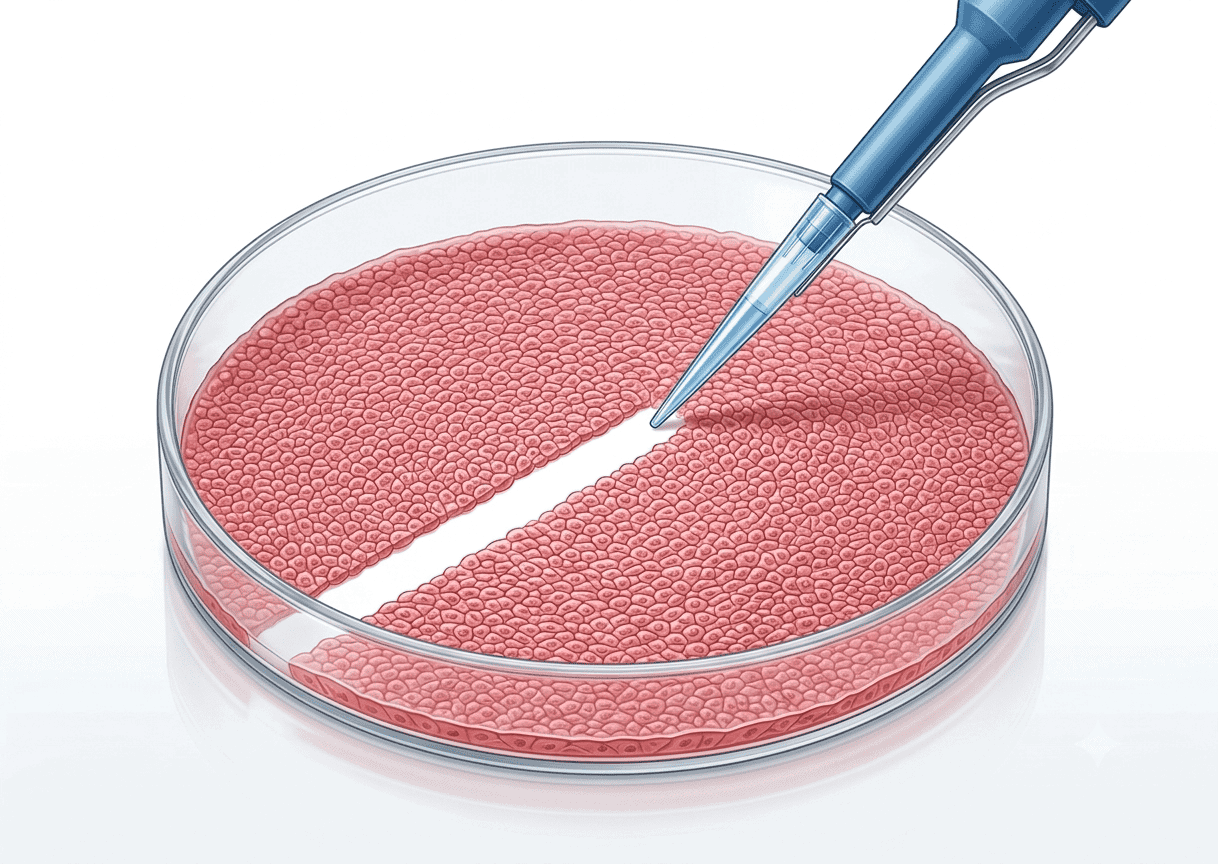
Manual pipette scratches vary significantly depending on operator pressure, angle, and tip size – making quantification unreliable.
Results cannot be directly compared between experiments, time points, or operators – destroying statistical power.
Lack of standardization is a frequent reason for rejection in peer review of migration and wound healing studies.
96 manual scratches per plate is time-consuming and error-prone – high-throughput screening is not realistic.
The pipette tip physically tears cells at the wound edge, generating uncontrolled debris and stress responses that confound migration readouts.
Each well is scratched at a slightly different moment and with a slightly different hand motion – timing and technique drift accumulate across a plate.
Our scratch assay plates feature photosensitizer-coated glass bottoms as single-use consumables, combined with reusable precision light masks. Requires a fluorescence microscope as minimum light source.
Ideal for initial experiments, cell line screening, and qualitative migration studies with larger well volumes.
The standard for scratch assay plates. Optimal for quantitative migration studies, drug testing, and compound screening.
For screening studies with many conditions simultaneously. Maximum throughput with consistent reproducibility across all wells.
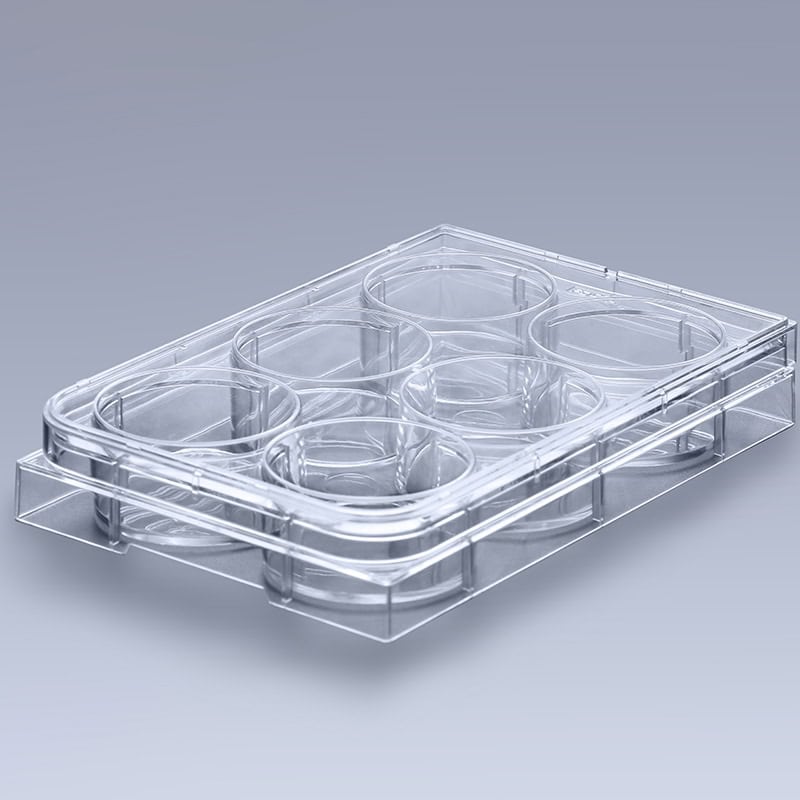
Standard well plate with individually bonded, photosensitizer-coated glass bottoms. Optimized for clean, reproducible photochemical wound edges in scratch assay applications.
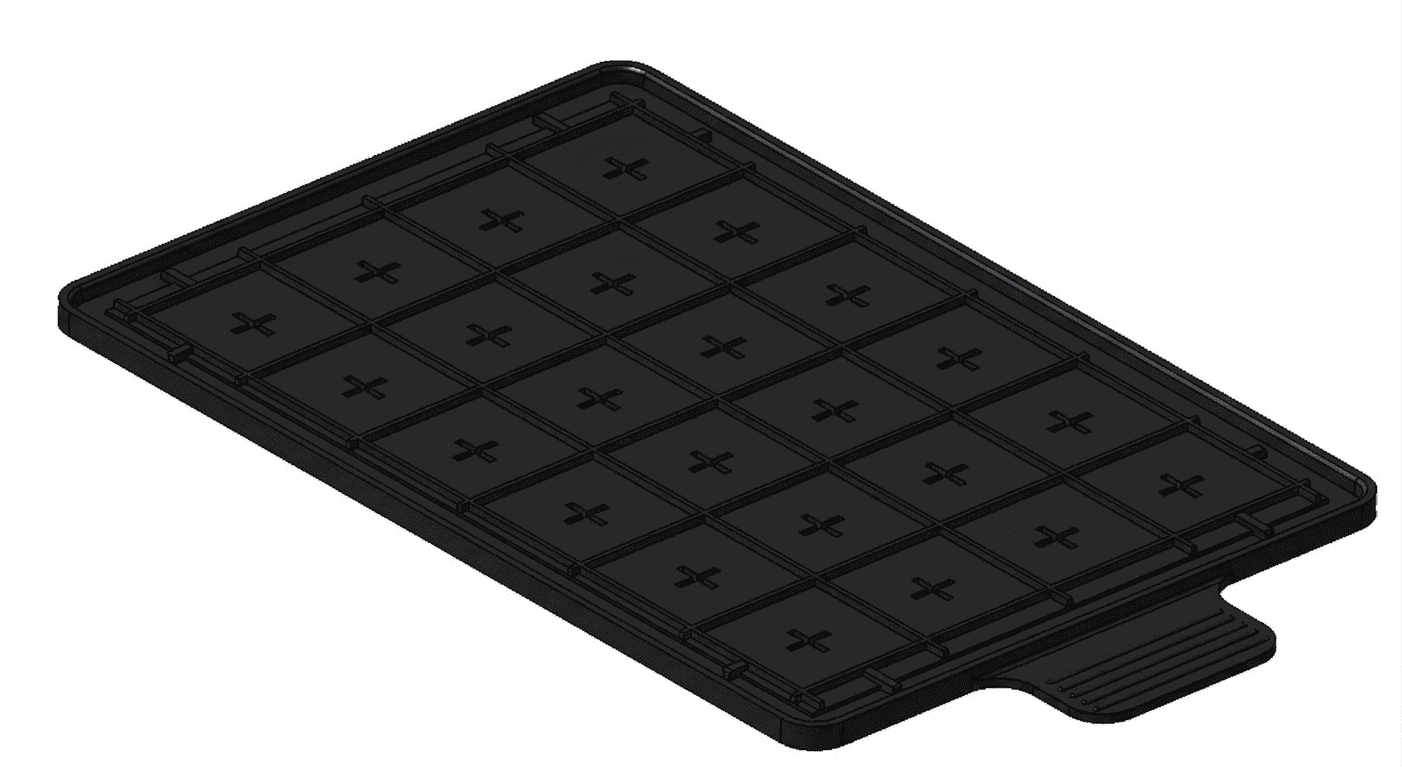
Precision-manufactured light mask that clips directly under the well plate. Defines the IR/VIS light exposure area precisely – identical position in every well, every experiment. Reusable across many experiments.
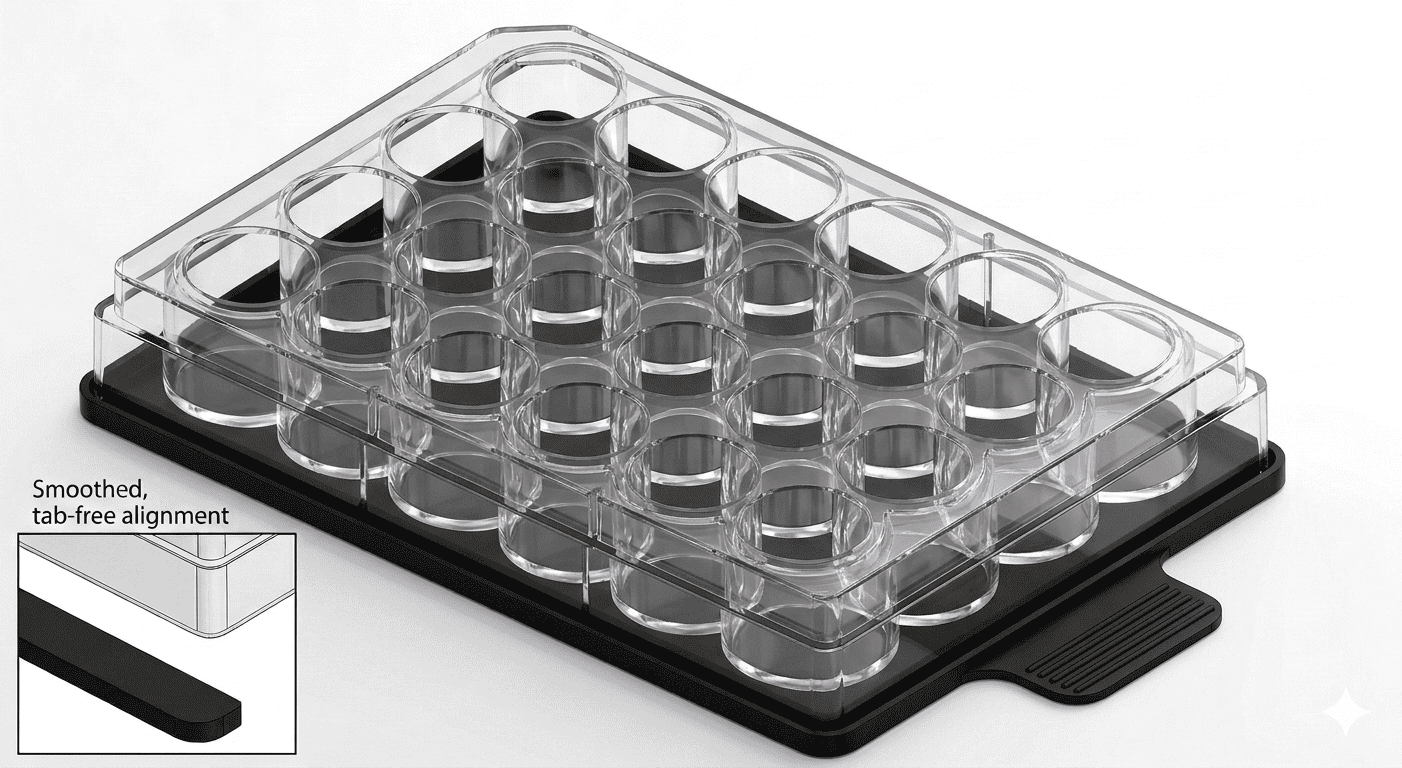
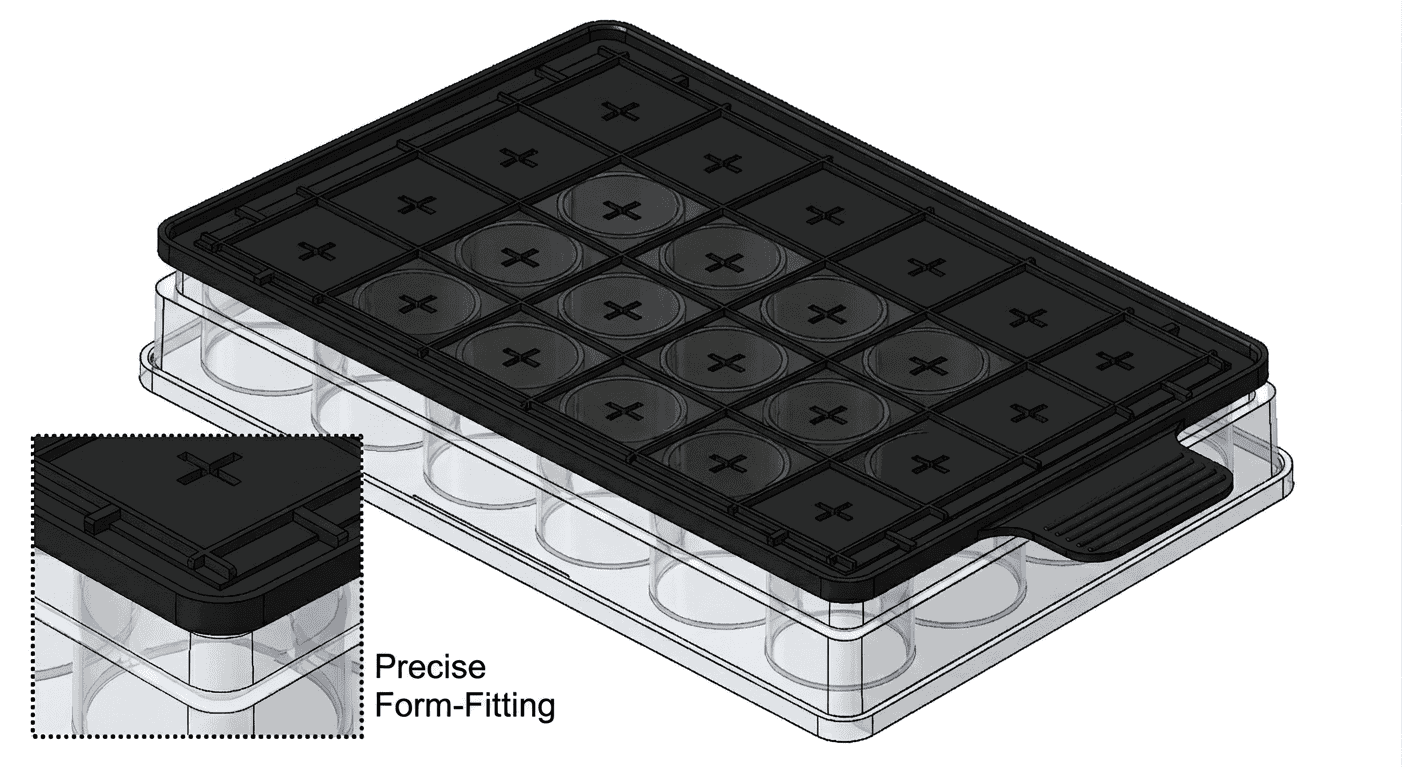
Everything you need for your first reproducible scratch assay. Light mask + scratch assay plates in one box, protocol PDF included. Start today, no setup required.
You do not need to expose all wells at once. Use only the wells your current experiment requires – expose them one by one, step by step. As long as you work under sterile conditions, the remaining wells stay intact and can be used in subsequent experiments. This makes each scratch assay plate a cost-efficient resource across multiple independent assays.
From confluent monolayer to defined photochemical wound – a standardized workflow in four steps. ScratchMaker scratch assay plates are compatible with 6-, 24-, and 96-well formats.
Seed your cells onto the ScratchMaker scratch assay plate at the appropriate density. Incubate until ≥95% confluency is reached – typically 16–24 h depending on cell line.
Clip the ScratchMaker light mask onto the underside of the well plate. The mask acts as holder and light guide – it defines exactly which area of each well will be exposed.
Place each well under your fluorescence microscope light source for 60 seconds at a distance of 3 cm between light and plate. The light activates the photosensitizer → singlet oxygen → localized cell death in the defined zone. Work well by well through the plate.
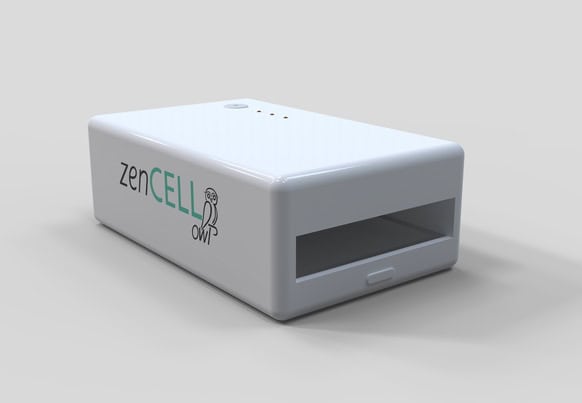
The scratch assay plate is ready immediately after light exposure. No washing step required. Place directly under your microscope or into the zenCELL owl and start live-cell monitoring.
A direct comparison across the three most common wound healing assay approaches – and why photochemical scratch assay plates produce the most physiologically relevant data.
| Merkmal | ScratchMaker Plates | Pipettenspitze | Ibidi Einsatz |
|---|---|---|---|
| Wound type | Photochemical cell death | Mechanical rupture | Gap – no cell death |
| Physiological relevance | High – mimics in vivo | Moderate | Low – no debris clearance |
| Cell debris clearance | Yes, defined zone | Yes, uncontrolled | No |
| Insert detachment risk | No insert | No insert | Yes – after 2+ hours |
| Scratch reproducibility | Hoch | Low (±30–60%) | Hoch |
| 6-Well-Platte | Ja | Ja | Ja |
| 24-Well-Platte | Ja | Ja | Ja |
| 96-Well-Platte | Ja | Laborious | Ja |
| Microscope requirement | Fluorescence microscope (min.) · 3 cm distance | Any | Any |
| Partial plate use | Yes – expose wells step by step (sterile) | Ja | No |
| Washing after wound | Nicht erforderlich | Required | Required |
| Cost per plate | from €59 | ~€0 | €50–80 |
| Microelectrode Array (MEA) | Compatible | Alternative method | Alternative method |
| Publication suitability | Ja | Limited | Ja |
ScratchMaker plates are compatible with Microelectrode Array (MEA) technology, offering a precise alternative to insert-based or manual scratch methods for electrical migration measurements. Because the wound position is precisely defined by the light mask, the MEA electrode is always located at the same position relative to the wound – making electrical migration measurements significantly more reproducible and valid.
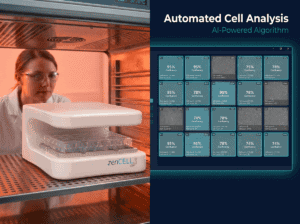
ScratchMaker scratch assay plates are designed to work directly with the zenCELL owl incubator imager. Place the plate inside, press start – the system captures every well, every hour, automatically.
Fully automated photochemical wound generation for our scratch assay plates – 96 identical wounds in under 60 seconds. Currently in prototype development.
Illuminate all wells simultaneously in one step using infrared or visible range illumination. Compatible with all ScratchMaker scratch assay plates – 24-well and 96-well. Early access on request.
Price list, protocol PDF, and sample order for ScratchMaker scratch assay plates – contact us directly.
Contact Us English English
 Deutsch
 Français
 Español
 简体中文
简体中文