The method you use to create a wound determines what biology you can study. Not all scratch assay plates are equal — the wound type matters. Studies on cell migration assays consistently show that physiological relevance is the critical differentiator between insert-based and photochemical wound models.
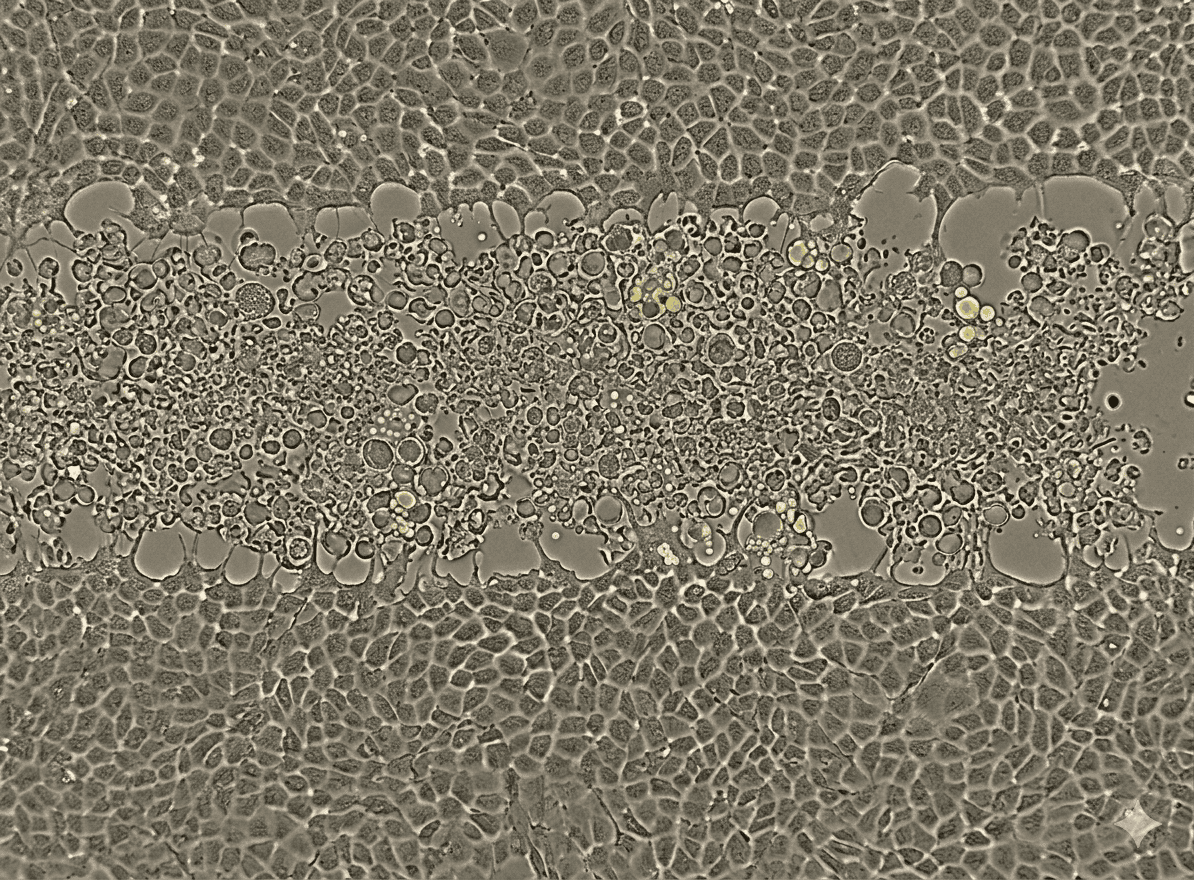
Most labs still create scratch wounds by dragging a pipette tip across the monolayer by hand. This mechanically ruptures cells at the wound edge — width, angle, and depth vary with every pass, every operator, every plate. ScratchMaker scratch assay plates replace this manual step entirely with a precisely defined, reproducible photochemical wound.
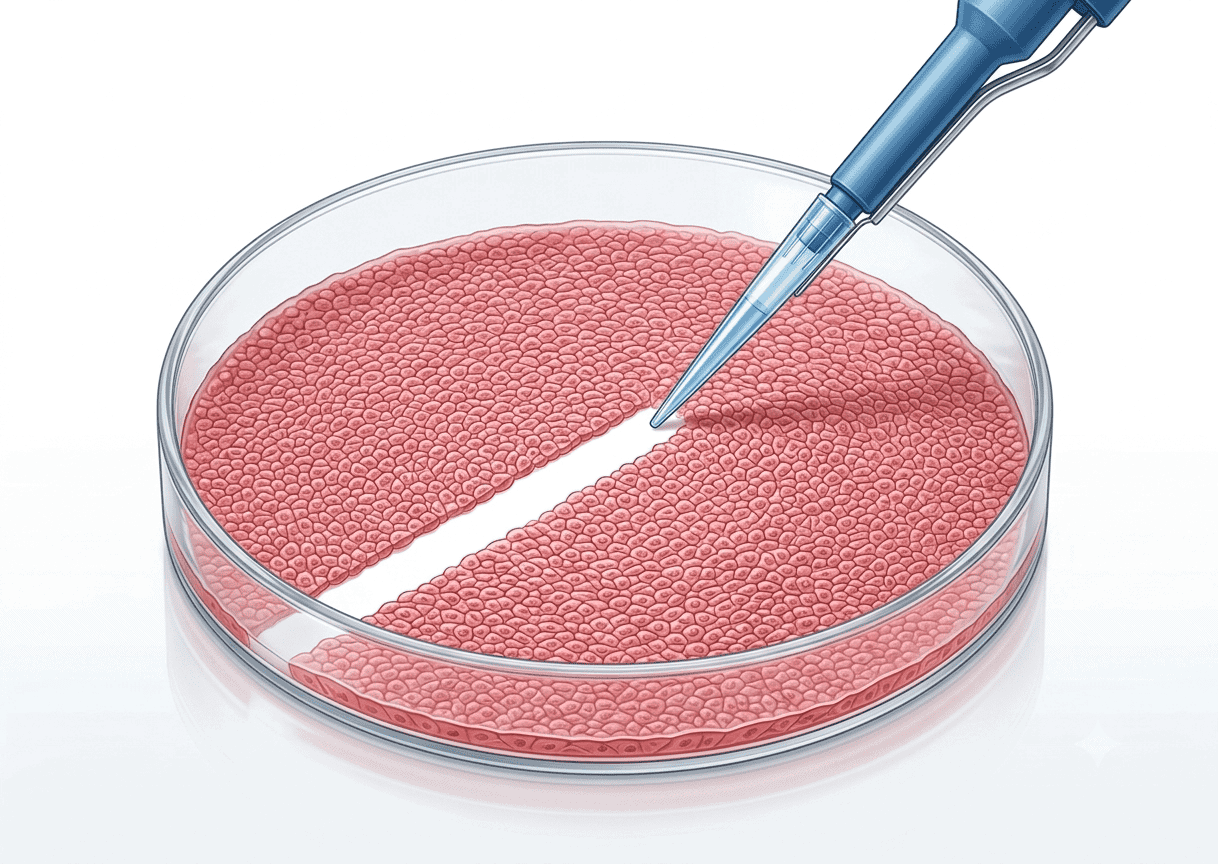
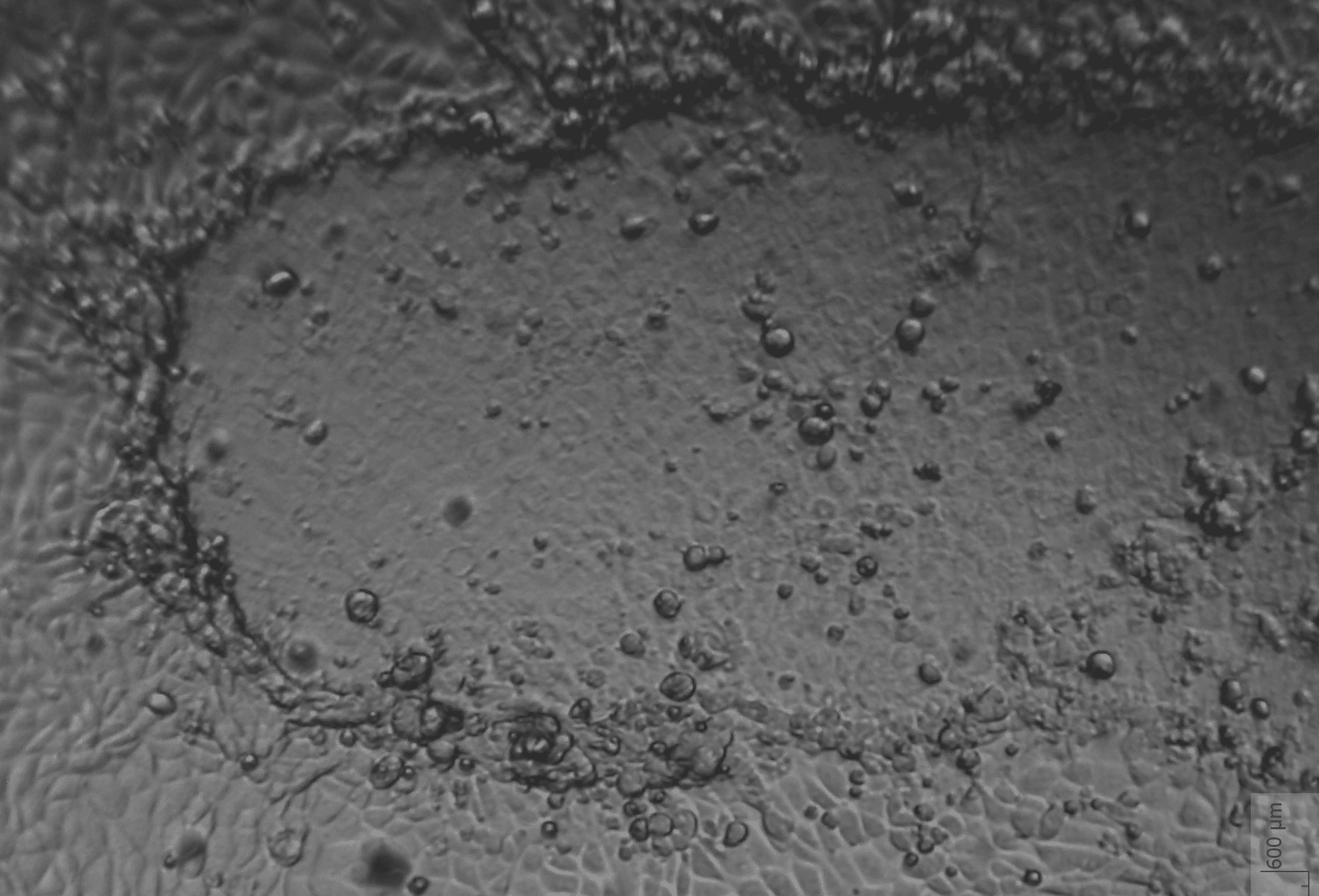
"The cells, when they move towards the wound, they not only close the wound, but also digest the cell bodies which are on the way. So we believe that this closely mimics the physiological situation, the real-time situation, what's happening at a biological level."
— Researcher feedback, zenCELL owl live demo · June 2026UV-A/visible light (wavelength typically ~340–408 nm). Standard fluorescence microscopes with Hg-vapour lamp (DAPI filter cube) or 405 nm laser are fully compatible. Photosensitizer absorption maximum: ~395 nm. No dedicated UV lamp or laser required — exposure time 20–60 seconds per well.
Available in 6-, 24-, and 96-well format. Order plates and masks separately or as a complete Starter Kit. Individual sample offers available for new customers.
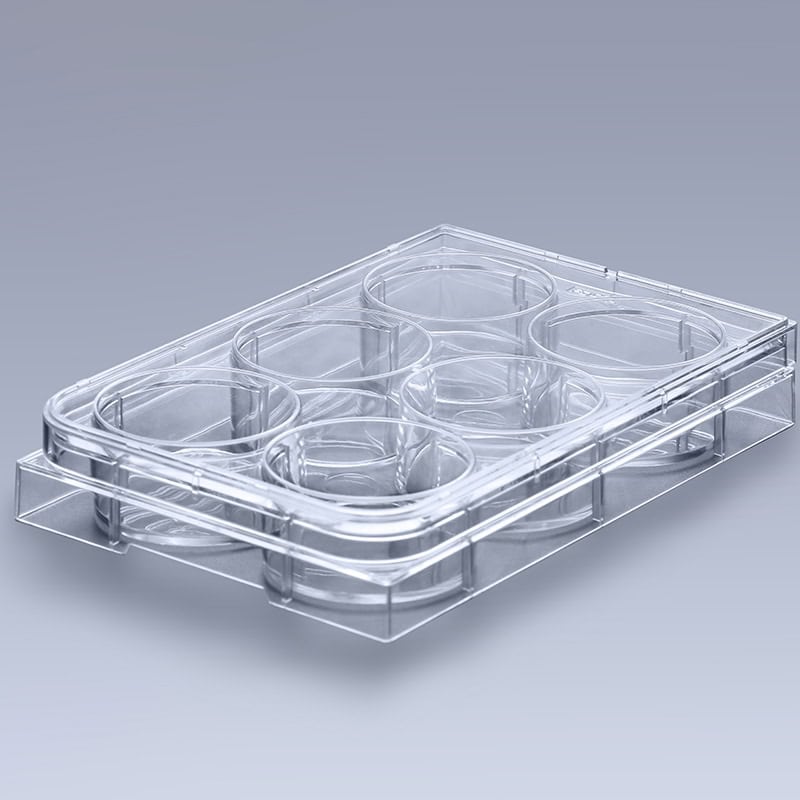
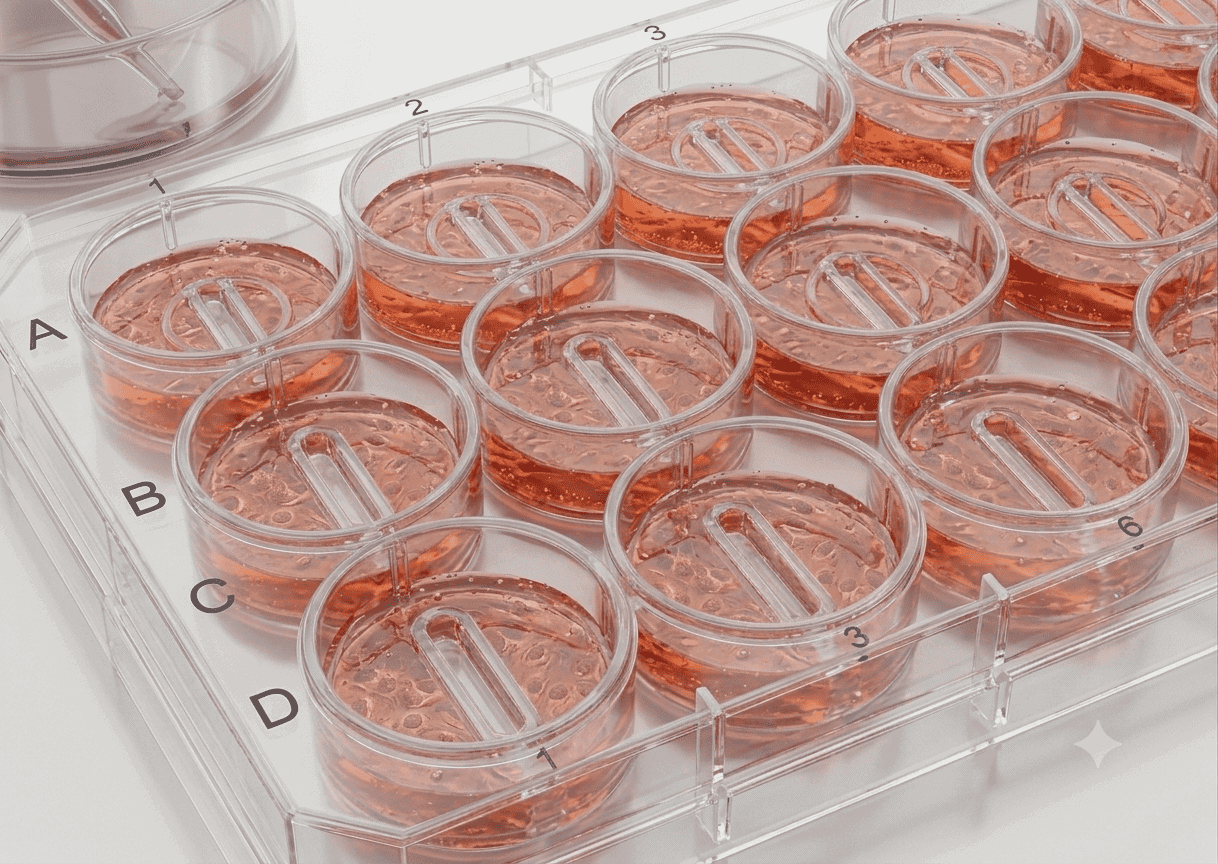
Photosensitizer-coated glass bottom plates for standardized, reproducible wound healing assays. Available in 6-, 24-, and 96-well format. No washing step or medium change required after light exposure.
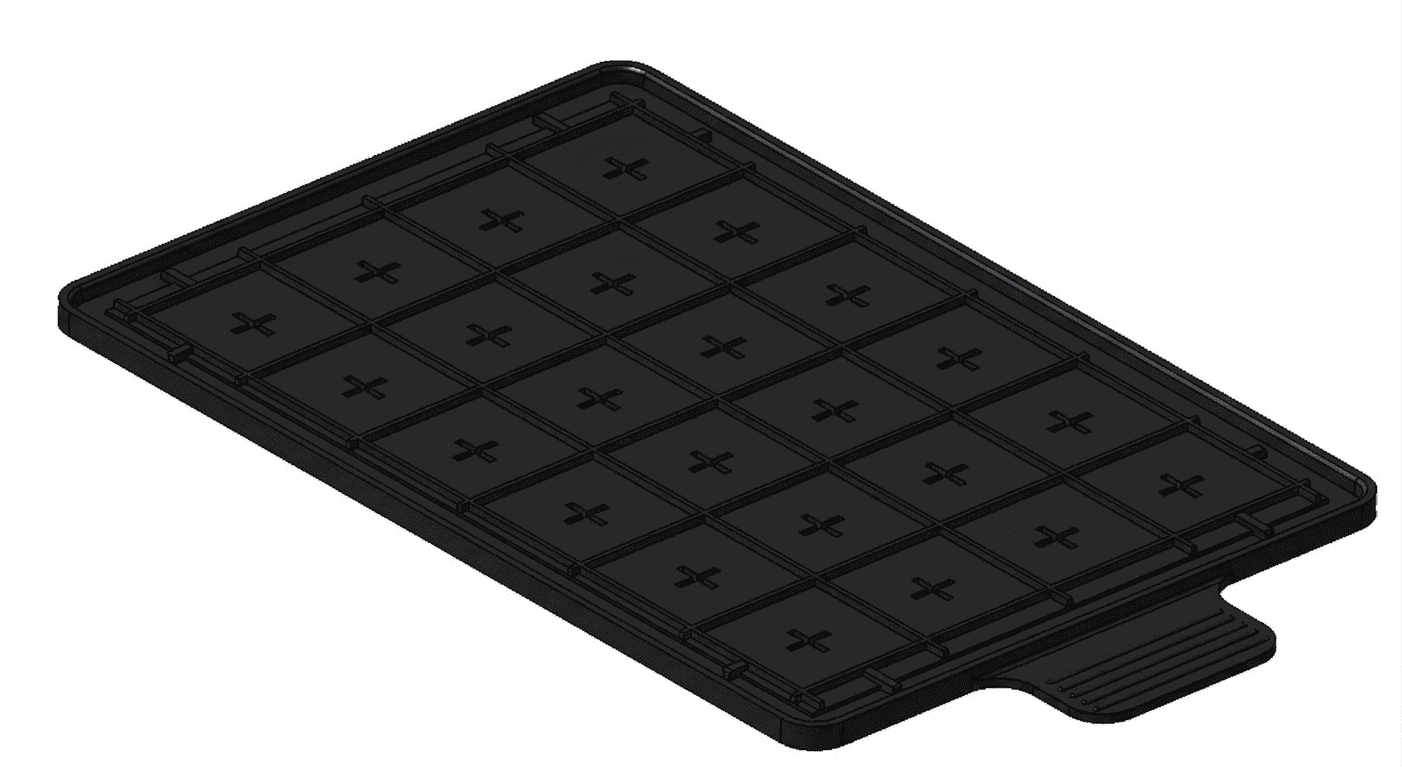
The light mask clips under the ScratchMaker plate and defines exactly where the photosensitizer is activated. Ensures identical wound geometry across all wells, all experiments, all operators. One mask per format — reusable.
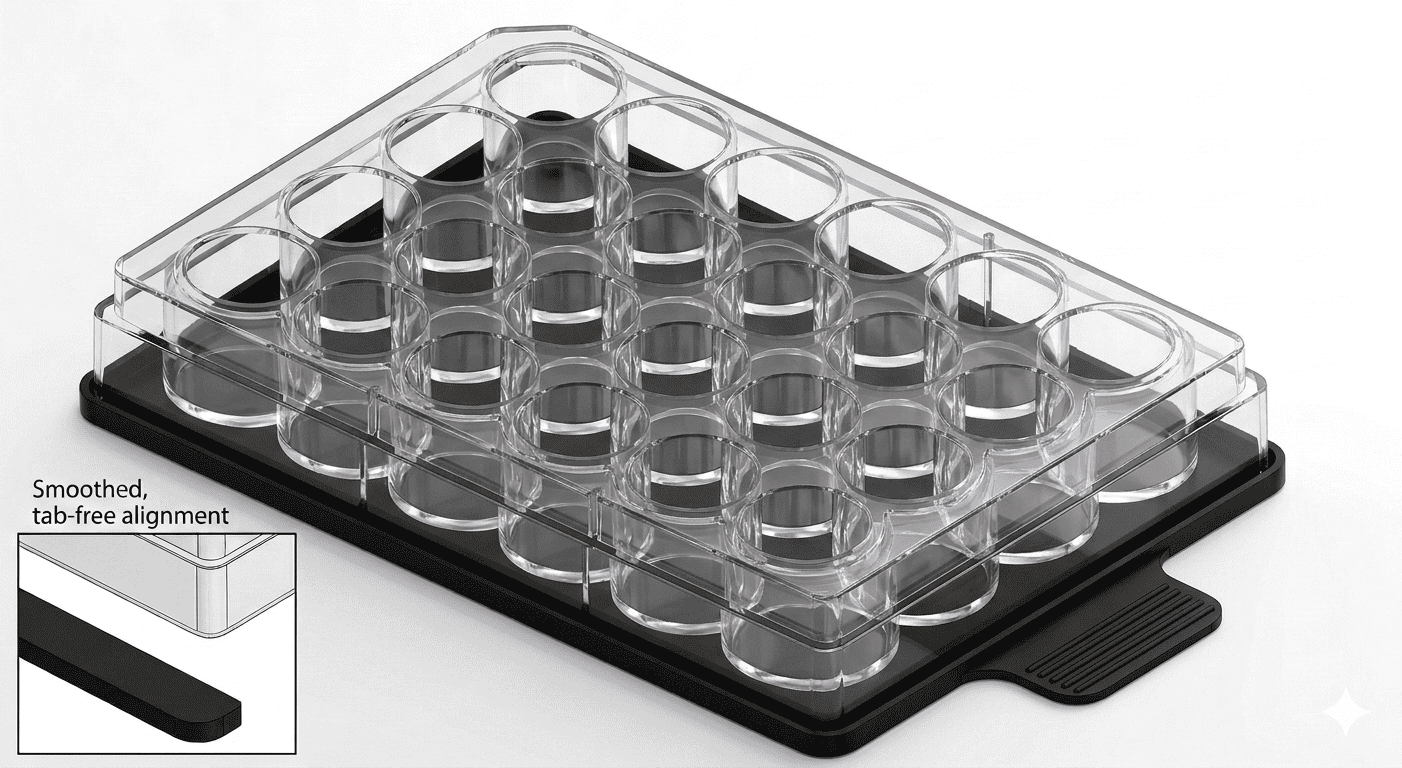
Everything you need to run your first standardized scratch assay. Includes ScratchMaker plates in your chosen format, the matching light mask, and a step-by-step protocol. Up to 50% off for new customers.
Ideal for larger cell populations, higher cell input, or applications requiring more image area per well. Compatible with most brightfield and fluorescence microscopes.
The standard format for scratch assay experiments. Fits directly into the zenCELL owl 24-channel imager. Best balance between throughput and image quality.
For high-throughput screening applications. Compatible with zenCELL owl XYZ SCAN stage add-on. Screen up to 96 conditions in a single experiment.
All ScratchMaker plates and masks are available for individual sample offers. Contact us at info@innome.de with your format, quantity, and institution — we will create a personal quote within 24 hours. New customers receive up to 50% off their first Starter Kit order.
ScratchMaker plates with integrated Microelectrode Array (MEA) compatibility — precisely defined wound position relative to the electrode for electrical cell migration measurements. Contact us for early access.
From confluent monolayer to defined photochemical wound – a standardized workflow in four steps. Compatible with 6-, 24-, and 96-well formats.
Seed cells, incubate to ≥95% confluency
Mask clips under the plate, defines exposure zone
Blue/violet light (~408 nm, DAPI channel), 3 cm distance, per well
No washing step required — image immediately. Medium change optional for long-term assays (>24h).
Seed your cells onto the ScratchMaker scratch assay plate at the appropriate density. Incubate until ≥95% confluency is reached – typically 16–24 h depending on cell line.
Clip the ScratchMaker light mask onto the underside of the well plate. The mask acts as holder and light guide – it defines exactly which area of each well will be exposed.
Place each well under your fluorescence microscope light source for 60 seconds at a distance of 3 cm. The blue/violet excitation light resonantly activates the photosensitizer embedded in the glass coating, generating singlet oxygen (¹O₂) precisely within the illuminated area. This induces localized cell death only where the light hits – cells just outside the exposed zone remain completely unaffected.
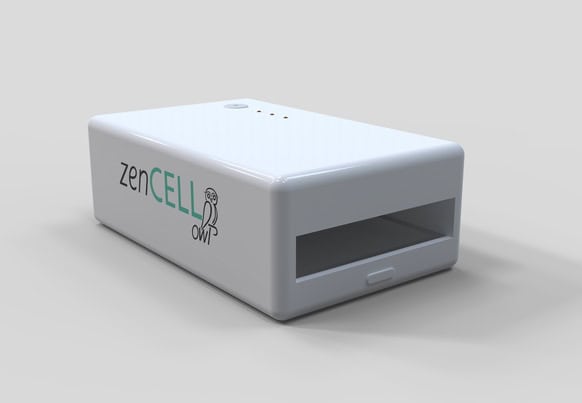
The scratch assay plate is ready immediately after light exposure. No washing or medium change is required – cells remain in their original medium. Place directly under your microscope or into the zenCELL owl and start live-cell monitoring.
Fully automated photochemical wound generation for our scratch assay plates – 96 identical wounds in under 60 seconds. Currently in prototype development.
Illuminate all wells simultaneously in one step using UV-A/visible light (~385–408 nm) illumination. Compatible with all ScratchMaker scratch assay plates – 24-well and 96-well. Early access on request.
 English English
 Deutsch
 Français
 Español
 简体中文
简体中文