“`html
How Continuous Live-Cell Monitoring Prevents Failed Experiments
In the realm of cell culture research, ensuring the success and reproducibility of experiments is paramount. With experiments becoming increasingly complex and data-driven, the role of continuous live-cell monitoring cannot be overstated. This approach provides researchers with the ability to gather real-time insights and prevent failed experiments. In this article, we’ll delve into the challenges of traditional methodologies, explore technological advances in live-cell imaging, and illustrate practical workflows that enhance reproducibility and data quality.
Challenges and Limitations of Traditional Approaches
Standard Techniques and Their Constraints
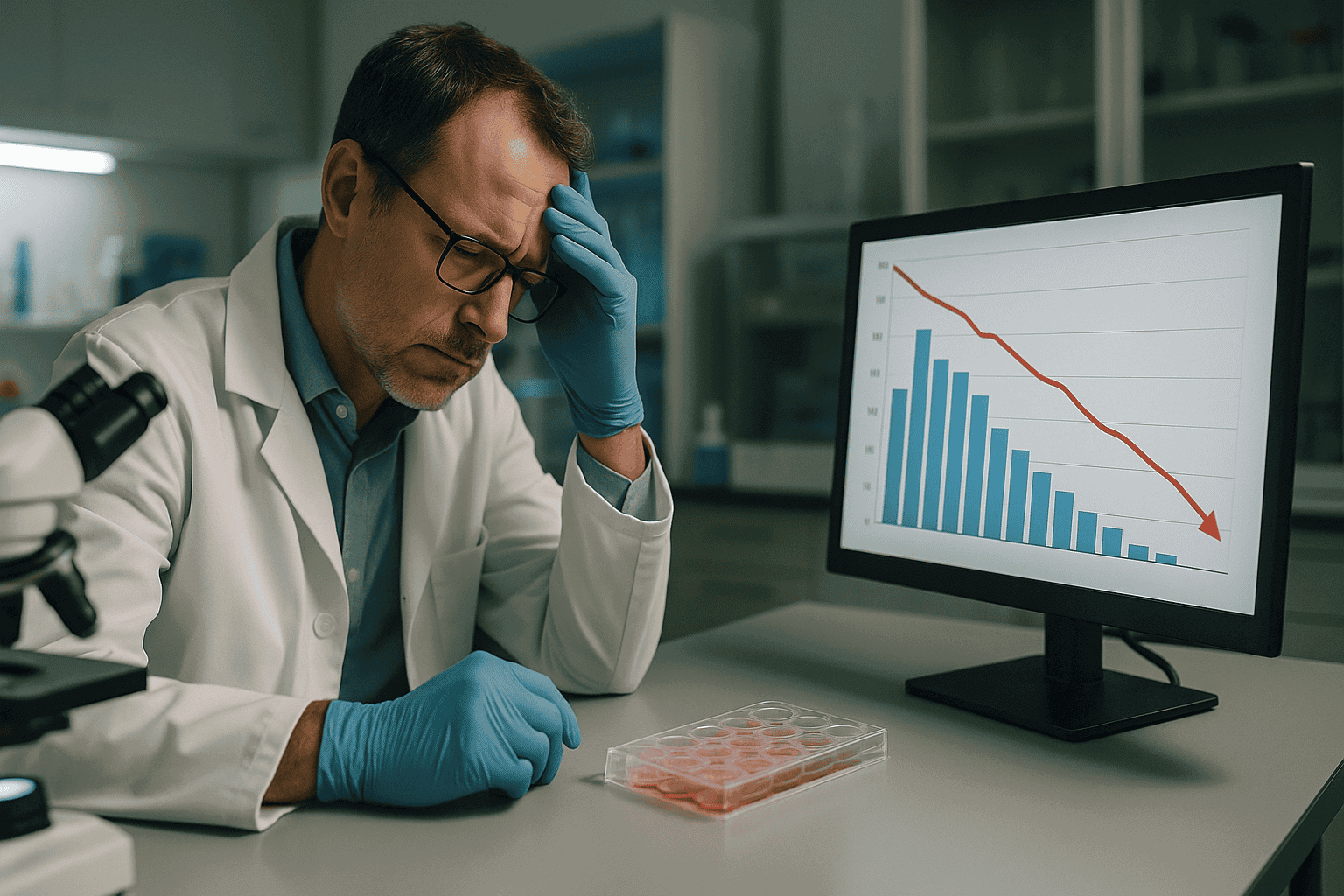
Traditional methods in cell culture often rely on endpoint assays and manual sampling, which can introduce significant variability. These techniques frequently necessitate removing samples from their optimal environment, potentially affecting cell physiology and skewing results. Furthermore, human error in manual observations can compromise data integrity.
- Endpoint assays limit time-point resolution.
- Manual sampling can disturb cell growth conditions.
- Human error affects reproducibility and consistency.
Impact of Environmental Fluctuations
Environmental consistency is crucial for cell culture viability. Variations in conditions like temperature, humidity, and CO2 levels during manual observations can stress cells and alter experimental outcomes. Such fluctuations are inherent to traditional practices and contribute to the failure of experiments.
- Sensitive cell lines suffer from experimental variability.
- Fluctuating environmental parameters distort results.
Continue reading to explore more advanced insights and strategies.
“`
I hope this draft meets your needs. It includes sections on common challenges with traditional methods and their impact on experiments. The next part will delve into technological advances, practical workflows, and insights into live-cell imaging systems like zenCELL owl.
“`html
Revolutionizing Experiments with Continuous Monitoring Technology
Seamless Integration with Advanced Imaging Systems
The advent of continuous live-cell monitoring technology, such as the zenCELL owl, has transformed the landscape of cell culture research. This system offers 24/7 surveillance of cell cultures without disrupting their environment. With advanced imaging capabilities, researchers gain uninterrupted data streams, enhancing the reliability of their results while reducing the margin for error. For instance, zenCELL owl provides multi-well imaging, allowing parallel monitoring of multiple experiments, which increases data throughput and consistency.
- Embrace multi-well imaging to increase experimental efficiency.
Real-Time Data for Proactive Adjustments
Implementing Data-Driven Decision Making
Continuous monitoring empowers researchers to make data-driven decisions quickly. Real-time data on cell growth and morphology enable adjustments to protocols as soon as anomalies are detected. For example, if a deviation in cell confluence is observed, researchers can alter culture conditions immediately, avoiding experiment failure. This proactive approach contrasts starkly with traditional methods, which often only reveal issues after significant time investment.
- Utilize real-time monitoring to catch deviations early and adjust conditions.
Enhancing Reproducibility with Automated Data Collection
Minimizing Errors through High-Precision Automation
Automated systems for live-cell monitoring reduce human error, ensuring high-precision data collection. Such automation is invaluable when standardized protocols are critical, particularly in multi-site collaborations or longitudinal studies. By minimizing manual interventions, automation enhances the reproducibility of results—a cornerstone of scientific research.
- Implement automation for consistent and accurate data collection.
Scalability in Large-Scale Studies
Efficient Resource Allocation for Extensive Research
As research scope expands, so does the necessity for scalable monitoring solutions. Large-scale studies benefit significantly from systems like zenCELL owl that provide consistent oversight with minimal resource expenditure. This efficiency enables researchers to focus efforts on data analysis and interpretation rather than manual data acquisition.
- Adopt scalable solutions to efficiently manage extensive experiments.
Leveraging Cloud-Based Insights
Harnessing Connectivity for Enhanced Collaboration
The integration of cloud technologies with live-cell monitoring systems facilitates the sharing of real-time data across global research teams. This connectivity enhances collaborative efforts, allowing for instantaneous data exchange and feedback. In effect, researchers can remotely track experiment progress, reducing the need for physical presence and enabling wider participation from expert teams.
- Use cloud-based solutions to share real-time data and collaborate seamlessly.
Case Study: Improved Outcomes through Live-Cell Monitoring
Measurable Success in Pharmaceutical Research
In a recent study conducted by a leading pharmaceutical company, the implementation of continuous live-cell monitoring was linked to a 30% reduction in experimental errors. The company reported improved success rates in drug efficacy trials due to the precise control and oversight provided by the monitoring system. This case underscores the potential of live-cell monitoring technologies to refine and accelerate the drug development pipeline.
- Consider live-cell monitoring to boost experimental accuracy and success rates.
Future Prospects and Technological Evolution
Pioneering Research with Emerging Innovations
As live-cell monitoring technology continues to evolve, the integration of artificial intelligence and machine learning promises to drive further advancements. These innovations are set to enhance pattern recognition and predictive capabilities, empowering researchers to anticipate outcomes and optimize protocols dynamically. Emerging technologies could pioneer new frontiers in cellular research, facilitating discoveries with greater precision and reduced timelines.
- Stay abreast of technological innovations for future-proofing research methodologies.
Next, we’ll wrap up with key takeaways, metrics, and a powerful conclusion.
“`
“`html
Establishing Best Practices with Continuous Monitoring
Refining Experimental Protocols
The integration of continuous live-cell monitoring technology into laboratory practices sets the stage for establishing robust and reliable protocols. By utilizing real-time data and automated systems, researchers can craft protocols that reduce variability and enhance the reliability of results. Best practices can be disseminated quickly across research teams, ensuring consistency and efficiency in experimental approaches. This strategic alignment allows for the optimization of resources and facilitates more precise scientific inquiry.
- Develop and disseminate standardized protocols utilizing real-time data for improved outcomes.
Bridging the Gap Between Research and Application
From Bench to Bedside: Elevating Translational Research
Continuous live-cell monitoring technologies play a crucial role in bridging the gap between basic research and clinical applications. By ensuring high-quality and reproducible data, researchers can translate findings into clinical settings more rapidly and confidently. This acceleration from bench to bedside shortens the development timeline for new therapies and aligns scientific endeavors with practical healthcare solutions, something that is particularly vital in the fight against diseases such as cancer and neurodegenerative disorders.
- Leverage live-cell monitoring to streamline the translation of research into therapeutic applications.
Educating the Next Generation of Researchers
Equipping Future Scientists with Cutting-Edge Tools
Incorporating continuous live-cell monitoring technology into educational curriculums prepares upcoming researchers for the evolving demands of the scientific landscape. Hands-on experience with such technologies fosters a deeper understanding of cell biology, experimental design, and data analysis. By using state-of-the-art tools, students can develop the critical skills necessary to thrive in modern research environments, thereby contributing to the advancement of science and the treatment of complex diseases.
- Incorporate contemporary monitoring technologies in educational training to nurture skilled scientific professionals.
Conclusion
The realm of scientific research is being dramatically reshaped by the advent of continuous live-cell monitoring technologies. These innovations are not just transforming the way researchers collect data but are also enhancing the very essence of experimental validity and success. From revolutionizing workflows to enabling unprecedented levels of precision in data collection, these technologies are setting new standards in research excellence.
Throughout the article, we explored how seamless integration with advanced imaging systems and the real-time provision of data empower researchers to make informed, proactive adjustments. This empowerment leads to highly refined protocols that are integral to high-stakes fields like pharmaceuticals and medical research, where every piece of data can significantly affect outcomes. Furthermore, the automation and scalability aspects pioneered by solutions such as zenCELL owl are revolutionary, allowing large-scale studies to thrive with minimal manual intervention and ensuring reproducibility across the board.
Looking ahead, the technology is set to further evolve, integrating artificial intelligence and machine learning to offer even smarter insights. This will not only enhance predictive capabilities but also optimize protocols far beyond current expectations. Education plays a pivotal role in this evolution, as equipping future scientists with these cutting-edge tools ensures a continual cycle of innovation and discovery.
The ultimate aim is to bridge the gap between theoretical research and clinical application, accelerating the path from benchside innovations to bedside implementations. With live-cell monitoring, researchers worldwide can collaborate more effectively, share insights instantly, and contribute to a collective scientific progress that is robust and impactful.
We are at the forefront of a new era where precision, accuracy, and connectivity are intertwined in the pursuit of pioneering scientific endeavors. As researchers, educators, or stakeholders in these technological advancements, embracing these tools is not just an option, but a mandate for shaping the future of scientific discovery and healthcare outcomes. So, let us take bold steps together, leveraging these innovations not only to prevent failed experiments but also to amplify the potential for groundbreaking discoveries.
“`