Sensitive Cells, Stable Results: Optimizing iPSC and Immune Cell Monitoring
“```html
Sensitive Cells, Stable Results: Optimizing iPSC and Immune Cell Monitoring
In recent years, the field of cell culture research has witnessed a significant surge in interest and innovation, particularly concerning induced pluripotent stem cells (iPSCs) and immune cells. These cell types hold tremendous potential for regenerative medicine, drug development, and understanding disease mechanisms. However, their sensitivity to environmental changes poses considerable challenges. Maintaining stable, reproducible results in iPSC and immune cell cultures is an ongoing quest for researchers. This article explores the common challenges, technological advancements, and innovative workflows designed to optimize monitoring and analysis of these sensitive cells.
Häufige Herausforderungen und Beschränkungen traditioneller Ansätze
Understanding the Sensitivity of iPSCs and Immune Cells
Both iPSCs and immune cells are remarkably sensitive to their environment. Variations in temperature, pH, nutrient supply, and other factors can cause inconsistencies in experimental results. This sensitivity often leads to challenges such as cell death, differentiation variability, and activation anomalies in immune cell cultures. Historic approaches to cell culture monitoring often relied on periodic manual inspection, which is labor-intensive and offers limited temporal resolution.
- Environmental fluctuations can compromise cell viability.
- Manual monitoring lacks consistency and specificity.
- Data from traditional methods are not continuously recorded.
Technologische Fortschritte und Automatisierungstrends
Introducing Live-Cell Imaging and Automation
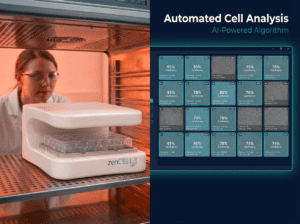
The advent of live-cell imaging technology offers a substantial improvement over traditional monitoring methods. By providing real-time visualization and analysis, live-cell imaging enables researchers to capture dynamic cellular processes with higher fidelity. Incorporating automation in conjunction with live-cell imaging decreases the potential for human error and variability. Systems like the zenCELL owl, a compact and incubator-compatible live-cell imaging system, exemplify this technological convergence, fostering enhanced reproducibility and continuous monitoring.
- Improved image quality and data accuracy through high-resolution imaging.
- Automation reduces manual intervention, minimizing error.
- Continuous data collection enhances understanding of dynamic cellular behavior.
Praktische Beispiele und Arbeitsabläufe unter Verwendung von Lebendzellbildgebung
Optimized Monitoring of Sensitive Cells
The implementation of live-cell imaging techniques brings transformative changes to workflows involving iPSCs and immune cells. Researchers can deploy real-time monitoring to assess cellular responses to different stimuli, track proliferation rates, and observe morphological changes. A well-configured system allows for comprehensive, hands-off analysis. For instance, with incubator-based systems, data collection doesn’t interrupt optimal culture conditions, thus maintaining the cells’ sensitive nature while ensuring data reliability.
- Real-time tracking of cell cycle and proliferation.
- Monitoring of immune cell activation and response.
- Dynamics of iPSC differentiation under various conditions.
Wie Inkubator-basierte Bildgebung die Reproduzierbarkeit und Datenqualität verbessert
Maintaining Optimal Culture Conditions
Incubator-based imaging systems merge the benefits of controlled environmental conditions with continuous data acquisition. The zenCELL owl system serves as an ideal example of how compact, precise imaging capabilities can be integrated within incubators. This setup ensures that the cells are not exposed to external disturbances, which substantiates consistent and reproducible data output. Moreover, these systems enhance experimental throughput while maintaining strict environmental controls.
- Reduced exposure to external contaminants.
- Stable imaging environment ensures reproducibility.
- Fosters scalability for high-throughput applications.
Lesen Sie weiter, um tiefere Einblicke und Strategien zu gewinnen.
“`
“```html
Integrating Artificial Intelligence with Cell Monitoring
AI’s Role in Enhancing Data Interpretation
The integration of artificial intelligence (AI) in cell monitoring is revolutionizing data interpretation and decision-making processes. AI algorithms can analyze complex imaging data sets far more efficiently than traditional methods, extracting intricate patterns and correlations that may not be immediately evident to human observers. For instance, machine learning models can predict outcomes based on historical data, allowing researchers to anticipate cellular behaviors and adjust experimental conditions in real-time. This capability significantly improves the accuracy and reliability of iPSC and immune cell studies.
- Implement AI tools to identify subtle changes in cell morphology.
- Use predictive analytics to enhance experimental design efficiency.
Standardizing Protocols for Consistency
Establishing Unified Methodologies
To address variability in cell culture experiments, standardizing protocols is crucial. By implementing unified methodologies, researchers can compare data across different studies and labs more reliably. These protocols should cover every stage of the experimental process, from cell seeding and maintenance to post-experiment analysis. Through rigorous standardization, discrepancies caused by procedure deviations are minimized, thereby enhancing the reproducibility of results.
- Develop comprehensive SOPs (Standard Operating Procedures) for cell culture.
- Use standardized cell lines to ensure consistency across experiments.
Leveraging Cloud-Based Data Management
Facilitating Collaboration and Data Security
Cloud-based platforms provide a secure, accessible means of managing and sharing cell culture data. These platforms allow for seamless collaboration among research teams and institutions, facilitating real-time data updates and collective data analysis. Cloud storage ensures that valuable experimental data is preserved and protected against local hardware failures. Moreover, integrating cloud solutions with AI analytics further enhances the ability to perform meta-analyses and gain insights across larger data sets.
- Adopt cloud platforms to enable global research collaborations.
- Ensure compliance with data security regulations for sensitive data.
Enhancing iPSC Differentiation Protocols
Precision Control of Differentiation Pathways
Refining the differentiation protocols for iPSCs is key to generating specific cell types with high fidelity. Advanced techniques, such as three-dimensional (3D) culture systems and microfluidics, enhance the control researchers have over differentiation conditions. These methods simulate in vivo-like environments, yielding more accurate modeling of cellular processes. As a result, the efficiency and predictability of iPSC differentiation increase, which is invaluable for applications in disease modeling and regenerative therapies.
- Utilize 3D culture systems to better mimic physiological conditions.
- Integrate microfluidic devices for controlled media distribution.
Optimizing Immune Cell Function Through Genetic Engineering
Genetic Tools Enhancing Research
Genetic engineering advancements, including CRISPR/Cas9, have opened new avenues for optimizing immune cell research. By modifying specific genes, researchers can influence immune cell function, such as enhancing T-cell receptor specificity or reducing the expression of inhibitory receptors. These modifications hold potential for developing powerful immunotherapies and creating immune cell models that more accurately reflect human health and disease states.
- Implement CRISPR techniques to explore gene function in immune cells.
- Adapt genetic modifications to refine therapeutic strategies.
Harnessing High-Throughput Screening Tools
Increasing Experimental Throughput and Data Richness
High-throughput screening (HTS) platforms are indispensable in today’s fast-paced research environment. They enable the rapid assessment of cellular responses to numerous compounds, conditions, or genetic modifications. By integrating HTS with live-cell imaging and automated systems, researchers can gather comprehensive datasets necessary for robust statistical analysis. This approach dramatically accelerates the pace of discovery, especially in drug development and personalized medicine.
- Employ HTS platforms for efficient compound screening.
- Combine HTS with live-cell analysis for dynamic insights.
Developing Scalable Cell Manufacturing Systems
Bridging the Lab to Market Gap
To meet the growing demand for cell-based therapies, scalable manufacturing solutions are essential. Bioreactor technology and modular manufacturing systems offer paths to scale up the production of iPSCs and immune cells. These systems ensure that large-scale production maintains the quality and consistency observed at the research level. Scalable solutions also reduce costs, supporting broader accessibility to breakthrough therapy options.
- Integrate bioreactors for large-scale cell production.
- Ensure compliance with Good Manufacturing Practice (GMP) standards.
Im Anschluss fassen wir die wichtigsten Erkenntnisse, Kennzahlen und eine wirkungsvolle Schlussfolgerung zusammen.
“`
“```html
Integrating Automation in Cell Culture
Streamlining Workflow and Reducing Human Error
Automation in cell culture processes is a game changer in reducing human error and increasing throughput. By implementing robotic systems and automated platforms for cell handling, researchers can ensure a more consistent and repeatable process. This level of consistency is critical in reducing variability and ensuring the reliability of results across multiple experiments. Furthermore, automation frees scientists to focus on data analysis and experimental design, enhancing productivity and innovation.
- Adopt robotic systems for routine cell culture tasks.
- Utilize automated imaging systems for real-time monitoring.
Bioinformatics in Cell Research
Maximizing Data Utility Through Advanced Computational Tools
With vast amounts of data generated from cell research, bioinformatics tools are essential in deriving meaningful insights. These tools facilitate the integration and interpretation of complex datasets, supporting hypothesis generation and validation. Advanced computational models and software can analyze genetic, proteomic, and metabolic data, enabling researchers to uncover new patterns and biological signatures. Such capabilities are crucial in advancing personalized medicine and understanding cellular dynamics at a deeper level.
- Incorporate bioinformatics software for comprehensive data analysis.
- Leverage computational models to predict cellular responses.
Fostering Interdisciplinary Collaboration
Uniting Diverse Expertise for Holistic Approaches
The complexity of cell monitoring solutions necessitates interdisciplinary collaboration. By bringing together experts from biology, engineering, data science, and clinical research, innovative solutions and breakthroughs become achievable. Collaboration fosters a holistic understanding of cellular processes, enabling the translation of laboratory findings into practical applications. This multidisciplinary approach not only accelerates discoveries but also ensures that cell-based technologies are primed for real-world implementation.
- Promote collaboration across scientific disciplines and industries.
- Engage with interdisciplinary research networks and consortia.
Schlussfolgerung
The landscape of iPSC and immune cell monitoring is rapidly evolving, driven by the integration of advanced technologies and innovative methodologies. Throughout this article, we have explored various strategies, such as artificial intelligence, standardized protocols, cloud-based data management, and scalable manufacturing, that collectively contribute to the optimization of iPSC and immune cell research. Key takeaways include the importance of adopting automation to streamline workflows, leveraging bioinformatics for comprehensive data analysis, and fostering interdisciplinary collaborations to unite diverse expertise.
These advances underscore the growing sophistication and potential of cell-based research to impact fields such as regenerative medicine, drug discovery, and disease modeling. By integrating these methods and tools, researchers can enhance the precision, efficiency, and reliability of experimental outcomes, ultimately contributing to the development of groundbreaking therapies and applications.
As we continue to embrace these cutting-edge technologies and collaborative efforts, the future of cell monitoring looks promising. Researchers, practitioners, and industry stakeholders must remain committed to staying informed and adaptive to innovations. By doing so, they will be well-equipped to tackle ongoing challenges and seize emerging opportunities in cellular research. We invite you to join this exciting journey to advance knowledge, foster innovation, and transform the future of medicine.
Let this article inspire you to think beyond traditional boundaries, explore novel solutions, and collaborate broadly to shape a healthier, more scientifically advanced world. Together, we can unlock the full potential of iPSC and immune cell monitoring, advancing science and medicine to new heights.
“`