
Why analytical specifications alone do not guarantee functional performance
“```html
Why Analytical Specifications Alone Do Not Guarantee Functional Performance
The Role of Analytical Specifications
Establishing Baseline Quality
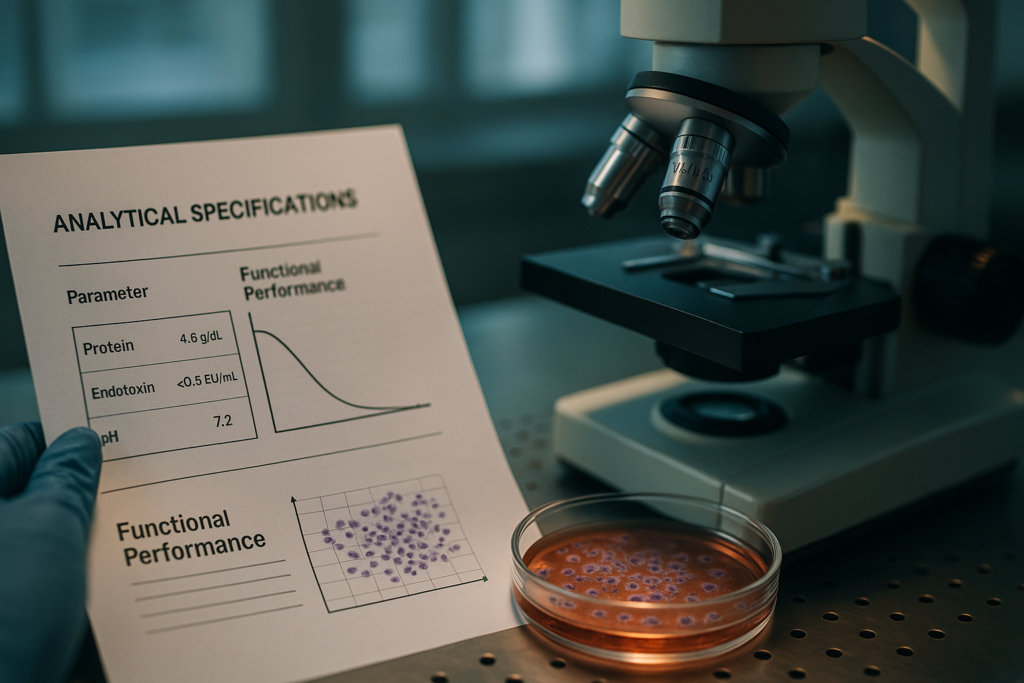
Analytical specifications serve as a foundation for assessing the quality of biological materials like fetal bovine serum (FBS) or human-derived sera, detailing quantitative parameters such as protein content, endotoxin levels, and pH. These specifications help ensure that batches meet minimum quality standards required for particular applications.
- Establishes consistency across production lots
- Facilitates comparison between suppliers
Lesen Sie weiter, um tiefere Einblicke und Strategien zu gewinnen.
The Gap Between Specifications and Reality
Understanding Functional Performance
Despite their utility, analytical specifications often fall short in predicting the actual functional performance of biological materials in cell culture systems. Variability at the molecular level, including factors like biological activity and lot-to-lot variability, can have significant impacts on experimental outcomes, which are not captured in standard analytical tests.
- Variability in biological activity affects cell behavior
- Lot-to-lot differences can lead to inconsistent results
Lesen Sie weiter, um tiefere Einblicke und Strategien zu gewinnen.
Biological Variability and Its Implications
The Influence of Donor and Material Variability
In human-derived biologicals, variability in donor sources can greatly impact serum or plasma functional performance. This variability necessitates stringent ethical and regulatory scrutiny, especially when used for applications like primary cell cultures or immunological studies.
- Ethical sourcing poses regulatory challenges
- Batch-specific documentation is critical for traceability
Lesen Sie weiter, um tiefere Einblicke und Strategien zu gewinnen.
Ensuring Reproducibility in Cell Culture
Integrating Advanced Monitoring Systems
The zenCELL owl, an incubator-compatible live-cell imaging system, exemplifies how continuous monitoring can aid in understanding serum or reagent effects on cell cultures. By documenting cell behavior in real-time, researchers can better ensure reproducibility and validity across multiple experimental runs.
- Continuous monitoring enhances understanding of culture conditions
- Improves reproducibility and reduces biological variability
Lesen Sie weiter, um tiefere Einblicke und Strategien zu gewinnen.
Schlussfolgerung
Bridging the Gap Between Specifications and Functional Use
While analytical specifications are crucial for ensuring baseline quality, they cannot singularly predict the functional performance of biological materials in cell culture or bioprocessing environments. By considering additional factors such as molecular variability, ethical sourcing, and continuous monitoring, researchers can achieve a more reliable and comprehensive understanding of their experimental materials, ultimately fostering more consistent and credible scientific outcomes.
“`
“```html
Optimizing Serum Performance with Supplemented Additives
Enhancing Culture Environment Through Supplementation
Biological materials such as fetal bovine serum (FBS) can benefit greatly from strategically supplemented additives. Supplementation aims to mitigate lot-to-lot variability and optimize the functional performance of sera by enhancing deficient nutrients or promoting specific cellular activities. The use of additives like growth factors, hormones, and antioxidants can significantly bolster the culture environment, leading to more consistent experimental results.
- Identify specific deficiencies in the culture medium before supplementation
- Customize additive blends based on the specific cellular application
Leveraging Single Cell Technologies
Dissecting Variability at the Single-Cell Level
Single-cell RNA sequencing and other single-cell technologies are revolutionizing our understanding of molecular variability within serum batches. By isolating and analyzing individual cells, researchers can discern how specific batches impact gene expression patterns, cell population heterogeneity, and dynamic cellular responses. This approach provides insights into the fine-scale effects of sera that bulk measurements may obscure.
- Utilize single-cell analysis for fine-grained understanding of variability
- Employ findings to refine culture conditions and enhance reproducibility
Standards and Harmonization in Biological Material Sourcing
Establishing Global Benchmarks for Serum Quality
Variability stemming from geopolitical differences in sourcing standards can influence bioprocessing outcomes significantly. International organizations and regulatory bodies, such as the International Serum Industry Association (ISIA), advocate for harmonized standards that ensure ethical practice and consistency across different regions. Such standards encompass ethical sourcing, processing methods, and documentation rigor, which are vital for maintaining global serum quality.
- Engage in collaborative networks to share best practices across borders
- Prioritize suppliers that adhere to recognized international standards
Real-Time Quality Control with Integrated Sensor Technologies
Automating Consistency Checks Throughout Culture Processes
Advanced sensor technologies integrated into bioreactors and cell culture systems provide real-time monitoring and feedback on critical parameters such as pH, oxygen levels, and nutrient concentration. This continuous stream of data enables immediate quality control interventions, allowing for on-the-fly adjustments that can prevent deviations in culture conditions and enhance serum performance.
- Implement sensor feedback loops to maintain optimal conditions
- Use data analytics to predict and mitigate potential issues proactively
Case Study: High-Throughput Screening with Variable Serum Sources
Empirical Insights into Serum Source Variability
In a collaborative study conducted by a consortium of pharmaceutical companies, high-throughput screening of various serum sources was performed to elucidate the impact on drug discovery pipelines. The study revealed that inconsistencies in serum batches led to variable cell viabilities and drug response profiles, underscoring the need for comprehensive screening protocols and supplier qualification processes.
- Incorporate high-throughput assays to screen serums for specific applications
- Use findings to refine supplier selection and serum sourcing strategies
Frameworks for Ethical and Sustainable Serum Sourcing
Balancing Ethical Considerations with Scientific Demands
Sustainability and ethical sourcing are becoming increasingly prioritized in research environments. Transitioning to alternative sources like human platelet lysate or chemically defined media can alleviate some ethical concerns associated with fetal bovine serum collection. The implementation of frameworks that emphasize the humane treatment of donor animals and transparency in the supply chain can also elevate ethical standards in serum sourcing.
- Evaluate alternative sources for sustainable research practices
- Engage with suppliers committed to ethical sourcing certifications
Customizing Reagent Protocols for Specialized Applications
Tailoring Reagents for Unique Experimental Needs
In highly specialized applications such as stem cell research or immunotherapy, customizing reagent protocols is critical to achieving optimal outcomes. This requires an in-depth understanding of the specific cellular and molecular pathways involved and how different reagent formulations can modulate these pathways. Tailoring reagent protocols can significantly contribute to reducing variability and improving the predictability of experimental results.
- Collaborate with reagent specialists to develop tailored protocols
- Conduct pilot studies to optimize protocol effectiveness before broad application
Im Anschluss fassen wir die wichtigsten Erkenntnisse, Kennzahlen und eine wirkungsvolle Schlussfolgerung zusammen.
“`
“```html
Integrating Cross-Disciplinary Approaches in Serum Research
Fostering Innovation through Collaborative Efforts
Advancing serum performance in biological research benefits tremendously from cross-disciplinary collaboration among fields such as bioinformatics, materials science, and biotechnology. These partnerships introduce innovative methodologies and tools that can profoundly enhance the predictive power and efficiency of serum applications. By drawing on diverse expertise, laboratories can drive forward new paradigms in cellular research, ultimately leading to breakthroughs that were once inconceivable.
- Leverage bioinformatics for predictive modeling and data-driven insights
- Work with materials scientists to develop novel biocompatible additives
Emphasizing Data Transparency in Experimental Protocols
Building Trust and Reproducibility in Research Communities
Data transparency is crucial to ensuring trust and reproducibility within the scientific community. Detailed documentation of serum characteristics, experimental conditions, and resultant data enables researchers to better interpret outcomes and build upon existing studies. Open data initiatives and shared databases that catalog such information promote collaborative progress by providing a reliable resource for comparative analysis and hypothesis development.
- Adopt robust data management systems to streamline documentation
- Participate in open data platforms to foster collective advancements
Future Directions in Serum Optimization
Charting a Course Towards Greater Efficacy and Innovation
The future of serum optimization is poised for exciting developments as technology advances and ethical considerations become integral to research processes. Exploration of novel culturing systems, artificial intelligence-driven prediction models, and sustainability-focused practices will define the next frontier. These innovations promise to mitigate current limitations and harness the untapped potential of biological materials for transformative therapeutics and discoveries.
- Invest in AI technologies for optimizing serum preparation and use
- Explore sustainable avenues for reducing environmental impact
Schlussfolgerung
In the ever-evolving landscape of biological research, optimizing serum performance is more than adjusting analytical specifications – it is about embracing a holistic approach that considers scientific, ethical, and technological dimensions. Through strategic supplementation, leveraging single-cell technologies, and adhering to global sourcing standards, researchers can significantly reduce variability and enhance the consistency of their experimental outcomes.
The value and relevance of these efforts are undeniable, as they lay the groundwork for a more robust and reliable scientific inquiry. By engaging in cross-disciplinary collaborations, prioritizing data transparency, and adhering to ethical sourcing practices, the scientific community can address current challenges and push the boundaries of what is possible.
In closing, let us remember that innovation is not born in isolation; it thrives within a network of shared knowledge, ethical responsibility, and technological prowess. Whether you’re a researcher, practitioner, or stakeholder in the scientific ecosystem, your commitment to these principles is crucial. Now is the time to take action: prioritize equitable sourcing, invest in cutting-edge technologies, and foster an environment of transparency and cooperation.
Embrace this transformative journey towards greater efficacy and innovation – the future of serum optimization is bright, and together, we can shape the next era of groundbreaking discoveries.
“`