Why analytical specifications alone do not guarantee functional performance
“```html
Why Analytical Specifications Alone Do Not Guarantee Functional Performance
Understanding Analytical Specifications
The Role of Quality Parameters
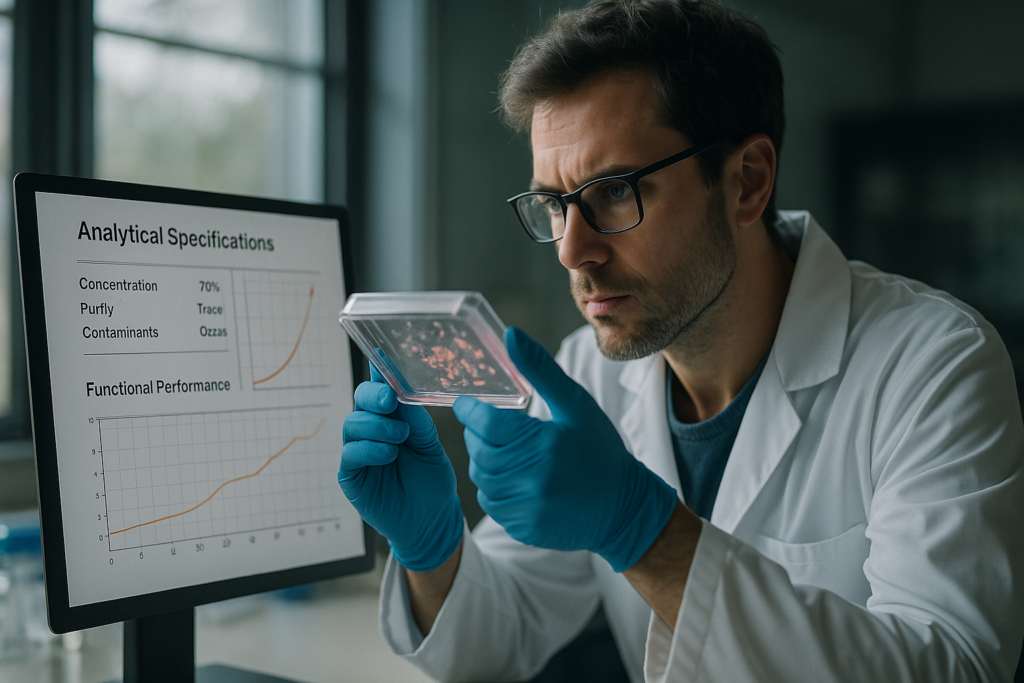
Analytical specifications often include quality parameters such as purity, concentration, potency, and absence of contaminants. These metrics are essential in characterizing biological materials like fetal bovine serum (FBS) or human plasma. Despite their importance, these parameters provide limited insights into the functional utility of these materials in specific experimental contexts.
- Analytical specifications focus on quantifiable properties.
- Functional performance depends on how these properties interact in biological systems.
Lesen Sie weiter, um tiefere Einblicke und Strategien zu gewinnen.
The Role of Biological Variability
Lot-to-Lot Variability
Animal-derived biologicals, including FBS, exhibit lot-to-lot variability, which can profoundly affect experimental consistency. Factors such as geographical origin and processing methods contribute to this variability, highlighting that meeting analytical specifications does not equate to predictable biological outcomes.
- Lot-to-lot variability can lead to inconsistent results.
- Understanding variability is key to predicting functional performance.
Lesen Sie weiter, um tiefere Einblicke und Strategien zu gewinnen.
Functional Performance: Beyond Specifications
Biological Function Evaluation
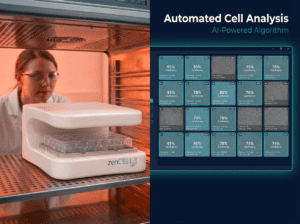
Assessing biological function involves understanding how reagents interact with cellular systems over time. This includes evaluating cytokine activity and influence on cell viability and proliferation. Tools such as live-cell imaging systems, like the zenCELL owl, enable continuous monitoring of these interactions, offering insights beyond static analytical data.
- Functional tests provide real-world application insights.
- Live-cell imaging enhances understanding of serum or reagent effects.
Lesen Sie weiter, um tiefere Einblicke und Strategien zu gewinnen.
Documentation and Traceability
Importance of Detailed Record-Keeping
Documentation and traceability support reproducibility and accountability in scientific research. Maintaining detailed records of batch testing and sourcing processes is vital for correlating analytical data with functional outcomes. This practice reduces risks associated with variability and ensures compliance with regulatory standards.
- Traceability links analytical specifications to functional outcomes.
- Documentation supports research integrity and reproducibility.
Lesen Sie weiter, um tiefere Einblicke und Strategien zu gewinnen.
Adopting Complementary Approaches
Integrative Strategies
Incorporating a balance of analytical and functional assessments leads to comprehensive evaluations of biological materials. Researchers should consider integrating standardized functional assays with quality parameter assessments to ensure materials meet both analytical and application-specific needs.
- Integrating analytical and functional assessments offers a holistic approach.
- Standardized functional assays complement analytical specifications.
Lesen Sie weiter, um tiefere Einblicke und Strategien zu gewinnen.
“`
“```html
Advancing Functional Assays: Innovative Techniques
Diversifying Testing Approaches
Introducing advanced functional assays into the evaluation process can significantly enhance the understanding of biological materials’ performance. Techniques such as quantitative PCR, fluorescence-activated cell sorting (FACS), and ELISA (enzyme-linked immunosorbent assay) are now being used to provide more nuanced insights. These methods allow researchers to quantify gene expression, analyze cell populations, and detect specific proteins or antigens effectively, thus offering a better comprehension of a reagent’s functional impact in various biological contexts.
- Diversify testing with advanced assays like ELISA and FACS to gather comprehensive data.
Real-World Application: Case Studies in Bioprocessing
Benchmarking Performance in Industry
A leading biopharmaceutical company adopted a dual-approach by pairing traditional analytical specifications with a suite of functional assays to improve the consistency and reliability of their cell culture media. The company observed a 20% increase in reproducibility across different production batches. By aligning analytical data with functional outcomes, the company was able to reduce the variability that previously affected yield and quality, thus setting a new industry benchmark for quality assurance.
- Use case studies as reference points for integrating analytical and functional evaluations.
Quality Control Enhancements
From Static to Dynamic Processes
Quality control (QC) processes must evolve from static evaluations based solely on predetermined specifications to dynamic, ongoing assessments. Implementing real-time monitoring technologies like the zenCELL owl allows scientists to observe cellular responses as they happen, offering immediate feedback and facilitating quicker adjustments to experimental conditions. This dynamic approach can prevent costly delays and optimize both product development and quality.
- Implement real-time monitoring to adapt and refine quality control strategies dynamically.
Leveraging Automation for Increased Efficiency
Streamlining Functional Testing
Automated systems offer the potential to systematically assess both analytical and functional parameters without introducing human error. For example, robotic systems can automate repetitive testing processes and data collection, ensuring consistency while freeing up valuable human resources for more complex problem-solving tasks. Companies utilizing automation have reported not only reductions in labor costs but also improved data accuracy and timeliness in reporting test outcomes.
- Adopt automation to enhance consistency, efficiency, and data accuracy in testing.
Customized Protocols for Specific Needs
Tailoring Evaluations to Research Fields
Different fields within life sciences may require specialized evaluation protocols. For instance, immunology research often benefits from custom assays tailored to monitor specific immune responses or the efficacy of a new therapeutic. Developing proprietary protocols that address unique aspects of your research can lead to more meaningful and actionable insights, thus advancing both understanding and innovation.
- Customize evaluation protocols to target specific research needs and objectives.
Effective Data Integration for Insightful Analysis
Combining Multimodal Data
The integration of analytical data with functional performance metrics provides a multidimensional view of biological material outcomes. Data analytics platforms that combine these disparate data points help researchers to identify correlations and patterns that would otherwise remain hidden. By leveraging big data analytics, laboratories can enhance decision-making, improve research outcomes, and accelerate the path to discovery.
- Utilize data analytics tools to integrate and interpret analytical and functional datasets.
Training and Development in Advanced Assessment Techniques
Building Expertise for Competitive Advantage
Investing in training and knowledge development in advanced testing techniques is essential for staying ahead in a competitive marketplace. Training programs that focus on the latest functional assays and regulatory compliance can empower scientists and technicians with the skills necessary to implement innovative testing methods effectively. This commitment to continual learning fosters a culture of excellence and enhances organizational capability.
- Invest in ongoing training to keep teams updated on advanced testing methodologies and compliance.
Im Anschluss fassen wir die wichtigsten Erkenntnisse, Kennzahlen und eine wirkungsvolle Schlussfolgerung zusammen.
“`
“```html
Innovative Collaboration for Enhanced Outcomes
Synergizing Multidisciplinary Efforts
Collaboration between various disciplines within life sciences can accelerate the development of functional assays and their application in research and industry. By integrating insights from molecular biology, bioinformatics, and bioengineering, teams can achieve a more holistic view of how reagents perform in complex biological systems. Such multidisciplinary efforts enhance innovation and lead to tailored solutions that address specific research challenges.
- Promote interdisciplinary collaborations to drive innovation in functional assay development.
Future Prospects in Functional Assay Development
Continual Evolution and Adaptation
The field of functional assay development is poised for continual growth with emerging technologies and methodologies. As new tools such as CRISPR and single-cell sequencing become more prevalent, they present opportunities to refine functional assays for specific end goals. Embracing these advancements will allow researchers to keep pace with rapidly evolving scientific inquiries, thereby ensuring their research remains at the cutting edge.
- Stay informed about emerging technologies that can refine and enhance functional assays.
Schlussfolgerung
In navigating the complexities of biological evaluation, the limitations of relying solely on analytical specifications are becoming increasingly apparent. Throughout this exploration, we have seen how incorporating advanced functional assays and dynamic quality control measures offers a vast improvement in understanding and predicting the performance of biological reagents. Furthermore, the move towards integrating real-time monitoring and automated processes has proven to foster both efficiency and precision in data collection and interpretation.
The inclusion of multidisciplinary collaboration highlights the importance of combining diverse scientific perspectives to tackle challenging research questions. Customized protocols targeting specific research needs have emerged as a potential game-changer, bringing forth a more nuanced understanding of biological systems. Meanwhile, effective data integration and training programs ensure that laboratories not only enhance their operational capacity but also sustain a culture of continuous improvement and excellence.
The ever-evolving landscape of functional assay development mandates a proactive and forward-thinking approach. As researchers and stakeholders within the life sciences community, embracing technological advancements such as CRISPR-based assays and big data analytics will enable us to break new ground in precision medicine, drug discovery, and beyond.
Recognizing the challenges and opportunities outlined in this discussion, it’s crucial for organizations to be nimble, adaptable, and innovative. By building robust, inter-disciplinary teams and investing in cutting-edge technologies and training, organizations can position themselves for sustained success and competitive advantage.
In essence, the journey towards mastering functional performance is not merely about refining techniques; it’s about cultivating a strategic vision that aligns analytical rigor with functional insight. Let’s invest in smarter, more integrated strategies today to unlock the potential of tomorrow’s scientific breakthroughs. Let’s build a future where every assay is as insightful as it is precise. The time to act is now, and the possibilities are endless. Engage in this revolution of functional assessment, and witness the transformation in scientific understanding unfold.
“`