“```html
Advanced Scratch Assays: Measuring Interaction, Not Just Distance
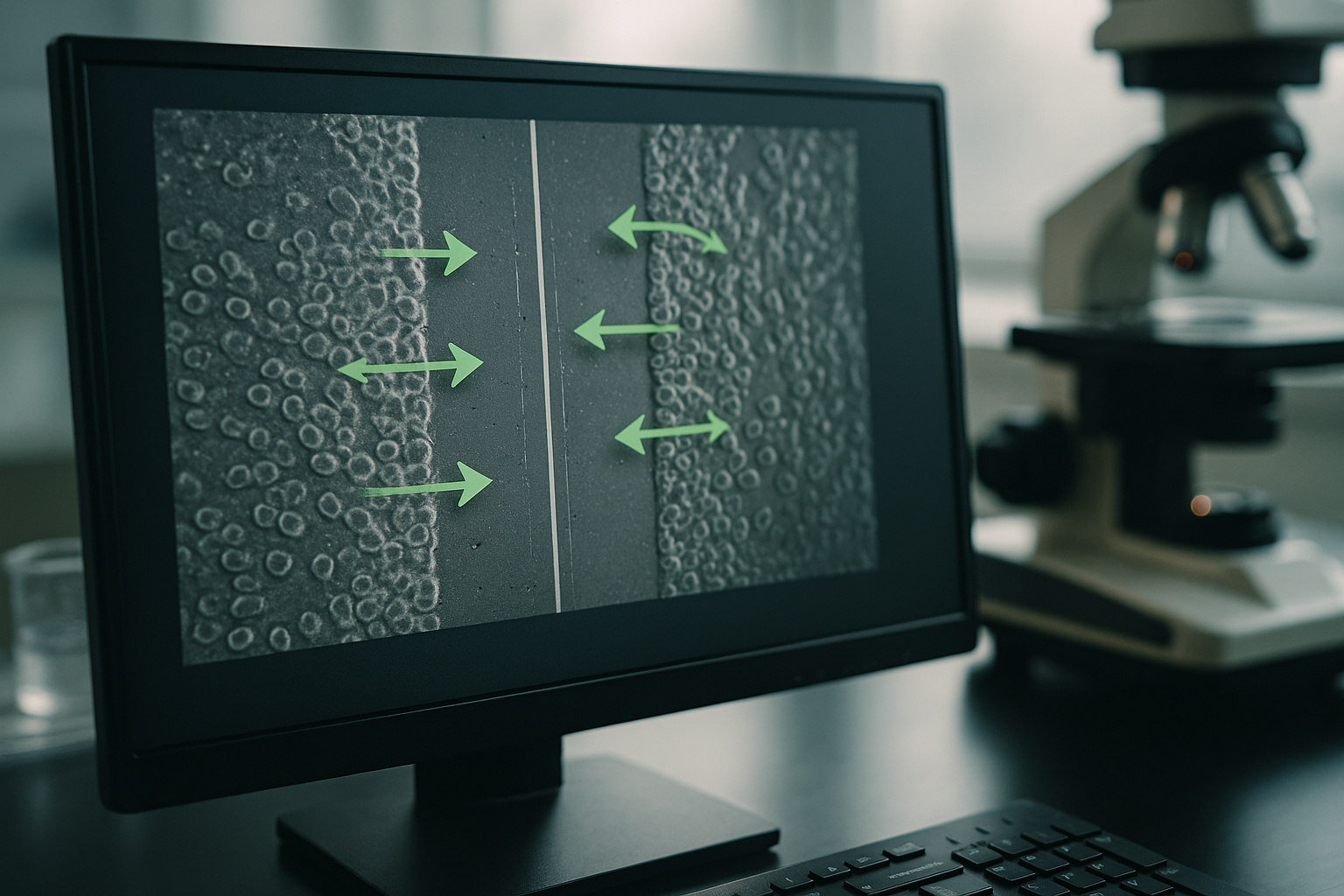
In the ever-evolving field of cell culture research, the ability to accurately assess cellular behaviors is crucial. Scratch assays, traditionally used to measure cell migration and wound healing processes, are undergoing significant refinement. New methodologies focus not just on the distance traveled by cells, but on their interactions and dynamic behaviors. This article explores these advanced scratch assays, examining why they are of pivotal importance in modern research, the challenges associated with traditional methods, and how innovations in technology are addressing these issues. Readers will gain an in-depth understanding of cutting-edge practices that enhance repeatability and precision in cell-based assays.
The Relevance of Advanced Scratch Assays in Modern Research
Beyond Measuring Distance
Scratch assays have long been a staple in cellular biology, particularly for studying cellular migration and wound healing. However, the complexity of cellular interactions goes beyond mere physical movement. Advanced scratch assays aim to capture not only the distance but also the myriad interactions as cells respond to environmental stimuli, signaling cues, and neighboring cells. Understanding these interactions is essential for applications in cancer research, developmental biology, and drug discovery. Enabling researchers to observe these interactions provides deeper insights into cellular mechanisms and potential therapeutic targets.
- Captures complex cellular interactions
- Provides insights relevant to cancer and drug research
Häufige Herausforderungen und Beschränkungen traditioneller Ansätze
Limitations in Traditional Scratch Assays
Traditional scratch assays have been indispensable but come with inherent limitations. Manual methodologies are labor-intensive and often suffer from low reproducibility due to human error and inconsistencies in experimental conditions. Additionally, these traditional approaches focus primarily on measuring the distance filled by cells post-scratch, scarcely capturing complex cell-cell or cell-substrate interactions.
- Manual methodologies prone to error
- Focus on distance over interactions< /li>
Technologische Fortschritte und Automatisierungstrends
With the advent of automated live-cell imaging systems, the landscape of scratch assays is changing. Technologies like the zenCELL owl offer automation that minimizes human error, providing continuous, real-time monitoring of cell behavior. These advances facilitate the capture of qualitative and quantitative data crucial for high-resolution analysis of cellular dynamics. Automation trends are rapidly driving the integration of machine learning algorithms to analyze and predict cell behavior more effectively, further enriching the assay’s interpretative power.
- Automation reduces human error
- Real-time monitoring enhances data quality
Lesen Sie weiter, um tiefere Einblicke und Strategien zu gewinnen.
“`
“```html
Innovative Tools Enhancing Scratch Assay Applications
Empowering Accuracy and Efficiency
The introduction of sophisticated tools and software has significantly enhanced the utility of scratch assays, enabling researchers to push the boundaries of cellular behavior analysis. Technologies such as high-content imaging systems and automated analysis software have become pivotal. These innovations offer high throughput and high-resolution data to researchers, allowing for rapid processing and detailed examination of thousands of cells simultaneously. For instance, the InCell Analyzer 6500HS leverages its robust imaging capabilities and user-friendly interface to streamline workflows and optimize data analysis in cellular assays. This ensures that researchers access precise quantitative insights, which are crucial for exploring intricate cellular phenomena.
- Invest in cutting-edge imaging systems for better precision
- Utilize user-friendly software to streamline workflows
Streamlining Analysis with Advanced Analytics
Harnessing Computational Power
Advanced scratch assays benefit immensely from the integration of computational analysis techniques. Machine learning (ML) models are being increasingly used to analyze vast datasets generated by these assays. Such models can detect patterns and predict cellular responses under various conditions. Researchers at the University of Texas recently implemented ML-driven analyses in their scratch assays, leading to breakthroughs in understanding tumor cell migration in real-time. These findings are crucial as they illuminate pathways for potential therapeutic interventions.
- Implement machine learning for predictive analytics in assays
- Recognize patterns that aid in drawing actionable conclusions
Optimizing Experimental Design for Robust Results
Enhancing Reproducibility and Validity
Designing robust experimental protocols is fundamental to obtaining valid results in advanced scratch assays. Rigorous experimental design exceeds mere scratch formation by incorporating control conditions, replicates, and standardized cell handling practices. The Cell Migration Consortium advises on the adherence to established protocols and standard operating procedures to maximize reproducibility and minimize variability. Initiating correct experimental conditions ensures reliability and accuracy, significantly enhancing the significance of the results obtained.
- Standardize conditions to minimize variability
- Employ controls and replicate experiments for reliability
Integrating Multimodal Approaches for Comprehensive Insights
Complementary Techniques for Holistic Understanding
One of the most effective ways to enhance the insights offered by scratch assays is by integrating them with other analytical techniques. Combining scratch assays with fluorescence microscopy or mass spectrometry provides multidimensional data on cellular behavior and molecular dynamics. A study conducted by Bayer integrated scraping and imaging with proteomics to identify novel proteins involved in cell motility. This interdisciplinary approach allows for a nuanced understanding of cellular dynamics that would not be achievable with scratch assays alone.
- Combine assays with other analytical techniques for deeper insights
- Synergize data from multiple modalities to enhance reliability
Case Study: Innovations in Cancer Research
Pioneering Approaches to Combat Tumor Progression
In a pioneering study, researchers at the Dana-Farber Cancer Institute utilized advanced scratch assay techniques to examine the impact of specific gene inhibitors on breast cancer cell migration. By adopting automated systems, they performed high-throughput screening and detected subtle changes in cellular interactions under drug treatment. The study yielded critical insights into the molecular pathways involved in limiting tumor growth, facilitating the development of targeted therapeutic strategies that offer promising prognoses for cancer patients.
- Explore targeted assays for groundbreaking research advances
- Use case studies to inform and enhance pharmaceutical development
Therapeutic Implications and Future Opportunities
Translational Applications of Scratch Assay Innovations
Scratch assays continue to present unprecedented opportunities in therapeutic research, especially with ongoing innovations in assay automation and analytics. These assays are critical in validating therapeutic strategies for conditions like fibrosis, cancer, and numerous chronic diseases. The Translational Medicine Society reports a surge in pharmaceutical companies leveraging advanced scratch assays for drug screening and efficacy testing. As these tools evolve, their potential to transform treatment paradigms and patient outcomes becomes increasingly pronounced.
- Apply findings to enhance therapeutic interventions
- Partner with industry to translate research into clinical applications
Im Anschluss fassen wir die wichtigsten Erkenntnisse, Kennzahlen und eine wirkungsvolle Schlussfolgerung zusammen.
“`
“```html
Collaborations for Cross-Disciplinary Advancements
Fostering Innovation Through Partnership
Harnessing the full potential of scratch assays is greatly enhanced by forming strategic collaborations across disciplines. By partnering with experts in bioinformatics, software engineering, and clinical research, teams can coalesce diverse expertise to innovate and refine assay methodologies. Companies like AstraZeneca have initiated collaborative ventures with academic institutions to integrate next-generation sequencing with scratch assays, enabling a comprehensive analysis of genetic factors influencing cell motility. Such alliances are paving the way for groundbreaking advancements that were previously unimaginable.
- Foster collaboration among different scientific disciplines
- Engage in cross-sector partnerships for expanded capabilities
Data Integration and Interpretation
Refining Insights Through Comprehensive Analysis
The vast data generated by modern scratch assays necessitate sophisticated integration and interpretation methods. A multidisciplinary approach is essential to synthesize data from various sources such as genomics, proteomics, and phenotypic assays. Techniques like data mining and integrative biology offer rich insights that can be used to identify novel therapeutic targets and biomarkers. A careful, collaborative interpretation of this complex data landscape can transform basic research into practical applications, bridging the gap between bench and bedside.
- Utilize data mining for comprehensive data analysis
- Focus on integrative approaches to enhance interpretation
Regulatory Considerations and Ethical Challenges
Ensuring Compliance and Integrity in Research
As scratch assay technologies evolve, maintaining regulatory compliance and addressing ethical considerations remain pivotal. It is crucial for researchers and developers to navigate the labyrinth of international regulations concerning biological research. Furthermore, ethical challenges, particularly regarding genetic manipulation and privacy of genetic data in assays, call for stringent oversight. These considerations must align with international best practice guidelines to foster trust and ensure that research advances are conducted responsibly and sustainably.
- Adhere to international standards for research integrity
- Address ethical concerns with transparency and diligence
Schlussfolgerung
Throughout this exploration of advanced scratch assays, several critical insights have surfaced. We’ve seen how cutting-edge analytical tools enrich the precision and efficiency of experimenting in cellular biology. The introduction of automated imaging systems and robust computational analytics drives unprecedented accuracy, allowing for refined exploration of cellular responses. Collaborative efforts elevate the potential of scratch assays, integrating insights from diverse scientific disciplines to foster innovation and breakthrough discoveries. Furthermore, the emphasis on integrating multiple technologies and multimodal approaches broadens the scientific understanding of cellular dynamics, opening the possibilities for more targeted therapeutic interventions.
These advancements underline the transformative potential of scratch assays in modern scientific and therapeutic research. Emphasizing rigorous experimental designs ensures that the results we achieve are not only valid but also reproducible, significantly enhancing the trust and applicability of these findings across various biological studies. Scratch assays serve as an indefatigable tool in the armory of biological research, offering predictive insights that chart new paths in combating diseases like cancer and understanding complex biological processes.
As we progress, it’s essential to continue fostering cross-disciplinary partnerships, address ethical challenges with transparency, and embrace data integration to transform intersectional data into actionable knowledge. These trends signify a remarkable era of exploration where technological advancements in scratch assays pave the way for new therapeutic approaches and practical solutions to coming healthcare challenges.
In closing, this journey through the applications and innovations of scratch assays highlights their growing importance in cellular research. We invite researchers, developers, and clinicians to leverage these insights, exploring new horizons in scientific discovery. Together, let’s push the boundaries of what’s possible and accelerate our collective impact on human health and well-being.