Cost-Efficient Live-Cell Imaging: Why Smaller Automated Systems Win
Cost-Efficient Live-Cell Imaging: Why Smaller Automated Systems Win
In the evolving landscape of modern cell culture research, the efficiency and accuracy of live-cell imaging have become paramount. As laboratories strive to improve outcomes while optimizing resources, the need for cost-efficient solutions has gained significant attention. In this article, we will explore how smaller automated systems offer a promising solution to common lab challenges, particularly in the context of continuous live-cell monitoring. From understanding the inherent limitations of traditional methods to assessing the benefits of compact innovations, we’ll dive into the transformative potential of these advanced technologies.
Desafíos de los Enfoques Tradicionales de Imágenes de Células Vivas
Resource Intensiveness and Limited Flexibility
Traditional live-cell imaging systems have long been the cornerstone of cellular research. However, these setups often come with inherent challenges that can hinder productivity in modern labs. High costs and significant spatial demands are among the most pressing issues. Such systems usually require dedicated microscopy rooms, complex handling, and frequent downtime due to maintenance needs.
- High initial and operational costs limit access for smaller labs.
- Space-intensive designs are impractical for labs with limited physical infrastructure.
- Complexity in operation necessitates specialized training and can lead to increased error rates.
Avances y Tendencias Tecnológicas en Automatización
Evolution Toward Compact and Efficient Designs
The shift towards smaller, automated systems reflects a broader trend in laboratory automation aimed at enhancing flexibility and cost-efficiency. Recent advances prioritize adaptability, ease of use, and improved integration with existing lab workflows, which are crucial for addressing the limitations of conventional setups. Such systems enable continuous, uninterrupted monitoring without compromising on data quality.
- Enhanced automation reduces manual intervention, freeing up valuable researcher time.
- Compact designs support easy integration with existing laboratory equipment.
- Automation trends align with the push towards high-throughput screening and precision medicine.
Implementing Practical Workflows with Live-Cell Imaging
Improving Data Quality and Laboratory Throughput
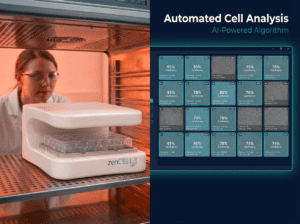
By adopting smaller automated live-cell imaging systems, laboratories can streamline operations and elevate the quality of experimental data. Systems like the zenCELL owl, for example, facilitate continuous observation without the need for direct human intervention, thereby increasing reproducibility and reducing the potential for human error.
- Automated imaging systems enhance reproducibility through consistent environmental conditions.
- Systematic monitoring minimizes operator variability, a common issue in manual workflows.
- Data acquisition and analysis are expedited, facilitating more timely decision-making.
Continúe leyendo para explorar información y estrategias más avanzadas.
“`
Increasing Accessibility and Scalability
Deploying Cost-Effective Solutions for Every Lab Size
One of the standout advantages of adopting smaller automated live-cell imaging systems is the democratization of access to advanced research technologies. For many smaller labs and institutions, traditional systems are prohibitively expensive, both in terms of initial investment and ongoing operational costs. Compact systems like the zenCELL owl require a fraction of the budget traditionally needed, making cutting-edge imaging technologies accessible to a broader range of researchers. Additionally, these systems offer scalability, allowing labs to expand their capabilities in alignment with growth or increased research demand.
- Start with a single-unit system and scale up as research needs evolve.
- Utilize cost savings to fund additional research projects or personnel training.
Enhancing Data Consistency and Integrity
Maintaining High Standards Across Experiments
Data consistency and integrity remain critical challenges in live-cell imaging. Traditional systems often fall short due to variability in manual operations and environmental conditions. Conversely, automated compact systems provide a more controlled environment, minimizing fluctuations and external interferences. This stability is crucial for ensuring the quality and reliability of collected data, which can decisively influence research outcomes and conclusions.
- Implement standardized protocols to maintain consistency across experimental runs.
- Regularly calibrate devices to ensure optimal performance and data accuracy.
Reducing Carbon Footprint and Environmental Impact
Creating Greener Labs for a Sustainable Future
Environmental sustainability is becoming a pivotal focus in academia and industry alike. Smaller live-cell imaging systems contribute to greener labs by consuming significantly less power and occupying reduced space. Many of these systems are designed with minimalistic cooling requirements and lower energy consumption, which collectively lower the carbon footprint of a laboratory. Institutions such as the University of Cambridge have reported significant energy savings by transitioning to compact imaging systems.
- Conduct energy audits to identify further efficiency opportunities within labs.
- Adopt eco-friendly practices as part of a broader sustainability initiative.
Facilitating Remote Monitoring and Collaboration
Empowering Researchers Through Connectivity
The integration of remote monitoring capabilities into smaller systems has revolutionized how scientists collaborate and conduct research. With the ability to access live-cell imaging data in real time from any location, researchers can now make immediate adjustments and decisions, fostering enhanced collaboration across geographies and institutions. This connectivity is especially beneficial during instances when physical lab presence is not feasible, such as during travel or global events like the COVID-19 pandemic.
- Leverage cloud-based storage solutions for seamless data sharing and backup.
- Utilize collaboration tools for real-time data interpretation and teamwork.
Streamlining Training and Operational Procedures
Building a Skilled and Efficient Workforce
Compact live-cell imaging systems are designed with user-friendliness in mind, significantly lowering the learning curve compared to traditional systems. Many systems come equipped with intuitive interfaces and extensive online resources, facilitating smoother operational transitions. This ease of use not only enhances productivity but also reduces the likelihood of human error, thereby protecting the integrity of experimental outcomes.
- Incorporate structured training sessions into onboarding for new researchers.
- Regularly update staff on new system capabilities and software features.
Empowering Personalized and Precision Medicine
Driving Innovation in Healthcare Research
The marriage of compact automated imaging systems and precision medicine promises unprecedented advancements in healthcare. By enabling high-throughput screenings and detailed cellular analyses, these systems provide invaluable insights into patient-specific responses and drug effects. Institutions engaging in precision medicine research, like the Dana-Farber Cancer Institute, utilize such technologies to streamline patient data collection, resulting in more targeted and effective treatment strategies.
- Develop collaborations between imaging experts and clinical researchers.
- Utilize imaging data to personalize treatment regimens and improve patient outcomes.
A continuación, concluiremos con los puntos clave, métricas y una conclusión contundente.
“`
“`
Optimizing Workflow and Laboratory Management
Enhanced Efficiency and Productivity
Modern laboratories face unique challenges, not only in research but also in the effective management of resources. Smaller automated live-cell imaging systems redefine laboratory workflows by optimizing the use of space and resources. Their compact nature allows for flexible installations that can be tailored to the specific needs and constraints of any laboratory environment. This adaptability paves the way for streamlined processes and improved productivity across the board.
- Engage in continuous process improvement to maximize the benefits of compact systems.
- Optimize lab layouts to accommodate both current and anticipated future technologies.
Supporting Advanced Teaching and Education
Bridging Theory with Practical Application
In the educational sector, the practical application of theoretical knowledge is crucial for developing competent researchers. Compact live-cell imaging systems provide educational institutions with the tools necessary to bring cutting-edge science into the classroom. Their cost-effectiveness and ease of use enable integration into curricula, offering students firsthand experience with live-cell imaging techniques, which enhances learning outcomes and prepares them for future scientific careers.
- Integrate practical sessions with automated imaging into biology and life sciences curricula.
- Facilitate student-led research initiatives utilizing accessible imaging technologies.
Advancing Open Science and Data Sharing
Fostering Collaborative Research Environments
The open science movement emphasizes transparency, sharing, and collaboration. Compact imaging systems are ideally suited to support these goals by facilitating data sharing and cross-institutional collaborations. Their integration with cloud technologies and data storage solutions means data can be readily accessed and shared with researchers globally, promoting a more connected and collaborative scientific community that stands to accelerate breakthroughs and innovation.
- Adopt open-access policies for data generated using live-cell imaging systems.
- Encourage partnerships and collaborations across disciplines and institutions.
Conclusión
Throughout this article, we’ve explored the myriad benefits of adopting smaller, automated live-cell imaging systems in research settings. From democratizing access to advanced technologies to enhancing data consistency and integrity, these compact systems offer distinct advantages over traditional counterparts. By enabling researchers to increase accessibility, expand their capabilities, and streamline operational procedures, they play a pivotal role in advancing scientific inquiry.
The significance of reducing the carbon footprint and the push towards a more sustainable laboratory environment cannot be overstated. These systems not only consume less power and space but also offer efficiencies that contribute to broader institutional sustainability initiatives. Furthermore, with the integration of remote monitoring capabilities, they empower scientists to collaborate and make informed decisions regardless of their physical location, thereby embodying the adaptability required in today’s rapidly changing world.
The impact of these systems extends beyond efficiency and sustainability; they support the advancement of precision medicine, aid in educational endeavors, and promote a culture of open science. By making research tools accessible and encouraging inclusive collaboration, compact live-cell imaging systems open new frontiers in healthcare, education, and scientific discovery.
As we look to the future, the adoption of these technologies stands as a testament to progress and innovation. Laboratories worldwide, from small academic institutions to established research facilities, are poised to benefit immensely. By embracing these advancements, researchers can drive more impactful discoveries, contribute to a more sustainable planet, and shape the next generation of scientists.
Herein lies the call to action: whether in academia or industry, now is the time to invest in these transformative systems. Let’s push the boundaries of what’s possible, create meaningful impacts in our respective fields, and commit to sustainable and innovative research practices that promise a brighter future for science and society alike.
“`