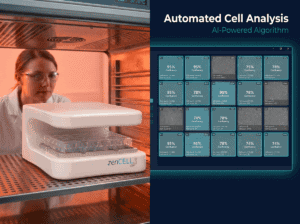
Track the effect of toxins, contaminants and harmful compounds on cell morphology and viability — continuously, label-free, without removing cells from the incubator. 24 conditions in parallel.
Cell intoxication is a dynamic process. Morphology changes, detachment and cell death occur at different rates depending on toxin type and concentration. A single endpoint assay misses the kinetic profile entirely.
Image every 10 minutes from first toxin exposure through to cell death. Capture the exact onset of morphological changes, detachment kinetics and dose-dependent response curves — all automatically.
5MP brightfield resolution captures cell rounding, granulation changes, membrane blebbing and detachment at single-cell resolution. Document the mechanism of toxicity visually.
Test 24 different toxins, concentrations or exposure times simultaneously under identical incubator conditions. Complete dose-response relationships in a single experiment.
Cells stay in the incubator throughout. No temperature disruption, no CO₂ fluctuations, no contamination risk from repeated handling. Environmental conditions remain stable.
Brightfield imaging requires no fluorescent labels or staining. Intoxication detected through confluence reduction and morphological changes — cells remain alive and intact for subsequent analysis.
Monitor toxin effects remotely from your PC or tablet. Set confluence alerts for critical thresholds. Check progress without entering the lab — especially valuable for long-duration intoxication experiments.
Real-time cell intoxication monitoring with zenCELL owl is applied across a broad range of research and testing scenarios.
Monitor effects of environmental contaminants, heavy metals or pollutants on cell viability over time. Quantify dose-dependent responses continuously without endpoint assays.
Track the effect of bacterial toxins on host cells in real time. Capture morphological changes, membrane disruption and cell death kinetics continuously inside the incubator.
Test chemical compounds for cell toxicity as part of safety evaluation. Continuous monitoring provides kinetic data that supports regulatory submissions and reduces the need for repeated experiments.
Characterise off-target cytotoxic effects of drug candidates on non-target cell lines. Parallel testing of 24 compounds or concentrations in one experiment.
Monitor the cellular response to nanoparticles and nanomaterials continuously. Capture early morphological changes before confluence-based assays would detect any effect.
Assess the cellular toxicity of water contaminants, food additives or agricultural chemicals using continuous brightfield monitoring as a sensitive early-warning readout.
Bacterial toxins such as those produced by Clostridioides difficile play a key role in diseases like pseudomembranous colitis. This experiment demonstrates how zenCELL owl captures the full intoxication kinetics non-invasively.
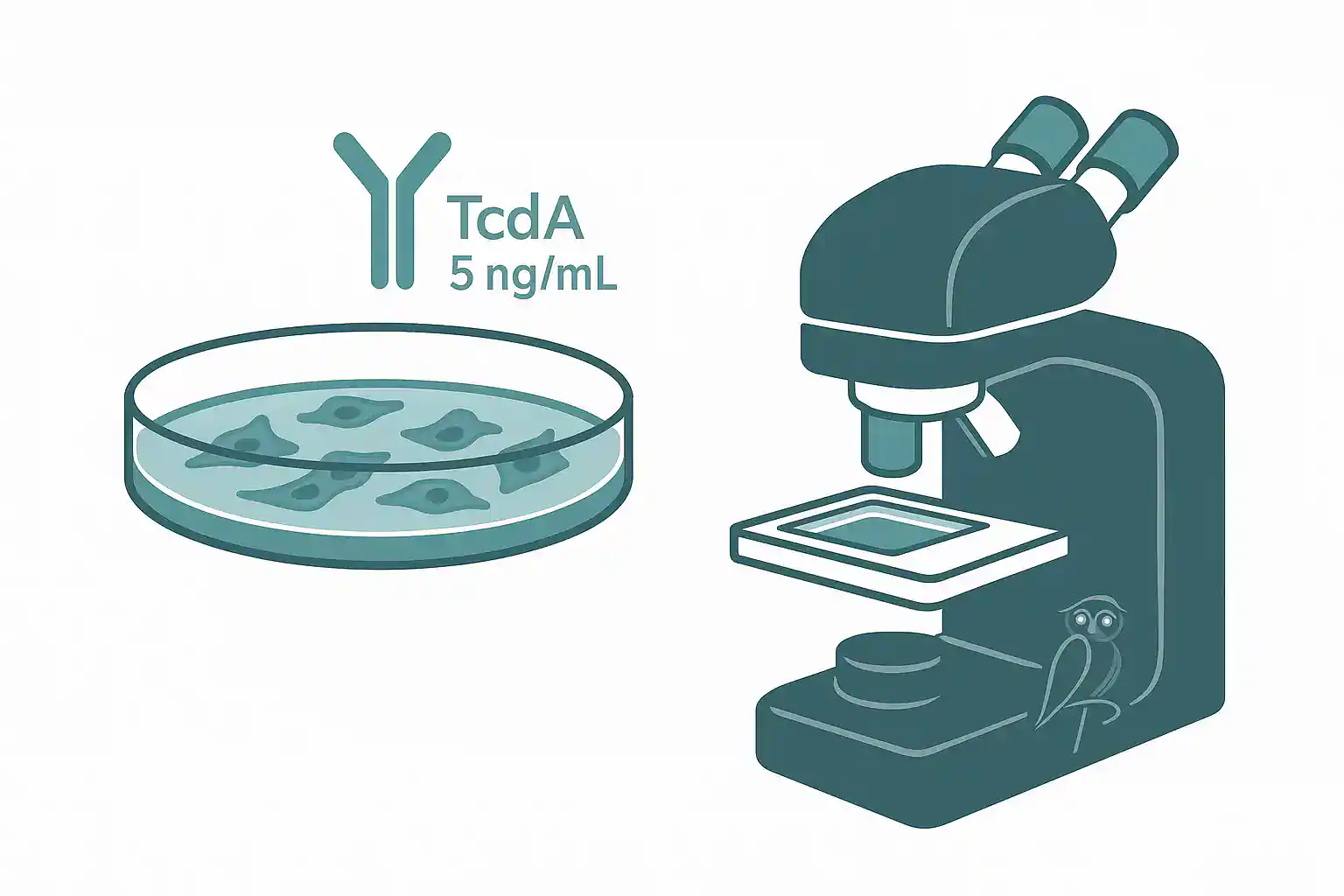
Experimental setup — Vero cells exposed to TcdA toxin, imaged every 30 minutes for 15 hours.
Vero cells (African green monkey kidney epithelial cells) were exposed to C. difficile TcdA toxin and monitored continuously with zenCELL owl.
Within the first hour, cells exposed to TcdA begin to round up — a hallmark morphological change indicating Rho protein glucosylation and cytoskeletal collapse. zenCELL owl captured the full progression without a single chamber opening.
These time points would be completely invisible with an endpoint assay — only continuous imaging reveals the full kinetic profile.
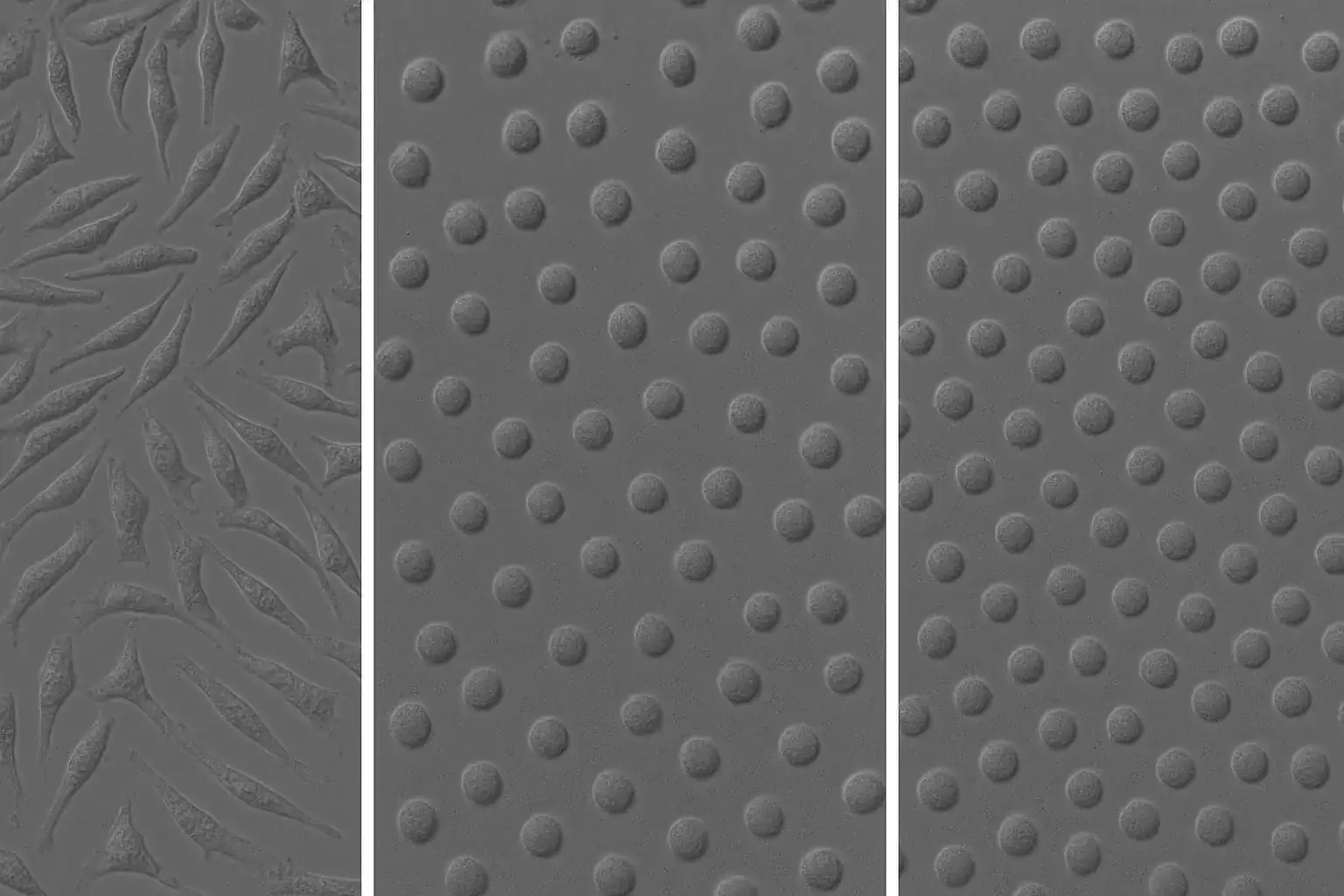
Morphological monitoring — cell rounding progression from 1h to 15h. High-resolution brightfield, no labels.
Developed by:
Institute of Pharmacology and Toxicology, Ulm University Medical Center
Authors: Maria Braune, Katharina Ernst
Watch zenCELL owl track toxin effects on real cells inside a real incubator. On request via MS Teams.
 English English
 Deutsch
 Français
 Español
 简体中文
简体中文