“`
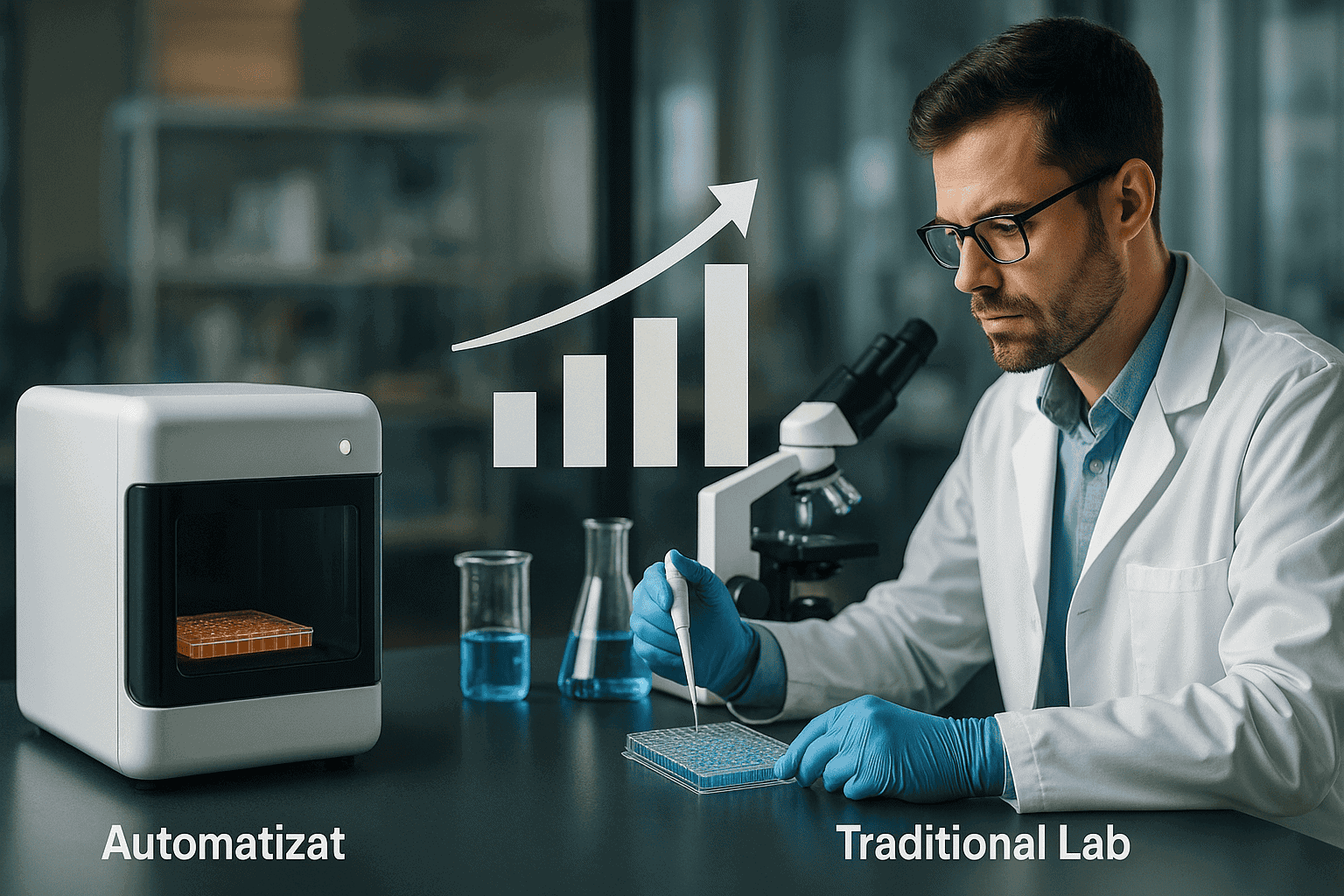
The ROI of Automation: Why Small Integrated Systems Outperform Traditional Labs
In the rapidly evolving world of cell culture research, the integration of automation and innovative technologies is not merely a luxury but a necessity. The pressures of efficiency, accuracy, and reproducibility in modern lab environments demand smarter solutions. The ROI of automation in laboratory settings has become increasingly evident, particularly with the advent of small, integrated systems. In this comprehensive guide, we delve into why these systems often outperform traditional labs, shedding light on the technological advances driving this transformation and providing actionable insights for researchers, lab managers, and biotech professionals.
Common Challenges and Limitations of Traditional Approaches
Traditional laboratories, while foundational to scientific discovery, face several inherent challenges that can impede progress. These challenges include variability in manual processes, limitations in scalability, and the high likelihood of human error. Laboratories reliant on traditional techniques often struggle with:
- Inconsistent data due to manual handling and human error.
- Limited throughput that hampers experiment scalability.
- Time-consuming workflows that delay results.
- Increased operational costs associated with labor-intensive processes.
The conventional lab setup frequently requires significant personnel time for monitoring and data collection, creating bottlenecks that can hinder project timelines and affect overall productivity.
Technological Advances and Automation Trends
As the landscape of life-science research continues to advance, so does the need for enhanced precision and efficiency. Automation technologies have been at the forefront of this evolution, providing solutions that streamline workflows and improve outcomes. Recent trends in laboratory automation include:
- The rise of compact, integrated systems that fit seamlessly into existing lab workflows.
- Enhanced data collection capabilities through real-time monitoring and analysis.
- Improved software interfaces for easier control and data interpretation.
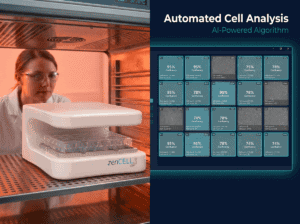
One notable example is the zenCELL owl, an incubator-compatible live-cell imaging system offering automation, reproducibility, and continuous monitoring within a smaller, more efficient footprint.
Practical Examples and Workflows Using Live-Cell Imaging
Live-cell imaging is a powerful tool for researchers seeking to observe cellular processes in real time. Automation with systems like the zenCELL owl allows for continuous observation without disrupting cell growth conditions. Common workflows and applications that benefit from automated imaging include:
- Time-lapse studies to observe cell proliferation and differentiation.
- Migration assays where real-time tracking of cell movement is crucial.
- Organoid models that require constant environmental monitoring for accurate morphological assessment.
By integrating automated live-cell imaging into these workflows, researchers can achieve more reliable and reproducible data, enhancing the accuracy and efficiency of their studies.
How Incubator-Based Imaging Improves Reproducibility and Data Quality
Incubator-based imaging systems play a crucial role in maintaining ideal conditions for cell culture experiments. These systems reduce variability by providing a controlled environment that mitigates external disturbances. The key benefits of incubator-based imaging include:
- Consistent monitoring of environmental conditions like temperature and CO2 levels.
- Minimized sample disturbance, increasing data reliability.
- Enhanced reproducibility through standardized conditions.
With integrated systems like the zenCELL owl, the capacity for high-throughput screening is expanded, allowing researchers to gather extensive data sets with greater accuracy.
Continúe leyendo para explorar información y estrategias más avanzadas.
“`
“`
Leveraging Artificial Intelligence for Better Analysis
AI Tools Revolutionizing Lab Data Interpretation
The integration of Artificial Intelligence (AI) with small automated systems provides groundbreaking potentials for data analysis and interpretation. AI algorithms can process large datasets swiftly, offering substantial improvements over manual analytical methods. For instance, machine learning models can identify patterns in cell behavior that human researchers might overlook, unlocking new insights into cellular processes. This capability is particularly beneficial for detecting subtle changes in cell morphology or response to treatments.
- Implement AI-driven software to enhance data accuracy and uncover unique patterns.
Boosting Efficiency with Automated Sample Handling
Streamlined Processes for Maximum Throughput
Handling samples manually is not only labor-intensive but also prone to errors and contamination. Automation in sample handling, through robotic systems and integrated platforms, significantly enhances throughput and consistency. Automated pipetting systems, for example, precisely manage liquid handling tasks, reducing variability and enhancing speed. The integration of these systems within laboratories allows researchers to focus on analysis rather than laborious manual processes.
- Adopt automated pipetting tools to minimize human error and improve experiment efficiency.
Enhancing Data Management with Cloud-Connected Labs
Cloud Technology for Remote Data Access and Collaboration
The transition to cloud-connected laboratories represents a modern shift in research environments, enabling remote data access and real-time collaboration across global teams. Cloud technologies facilitate seamless data storage, significantly enhancing data security and integrity. For example, research teams can simultaneously access up-to-the-minute data collected from automated systems, regardless of their location, thus fostering more dynamic and efficient collaborations.
- Utilize cloud solutions to enable remote monitoring and collaborative analysis.
Ensuring Compliance and Quality Assurance With Automation
Meeting Regulatory Standards Efficiently
Regulatory compliance is a critical aspect of laboratory operations, especially in pharmaceuticals and biotechnology. Automation systems can help labs maintain compliance by standardizing processes and ensuring accurate record-keeping. For example, automated data logging and audit trails can be integrated into workflows to ensure complete and accurate records, thus reducing the risk of non-compliance and facilitating ease of audits.
- Integrate automated record-keeping tools to ensure regulatory compliance and quality assurance.
Cost-Effectiveness of Miniaturized Automated Systems
Saving Resources While Maximizing Output
The economic edge gained by adopting miniaturized automated systems is significant. These systems not only reduce labor costs but also decrease resource consumption through precise and efficient use of reagents and supplies. A case study shows that a laboratory deploying an integrated system like the zenCELL owl saw a significant reduction in consumables cost, while improving experiment throughput. The cost savings achieved enable more extensive experimental outreach without increasing budget allocations.
- Assess cost savings potentials by mapping out reduced consumable usage due to automation.
Training and Skill Development in Automated Labs
Bridging the Gap Between Technology and Talent
Introducing automation in labs requires skill development to maximize the benefits of new technologies. Training programs tailored to laboratory personnel ensure that all team members are adept at using automated systems effectively. This training ranges from basic operations to advanced troubleshooting of integrated hardware and software systems. Reputable institutions have started offering certification programs that focus on laboratory automation systems, thereby equipping scientists and technicians with the necessary skills to thrive in modern labs.
- Invest in professional development programs to enhance team proficiency in automated systems.
Overcoming Resistance to Technological Change
Fostering a Culture of Innovation
Resistance to change remains one of the significant obstacles in the adoption of automation technologies. To overcome this, a proactive approach is needed to create a culture receptive to innovation. This involves educating team members on the benefits of automation, showcasing its successful implementation in similar settings, and actively involving staff in the transition process. Success stories from labs that improved their operational processes can serve as motivating examples, illustrating the tangible advantages of embracing technology.
- Promote a technology-positive culture through open forums and knowledge-sharing workshops.
A continuación, concluiremos con los puntos clave, métricas y una conclusión contundente.
“`
“`
Maintaining Competitiveness with Scalable Solutions
Adaptation Strategies for Long-Term Success
The infrastructure provided by small integrated systems not only simplifies current processes but also prepares laboratories for future innovations. This adaptability comes from their scalability, which allows for future expansions without substantial overhauls. Scalability ensures that laboratories remain competitive by providing the flexibility to adapt to new innovations, market demands, or regulatory changes. This means the investment made today is sustainable for tomorrow, aligning with future scientific and technological advancements efficiently.
- Plan for scalability to accommodate future technological advancements seamlessly.
Driving Innovations Through Integrated Systems
Creating a Synergistic Workflow
Integrated systems do not merely automate tasks but also encourage innovative approaches by providing a foundation for creative problem-solving. These systems allow laboratories to transition from routine tasks to experimental innovations. The synergy achieved through integration of diverse systems and technologies provides a fertile ground for groundbreaking discoveries. Having robust and versatile platforms supports exploration and testing of uncharted waters in research, ushering new breakthroughs.
- Leverage integrated systems to explore innovative research directions and collaborations.
Environmental Impact and Sustainability
Green Innovations for Responsible Research
As global consciousness towards environmental impact intensifies, laboratories are urged to adopt more sustainable practices. Miniaturized automated systems contribute significantly towards this goal by reducing energy consumption and minimizing waste generation. These efficient systems ensure high-quality research with a lower ecological footprint, thereby supporting laboratories in their quest to be both innovative and environmentally responsible. This alignment with sustainable practices not only fulfills regulatory and ethical standards but also strengthens a lab’s reputation in the scientific community.
- Implement eco-friendly technologies to enhance your lab’s sustainability credentials.
Conclusión
The adoption of small integrated automated systems in laboratories presents an array of transformative benefits, from enhanced precision and reliability to substantial cost savings. By automating routine tasks, research teams can dedicate more time and resources to groundbreaking innovations. This leap from traditional methods to more sophisticated, precise, and efficient solutions underscores an essential evolution in laboratory operations.
Throughout this article, we have delved into various aspects of these advancements, exploring how artificial intelligence revolutionizes data interpretation, automated sample handling streamlines processes, cloud-connected labs enhance data management, and automation enhances compliance and quality assurance. Additionally, we have seen how these systems, by being both scalable and sustainable, maintain a competitive edge and environmental consciousness, which are crucial in today’s ever-evolving scientific landscape.
The relevance of these systems cannot be overstated, as they provide the infrastructure not only for present needs but future innovations. Training and development mold competent personnel who maximize these technologies’ potential, while fostering a culture of innovation counters resistance and allows labs to transition smoothly into this new era.
These strategic implementations ultimately lead to a more efficient, sustainable, and innovative research environment—qualities that every modern lab aspires to achieve. As global scientific collaboration intensifies, the need for efficient, robust, and eco-friendly systems becomes increasingly critical. The journey towards automated, intelligent labs is not just a trend but an indispensable trajectory for future scientific endeavors.
Now is the time for laboratories to harness the power of automation, embrace its transformative potential, and lead the charge toward a technologically advanced future. By doing so, labs can not only enhance their operational workflows but also contribute to the broader scientific community’s pursuit of knowledge and understanding. As we embrace this technological renaissance, we are reminded of the profound words of Charles Darwin: “It is not the strongest of the species that survive, nor the most intelligent, but the one most responsive to change.” Embracing change through automation is the pathway forward.
“`