“`html
La fin de la variabilité des éraflures : automatisation des essais de migration pour des données de référence
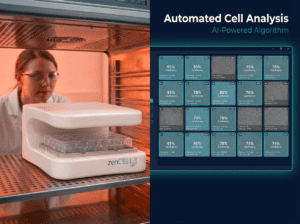
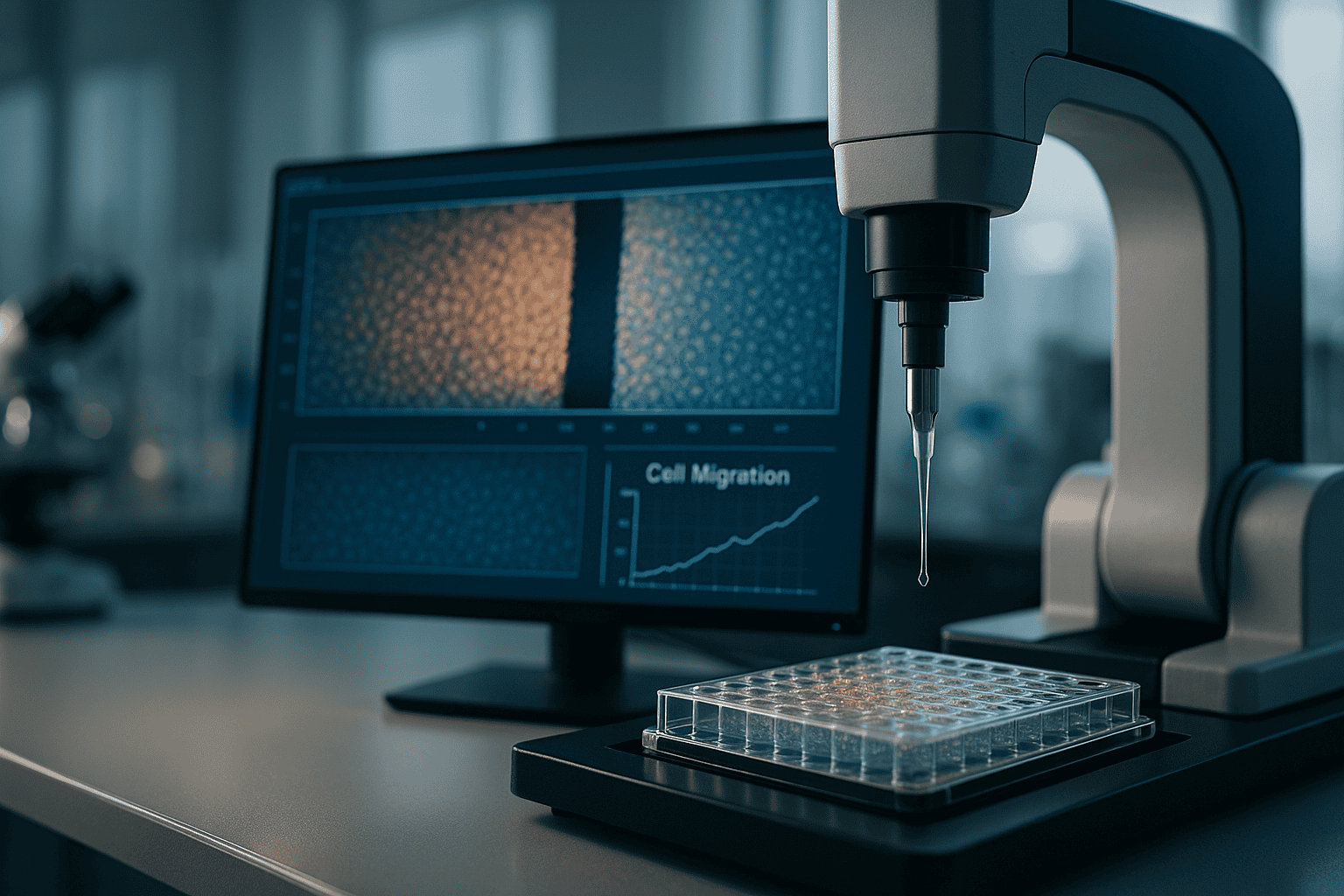
Le domaine en constante évolution de la recherche sur la culture cellulaire apporte continuellement des méthodologies innovantes pour relever des défis anciens. Parmi ceux-ci, les tests de migration cellulaire servent de pierre angulaire pour comprendre les processus biologiques tels que la cicatrisation des plaies, la métastase du cancer et le développement des tissus. Historiquement, ces tests ont été sujets à des variations, souvent dues à des procédures manuelles comme le test aux rayures. Avec l'avènement de la technologie de pointe, l'intégration de systèmes automatisés dans les flux de travail de culture cellulaire a déclenché une révolution, réduisant les erreurs humaines et améliorant la fiabilité des données. Cet article se penche sur la transition vers l'automatisation des tests de migration, offrant des aperçus sur la manière dont ces innovations éliminent la variabilité des rayures, garantissent des données de référence et préparent le terrain pour les avancées futures.
Défis et limites des tests de migration traditionnels
Sensibilité à l'erreur humaine
Les approches traditionnelles des essais de migration cellulaire, en particulier l'essai “scratch”, ont longtemps été entravées par leur dépendance à l'égard de l'intervention manuelle. Le processus de création d'une "rayure" ou d'une plaie sur un monocouche de cellules pour étudier la migration est intrinsèquement sujet à des divergences. Les chercheurs sont confrontés à des défis pour standardiser les paramètres physiques tels que la largeur de la rayure et la pression appliquée, qui varient d'un praticien à l'autre. Cela entraîne des incohérences dans les données et les résultats, jetant des doutes sur la reproductibilité des découvertes.
- La variabilité de la manipulation manuelle affecte la fiabilité des données
- Des mesures incohérentes compliquent les analyses comparatives
- L'évaluation subjective des résultats d'analyse introduit des biais
Limitations dans le suivi et la collecte de données
Les essais de migration manuels nécessitent une observation périodique, impliquant souvent une analyse de point final dépourvue d'acquisition de données en temps réel. Les techniques de microscopie traditionnelles exigent le retrait des échantillons des environnements d'incubateur stables, ce qui peut perturber l'état cellulaire et affecter la dynamique de migration. Cette approche d'examen intermittent limite la capacité à capturer des données cinétiques critiques, entravant une compréhension complète.
- Infrequent observation overlooks key migratory behaviors
- Disturbance during sample handling impairs cell physiology
Progrès technologiques et tendances en automatisation
Emergence of Automated Systems
The transition to automated systems in cell culture assays has brought about a new era of precision and consistency. These systems eliminate the variability introduced by manual operations through consistent protocol execution. Innovations such as robot-assisted scratch assays and programmable imaging stages provide a level of precision that manual efforts simply cannot match.
- Robotic platforms ensure uniform scratch creation
- Automated repeatability enhances reproducibility
- Consistent environmental control fosters reliable results
Continuez votre lecture pour explorer des perspectives et des stratégies plus avancées.
“`
“`html
Optimizing Real-Time Data Acquisition and Analysis
Advanced Imaging Technologies
One of the most significant advancements in migration assays is the integration of real-time imaging technologies. Automated platforms, equipped with state-of-the-art, high-resolution cameras, allow continuous monitoring of cell migration processes. These systems facilitate the acquisition of dynamic and intricate live-cell data, revealing nuanced behaviors of cell movement that were previously missed with periodic manual observation.
- High-resolution imaging captures detailed migration events
- Real-time data enables comprehensive kinetic analysis
Innovative Software Solutions
Software advancements complement the automation of imaging hardware, providing powerful tools for data processing and analysis. Machine learning algorithms and artificial intelligence are now utilized to interpret complex datasets automatically, reducing the workload on researchers and making precise, unbiased assessments possible. Such software can identify patterns and anomalies that might elude human analysis, further enhancing the assay’s informativeness.
- AI-driven analytics reduce human analysis time
- Pattern recognition improves data accuracy and depth
Ensuring Reliable Reproducibility Across Laboratories
Standardized Protocol Development
Automated systems facilitate the development of standardized experimental protocols, promoting reproducibility of results across different laboratories. These protocols ensure that every parameter, from incubation conditions to imaging intervals, remains consistent. Organizations and consortia are also working towards creating universal standards for data. This shift helps unify methodological approaches, providing a reliable framework for global collaboration.
- Standardized protocols enable cross-laboratory consistency
- Unified standards foster collaborative research efforts
Case Study: Collaborative Networks
Global initiatives in academic and commercial settings underscore the importance of standardization. A notable example includes a network of cancer research laboratories that adopted a unified automated system. This collaborative approach resulted in significantly reduced variability in assays across multiple sites, leading to breakthroughs in understanding metastatic pathways. Researchers reported increased speed and confidence in their data, sparking further innovations.
- Collaborative networks enhance data validity
- Joint efforts accelerate discovery and innovation
Automating Comprehensive Environmental Control
Precision in Microenvironment Regulation
Cell migration is sensitive to environmental conditions, which are critical in influencing experimental outcomes. Automated systems incorporate integrated environmental controls that maintain stable temperature, humidity, and CO2 levels, crucial for replicating in vivo conditions. Advanced chamber technologies mimic physiological environments more precisely than manual systems, preventing cellular stress and ensuring more physiologically relevant results.
- Improved microenvironment control boosts data relevance
- Stable conditions reduce external variability impact
Case Study: Physiological Replication
A leading biotechnology firm implemented an automated incubation system in their migration assays, replicating physiological conditions typically seen in in vivo research. By doing so, they observed a marked improvement in the migration rates and patterns that closely resembled in vivo observations. This approach not only enhanced research accuracy but also paved the way for developing novel therapeutic interventions based on more reliable data.
- Physiologically relevant conditions enhance validity
- Automation supports translational research initiatives
Integration of Multi-Modal Analytical Techniques
Leveraging Various Data Streams
By incorporating multiple analytic modalities, automated migration assays offer more comprehensive insights into cellular behavior. Techniques such as flow cytometry, spectrophotometry, and automated microscopy are integrated within these systems to provide multi-dimensional data. This convergence of technologies enriches understanding by correlating morphological changes with biochemical markers, facilitating a holistic view of cellular dynamics.
- Multi-modal analysis enriches cellular insights
- Diverse data streams enhance contextual understanding
Practical Implementation
In practical terms, integrating multi-modal platforms involves leveraging complementary technologies that speak to different aspects of cell behavior. Labs that successfully combine imaging with biochemical analysis often unlock insights into migration tied to specific cellular pathways or genetic markers. For instance, a research team studying neurodegeneration utilized an integrated platform to simultaneously assess cellular morphology and gene expression changes, significantly advancing their understanding of disease mechanisms.
- Combining technologies unlocks deeper insights
- Cross-technological approaches offer a more complete picture
Economical and Resource Efficiency in Automated Systems
Sustainable Lab Practices
Automated migration assays contribute significantly to cost and resource efficiency. By minimizing manual labor and optimizing reagent usage, laboratories can achieve substantial savings. Furthermore, the reliable data provided reduces the requirement for repetition of experiments, conserving both financial and material resources. Additionally, automation aligns with green lab initiatives, reducing waste and promoting sustainable practices.
- Resource efficiency contributes to reduced operational costs
- Sustainability initiatives benefit from automation efficiencies
Economic Case Study
In a pilot study conducted by a consortium of environmental labs, transitioning to automated cell migration assays showed a marked decrease in reagent consumption by over 30%. The initial investment in technology was offset within a year due to savings on consumables and labor hours. Furthermore, by reducing experimental repetition rates by 50%, the labs reported not only economic benefits but also enhanced sustainability in their operations.
- Sustained resource savings validate initial tech investments
- Economic gains coupled with environmental benefits
Ensuite, nous conclurons avec les points clés à retenir, les métriques et une conclusion percutante.
“`
“`html
Augmenting Data Reliability with Enhanced Automated Controls
Incorporation of Quality Assurance Measures
As laboratories rely increasingly on automated systems, embedding quality assurance protocols within these systems becomes crucial. Automated self-checks, calibration routines, and error detection protocols can significantly enhance data reliability. These measures ensure that each experiment is performed under optimal conditions, providing precise and reproducible outputs.
- Automated checks maintain consistent operational standards
- Quality assurance minimizes the risk of data anomalies
Technological Advancements in Error Proofing
Innovations in automation technology have provided new methods for error detection and prevention. Sophisticated sensors and software algorithms now offer real-time monitoring, alerting laboratories to any discrepancies during the experiment. These advancements help reduce downtimes and improve the overall robustness of cell migration assays.
- Real-time monitoring identifies potential errors promptly
- Technological safeguards enhance overall lab efficiency
Promoting Educational Initiatives for Automated Assays
Training for Next-Generation Researchers
With the increasing complexity of automated systems, educational initiatives aimed at equipping researchers with necessary skills are important. Training programs focusing on utilizing these technologies allow for effective, maximum adoption. Encouraging knowledge sharing and workshops can cultivate an adaptable research community ready to tackle modern challenges within the field.
- Training initiatives build competence in automation technologies
- Workshops foster a collaborative and informed research culture
Access to Shared Knowledge Resources
Encouraging open access to documentation and shared resources helps broaden understanding and proficiency with automated assays. Shared databases and collaborative online platforms enable researchers to exchange insights and troubleshoot challenges collectively, enhancing both individual and group competencies in the field.
- Knowledge sharing platforms promote resource accessibility
- Collaborative tools streamline the learning curve for researchers
Conclusion
This journey through the innovative landscape of automated migration assays has unveiled the transformative impact of automated technologies on cellular research. From optimizing real-time data acquisition to advancing economic sustainability, the highlighted sections offer a comprehensive insight into how these tools revolutionize traditional methodologies.
The integration of advanced imaging and software solutions, along with standardized protocols, sets a new standard for reproducibility and accuracy. Multifaceted analytical approaches enrich our understanding, while automation-driven sustainability reinforces labs’ commitments to environmentally conscious practices.
Importantly, quality assurance and educational initiatives ensure that the benefits of automation are fully realized across the research community. By equipping researchers with the necessary skills and fostering a collaborative environment through shared resources, we can expedite the pace of scientific discovery.
The potential for automation in cell migration assays represents not simply an incremental upgrade but a foundational paradigm shift in research methodologies. As laboratories worldwide adopt these innovative practices, the scientific community moves closer toward achieving gold-standard data, enhancing the fidelity and relevance of their findings.
As you explore these emerging technologies, consider the long-term benefits of embracing automation within your own lab settings. By doing so, you not only drive better research outcomes but also contribute to a wider movement aimed at more precise, efficient, and sustainable scientific practices. Together, we can push the boundaries of knowledge and achieve remarkable breakthroughs that lay the groundwork for future achievements.
“`