🫧 Application — Spheroid & Organoid Imaging

Spheroid Timelapse Imaging —
3D Cell Cultures. Live. Inside the Incubator.

Monitor spheroid growth, compaction, adhesion and outgrowth continuously — without removing 3D cultures from their environment. Automated quantification of area, diameter and roundness over time.
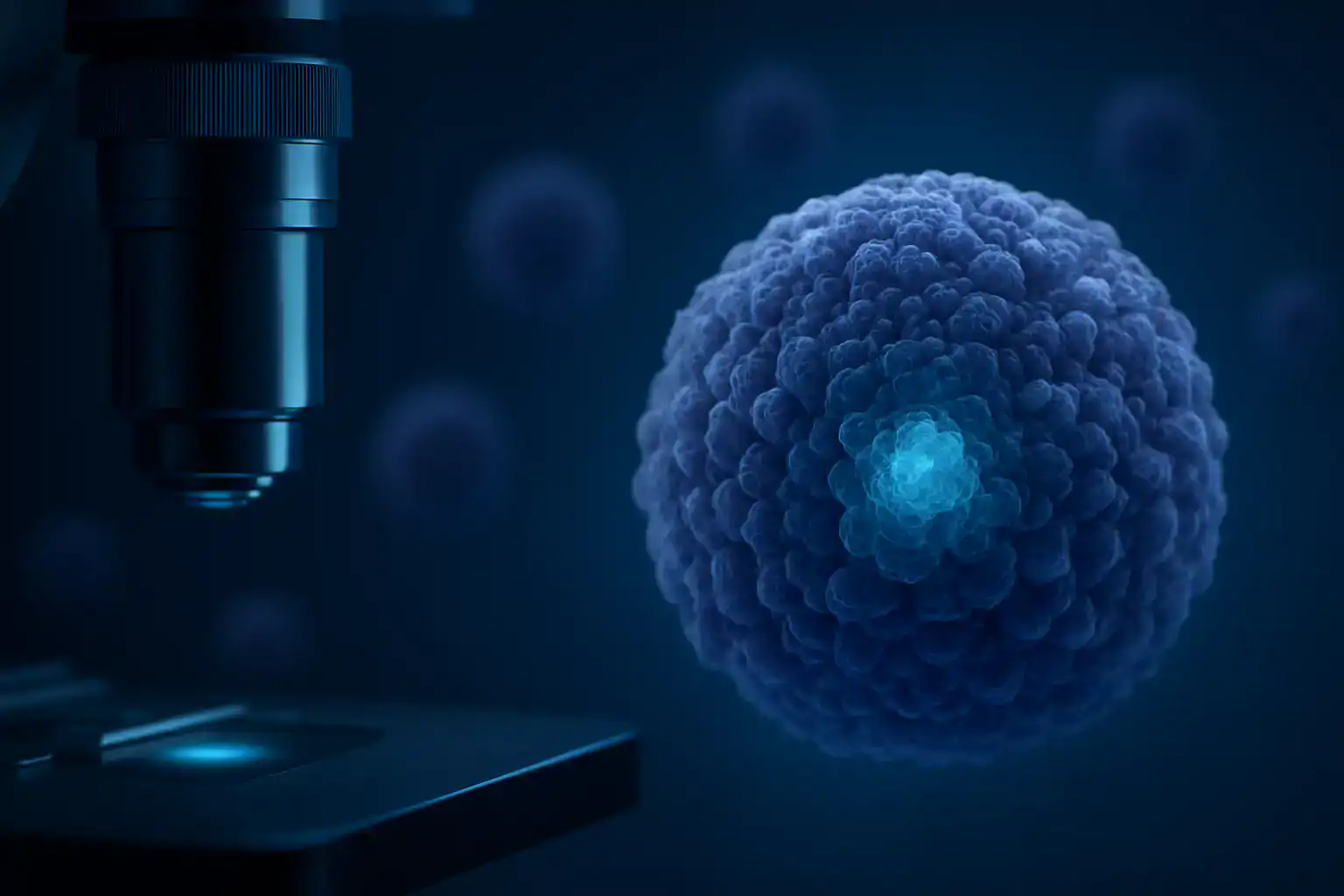
96h
continuous monitoring
10 min
imaging interval
24
spheroids in parallel
0
culture disruptions
zenCELL owl spheroid live imaging — 3D cell culture monitoring inside incubator
Why spheroids need continuous monitoring

3D Cell Cultures — More Relevant, More Demanding

Spheroids and organoids offer a significantly better approximation of in vivo tissue environments compared to 2D cultures — but they require careful, continuous observation to capture growth dynamics, compaction and outgrowth events.

🔬
In-Incubator 3D Monitoring

zenCELL owl images spheroids directly inside the incubator — no removal, no disruption of 3D structure, no temperature shock. Physiological conditions maintained throughout the entire experiment.

📐
Automated Morphology Quantification

Area, width, height, diameter and roundness quantified automatically using zenCELL owl and ImageJ at every imaging interval. Track structural changes over time without manual measurement.

🔄
24 Spheroids Simultaneously

Monitor up to 24 wells in parallel — different cell lines, drug treatments, or growth conditions. Compare proliferation rates and outgrowth dynamics under identical environmental conditions.

📊
Growth Kinetics Over Days

Continuous monitoring over 48–96 hours captures the complete growth profile — from initial aggregation through to full spheroid formation. Every 10 minutes, automatically.

🧬
Adhesion & Outgrowth Detection

Capture the moment spheroids adhere to treated surfaces and begin outgrowth migration. A semi-spherical 3D core with surrounding monolayer formation — documented automatically.

💊
Drug Screening on 3D Models

Apply drug treatments to spheroids and monitor effects continuously. More physiologically relevant than 2D cytotoxicity assays for predicting in vivo drug responses.

Experimental data

MCF-7 Spheroids — Two Experimental Approaches

Two parallel experiments with MCF-7 breast cancer cells demonstrate zenCELL owl's capability for both non-adhesive spheroid growth and adhesion/outgrowth monitoring.
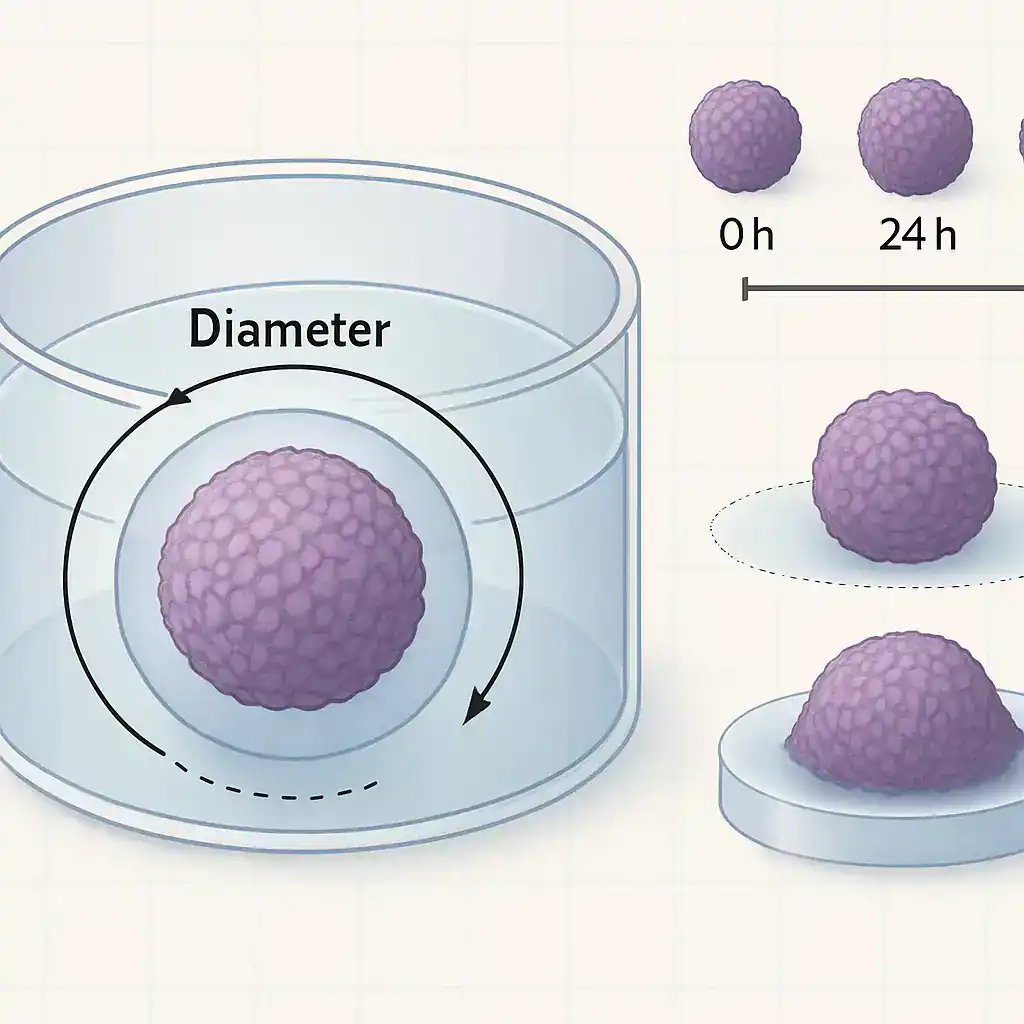
MCF-7 spheroid growth diameter over time — zenCELL owl 96h monitoring on agarose

MCF-7 spheroid diameter growth over 96h on agarose-coated plates. Area, width, height and roundness quantified automatically.

Experiment 1 — Spheroid Proliferation on Non-Adhesive Surface

MCF-7 cells (6,000 cells/well) were seeded on agarose-coated 24-well plates and monitored for 96 hours at 10-minute intervals.

Result: Spheroids formed smooth, round shapes due to the non-adhesive environment. Proliferation occurred in the outer layers, increasing diameter over time. Key parameters including area, width, height and roundness were quantified automatically.

  • Platform: agarose-coated 24-well plates
  • Cell line: MCF-7 · 6,000 cells/well
  • Duration: 96 hours · interval: every 10 minutes
  • Parameters: area · diameter · width · height · roundness

Experiment 2 — Adhesion & Outgrowth on Treated Surface

7-day-old MCF-7 spheroids (6,000 cells/well) were transferred to tissue-culture treated 24-well plates and monitored for 48 hours.

Result: Cells adhered to the surface and began migrating outward. A semi-spherical 3D core with a surrounding monolayer formed within 48 hours — adhesion and outgrowth dynamics captured completely.

  • Platform: TC-treated 24-well plates
  • Spheroid age: 7 days · 6,000 cells/well
  • Duration: 48 hours · interval: every 10 minutes
  • Outcome: core + surrounding monolayer formation documented
MCF-7 spheroid adhesion and outgrowth on treated surface — zenCELL owl 48h

MCF-7 spheroid adhesion and outgrowth on TC-treated surface over 48h. 3D core with surrounding monolayer.

Results & analysis

Image-Based Analysis — All Parameters Automatically

Using zenCELL owl software and ImageJ, all key morphological parameters are monitored continuously — with no manual intervention and no environmental disruption.
zenCELL owl spheroid results — image-based analysis area roundness diameter

Results overview — spheroid expansion, adhesion dynamics and morphological parameters quantified automatically.

What Is Measured Automatically

Every 10 minutes, zenCELL owl software and ImageJ extract the following parameters from each well — no manual measurement, no environmental disruption, no bias.

  • Spheroid area (µm²) — expansion over time
  • Diameter — width and height separately
  • Roundness — structural compaction index
  • Adhesion dynamics — time to surface contact
  • Outgrowth area — monolayer expansion around 3D core
  • Morphological deviations — shape changes under drug treatment

All data exportable as CSV for statistical analysis. Timelapse videos generated automatically for each well.

🏛️

Developed in collaboration with:

University of Regensburg & Fraunhofer EMFT, Munich — with support from distribution partner Omni Life Science (ols-bio.com)

50+
peer-reviewed publications cite zenCELL owl across all applications
View all publications →
FAQ

Spheroid Imaging — Common Questions

Can zenCELL owl image spheroids inside the incubator?+
Yes — zenCELL owl sits inside the incubator and images through the transparent bottom of standard multi-well plates. Spheroids remain in their culture environment throughout the experiment. No removal, no temperature disruption, no structural damage to 3D cultures.
What morphology parameters can be quantified?+
Area, diameter, width, height and roundness are quantified automatically at every imaging interval using zenCELL owl software and ImageJ. This provides a complete kinetic profile of spheroid growth and structural changes.
Which plates are compatible for spheroid monitoring?+
Standard agarose-coated 24-well plates for non-adhesive spheroid growth, and tissue-culture treated plates for adhesion and outgrowth experiments. Any transparent-bottom multi-well plate compatible with zenCELL owl can be used.
Can I monitor drug effects on spheroids?+
Yes. Apply drug treatments and monitor spheroid morphology and growth continuously. The 24-well parallel format allows comparison of multiple drug concentrations or compounds simultaneously under identical incubator conditions.

See Spheroid Monitoring Live —
Free Remote Demo

Watch zenCELL owl monitor 3D spheroid growth inside a real incubator. On request via MS Teams.

On request via MS Teams No commitment 50+ publications Response within 24h

Developed in collaboration with:

University of Regensburg & Fraunhofer EMFT, Munich
With support from our distribution partner Omni Life Science (www.ols-bio.com)

Vue en direct

See zenCELL owl
live, 30 min, free online

Real cells. Real data. Real comparison. Watch AI cell counting, XYZ stage and full software live inside a real incubator — twice a week via MS Teams.

Full course of live cell imaging

Get your free live online demonstration of the zenCELL owl directly inside an incubator, available twice per week.

Remote-Demo

or