“`html
AI in the Lab: What You Need to Know to Stay Ahead of the Competition
In today’s fast-paced research environment, staying ahead in the field of cell culture research requires embracing innovative technologies. Artificial intelligence (AI) is making significant strides in transforming traditional lab workflows into more efficient and accurate processes. This article delves into how AI is reshaping laboratories, offering insights into practical applications like live-cell imaging and laboratory automation. By understanding these advances, researchers, lab managers, and biotech professionals can remain competitive and enhance their research outcomes.
传统方法的常见挑战和局限性
The Bottlenecks in Conventional Laboratories
Conventional cell culture methods often face challenges such as variability in results, time-consuming manual processes, and limited monitoring capabilities. The need for skilled personnel to manage these tasks increases both costs and the potential for human error. Traditional live-cell imaging techniques, for example, can be invasive, leading to changes in cell behavior that might alter experimental results. Additionally, these methods typically offer only endpoint analysis, providing a static picture of dynamic cellular processes.
- High personnel costs and variability in manual handling
- Limited capacity to monitor live cells continuously
- Potential invasive techniques altering cell behavior
技术进步与自动化趋势
Leveraging AI for Enhanced Lab Automation
With the advent of AI, laboratories are experiencing a shift toward automation and high-throughput analysis. AI-powered tools can streamline workflows by automating routine tasks, reducing variability, and providing real-time feedback. Technologies such as machine learning algorithms can predict outcomes and optimize conditions based on historical data. As a result, laboratories are capable of processing larger volumes of data faster, improving both efficiency and accuracy.
- Reduction in manual workload through automation
- Improved accuracy with real-time feedback and analysis
- Enhanced ability to handle complex data sets
活细胞成像的实用示例和工作流程
AI-Enhanced Live-Cell Imaging Techniques
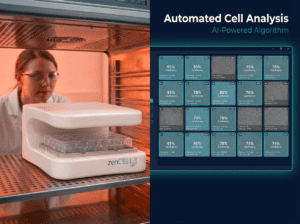
Live-cell imaging has been revolutionized by AI’s incorporation into imaging systems. AI allows for the continuous monitoring of cells under natural conditions without disrupting their environment. For example, the zenCELL owl, a compact, incubator-compatible live-cell imaging system, represents a significant advancement in this area. Its ability to operate within the incubator environment ensures that cells are monitored in real-time, leading to more consistent and accurate data collection. Such technology facilitates the observation of cellular processes, aiding in studies of cell migration, proliferation, and morphology under different conditions.
- Real-time, non-invasive monitoring with AI technology
- Consistent and accurate data through continuous analysis
- Compatibility with existing incubator setups for seamless integration
继续阅读,以探索更深入的见解和策略。.
“`
“`html
Harnessing AI for Predictive Analytics in Research
Transforming Data into Actionable Insights
Predictive analytics, powered by AI, is revolutionizing data interpretation in laboratory settings by allowing researchers to forecast potential outcomes and make informed decisions before experimental execution. By leveraging machine learning models, labs can analyze vast datasets to identify trends and correlations that would be impossible to discern manually. For instance, this approach has been applied in drug discovery, where AI models predict the efficacy of compounds based on historical biochemical data, significantly reducing research time and cost.
- Incorporate machine learning models to enhance predictive capabilities in your research.
AI-Driven Quality Control and Assurance
Ensuring Reliability and Consistency
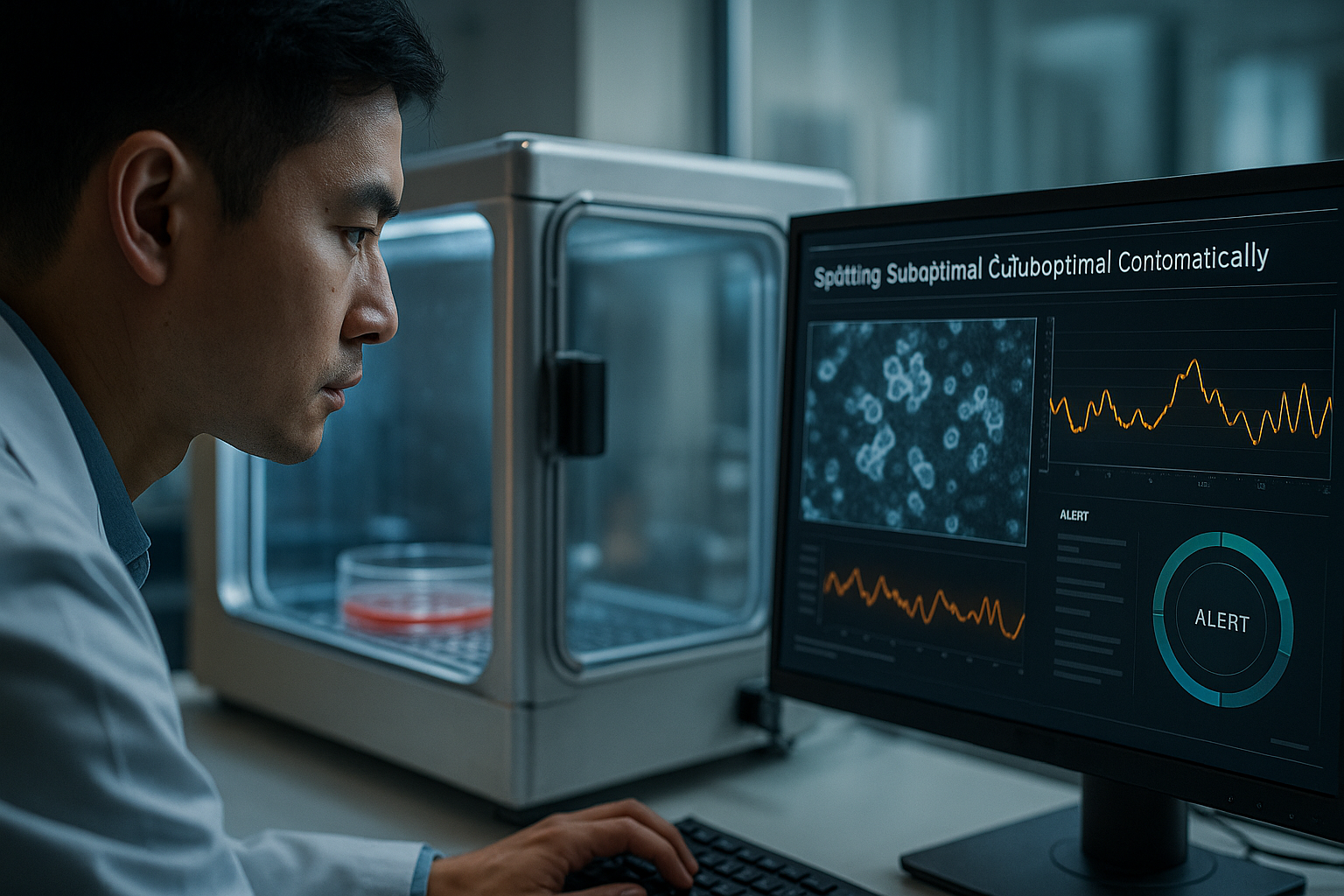
AI technologies can greatly improve quality control by automating quality assurance processes and minimizing human error. Image recognition algorithms, for example, are used to identify and categorize cell types, detect anomalies, and ensure consistency across experiments, which is crucial for reproducibility. In biomanufacturing, AI systems monitor production processes in real-time, facilitating rapid response to deviations from quality norms, thus ensuring product safety and efficacy.
- Implement AI tools for real-time quality monitoring to enhance product consistency.
AI-Enhanced Collaboration and Knowledge Sharing
Fostering Innovation through Shared Resources
The implementation of AI in laboratory settings also facilitates enhanced collaboration by centralizing data and analyses, making them accessible across multidisciplinary teams and research collaborators. Platforms enabled by AI can aggregate experimental data from multiple sources, creating a repository that can be accessed globally, thus expediting discovery and innovation. An example of this is the use of AI in virtual lab environments, where researchers can remotely access data and contribute to ongoing projects, fostering a more cohesive and inclusive research ecosystem.
- Utilize AI-powered platforms to enhance collaborative efforts and resource sharing.
Optimizing Workflow with AI-Powered Laboratory Management Systems
Streamlining Operations for Increased Efficiency
AI-powered laboratory management systems (LIMS) are at the forefront of modernizing laboratory operations. These systems automate the collection, processing, and storage of large volumes of experimental data, providing a seamless workflow that enhances productivity. Integrated solutions can track samples, schedule experiments, and manage inventory effectively, reducing downtime and optimizing resource allocation. By employing these systems, laboratories can ensure adherence to compliance standards while expanding their operational capacities.
- Adopt AI-driven LIMS to streamline operations and enhance productivity in your lab.
Applying AI for Enhanced Cellular Analysis
Advancing Precision in Cellular Studies
In-depth cellular analysis is critical in fields like oncology and regenerative medicine. AI enhances cellular analysis by providing quick, precise, and automated assessment of cellular behaviors and characteristics. AI algorithms help in quantifying biomarkers and cellular responses with high accuracy. Notably, AI-enabled systems like CellProfiler utilize image analysis to process high-throughput imaging data efficiently, accelerating the pace of cellular research.
- Integrate image analysis tools like CellProfiler for detailed cellular insights.
AI’s Role in Personalized Medicine
Tailoring Treatments with AI at the Core
As the healthcare paradigm shifts towards more personalized approaches, AI plays a pivotal role in tailoring treatments based on individual cellular and genetic profiles. AI technologies analyze genetic information to predict patient responses to treatments, aiding in the personalization of therapies. By integrating AI with genomics and patient data, researchers can develop more targeted and effective treatment plans, demonstrating AI’s potential to transform medical practices.
- Explore AI applications in genomics to advance personalized medicine initiatives.
Ethical Considerations and Challenges in AI Implementation
Navigating the Path with Caution
As AI becomes deeply integrated into laboratory processes, ethical issues and challenges arise, particularly concerning data privacy and algorithmic biases. It is crucial for labs to implement ethical frameworks and governance models that address these concerns. Transparent AI practices and data management protocols ensure credibility and trust in AI-enabled research outcomes. Developing AI technologies with inclusivity and fairness in mind can prevent biases and promote equitable advancements.
- Establish ethical standards and practices when implementing AI in research.
接下来,我们将总结要点、指标和一个有力的结论。.
“`
“`html
AI’s Influence on Data-Driven Decision Making
Bridging the Gap Between Data Analysis and Strategy
Incorporating AI into data analysis not only augments the decision-making process but also introduces a strategic edge to research initiatives. By analyzing vast amounts of data with precision, AI systems provide insights that inform strategic decisions. In complex fields like clinical research, AI helps prioritize research paths and resource allocation based on predicted outcomes. This predictive capability empowers teams to anticipate future trends, allowing them to adapt swiftly to evolving scientific landscapes.
- Leverage predictive analytics tools to inform strategic decision-making.
AI and Sustainable Research Practices
Enhancing Sustainability through Technology
As the focus on sustainability intensifies, AI technologies offer pathways to more environmentally conscious research practices. AI-driven systems optimize resource utilization, reducing waste and lowering the ecological footprint of laboratories. By monitoring energy consumption and raw material use in real-time, AI can suggest adjustments that align research operations with sustainable goals. Moreover, AI facilitates the recycling and repurposing of laboratory materials, contributing to the global sustainability agenda without compromising research quality.
- Adopt AI solutions to foster sustainable research environments.
Preparing for the Future of AI in Research
Navigating the Ever-Evolving Technological Landscape
As AI technologies continue to evolve, staying abreast of advancements is crucial for maintaining a competitive edge. Continuous learning and adaptation are imperative as new AI tools and methodologies emerge. Cultivating a culture of innovation within research teams can drive the integration of cutting-edge AI solutions and ensure their successful deployment. Additionally, fostering partnerships with AI experts and tech companies can facilitate knowledge transfer and support ongoing adaptation to future developments.
- Engage in continuous learning to stay current with AI advancements.
结论
As AI becomes a cornerstone of modern laboratory advancements, the integration of smart technologies into research processes proves indispensable. From enhancing predictive analytics to driving personalized medicine, AI transforms the laboratory landscape, offering unprecedented levels of efficiency, precision, and innovation.
The implementation of AI in laboratories fosters a data-driven approach to research, allowing for strategic decision-making and improved collaboration while maintaining ethical standards. At the same time, AI’s role in promoting sustainable practices aligns research activities with global sustainability objectives, underscoring its multifaceted value in the scientific ecosystem.
For researchers and laboratories seeking to maintain a competitive edge, embracing AI technologies is no longer optional but a necessity. The journey towards integrating AI can start by exploring the various applications outlined in this article, from leveraging machine learning models in predictive analytics to utilizing AI-powered quality control systems.
As you navigate this transformative era, let AI be the catalyst that propels your research to new heights. By embracing AI, you position yourself at the forefront of innovation, ready to tackle the challenges of today and tomorrow with renewed vigor and purpose. The future of research is intertwined with AI, and by harnessing its power, you can lead the way to groundbreaking discoveries and advancements. Stay ahead of the competition, explore the potential of AI in your laboratory, and inspire the next generation of scientific breakthroughs. Embrace this era of transformation and continually adapt and innovate, ensuring your research efforts yield meaningful, impactful outcomes that shape a better tomorrow.
“`