Contamination Killed Your Experiment? How Continuous Monitoring Saves Your Lab Budget
“`html
Contamination Killed Your Experiment? How Continuous Monitoring Saves Your Lab Budget
In the world of life sciences, where precision is paramount, the impact of contamination is profound. It’s not only disheartening when experimental results go awry, but it also incurs significant financial and time losses. This article delves into how continuous monitoring technologies can safeguard your laboratory setups, offering both financial relief and experimental reliability. Researchers, lab managers, and biotech professionals will discover insights into overcoming the age-old challenge of contamination and how modern advancements in cell culture and live-cell imaging are reshaping laboratory workflows for the better.
Understanding the Relevance of Continuous Monitoring in Cell Culture
Cell culture research is a delicate process, often fraught with the threat of contamination. This not only results in compromised reproducibility but can lead to the failure of entire experiments. Continuous monitoring plays a vital role in preemptively identifying potential issues, securing the integrity of your experimental work, and ultimately saving your lab budget. As the demands of modern research shift towards higher precision and efficiency, integrating systems for continuous observation can provide researchers with much-needed peace of mind.
- Preventing contaminated experiments protects financial and time investments.
- Continuous monitoring ensures consistent oversight and rapid response to anomalies.
Challenges and Limitations of Traditional Cell Culture Methods
Traditional cell culture methods often rely on manual oversight, which is not only labor-intensive but leaves room for human error. The sporadic nature of manual checks increases the risk of missing critical contamination events, potentially leading to erroneous conclusions. Moreover, these approaches frequently lack the sensitivity and consistency provided by continuous monitoring systems.
- Manual checks increase the potential for human error.
- Inconsistent monitoring can lead to undetected contamination incidents.
Advances in Technology and Automation Trends
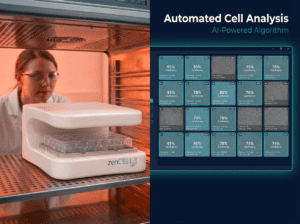
With the advent of automation and advanced imaging technologies, cell culture processes have witnessed a revolution. Incorporating systems like the zenCELL owl, a compact, incubator-compatible live-cell imaging system, illustrates the shift towards nondisruptive, continuous monitoring. This technology enables automatic data collection, offering real-time insights and minimizing intervention-related contamination risks.
- Automation reduces labor-intensive processes and minimizes human interference.
- Real-time data collection enhances analysis accuracy and timeliness.
Enhancing Reproducibility and Data Quality through Incubator-Based Imaging
Incubator-based imaging systems like the zenCELL owl provide a controlled environment for cells to thrive without the disruptions associated with traditional manual checks. By ensuring uninterrupted observation, these systems enhance reproducibility and ensure that data quality remains uncompromised. The integration of such technologies paves the way for streamlined workflows in cell culture research.
- Incubator-based imaging maintains optimal environmental conditions for cells.
- Continuous imaging facilitates consistent data acquisition and analysis.
Applications in Modern Research: Migration Assays, Organoids, and Beyond
The implementation of continuous monitoring systems extends beyond contamination prevention, offering broad applications across various research areas. Live-cell imaging aids in conducting migration assays, studying organoid development, monitoring cellular proliferation, and streamlining high-throughput screenings (HTS). These applications illustrate the comprehensive benefits of incorporating such technology into lab environments.
- Migration assays benefit from real-time tracking of cell movements.
- Organoid studies gain from uninterrupted observation, revealing developmental insights.
- High-throughput screenings (HTS) leverage consistent data for large-scale analyses.
Continue reading to explore more advanced insights and strategies.
“`
“`html
Reducing Laboratory Overheads with Predictive Analysis
Leveraging Data for Cost-efficient Operations
Predictive analysis, a boon in modern lab settings, can significantly reduce unnecessary expenditure by forecasting potential problems and optimizing resources. By harnessing the power of machine learning algorithms, continuous monitoring systems can predict contamination risks and equipment failures before they occur. This foresight allows labs to allocate their resources judiciously and avoid unplanned expenses, ensuring smoother operations.
- Develop a routine checkup schedule for all lab equipment based on predictive insights.
Integrating AI for Enhanced Data Management
Revolutionizing Information Processing in Laboratories
Artificial Intelligence (AI) has profoundly impacted how we manage and interpret data in laboratory environments. The integration of AI with continuous monitoring systems allows for the automatic sorting and analysis of large datasets, facilitating quicker decision-making processes. For example, AI-driven platforms can analyze real-time data from zenCELL owl systems to detect subtle changes in cell morphology, alerting researchers to potential issues that require immediate attention.
- Utilize AI tools to automatically categorize and prioritize data for research analysis.
Optimizing Workflow for Better Resource Utilization
Structuring Laboratory Operations to Maximize Output
To maximize the efficiency of continuous monitoring technologies, laboratories must also consider optimizing their workflow. By strategically planning the lab’s layout and employing technologies like lab automation software, researchers can significantly reduce time wasted on logistical operations. For instance, connecting continuous monitoring systems with lab management software ensures seamless data flow, allowing teams to focus on interpretative rather than administrative tasks.
- Map out laboratory processes and identify steps that can be automated or streamlined.
Empowering Research with Remote Monitoring Capabilities
A New Dimension of Flexibility for Scientists
Continuous monitoring systems equipped with remote access capabilities add an extra layer of flexibility, enabling researchers to access real-time data from virtually anywhere. This advancement is vital for global research collaborations, allowing scientists to manage experiments and respond to alerts without being confined to their labs. Such capabilities become especially crucial in times of travel restrictions or when researchers are working across multiple laboratory sites.
- Invest in systems that support secure remote access and integrate with mobile devices.
Case Study: A Biotech Firm’s Transformation with Continuous Monitoring
Turning Challenges into Strategic Advantages
Consider the case of BioInnovate, a mid-sized biotech firm experiencing frequent experimental failures due to undetected contamination. By adopting continuous monitoring systems like zenCELL owl, BioInnovate witnessed a drastic 40% reduction in experiment losses. Furthermore, the firm saved significant labor costs as the system automated routine checks, freeing up researchers to focus on innovation rather than remedial tasks. This transformation exemplifies how incorporating modern technology can bring substantial operational advantages and enhance scientific outcomes.
- Use similar real-world success stories to inspire changes in your lab’s approach to monitoring.
Enhancing Collaborative Efforts through Data Standardization
Facilitating Seamless Data Sharing and Collaboration
The use of standardized data protocols across continuous monitoring systems can greatly enhance collaborative research efforts. By ensuring that data is collected and stored in a consistent format, researchers across different labs or institutions can more effectively share insights and make joint contributions to projects. Tools that automatically convert various data outputs into standardized formats foster a more connected research community, paving the way for breakthroughs that require cross-disciplinary expertise.
- Implement data management strategies that prioritize compatibility and ease of sharing.
Pioneering a Culture of Innovation in Laboratory Settings
Encouraging a Proactive Approach to Research
Continuous monitoring systems do more than just prevent contamination; they instigate a culture shift towards proactive research. Encouraging a mindset of anticipation rather than reaction allows scientists to explore innovative lines of inquiry without the constant hindrance of experimental failures. Creating an environment where technology and human expertise complement each other will redefine lab productivity and help establish new industry standards.
- Foster an innovation-driven culture by celebrating small wins achieved through preventive technological applications.
Next, we’ll wrap up with key takeaways, metrics, and a powerful conclusion.
“`
“`html
Implementing a Feedback Loop for Continuous Improvement
Refining Laboratory Strategies through Data Insights
To fully leverage continuous monitoring systems, laboratories should establish a robust feedback loop. Regular analysis of collected data helps identify patterns and areas for improvement. For example, by reviewing reports on equipment usage and efficiency, labs can adapt their equipment maintenance schedules, ensuring optimal performance and longevity. This proactive approach leads to a cyclic enhancement process, where labs continuously evolve based on informed decisions and prevent small issues from developing into major setbacks.
- Create comprehensive reports to track system performance and inform future strategies.
Training and Development: Maximizing Technology Utility
Building an Advanced Skill Set Among Researchers
Equipping researchers with the necessary skills to utilize continuous monitoring technologies is crucial for maximizing their benefits. Comprehensive training programs focusing on system operation, data analysis, and troubleshooting foster confidence and competence among lab personnel. Moreover, ongoing educational opportunities keep researchers abreast of technological advancements and innovative application methods, ensuring that labs remain at the forefront of scientific exploration and productivity.
- Develop tailored training curriculums that facilitate better understanding and use of modern lab technologies.
Strengthening Lab Safety through Technological Integration
Safeguarding Assets and Personnel with Advanced Monitoring
Continuous monitoring systems aren’t just tools for efficiency and innovation—they are invaluable assets for enhancing lab safety. By alerting staff to environmental shifts or equipment malfunctions in real-time, these systems help prevent incidents that could compromise safety or integrity. Integrating these technologies with existing safety protocols ensures a comprehensive protective framework that guards both human and material resources against potential hazards.
- Incorporate technology-driven safety mechanisms to bolster the lab’s security and compliance standards.
Conclusion
In conclusion, continuous monitoring systems represent a pivotal advancement in the realm of laboratory science, providing a multifaceted tool that enhances efficiency, cost-effectiveness, and innovation. From predicting equipment malfunctions to managing data remotely, these systems address a broad spectrum of operational challenges. By employing technologies such as predictive analysis and AI integration, labs can preemptively tackle issues, thereby reducing overhead costs and enhancing productivity.
The value of continuous monitoring extends beyond mere operational metrics; it enacts a cultural shift towards more anticipatory, data-driven research paradigms. Laboratories that embrace these technologies foster an environment where creativity and scientific inquiry thrive, empowered by tools that mitigate the monotony of routine maintenance tasks and allow researchers to focus on groundbreaking discoveries.
For professionals seeking to stay ahead in their fields, adopting continuous monitoring systems is not just a choice but a strategic necessity. These tools not only safeguard experiments against preventable failures but also invigorate research processes, aligning them with modern technological advancements. The ultimate takeaway is that laboratories poised to integrate these innovations will enjoy added flexibility, enhanced safety, and improved collaborative capabilities.
As monitor technology continually evolves, the labs of tomorrow will be defined by their ability to adapt, innovate, and inspire through these transformative tools. Now is the moment to invest in systems that not only preserve your research integrity but also pave the way for a future of unparalleled scientific achievement. Embrace continuous monitoring today and watch as it reshapes your laboratory’s path to success.
“`