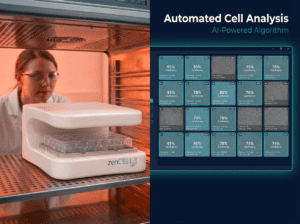
Data-Rich Discovery: Extracting More Insights from Every Adherent Culture
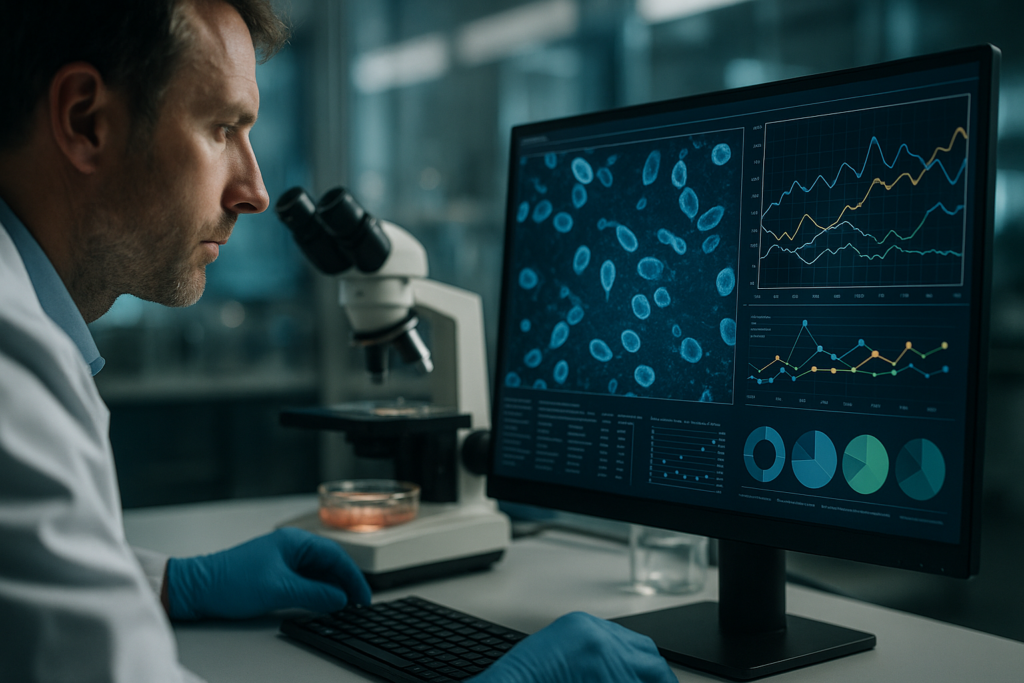
“`html
Data-Rich Discovery: Extracting More Insights from Every Adherent Culture
In the fast-evolving world of biotechnology, extracting more insights from every adherent culture has become a cornerstone of innovative research. As the complexity of experimental designs increases, so does the need for more detailed, data-rich discovery methods. This article delves into the importance of maximizing data acquisition from adherent cultures, revealing how cutting-edge technologies can tackle traditional limitations, optimize workflows, and ultimately enhance reproducibility and data quality in cell culture studies.
Challenges in Traditional Cell Culture Approaches
Limitations of Manual Monitoring and Data Collection
While traditional cell culture techniques have laid the foundation for countless biological insights, they are not without their limitations. Manual monitoring and data collection are not only time-consuming but also prone to human error. The inherent variability in manual processes can affect the consistency and reproducibility of results, leading to suboptimal data quality.
- Manual processes are labor-intensive and time-consuming.
- Increased variability due to human error.
- Limited capacity for continuous monitoring.
Embracing Technological Advances
Trends in Automation and High-Resolution Live-Cell Imaging
Recent technological advances have transformed how researchers approach cell culture. The integration of automation with high-resolution live-cell imaging allows for real-time monitoring of cellular environments. These advances enable data-rich discovery, offering deeper insights into cell behavior and dynamics.
- Automation reduces human error and ensures consistent conditions.
- High-resolution imaging provides detailed, continuous data.
- Integration with incubator environments maintains optimal cell conditions.
Practical Workflows in Live-Cell Imaging
Implementing Advanced Imaging Techniques
Live-cell imaging systems offer researchers a powerful tool for understanding cellular processes in real time. By employing these technologies, researchers can observe cell proliferation, migration, and other critical behaviors without disturbing the natural environment of the cells. An example of such a system is the zenCELL owl, a compact and incubator-compatible imaging solution that facilitates continuous monitoring while maintaining experimental conditions.
- Live-cell imaging supports long-term studies without perturbation.
- Systems like zenCELL owl enhance data collection within incubators.
- Continuous monitoring provides comprehensive datasets.
Improving Reproducibility with Incubator-Based Imaging
Enhancing Data Quality Through Stable Conditions
Incubator-based imaging significantly enhances the reproducibility and quality of data in cell culture studies. By maintaining stable environmental conditions, these systems minimize variability and allow for more precise data collection. This stability is crucial in assays where slight fluctuations can lead to significantly different outcomes.
- Stable conditions reduce variability, improving data quality.
- Intricacies of cellular dynamics better captured with precise imaging.
- Improved reproducibility leads to more reliable research outcomes.
Continue reading to explore more advanced insights and strategies.
“`
“`html
Incorporating AI in Data Analysis
Leveraging Machine Learning for Enhanced Insights
Artificial intelligence (AI) and machine learning (ML) have made significant strides in the field of biotechnology, particularly in data analysis related to cell culture studies. Leveraging AI models allows researchers to analyze complex datasets more efficiently, uncovering patterns and insights that might be missed through manual analysis. For example, AI algorithms can detect subtle changes in cellular morphology or proliferative behavior in images captured through live-cell imaging.
- AI models enable automated, in-depth analysis of large datasets.
- Machine learning can predict outcomes based on historical data, improving experimental design.
- AI streamlines the identification of key markers in cell behaviors.
Advancing Through Multi-Omics Integration
Combining Genomic, Transcriptomic, and Proteomic Data
By integrating data across various omics, such as genomics, transcriptomics, and proteomics, researchers can gain a more holistic view of cellular processes. Multi-omics approaches provide comprehensive datasets that reveal the interplay between genetic information, gene expression, and protein production. This integration is pivotal for studying complex biological systems and for applications like personalized medicine.
- Multi-omics integration reveals intricate biological networks.
- Enables precise identification of disease biomarkers.
- Supports development of targeted therapeutic strategies.
Scaling Up with Bioreactor Technologies
Optimizing Large-Scale Cell Culture
Bioreactors present a scalable solution to study adherent cultures at a larger volume and with enhanced control over environmental conditions. They are indispensable in the large-scale production of cells for therapeutic applications, such as cell therapy and vaccine production. Moreover, the integration of sensors and automation in modern bioreactors allows for real-time monitoring and adjustment of variables such as pH, oxygen levels, and temperature.
- Scalable production with consistent results.
- Automated control of environmental parameters enhances yield quality.
- Bioreactors facilitate compliance with regulatory standards for biologics.
Exploring Non-Invasive Imaging Techniques
Enhancing Cell Culture Monitoring Without Disruption
Non-invasive imaging techniques provide a significant advantage in monitoring cell cultures. These technologies bypass the need for destructive sampling, thereby preserving cell integrity and reducing variability. Techniques such as fluorescence microscopy and Raman spectroscopy have become popular for their ability to provide molecular-level insights without damaging the cells.
- Non-invasive methods preserve cell viability for extended studies.
- Detailed information at the molecular level is achievable without destructive analysis.
- Supports the longitudinal observation of cellular processes.
Utilizing 3D Cell Culture Models
Enhancing Physiological Relevance of In Vitro Studies
3D cell culture models offer a more physiologically relevant environment compared to traditional two-dimensional methods, leading to more accurate studies of cell behavior. These models replicate the complex architecture of tissues, providing insights that are closer to in vivo conditions. By adopting 3D models, researchers can better understand cellular interactions, drug responses, and tumor dynamics.
- 3D models mimic natural tissue architecture and cell-to-cell interactions.
- Enhanced predictive power for drug efficacy and toxicity tests.
- Increased relevance of data to clinical scenarios and therapeutic applications.
Implementing Lab-on-a-Chip Systems
Miniaturizing and Automating Experimental Setups
Lab-on-a-chip technology revolutionizes cell culture studies by miniaturizing and automating processes on a microfluidic platform. These systems allow for high-throughput screening and offer precise control over the microenvironment. Lab-on-a-chip devices are particularly valuable in studies where sample size and resource conservation are critical.
- Enhances throughput while reducing sample and reagent volumes.
- Automated processes increase efficiency and reduce costs.
- Microfluidic platforms facilitate complex biochemical analyses.
The Future of Adherent Cell Culture Research
Innovations and Emerging Technologies on the Horizon
As technology continues to evolve, the future landscape of cell culture research seems promising with the advent of new tools and methodologies. Innovations such as CRISPR-based gene editing, organ-on-chip models, and advanced bioprinting are set to further enhance data acquisition and accuracy. These technologies pave the way for more precise and individualized research applications, ultimately transforming biomedical studies and therapeutic applications.
- CRISPR allows for targeted genetic modifications in cell cultures.
- Organ-on-chip systems offer robust models for studying organ-specific diseases.
- Bioprinting enables the creation of complex tissue architectures for research.
Next, we’ll wrap up with key takeaways, metrics, and a powerful conclusion.
“`
“`html
The Role of CRISPR in Precision Editing
Transforming Genetic Studies in Cell Cultures
As a transformative technology, CRISPR-Cas9 has introduced precision and efficiency in genetic editing, allowing researchers to make targeted modifications with reduced risk of off-target effects. In adherent cell cultures, CRISPR offers unparalleled capabilities to understand gene function, study disease mechanisms, and create genetically modified cells for therapeutic research. The advent of this technology accelerates advancements in personalized medicine by tailoring cellular behaviors to study human diseases in vitro.
- CRISPR provides precise tools for gene knock-out and knock-in studies.
- Facilitates exploration of genetic pathways responsible for disease.
- Advances development of cell-based therapies through targeted modifications.
Advancements in Organ-On-Chip Technologies
Replicating Organ Physiology for Better Modeling
Organ-on-chip systems represent a frontier in mimicking the physiological context of organs. These microsystems integrate microengineering principles with biological components, providing an innovative way to emulate the dynamic architecture and functions of human organs. Enhancing the predictive capability for drug testing and disease progression, organ-on-chip devices offer significant promise in reducing the reliance on animal models, providing ethical and efficient research substitutes.
- Replicates complex organ functions within a microfluidic environment.
- Simplifies the study of organ-specific responses and disease models.
- Promotes ethical research by minimizing animal testing.
Innovative Prospects with Bioprinting
Crafting Organ Structures from the Ground Up
Bioprinting is at the forefront of creating complex tissue architectures, boasting the potential to revolutionize regenerative medicine and tissue engineering. This technology enables the precise placement of cells, biomaterials, and growth factors to create 3D tissue constructs that closely resemble the structural and functional properties of native tissues. In adherent cell culture research, bioprinting provides transformative prospects for developing artificial tissues and organs tailored for drug development and therapeutic purposes.
- Enables the creation of anatomically accurate tissue models.
- Enhances research in tissue repair and regenerative strategies.
- Facilitates the development of patients-specific therapeutic solutions.
Conclusion
The evolution of adherent cell culture research is marked by a significant integration of cutting-edge technologies such as AI, CRISPR, organ-on-chip systems, and bioprinting. These advancements collectively empower researchers to delve deeper into cellular processes, offering a comprehensive understanding of complex biological systems. The ability to leverage machine learning for enhanced data interpretation and the synthesis of multi-omics data are driving forces toward meaningful scientific discoveries.
In an era where the pace of innovation is accelerating, the application of scalable bioreactor technologies, non-invasive imaging, and lab-on-a-chip systems underscores the importance of automation and precision. By reflecting physiological conditions more accurately, 3D cell culture models stand at the forefront of preclinical research, bridging gaps towards clinical translations.
Incorporating these technological innovations reinforces this article’s central theme: extracting maximum insight from adherent culture studies to push the boundaries of biotechnology. With CRISPR and organ-on-chip technologies offering new vistas for targeted research and bioprinting opening avenues for complex tissue engineering, adherent cell culture research is poised to reshape the biological sciences landscape profoundly.
As we look to the future, the critical takeaways focus on the seamless integration of technology, collaboration across disciplines, and a commitment to ethical research methodologies that respect and reflect human biology intricacies. The field beckons researchers and innovators to continue their endeavors, advancing knowledge and applications that contribute significantly to improving human health and understanding disease pathology.
We invite you to stay informed, seek collaboration, and engage with emerging trends and technologies to accelerate progress. Your contributions are not just part of a scientific exploration but a vital push towards a future where science meets its fullest potential, sculpting a new horizon of therapeutic and investigative possibilities.
“`