“`html
Supporting Translational Research With Automated Live-Cell Imaging
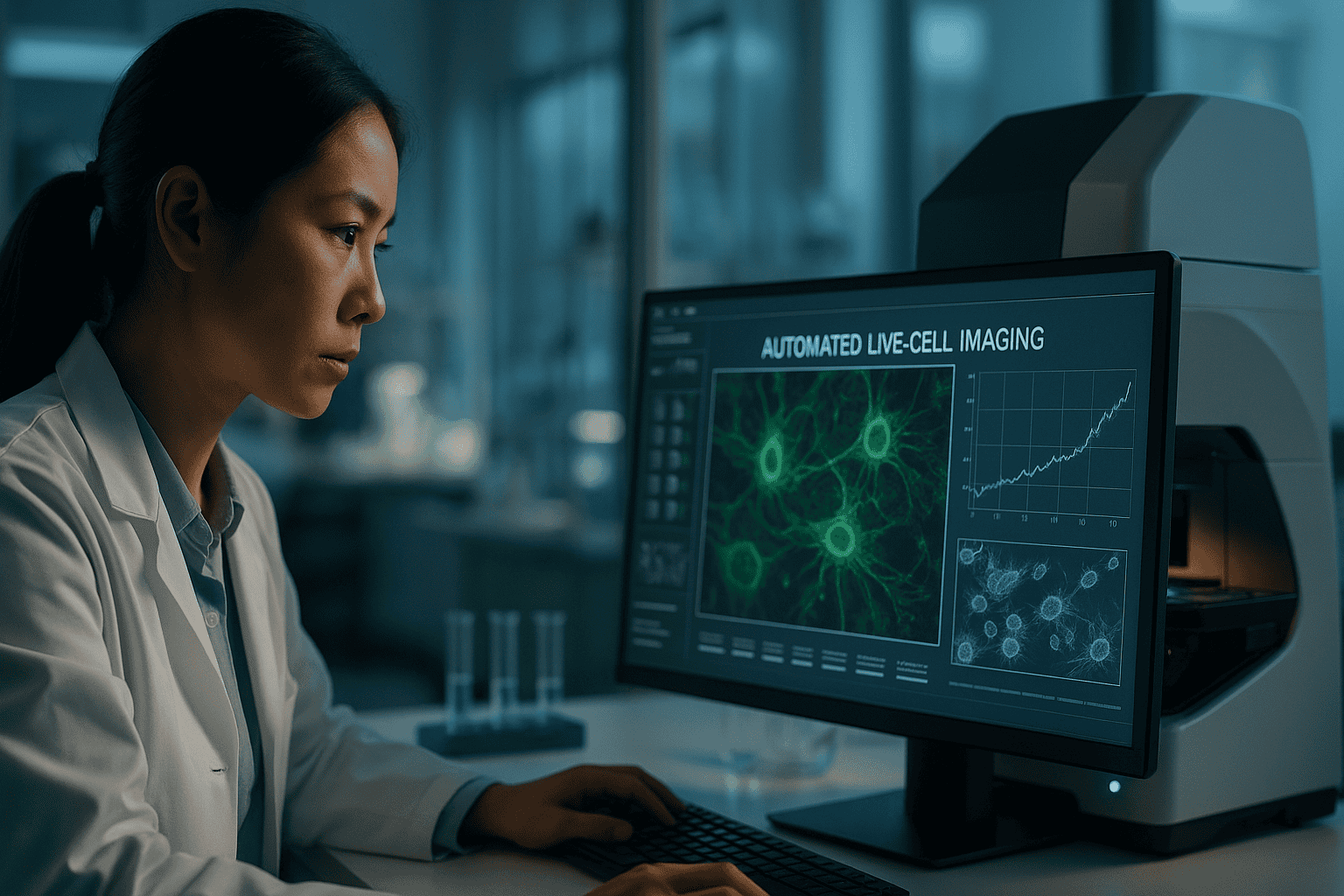
In the fast-evolving field of translational research, bridging the gap between basic science and clinical applications is vital. One of the key technologies at the forefront of this transition is automated live-cell imaging. This powerful tool offers real-time insights into cellular behaviors, assisting researchers in making groundbreaking discoveries. In this article, we will explore the significance of supporting translational research with automated live-cell imaging, highlighting the challenges of traditional methods and how modern advancements streamline workflows, enhance reproducibility, and improve data quality.
Challenges and Limitations of Traditional Approaches
Barriers in Conventional Cell Culture Techniques
The traditional approaches to cell culture and analysis, while foundational, come with several challenges. Manual cell counting and observation require extensive labor, are prone to human error, and often lack the resolution needed to capture dynamic cellular events. Moreover, the sporadic nature of manual observations can lead to data gaps, hindering the continuity necessary for comprehensive analysis.
- Manual observation risks inconsistency in data.
- High variability due to operator-dependent methodologies.
- Potential for overlooking transient cellular events.
Data Quality and Reproducibility Issues
Reproducibility is a cornerstone of scientific research, yet it remains a critical issue in cell culture studies. Traditional methodologies often fall short in ensuring consistent environmental conditions and precise tracking of cellular dynamics. This inconsistency can undermine confidence in experimental outcomes and hinder translational efforts.
- Variability in environmental conditions affects cell behavior.
- Lack of standardization leads to discrepancies in data interpretation.
Technological Advances and Automation Trends
The Shift Towards Automation
The advent of automation in cell culture and imaging represents a paradigm shift, offering solutions to longstanding challenges. Automated live-cell imaging systems blend precision with efficiency—capable of continuous monitoring without human intervention, they provide unprecedented insights into cell behavior.
- Automation reduces labor-intensive tasks and streamlines workflows.
- Continuous imaging captures dynamic processes, ensuring no data is missed.
Integration With Incubators
Technology has increasingly moved towards seamless integration with incubators. Systems such as the zenCELL owl exemplify this trend by allowing real-time imaging without removing cultures from their optimal environment. This integration enhances the fidelity of experiments by maintaining consistent conditions.
- Incubation-based imaging maintains optimal environmental conditions.
- Allows for long-term monitoring without disrupting cell culture conditions.
Continue reading to explore more advanced insights and strategies.
“`
“`html
Enhancing Data Accuracy and Precision
Leveraging High-Resolution Imaging Technologies
In the realm of translational research, data accuracy and precision are of paramount importance. Automated live-cell imaging systems are equipped with high-resolution cameras and advanced optics, allowing researchers to capture minute details of cellular processes. These systems provide quantitative analysis by measuring cellular morphology changes, migration patterns, proliferation rates, and other critical parameters. For instance, organizations such as the Howard Hughes Medical Institute utilize cutting-edge live-cell imaging systems to scrutinize specific cellular events in real-time, leading to more precise conclusions and experimental designs.
- Invest in high-resolution imaging systems for finer data accuracy.
Streamlining Drug Discovery Processes
Automated Screening and Monitoring of Cell Responses
Automated live-cell imaging has revolutionized the drug discovery landscape by enabling high-throughput screening of drug responses in cellular models. This approach allows rapid identification of drug efficacy and toxicity, drastically shortening the timeline from discovery to clinical application. Pharmaceutical companies like Pfizer have integrated automated live-cell imaging into their research pipelines, leading to faster, more reliable drug development processes. An automated system ensures comprehensive monitoring of real-time cellular responses, resulting in more informed therapeutic decisions.
- Implement high-throughput automated screening to expedite drug discovery.
Supporting Personalized Medicine Initiatives
Tailoring Treatments Based on Real-Time Imaging Data
As personalized medicine continues to gain prominence, real-time cell imaging plays a crucial role in tailoring treatments to individual patient needs. By studying a patient’s cell responses dynamically, researchers can predict how specific therapies will interact with their biological markers. Hospitals, such as the Mayo Clinic, have adopted live-cell imaging to customize cancer treatments, optimizing therapy effectiveness while minimizing adverse effects. This personalization is a game-changer in delivering patient-centric care.
- Utilize imaging data for individualized patient treatment plans.
Enhancing Collaboration Across Research Teams
Facilitating Data Sharing and Analysis
Collaboration is essential in translational research, where multidisciplinary teams must often work together. Automated live-cell imaging facilitates seamless data sharing and analysis through cloud-based platforms. Research institutions such as the European Molecular Biology Laboratory are leveraging these technologies to enable real-time access to imaging data across various locations, fostering global collaboration. This approach not only accelerates research but also ensures diverse perspectives contribute to robust data interpretation.
- Adopt cloud-based platforms to enhance collaborative research efforts.
Reducing Experimental Costs and Resource Use
Efficiency and Sustainability in Research Labs
While cutting-edge research technologies can seem costly, the integration of automated live-cell imaging systems ultimately reduces operational expenses by optimizing resource utilization. These systems cut down on reagent use, as smaller sample sizes are often sufficient for analysis. Additionally, the decrease in manual labor hours further contributes to cost efficiency. A study conducted by the University of California showed a reduction in research costs by 30% after adopting automated imaging solutions, emphasizing both financial and environmental sustainability.
- Leverage automation to reduce waste and optimize laboratory resources.
Training and Skill Development in Automated Systems
Providing Upskilling Opportunities for Researchers
As technology evolves, so must the skills of researchers. Automated live-cell imaging systems necessitate a new wave of training programs focused on operating these sophisticated tools and interpreting their outputs. Institutions such as the Massachusetts Institute of Technology offer specialized courses in automated imaging technologies, equipping scientists with the latest skills to excel in data analysis and equipment handling. This commitment to education ensures researchers remain at the forefront of innovation.
- Invest in training programs to proficiently utilize automated technologies.
Next, we’ll wrap up with key takeaways, metrics, and a powerful conclusion.
“`
“`html
Improving Data Accessibility and Transparency
Open-Source Sharing and Global Collaboration
In the world of research, open-source sharing of data and methodologies encourages greater transparency and reproducibility of findings. By adopting automated live-cell imaging systems that facilitate easy data storage and access, research organizations can ensure that their data contributes to a larger pool accessible to scientists worldwide. Institutions like the National Institutes of Health are pioneering efforts to create open-access databases that host live-cell imaging data, allowing researchers to verify results and build upon existing studies, thus accelerating scientific advancement.
- Encourage open data protocols to enhance research transparency and innovation.
Enhancing Predictive Modeling and Simulations
Integrating Imaging Data with Computational Analytics
Predictive modeling and simulations are essential tools for foreseeing biological responses to various stimuli. Automated live-cell imaging generates rich datasets that, when integrated with advanced computational analytics, improve the accuracy of these predictions. Collaborations between bioinformatics experts and experimental scientists have led to sophisticated models that simulate cellular behaviors under different conditions. Companies such as Cancer Research UK employ these methodologies to preemptively identify potential therapeutic targets, significantly lowering the risk of failure in clinical trials.
- Blend imaging data with computational tools for advanced predictive insights.
Advancing Ethical Standards and Compliance
Ensuring Ethical Practices in Automated Research
As research technology evolves, maintaining ethical standards becomes increasingly complex yet imperative. Automated live-cell imaging must adhere to stringent ethical guidelines, ensuring data integrity and patient confidentiality where applicable. Regulatory bodies such as the Food and Drug Administration are evolving their compliance standards to encompass advanced imaging technologies, ensuring that these innovations respect ethical boundaries while maximizing scientific potential. It is crucial for researchers to remain vigilant and updated on these standards to uphold the integrity of their work.
- Stay informed on ethical guidelines to ensure compliant research practices.
Conclusion
In the vibrant and challenging domain of translational research, automated live-cell imaging emerges as a transformative force. Across various aspects, such as enhancing data accuracy, streamlining drug discovery, supporting personalized medicine, and promoting global collaborations, this technology not only elevates scientific inquiry but also revolutionizes research methodologies. Institutions and companies that harness its potential are setting new benchmarks in research efficiency, precision, and ethical standards.
The preceding discussions underscore the extensive capabilities and applications of automated live-cell imaging. From increasing data accessibility and transparency to fostering global collaboration and driving down costs, the benefits to research labs are manifold. Furthermore, integrating these imaging systems with computational analytics has exemplified the power of interdisciplinary approaches in advancing scientific understanding. Such collaborations propel forward the limits of what can be achieved, promising insights and innovations that were once deemed unreachable.
Encouragingly, the advancements in live-cell imaging also herald significant implications for training and skill development. As educational institutions incorporate specialized courses, researchers gain access to invaluable skills, ensuring that the scientific community not only keeps pace with technological advancements but also leads it.
At its heart, automated live-cell imaging is paving the way towards a future of immense possibilities in translational research—one where personalized, precise, and efficient solutions to complex biomedical challenges are attainable. As researchers, institutions, and industries join hands in this shared vision, they stand at the cusp of discoveries that promise to redefine our understanding and treatment of diseases.
To drive these innovations forward, research bodies and professionals are called upon to embrace these technologies fully. By investing in open access, predictive analytics, and ethical compliance, the research community can maximize the potential of automated live-cell imaging, paving the way for breakthroughs that enhance human health and knowledge.
“`