“`
Cutting R&D Costs: Reducing Experimental Waste with Early-Phase Analytics
The escalating costs of research and development (R&D) in biotech and pharmaceutical domains have driven researchers to seek innovative strategies for cost management. In the world of modern cell culture research, one crucial approach is the integration of early-phase analytics, which minimizes experimental waste and enhances research efficiency. This article delves into the current challenges in cell culture, the role of technology in addressing these hurdles, and how adopting advanced tools in early-phase analysis can significantly cut R&D costs. Readers will gain insights into improving experimental design, leveraging real-time data, and enhancing the reproducibility of their studies.
Challenges in Traditional Cell Culture Approaches
Complexity and Variability in Experiments
Traditional cell culture approaches often wrestle with variability across experiments, which can lead to significant resource waste. Factors like batch-to-batch variations and environmental inconsistencies contribute to the unreliability of results. This unpredictability frequently necessitates repeat experiments, extending project timelines and inflating costs. Furthermore, traditional methods often lack real-time monitoring capabilities, making it difficult for researchers to adjust parameters promptly to optimize results.
- Batch-to-batch variation increases experimental costs.
- Limited real-time data availability hinders adjustment capabilities.
- High resource expenditure on repeat experiments.
Avances tecnológicos y tendencias de automatización
Incorporating Automation to Enhance Efficiency
Recent advancements in laboratory technology have introduced automation as a viable solution to address the challenges faced by traditional cell culture methods. Automation not only reduces human error but also streamlines workflows, thus minimizing waste. Technologies such as robotic systems, data analytics software, and automated live-cell imaging are transforming how researchers conduct their experiments. By integrating these solutions, labs can achieve significant time savings and cost reductions through improved operational efficiency and data precision.
- Automated systems enhance precision and reduce human error.
- Data analytics facilitate smarter decision-making processes.
- Robotic systems streamline complex workflows.
Practical Examples: Leveraging Live-Cell Imaging
Real-Time Monitoring with Live-Cell Imaging
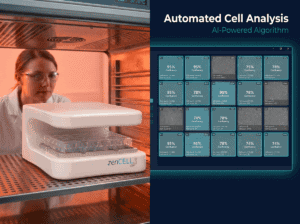
One of the pivotal technological advancements in cell culture analytics is live-cell imaging. This method offers real-time monitoring of cell behavior, allowing researchers to gather crucial data at every stage of an experiment. Systems like the zenCELL owl, a compact, incubator-compatible live-cell imaging system, exemplify this advancement. They provide uninterrupted observation without disturbing the cell environment, ensuring continuous data acquisition and minimizing the risk of experimental failure. Live-cell imaging systems are integral in performing various applications such as migration assays, organoid growth studies, and cell proliferation analyses.
- zenCELL owl provides continuous monitoring without disrupting cell environments.
- Enhances data accuracy and experimental reproducibility.
- Facilitates various applications like organoid and proliferation studies.
Incubator-Based Imaging for Improved Reproducibility
Advantages of Incubator Compatibility
Integration of imaging systems within incubators offers a substantial enhancement in the quality and consistency of experimental data. With devices like the zenCELL owl that are specifically designed for incubator compatibility, cells remain in optimal conditions during observation. This approach not only preserves the physiological environment crucial for cell health but also ensures that data collected is reflective of true cellular functions. Consequently, incubator-based imaging reduces experimental discrepancies and increases the likelihood of successful replication across experiments.
- Maintains physiological conditions for cell health.
- Increases data reproducibility across experiments.
- Reduces experimental discrepancies and errors.
Applications: Migration Assays, Organoids, and More
Diverse Uses in Modern Research
Live-cell imaging systems find application in a wide variety of research areas, including migration assays, organoid studies, and high-throughput screening (HTS). Migration assays benefit from real-time data to track cellular processes such as wound healing and metastasis. Organoid research, essential for drug discovery and disease modeling, requires precise monitoring of three-dimensional cell growth, which live-cell imaging expertly provides. Additionally, in HTS, the speed and efficiency of automated imaging systems significantly accelerate the detection of potential drug candidates.
- Migration assays utilize real-time imaging for tracking cellular processes.
- Organoid studies rely on precise monitoring of 3D growth patterns.
- HTS is enhanced by the efficient performance of automated imaging systems.
Continúe leyendo para explorar información y estrategias más avanzadas.
“`
“`
Optimizing Experimental Design in R&D
The Role of Early-Phase Analytics
Optimizing experimental design is crucial for enhancing the efficiency of R&D projects, especially within biotech and pharmaceutical industries. Early-phase analytics provide valuable insights that allow researchers to refine their initial experimental setups. By leveraging sophisticated software tools for data modeling and simulation, scientists can foresee potential pitfalls and configurations that maximize results. Implementing design of experiments (DOE) methodologies supported by statistical analysis enables clearer visualization of data trends and better-informed decision-making.
- Adopt DOE methodologies for structured experimentation.
- Utilize data modeling tools for predictive analytics.
Real-Time Data Utilization for Better Decision Making
Transforming Raw Data into Actionable Insights
The capability to access and utilize real-time data throughout the research process significantly amplifies decision-making efficiency. Analysts can employ advanced software solutions that integrate machine learning algorithms to interpret vast datasets generated during experiments. Tools such as real-time PCR analytics and next-generation sequencing data platforms provide researchers with instantaneous feedback, cutting down the analysis cycle and enabling prompt adaptations to experimental conditions.
- Invest in machine learning-driven data platforms.
- Leverage real-time analytics to refine experimental conditions swiftly.
Leveraging Big Data in Cell Culture Research
Harness the Power of Data Analytics
The integration of big data analytics into cell culture research marks a significant shift in how experiments are conceptualized and conducted. By systematically collecting and analyzing large volumes of biological data, researchers can uncover hidden patterns and relationships amid experimental variables. This approach has been instrumental in understanding phenomena such as drug resistance, enabling tailored therapeutic strategies. Collaboratively utilizing datasets from multiple studies amplifies research potential and accuracy.
- Utilize big data tools for comparative analysis across large datasets.
- Implement data-sharing systems to enhance collaborative research opportunities.
Advanced Data Reproducibility Strategies
Ensuring Consistency and Accuracy
Data reproducibility is a cornerstone of credible scientific research. Establishing robust reproducibility protocols involves standardizing methodologies and utilizing cutting-edge technologies that reduce variability in results. Adopting electronic laboratory notebooks (ELNs) and quality management systems (QMS) aids in maintaining meticulous records and facilitates cross-verification. These strategies ensure that data integrity is uncompromised across multiple research sites and phases.
- Incorporate ELNs to streamline data management and sharing.
- Implement QMS for systematic quality control of experimental data.
Integrating Artificial Intelligence in Research Processes
AI-Powered Innovations in R&D
The advent of artificial intelligence (AI) in R&D heralds a new era of innovation, particularly within the realms of drug development and genetic engineering. AI systems analyze complex biological networks and predict successful experiment outcomes through algorithms that learn from previous data sets. This not only boosts the efficiency of locating viable compounds but also accelerates time-to-market for new therapeutics. For example, AI-assisted drug screening tools offer precise identification of lead compounds, surpassing traditional trial-and-error methods.
- Integrate AI tools for enhanced predictive accuracy.
- Adopt AI-based screening to expedite candidate selection processes.
Bioprinting: Revolutionizing Cell Culture Experimentation
Innovative 3D Bioprinting Technologies
3D bioprinting stands at the forefront of transforming cell culture experimentation, enabling the fabrication of complex biological structures that mimic in vivo conditions. With applications spanning tissue engineering and personalized medicine, bioprinting allows researchers to develop detailed models of human tissues for testing drugs and observing disease dynamics. This technology is being harnessed to create organ-on-a-chip systems, offering realistic platforms for studying human pathophysiology.
- Employ 3D bioprinting for realistic tissue modeling.
- Utilize organ-on-a-chip systems to enhance experimental relevance.
Ensuring Compliance with Regulatory Standards
Navigating Regulatory Challenges in Research
Compliance with regulatory standards is essential for the credibility and applicability of research outputs. Strict adherence to guidelines from entities such as the FDA and EMA ensures the safety and efficacy of experimental processes. Researchers must stay informed of the evolving regulatory landscape and integrate compliance frameworks into their experimental workflows to circumvent potential hurdles during the approval stages of drug development or biomedical tool innovations.
- Stay updated on international regulations and compliance requirements.
- Incorporate regulatory frameworks early in the R&D process.
Collaborative Research and Cross-Functional Teams
Fostering Interdisciplinary Collaboration
Increasing collaboration between cross-functional teams can radically improve R&D outcomes by pooling diverse expertise and perspectives. Platforms that facilitate data sharing and communication between biologists, chemists, engineers, and data scientists expedite the discovery process. Cross-disciplinary synergy encourages innovative problem-solving approaches, leading to faster breakthroughs in complex research challenges.
- Develop platforms that enhance interdisciplinary data sharing.
- Create integrated teams with varied scientific backgrounds for holistic research.
A continuación, concluiremos con los puntos clave, métricas y una conclusión contundente.
“`
“`
Metrics for Successful R&D Implementation
Measuring Progress and Effectiveness
Quantitative metrics are essential in assessing the effectiveness of R&D strategies and initiatives. Implementing key performance indicators (KPIs) such as time-to-market, cost reductions, and the number of successful experiments can provide a comprehensive picture of progress. Furthermore, employing analytics dashboards allows researchers to monitor these metrics in real time, enabling swift adjustments and ongoing optimization.
- Define clear KPIs aligned with organizational goals.
- Use analytics dashboards for real-time performance monitoring.
Future Trends in R&D Innovation
Emerging Technologies and Their Impact
As R&D continues to evolve, emerging technologies such as quantum computing and advanced CRISPR techniques are set to redefine the landscape. Quantum computing holds the potential to revolutionize data processing and simulation capabilities, drastically reducing computation time for complex models. Simultaneously, advancements in CRISPR technology are expanding genetic engineering possibilities, enabling precise edits at an unprecedented scale. These innovations promise to accelerate discovery and development across biotechnology and pharmaceuticals.
- Explore quantum computing for faster data processing in R&D.
- Leverage advanced CRISPR techniques for targeted genetic modifications.
Adopting a Holistic R&D Strategy
Integrating Technology, Compliance, and Collaboration
The most successful R&D strategies are those that integrate technology, compliance, and interdisciplinary collaboration in a synergistic manner. By aligning innovations with regulatory requirements and fostering seamless communication between diverse teams, organizations can streamline their research processes. Strategic planning that encompasses all aspects of new technology adoption, regulatory navigation, and collaborative problem-solving form the bedrock of cutting-edge R&D endeavors.
- Align technological and regulatory strategies for cohesive R&D workflows.
- Facilitate communication and collaboration across all research divisions.
Conclusión
Optimizing R&D through early-phase analytics, real-time data integration, and advanced technologies heralds a transformative shift in research methodologies. By embracing DOE methodologies and harnessing real-time data, researchers can foresee experimental outcomes with greater accuracy and adapt to evolving conditions swiftly. Big data analytics, AI innovations, and bioprinting technologies further enhance the precision and speed of scientific inquiry, creating new avenues for breakthrough discoveries.
Moreover, ensuring compliance with strict regulatory standards upholds the integrity and practical applicability of R&D outputs, while interdisciplinary collaboration empowers diverse expertise to coalesce into innovative solutions. As new technologies such as quantum computing and advanced CRISPR techniques emerge, they hold the potential to revolutionize the efficiency and effectiveness of research processes further.
Ultimately, the key to successful R&D lies in recognizing the interconnected nature of modern scientific endeavors. By practicing holistic strategy adoption, incorporating technological advancements, and fostering a culture of collaboration and compliance, companies can radically enhance their research outcomes. Join this journey towards innovation by investing in comprehensive R&D strategies that not only cut costs but also reduce experimental waste, paving the way for future scientific breakthroughs. Let us embrace these cutting-edge, research strategies for a brighter tomorrow in the biotech and pharmaceutical landscapes.
“`