Montée en puissance sans sacrifice : une surveillance simple et à haut débit des plaques de 96 puits
“`html
Montée en puissance sans sacrifice : une surveillance simple et à haut débit des plaques de 96 puits
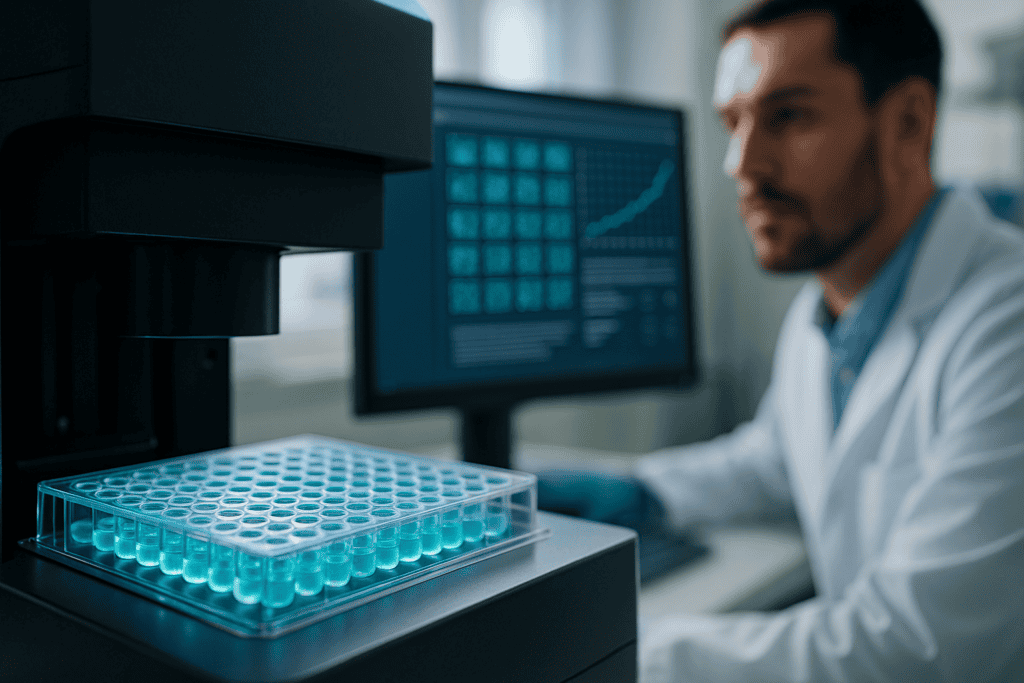
Dans le domaine en évolution rapide de la recherche sur la culture cellulaire, la demande de données scientifiques à haut débit et reproductibles n'a jamais été aussi cruciale. Alors que les laboratoires s'efforcent d'étendre leurs opérations sans sacrifier la qualité des données, l'adoption de technologies avancées devient impérative. La surveillance à haut débit en plaques de 96 puits offre une solution efficace, ouvrant la voie à une analyse complète des cellules et à l'innovation dans les flux de travail. Cet article explore les défis, les avancées et les applications pratiques de la surveillance à haut débit, équipant les chercheurs, les chefs de laboratoire et les professionnels de la biotechnologie des connaissances nécessaires pour améliorer leurs techniques de culture cellulaire.
Défis et limites des approches traditionnelles
Pour les chercheurs menant des expériences de culture cellulaire, les méthodes de surveillance traditionnelles présentent souvent des obstacles importants. Les interventions manuelles peuvent entraîner une variabilité, tandis que le recours aux tests de point final limite les informations en temps réel sur la dynamique cellulaire. Ces défis peuvent affecter la précision des données, la reproductibilité et, en fin de compte, les conclusions tirées des études expérimentales.
- La manipulation manuelle augmente le risque de contamination et de variabilité.
- Les essais ponctuels manquent de la capacité de surveiller les processus cellulaires dynamiques en temps réel.
- Les problèmes de reproductibilité découlent d'une manipulation incohérente des échantillons et de fluctuations environnementales.
Avec les avancées dans la technologie de culture cellulaire, il est essentiel de surmonter ces limitations pour maintenir l'intégrité de la recherche scientifique. Continuez votre lecture pour explorer les avancées technologiques et les tendances en matière d'automatisation.
Avancées technologiques et tendances d'automatisation
Automatisation dans la surveillance à haut débit
Les récents développements technologiques ont révolutionné la surveillance à haut débit, facilitant l'intégration transparente de l'automatisation dans les environnements de laboratoire. Les systèmes d'imagerie automatisés fournissent une collecte de données continue et en temps réel, réduisant le besoin d'intervention manuelle et minimisant les erreurs.
- L'automatisation améliore la reproductibilité en offrant des conditions d'imagerie cohérentes.
- La surveillance en temps réel permet d'observer la dynamique cellulaire dans des plaques de 96 puits.
- L'intégration avec des logiciels d'analyse de données permet une interprétation efficace des résultats.
En adoptant ces avancées, les laboratoires peuvent améliorer leur productivité et maintenir des normes élevées d'intégrité de la recherche. Continuez à lire pour des exemples pratiques et des flux de travail utilisant l'imagerie de cellules vivantes.
Exemples pratiques et flux de travail utilisant l'imagerie de cellules vivantes
Mise en œuvre de l'imagerie en cellules vivantes
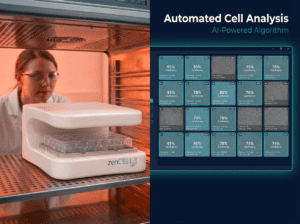
L'imagerie des cellules vivantes est une technique puissante qui fournit des informations approfondies sur le comportement cellulaire au fil du temps. Elle permet aux chercheurs de collecter des données quantitatives sur la migration, la prolifération et les changements morphologiques des cellules sans perturber l'environnement de culture. Le zenCELL owl est un exemple de système compact et efficace pour de telles applications. Cet appareil, compatible avec les incubateurs, permet une surveillance ininterrompue des cellules dans des plaques de 96 puits.
- Les essais de migration cellulaire bénéficient de la surveillance continue des schémas de mouvement.
- Les études de prolifération sont améliorées par le suivi de la division cellulaire en temps réel.
- Le développement des organoïdes peut être observé pour évaluer les schémas de croissance tridimensionnelle.
L'imagerie de cellules vivantes rationalise les flux de travail en éliminant le besoin d'observations manuelles prolongées, ce qui permet de gagner du temps et de réduire le risque d'erreurs. Continuez à lire pour découvrir comment l'imagerie basée sur incubateur améliore la reproductibilité et la qualité des données.
“`
“`html
Améliorer la qualité des données grâce à l'imagerie basée sur incubateur
Maintenir des conditions environnementales constantes
L'imagerie basée sur incubateur est une avancée révolutionnaire pour ceux qui travaillent avec l'imagerie de cellules vivantes, car elle permet aux chercheurs de maintenir des conditions de culture optimales tout en observant les cellules directement à l'intérieur de l'incubateur. En éliminant le besoin de transporter les cellules vers différents endroits pour l'imagerie, cette technologie minimise les fluctuations environnementales et le stress qui pourraient affecter les réponses cellulaires.
- Assurez la stabilité en maintenant des niveaux de température et d'humidité constants dans l'incubateur.
- Atténuez les changements cellulaires liés au stress en minimisant les perturbations externes pendant les séances d'imagerie.
- Optimiser la fiabilité des données grâce à des environnements d'incubation stables et à une réduction de la manipulation manuelle.
Avec l'imagerie basée sur incubateur, les laboratoires peuvent s'attendre à des améliorations dans la cohérence et la fiabilité de leurs efforts de surveillance des cultures cellulaires.
Intégration de l'apprentissage automatique pour une analyse améliorée
Informations basées sur les données avec l'intelligence artificielle
L’intégration d’algorithmes d’apprentissage automatique avec des systèmes d’imagerie à haut débit ouvre la voie à une analyse de données plus sophistiquée. En tirant parti de l’IA, les chercheurs peuvent automatiser l’interprétation de jeux de données complexes, en identifiant des modèles et des tendances qui autrement passeraient inaperçus.
- Utiliser l'apprentissage automatique pour analyser efficacement de grands volumes de données d'images.
- Utiliser la modélisation prédictive pour anticiper les résultats et les comportements cellulaires.
- Implémenter la détection d'anomalies pilotée par l'IA pour l'identification précoce d'événements cellulaires atypiques.
Cette combinaison d'IA et d'imagerie à haut débit permet aux chercheurs d'obtenir des informations plus approfondies à partir de leurs expériences, favorisant ainsi l'innovation et la découverte dans le domaine.
Études de cas réelles : Mise en œuvre réussie
Étude de cas : une entreprise de biotechnologie révolutionne son flux de travail
Une entreprise de biotechnologie a mis en œuvre un système complet de surveillance à haut débit sur 96 puits, intégré à l'imagerie de cellules vivantes et à l'automatisation. Cela a entraîné des améliorations spectaculaires de la productivité et de la fiabilité des données. En utilisant une surveillance continue, ils ont considérablement accéléré leur processus de découverte de médicaments et amélioré la précision de leurs essais sur des cellules.
- L'acquisition de données en temps réel a éliminé le goulot d'étranglement causé par les observations manuelles.
- Les processus automatisés ont permis d'augmenter le débit de plus de 501 TP3T par rapport aux méthodes traditionnelles.
- L'analyse basée sur l'apprentissage automatique a permis l'identification rapide de candidats médicaments prometteurs.
Ces résultats soulignent l'impact transformateur de l'adoption de technologies de surveillance avancées dans un environnement de laboratoire réel.
Optimisation de l'interprétation et du reporting des données
Des données brutes aux informations exploitables
Une analyse et une visualisation efficaces des données sont des composantes essentielles de la surveillance à haut débit réussie. Grâce à des solutions logicielles avancées, les chercheurs peuvent transformer facilement les données d'imagerie brutes en informations exploitables. Des tableaux de bord visuellement intuitifs et des outils de reporting automatisés simplifient l'interprétation des données, permettant une prise de décision plus éclairée.
- Exploitez des tableaux de bord interactifs pour explorer visuellement des ensembles de données complexes.
- Utilisez des rapports automatisés pour rationaliser la communication des conclusions.
- Améliorez la collaboration entre les équipes en partageant facilement des informations sur les données.
Cette approche rationalisée permet non seulement de gagner du temps, mais aussi d'améliorer la communication des résultats de recherche aux différentes parties prenantes.
Stratégies d'optimisation des flux de travail à haut débit
Maximiser l'efficacité et l'efficience
L'optimisation des flux de travail dans les systèmes à haut débit est essentielle pour maximiser la productivité du laboratoire. En planifiant stratégiquement les expériences, en utilisant le traitement parallèle et en assurant une intégration transparente des données, les chercheurs peuvent obtenir des résultats plus cohérents et fiables.
- Concevez des expériences avec des objectifs clairs et des processus simplifiés pour minimiser les erreurs.
- Utiliser des techniques de traitement par lots pour améliorer le débit et réduire le temps d'obtention des résultats.
- Intégrer des systèmes de gestion de données pour garantir une manipulation et un partage de données fluides.
Grâce à ces stratégies, les laboratoires peuvent améliorer leur efficacité opérationnelle et obtenir des résultats de recherche de meilleure qualité.
Surmonter les obstacles à l'adoption
Naviguer les défis dans la mise en œuvre de nouvelles technologies
Bien que les avantages de la surveillance à haut débit soient clairs, certains laboratoires peuvent rencontrer des difficultés lors de l'adoption de nouvelles technologies. Les obstacles courants comprennent le coût, la compatibilité des systèmes et la nécessité de formation. Cependant, ceux-ci peuvent être surmontés grâce à des stratégies de planification et de mise en œuvre judicieuses.
- Réaliser une analyse coûts-avantages pour justifier l'investissement dans de nouvelles technologies.
- Assurer la compatibilité avec les systèmes existants grâce à des solutions modulaires et flexibles.
- Offrir des programmes de formation complets pour faciliter des transitions harmonieuses pour le personnel.
En abordant proactivement ces défis, les laboratoires peuvent intégrer avec succès des solutions de surveillance avancées dans leurs flux de travail.
Directions futures du suivi à haut débit
Anticiper les prochaines innovations
Le domaine du suivi à haut débit en plaques de 96 puits est en constante évolution, les orientations futures étant susceptibles d'être façonnées par les progrès de la nanotechnologie, de la médecine personnalisée et de la biologie numérique. Ces innovations affineront davantage la précision de l'analyse des cultures cellulaires et ouvriront de nouvelles voies pour la recherche médicale et les développements thérapeutiques.
- Explorer les opportunités en nanotechnologie pour améliorer les techniques de surveillance cellulaire.
- Adapter les flux de travail pour soutenir les initiatives de médecine personnalisée et de médecine de précision.
- Exploiter la biologie numérique pour synthétiser des données biologiques complexes en modèles cohérents.
Rester informé de ces développements sera crucial pour les chercheurs qui cherchent à rester à la pointe de la découverte scientifique.
Ensuite, nous conclurons avec les points clés à retenir, les métriques et une conclusion percutante.
“`
“`html
Indicateurs clés de succès
Mesurer l'impact des systèmes à haut débit
Pour comprendre véritablement l'efficacité des systèmes de surveillance à haut débit sur 96 puits, les laboratoires doivent se concentrer sur des métriques spécifiques qui mettent en évidence leur impact. Ces indicateurs clés de performance permettent aux chercheurs d'évaluer le succès de leurs flux de travail en temps réel et d'ajuster leurs stratégies en conséquence.
- Efficacité du débit : Mesurer le nombre d'analyses traitées sur une période donnée pour évaluer la capacité opérationnelle.
- Exactitude des données : Évaluez la fiabilité et la cohérence des résultats pour garantir des sorties de haute qualité.
- Optimisation des processus : Suivre les améliorations des flux de travail et la réduction des délais d'exécution comme indicateurs de productivité accrue.
En se concentrant sur ces métriques, les laboratoires peuvent obtenir des informations sur les performances de leurs systèmes à haut débit, garantissant ainsi qu'ils atteignent les objectifs de recherche de manière efficace et efficiente.
Explorer les innovations collaboratives
Créer un réseau pour la découverte
La collaboration interdisciplinaire est un moteur essentiel de l'innovation dans la surveillance à haut débit. En s'associant à des fournisseurs de technologie, des institutions académiques et des experts de l'industrie, les laboratoires peuvent tirer parti d'un éventail plus large d'expertise et de ressources.
- Collaborer avec des équipes interdisciplinaires pour favoriser la créativité et des solutions innovantes.
- Participez à des initiatives de recherche collaborative pour accéder aux technologies et aux découvertes de pointe.
- Utiliser des plateformes partagées pour l'échange de données, favorisant la transparence et une découverte accélérée.
Les innovations collaboratives non seulement renforcent les capacités technologiques, mais ouvrent également la voie à des réalisations scientifiques révolutionnaires.
Conclusion
L'intégration de l'imagerie basée sur incubateur et d'algorithmes avancés d'apprentissage automatique au sein de systèmes de surveillance à haut débit à 96 puits représente un changement capital dans le domaine de la recherche en laboratoire. Tout au long de cet article, nous avons exploré diverses stratégies pour améliorer la qualité des données, intégrer l'IA pour une analyse approfondie et surmonter les obstacles à l'adoption. En maintenant des conditions environnementales constantes et en employant des solutions logicielles intuitives, les laboratoires peuvent améliorer considérablement la fiabilité des données et les résultats de la recherche.
La mise en œuvre réussie de ces technologies de pointe transforme les flux de travail dans les entreprises de biotechnologie et au-delà, comme en témoignent les études de cas réels présentées. Plus important encore, des indicateurs clés tels que l'efficacité du débit, la précision des données et l'optimisation des processus offrent des informations précieuses qui permettent aux laboratoires de rester compétitifs dans un paysage en constante évolution.
Alors que nous nous tournons vers l'avenir, les innovations anticipées en nanotechnologie, en médecine personnalisée et en biologie numérique promettent d'affiner davantage les capacités de surveillance à haut débit. En restant informés et adaptables, les laboratoires sont prêts à exploiter le potentiel de ces avancées, façonnant dynamiquement l'avenir de la recherche médicale et du développement thérapeutique.
Nous invitons les chercheurs comme les chefs d'entreprise à adopter les changements vers une science plus agile et axée sur les données. En tirant parti des outils, des stratégies et des collaborations décrits dans cet article, la communauté scientifique peut accélérer la découverte et l'innovation, transcendant les frontières traditionnelles dans la quête d'une connaissance transformatrice.
Rejoignez-nous dans ce voyage d'exploration scientifique et d'évolution technologique, où chaque point de données nous rapproche de la réponse aux grandes questions des sciences de la vie. Construisons collectivement un avenir où les systèmes de surveillance à haut débit ne seront pas de simples outils, mais la pierre angulaire de la découverte et de la compréhension.
“`