The Scalability Trap: Solving Throughput Bottlenecks in Large-Scale Screenings

“`html
The Scalability Trap: Solving Throughput Bottlenecks in Large-Scale Screenings
In the ever-evolving world of cell culture research, efficiency and scalability are paramount, especially when tackling large-scale screenings. Yet, the scalability trap — where throughput cannot keep up with the demand — remains a persistent challenge. This article delves into strategies for overcoming throughput bottlenecks in large-scale screenings, examining the limitations of traditional approaches and the role of modern technology and automation.
Understanding the Scalability Trap in Modern Cell Culture
Significance and Current Challenges
With an increasing need for high-throughput screening (HTS), the scalability trap arises from the incapacity of traditional methods to meet the demands. Limitations include time-consuming manual workflows, variability in results, and constraints in lab resources. These hurdles obstruct the ability to generate reliable and repeatable data crucial for advancements in drug discovery and cellular therapies.
- Dependency on manual labor increases errors and time consumption.
- Resource allocation issues lead to inconsistent experimental conditions.
- Traditional setups often require more space and cannot keep pace with throughput demands.
Technological Advances: Revolutionizing Throughput in Laboratories
The Shift Towards Automated Systems
Emerging technologies and automation are pivotal in surmounting the scalability trap. Automated systems streamline processes, enhance accuracy, and significantly increase throughput. These systems reduce human error and enable researchers to conduct parallel experiments across multiple samples.
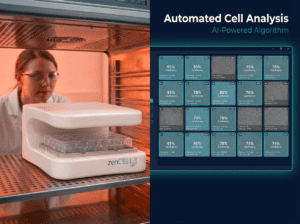
One notable advancement is the integration of incubator-compatible live-cell imaging systems. These compact devices, exemplified by the zenCELL owl, allow for real-time monitoring and analysis within the same environmental setup, greatly improving research efficiency and data reliability.
- Automated platforms increase efficiency by reducing manual handling.
- Live-cell imaging inside incubators offers uninterrupted process monitoring.
- Continuous data collection enhances reproducibility and experimental integrity.
Implementing Practical Workflows with Live-Cell Imaging
Enhancing Screening with Real-Time Data
Live-cell imaging has transformed lab workflows by providing continuous insight into cellular behaviors. Employing advanced imaging systems like the zenCELL owl enables the seamless observation of cellular processes, such as proliferation and migration, directly within an incubator. This not only saves time but also improves the accuracy and depth of data collected.
- Real-time monitoring allows for prompt responses to unforeseen cellular events.
- Enhanced data granularity aids in better understanding of cellular dynamics.
- Seamless integration into existing incubator environments offers logistical advantages.
Reproducibility and Data Quality: Key to Successful Screenings
Rôle des systèmes d'imagerie basés sur incubateur
In pursuit of high-quality datasets, reproducibility is non-negotiable. Incubator-based imaging systems play a critical role in minimizing variability by maintaining consistent environmental conditions during observations. Such setups ensure that less manual intervention is required, reducing discrepancies and enhancing the replicability of results.
- Consistent environmental control ensures experiment standardization.
- Automated systems minimize human-induced variability.
- Continuous tracking supports long-term studies with minimal disruption.
Continuez votre lecture pour explorer des perspectives et des stratégies plus avancées.
“`
“`html
Leveraging AI and Machine Learning for Enhanced Analysis
The Influence of Predictive Models on Screening Processes
The integration of Artificial Intelligence (AI) and Machine Learning (ML) in laboratory settings offers an unprecedented ability to predict and analyze complex datasets. By harnessing these technologies, researchers can identify patterns and predict outcomes more efficiently, reducing trial-and-error phases and enhancing decision-making processes.
- AI models can manage large datasets, identifying crucial patterns that humans might overlook.
- Machine learning algorithms continuously improve the accuracy of predictions by learning from previous data.
- Integration with laboratory equipment facilitates real-time data processing and analysis, offering actionable insights swiftly.
Optimizing Resource Allocation Through Workflow Automation
Maximizing Efficiency with Integrated Systems
Proper resource allocation remains a critical challenge in achieving high-throughput screening goals. Automation provides a solution by optimizing the use of materials and equipment. Automation systems can schedule and execute tasks with precision, ensuring resources are utilized efficiently and reducing operational costs.
- Centralized management systems provide an overview of resource availability and usage.
- Automated scheduling reduces equipment downtime and enhances productivity.
- Resource tracking analytics aid in identifying inefficiencies and optimizing lab operations.
Implementing Collaborative Platforms for Data Sharing
Facilitating Cross-Disciplinary Research
Collaboration is fundamental in large-scale research projects, where diverse teams work towards a shared goal. Leveraging collaborative platforms facilitates seamless data sharing, enhancing transparency and fostering innovation across different domains. Tools like electronic lab notebooks and cloud-based databases offer real-time data access to all stakeholders.
- Secure, cloud-based platforms allow for safe data storage and retrieval.
- Collaboration tools enable remote access, facilitating participation from global teams.
- Real-time updates and shared documents ensure all team members are aligned and informed.
Combining High-Throughput Screening With Genomic Technologies
A Step Towards Personalized Medicine
High-throughput screening in conjunction with genomic technologies provides a robust framework for personalized medicine initiatives. By integrating genetic data, researchers can tailor screening processes to account for individual biological differences, enhancing therapeutic effectiveness and reducing side effects.
- Genomic data can inform screening strategies, focusing on personalized responses to treatments.
- Integrated platforms allow for simultaneous genetic sequencing and phenotypic screening.
- Data-driven insights aid in the development of targeted therapeutics, accelerating the drug discovery pipeline.
Case Study: Achieving Breakthroughs with Automated Systems
Insights from Large-Scale Implementation
A leading biotechnology company undertook a massive screening project that involved over 10 million compounds, utilizing novel automated systems. By integrating automation across their workflow, they reduced processing time by 50% and increased hit detection accuracy by 70%, significantly accelerating their drug discovery timeline.
- Strategic integration of automation enhanced compound processing capacity.
- Innovative data analysis tools improved accuracy and reduced false positives.
- Results highlight the transformative impact of advanced technologies in large-scale screenings.
Embedding Scalability in Laboratory Design
Future-Proofing Research Environments
To address the scalability trap effectively, laboratories must consider design principles that incorporate flexibility and future expansion needs. Modular setups, alongside scalable IT infrastructure, ensure labs can grow with evolving research demands without substantial overhauls.
- Modular lab designs provide the flexibility to adapt spaces as research needs change.
- Scalable IT infrastructure supports expanding data requirements and technological advancements.
- Design considerations for environmental sustainability reduce costs and support regulatory compliance.
Navigating Regulatory Landscapes with Advanced Tools
Aligning Screening Processes with Compliance Standards
Maintaining adherence to regulatory standards is pivotal in screening processes. Advanced data management tools aid in tracking compliance, ensuring that all screening operations meet industry standards and regulations.
- Data systems deliver real-time alerts for compliance and standard alignment issues.
- Integrated documentation supports audit trails, streamlining regulatory submissions.
- Adaptive systems can quickly implement new regulatory changes across workflows.
Ensuite, nous conclurons avec les points clés à retenir, les métriques et une conclusion percutante.
“`
“`html
Integrating Artificial Intelligence with Robotics
Revolutionizing Laboratory Processes
As the demand for efficiency in laboratory settings continues to rise, the synthesis of artificial intelligence with robotics offers transformative potential. This integration not only automates repetitive tasks but also accelerates complex operations, allowing human researchers to focus on higher-order analysis and decision-making.
- AI-driven robots can perform delicate operations with high precision and minimal error.
- Automated systems ensure 24/7 operational capability, maximizing laboratory throughput.
- Continuous data monitoring and predictive maintenance reduce equipment failure risks.
Ensuring Data Security in Collaborative Environments
Protecting Intellectual Property During Data Sharing
With the growing trend of collaborative research, safeguarding data integrity and security is paramount. Implementing robust cybersecurity measures and secure sharing protocols protects intellectual property and fosters a trustful research environment.
- Encryption technologies provide secure databases and protect sensitive information.
- Access controls ensure that only authorized personnel can view or edit data.
- Regular security audits and updates prevent data breaches and unauthorized access.
Embracing Continuous Learning and Innovation
Fostering a Culture of Adaptation and Growth
The quest for large-scale screening efficiency necessitates a culture that embraces continuous learning and innovation. Encouraging knowledge sharing and professional development prepares lab personnel to effectively utilize emerging technologies, while fostering a mind-set of innovation ensures that labs remain at the forefront of scientific discovery.
- Regular training programs keep team members updated on the latest technological advancements.
- Cross-disciplinary workshops stimulate creative problem-solving and innovation.
- Engagement with the broader scientific community enhances knowledge exchange and collaboration.
Conclusion
As we reflect on the integral components necessary to solve throughput bottlenecks in large-scale screenings, several key takeaways emerge. The effective integration of AI and machine learning with laboratory operations transforms data handling and predictive analytics, significantly enhancing the accuracy and efficiency of research outcomes. Furthermore, the advancement of workflow automation optimizes resource allocation, effectively reducing overhead costs while increasing productivity.
Additionally, fostering collaboration through secure and transparent platforms ensures seamless data sharing, driving forward large-scale research projects to new heights of innovation. By combining high-throughput screening with genomic technologies, the pathway to personalized medicine becomes clearer, allowing for more targeted and effective therapeutic solutions. Data security remains paramount, with cutting-edge technologies safeguarding sensitive information across collaborative networks.
Ultimately, the future of screening processes depends on our ability to adapt to changing research landscapes, emboldened by a commitment to continuous learning and innovation. Embracing modular and scalable laboratory designs ensures laboratories can adapt to future demands, circumventing the scalability trap that often hinders large-scale research efforts. Meanwhile, navigating complex regulatory landscapes with advanced tools reinforces compliance and operational integrity across the screening lifecycle.
As we stand at the forefront of this new era of scientific discovery, it is essential to remember the purpose behind these technological advancements. Every breakthrough propels us further on the path of enhanced patient care and medical solutions. Let us harness the power of these innovations with a vision towards a future where research thrives unimpeded by bottlenecks, driving meaningful change in both science and society. Together, through perseverance and collaboration, we can transform challenges into opportunities, crafting a world where the capabilities of the present lay the foundation for the solutions of tomorrow.
“`