“`html
Advanced Scratch Assays: Measuring Interaction, Not Just Distance
The field of cell culture research is rapidly evolving, driven by the need for more sophisticated methods to analyze cell behavior. Traditional scratch assays have long been a staple in assessing cell migration, yet they often fall short in capturing the complex interactions occurring within cell populations. This article delves into the realm of advanced scratch assays, emphasizing the importance of measuring cellular interactions alongside distance. By exploring the limitations of conventional methods, advancements in technology, and practical applications, researchers can gain insights into the dynamic processes within their cultures.
Défis et limites courants des approches traditionnelles
Understanding the Traditional Scratch Assay
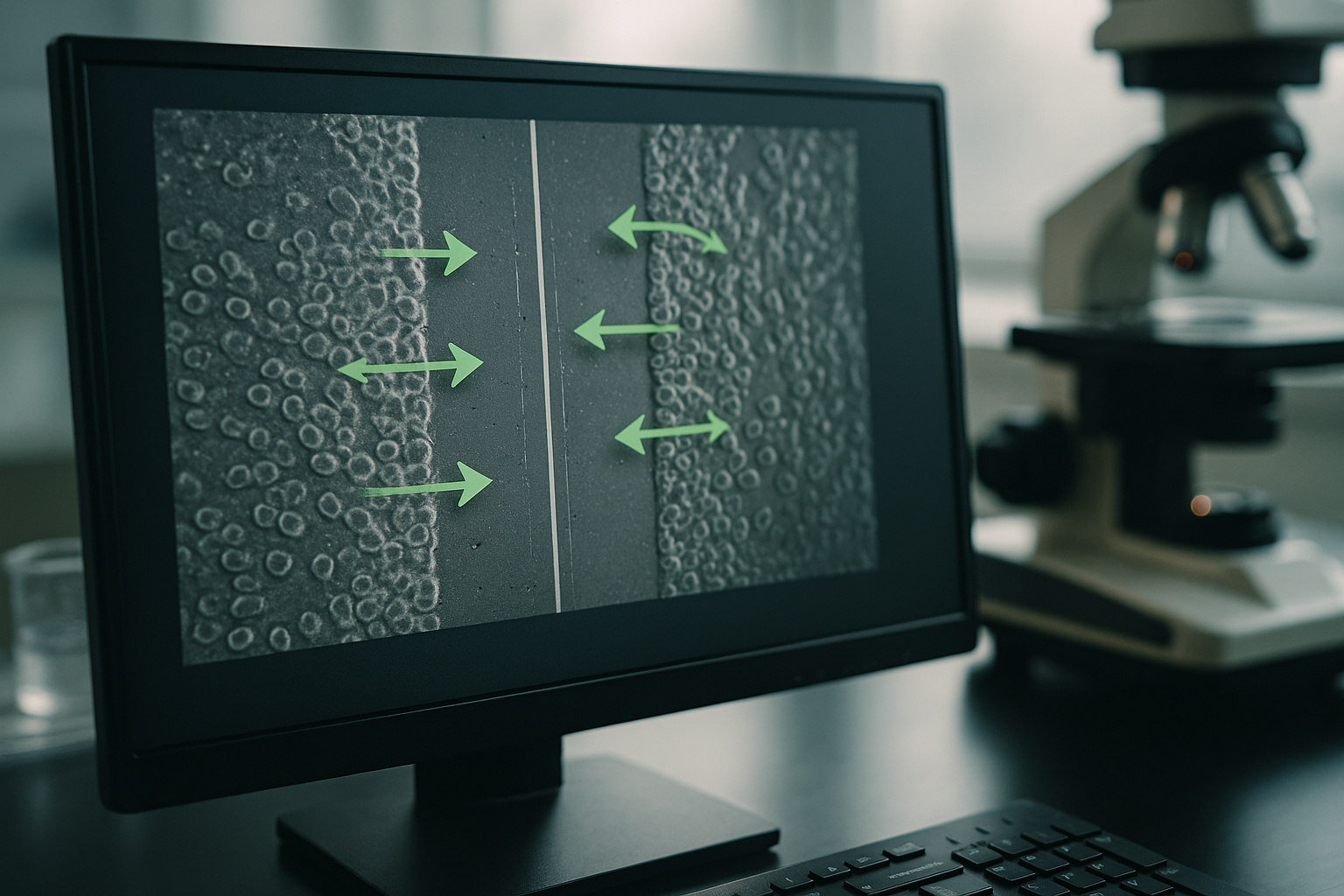
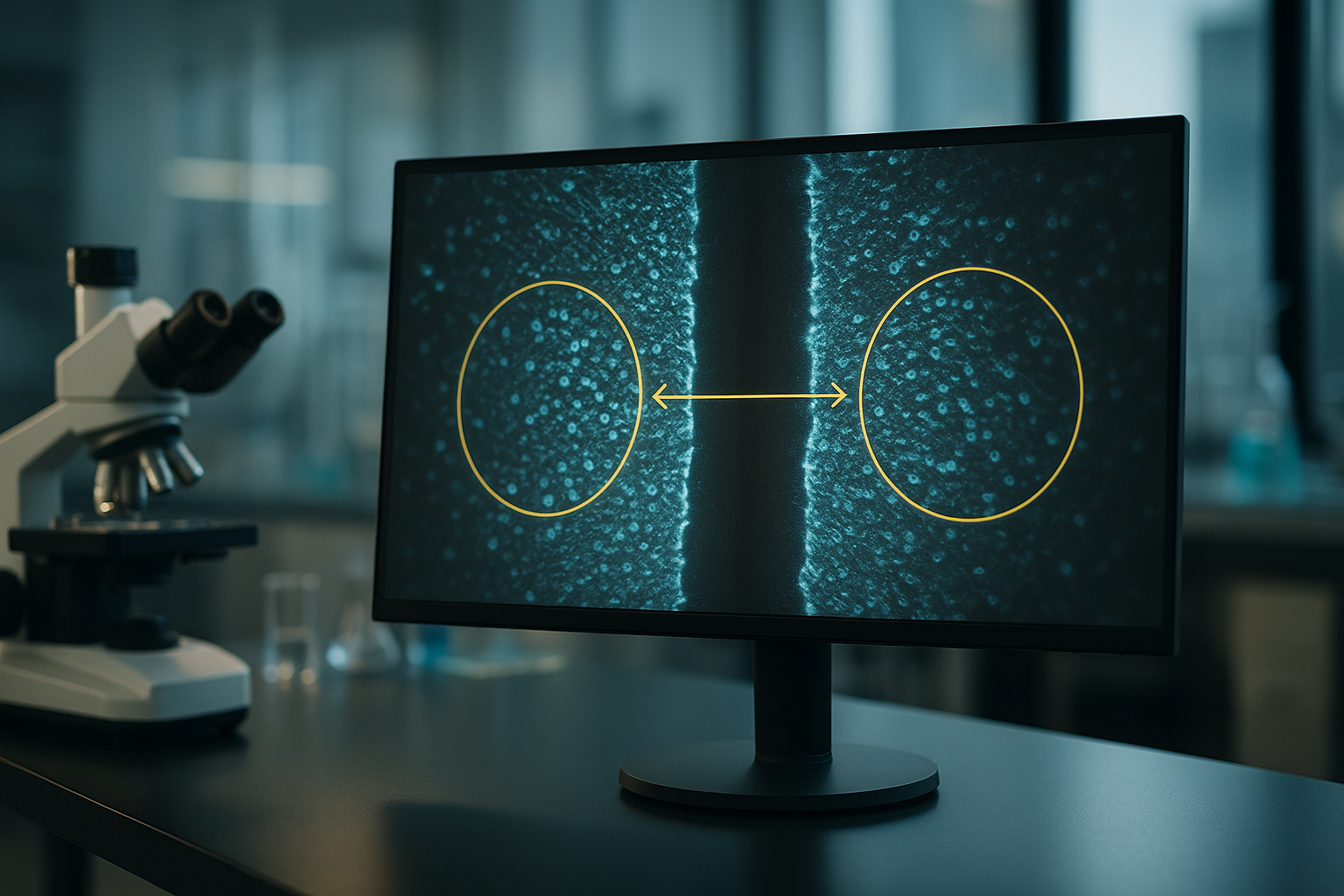
Scratch assays are a well-established technique used to study cell migration by creating a ‘wound’ in a cell monolayer and observing the closure rate. Despite its widespread use, this method is not without challenges. Issues such as variability in scratch width, manual measurement inaccuracies, and limited analysis scope constrain its effectiveness in detailed studies of cellular interactions.
- Scratch uniformity is difficult to control, leading to inconsistent data.
- Manual measurement can introduce human error and bias.
- Traditional approaches often overlook the complexities of cell interactions during wound closure.
Avancées technologiques et tendances d'automatisation
Integrating Automation in Scratch Assays
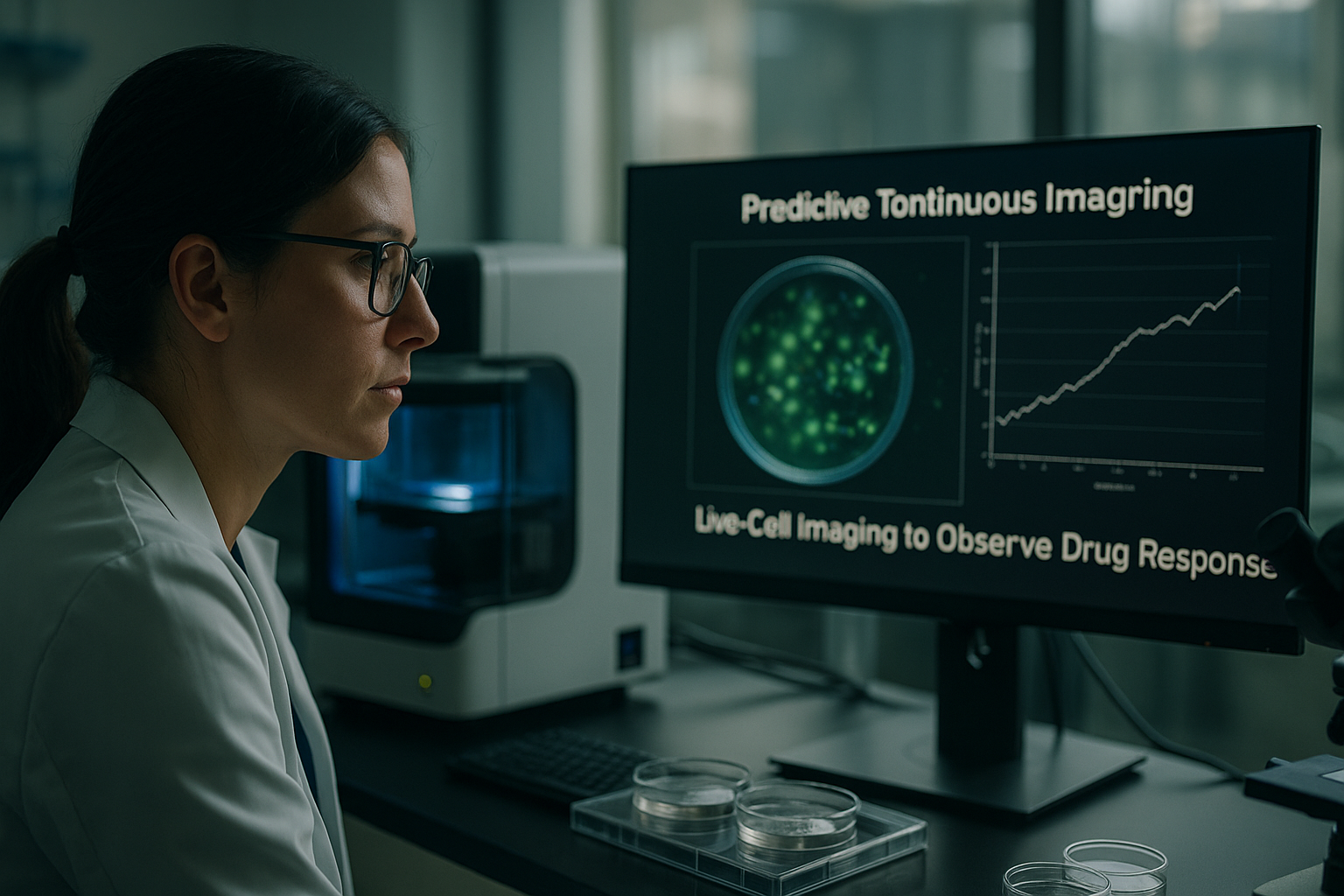
Technology has significantly enhanced the capabilities of scratch assays by introducing automated and high-throughput options. Automation reduces variability and enhances reproducibility, allowing researchers to focus on the qualitative aspects of cell behavior. By employing live-cell imaging systems, such as the zenCELL owl, researchers can continuously monitor and analyze cellular interactions in real-time, improving data quality and insight.
- Real-time imaging allows for continuous monitoring of cell behavior.
- Automated systems minimize human error and increase throughput.
- Advanced imaging provides deeper insights into cellular dynamics.
Exemples pratiques et flux de travail utilisant l'imagerie de cellules vivantes
Implementation of Modern Imaging Techniques
Live-cell imaging plays a pivotal role in modern scratch assays by capturing dynamic cellular events as they occur. Systems like the zenCELL owl enable researchers to configure and run experiments directly within an incubator, maintaining optimal environmental conditions. This continuity is crucial for studying rapid cellular responses and interactions that are typical during migration and wound healing processes.
- Continuous monitoring in controlled environments enhances data fidelity.
- Researchers can analyze complex interactions between cells, such as leading and trailing edge dynamics.
- Automated imaging reduces the labor-intensive nature of manual evaluations.
Continuez votre lecture pour explorer des perspectives et des stratégies plus avancées.
“`
“`html
Enhancing Data Interpretation through Advanced Analysis Techniques
Deep-Dive into Computational Tools for Scratch Assays
To fully leverage the capabilities of modern scratch assays, researchers are increasingly turning to advanced computational tools that offer sophisticated data analysis options. These analytic tools, such as machine learning algorithms and image processing software, can dramatically improve the interpretation of cellular interactions, helping to unveil patterns that might be overlooked with traditional methods. By employing these advanced techniques, scientists can not only assess migration rates but also analyze changes in cell morphology, track individual cell movements, and understand interaction dynamics within cell populations.
- Machine learning models can identify subtle phenotypic changes.
- Image processing software assists in quantifying interaction dynamics.
- Comprehensive data analysis provides insights into cellular behavior patterns.
Integrating Multi-Modal Approaches for Comprehensive Insights
Utilizing Combination Strategies for Enhanced Understanding
Modern scratch assay methodologies benefit significantly from the integration of multi-modal approaches, which combine various types of data to provide a more comprehensive picture of cellular activity and interactions. By pairing scratch assays with complementary techniques such as fluorescent tagging or mass spectrometry, researchers can gain insights into both the physical migration and the biochemical changes occurring during cell movement. This multi-faceted approach can reveal crucial insights about signaling pathways, cellular energy states, and molecular interactions that are pivotal during wound healing.
- Fluorescent tagging can highlight specific proteins involved in wound healing.
- Mass spectrometry provides data on molecular changes during cell migration.
- Combining techniques enhances the granularity of behavioral data.
Optimizing Experimental Design for Better Outcomes
Strategic Planning for Robust Experimental Pathways
To maximize the benefits of advanced scratch assays, thoughtful experimental design is paramount. This involves not only the selection of appropriate cell types and controls but also the meticulous planning of the assay conditions to reduce variability and improve repeatability. Researchers should consider factors such as the initial confluence of the cell monolayer, the consistency of the scratch method, and the timing of measurements. By ensuring a well-designed experiment, scientists enhance the reliability of their findings, enabling more accurate conclusions regarding cell behavior and interaction patterns.
- Ensure consistent experimental conditions to minimize variability.
- Implement robust controls to validate findings effectively.
- Consider time-lapse intervals for continuous data collection.
Case Studies: Successful Application of Advanced Scratch Assays
Real-World Examples of Enhanced Assay Utility
Several case studies highlight the notable success achieved through the application of advanced scratch assays. For example, a study at the University of Life Sciences integrated automated imaging with machine learning analysis to assess the healing dynamics in diabetic wound models, uncovering key signaling molecules involved in delayed healing. Similarly, a biotechnology firm leveraged live-cell imaging systems to monitor the efficacy of novel wound healing therapeutics, resulting in accelerated pathways to clinical trials and product development.
- Case studies demonstrate real-world applicability and success.
- Use advanced techniques to tackle specific research questions.
- Draw inspiration from successful applications to guide new studies.
Developing High-Throughput Workflows for Scale
Achieving Efficiency with Scalable Assay Solutions
As the demand for robust data grows, the development of high-throughput workflows becomes a critical component of modern scratch assays. Automation plays a central role in enabling scalable assays, allowing researchers to conduct numerous experiments in parallel, facilitating comprehensive data collection and analysis. High-throughput setups often incorporate robotics for plate handling, integrated imaging systems for real-time analysis, and software for data consolidation, greatly enhancing operational efficiency and capacity.
- Implement robotic systems for efficient plate handling.
- Use integrated imaging tools for concurrent analysis tasks.
- High-throughput systems enable large-scale studies efficiently.
Analyzing and Interpreting Complex Interaction Networks
Advanced Insights into Cellular Communication and Collaboration
Scratch assays’ advanced iterations now extend beyond simple migration analysis to exploring complex networks of cellular communication and collaboration. These assays facilitate the exploration of how cells coordinate migration, the roles of leader and follower cells during wound closure, and how cell-to-cell interaction modifies responses to external stimuli. By applying advanced network analysis techniques, researchers can decode these complex interactions, laying the foundation for novel therapeutic approaches in regenerative medicine and oncology.
- Study cellular leader-follower dynamics in migration.
- Network analysis techniques can map interaction pathways.
- Insights into behavior can inform therapeutic developments.
Tailoring Assays for Specific Research Needs
Customization Strategies for Targeted Investigations
To accommodate the diverse needs of different research fields, scratch assays can be tailored for specific investigations. Customization can include the selection of specialized cell lines, unique environmental settings, or enhanced imaging and analysis parameters tailored to particular biological questions. For instance, oncology researchers may prioritize assays that capture invasive behavior patterns in cancer cells, while tissue engineers might focus on assays that assess scaffold efficacy in promoting cell migration and integration.
- Custom assays should align closely with research objectives.
- Specialized conditions provide relevancy to various fields.
- Flexibility in design enhances the scope of investigational work.
Ensuite, nous conclurons avec les points clés à retenir, les métriques et une conclusion percutante.
“`
“`html
Harnessing the Potential of AI to Expand Assay Capabilities
Leveraging Artificial Intelligence for Enhanced Data Interpretation
Artificial Intelligence (AI) continues to redefine the landscape of scientific research, bringing transformative potential to scratch assays. AI-driven tools offer unprecedented capabilities for data interpretation, enabling researchers to discern complex patterns and correlations within large datasets that may otherwise remain hidden. By integrating machine learning algorithms with high-throughput data, scientists can automate image analyses, predict experimental outcomes, and even simulate in vivo environments, paving the way for more precise and predictive assays.
- Utilize AI for automated image analysis and predictive modeling.
- Identify hidden correlations through advanced data analytics.
- Simulate biological environments for realistic outcome predictions.
Moving Towards Eco-Friendly Assay Systems
Implementing Sustainable Practices in Research
In the quest for scientific advancement, eco-friendly practices within laboratory settings are increasingly becoming pivotal. Sustainable scratch assay systems not only contribute to environmental conservation but also promote long-term cost efficiencies. By reducing the use of single-use plastics and optimizing resource utilization, laboratories can lower their carbon footprint. Furthermore, implementing digital data storage in lieu of traditional paper records and maximizing the lifespan of assay equipment through regular maintenance supports sustainability goals.
- Reduce waste through the minimization of single-use materials.
- Optimize resource allocation for energy efficiency.
- Shift towards digital data management for reduced paper dependency.
Future Prospects for Scratch Assay Applications
Innovative Directions in Research and Development
The evolving field of scratch assays continues to open new vistas of exploration across diverse domains of science. With ongoing advancements, future applications promise to encompass revolutionary therapies and biotechnologies. As assays become increasingly multidimensional, they offer the potential for personalized medicine approaches, enabling treatments tailored to individual cellular and molecular profiles. Additionally, the integration of emerging technologies such as organ-on-a-chip systems can simulate physiological conditions more accurately, providing fertile ground for groundbreaking research.
- Explore potential for personalized therapeutic strategies.
- Leverage emerging technologies like organ-on-a-chip.
- Expand applications across varied scientific disciplines.
Conclusion
In navigating the modern landscape of scratch assays, it is evident that the ability to elucidate the intricacies of cellular behavior extends far beyond mere measurement of physical distance. These advanced assays have transformed into sophisticated tools capable of reflecting the dynamic interactions and intricate networks present within cellular environments. This expanded functionality is vital to advancing our understanding of fundamental biological processes, offering significant insights into cellular communication, interaction dynamics, and the molecular underpinnings of disease pathogenesis.
The integration of computational techniques, multi-modal approaches, and strategic experimental designs have set new benchmarks for precision and reliability, allowing researchers to draw more nuanced conclusions from their data. As we embrace high-throughput and AI-enhanced methodologies, the potential for uncovering novel therapeutic targets and fostering innovative treatment modalities broadens significantly, harnessing the complexity of biological systems like never before.
Moreover, the alignment with sustainable research practices ensures that the pursuit of scientific knowledge does not come at the expense of environmental health, promoting a balanced and responsible approach to advancement. As we look to the future, the prospects of integrating further technological innovations remain bright, promising continued evolution in the utility and applicability of scratch assays.
Therefore, to all researchers, practitioners, and innovators in the field, the invitation is open to engage deeply with these advanced techniques. Whether the goal is to refine existing methodologies, explore uncharted territories within your research, or contribute meaningfully to the collective scientific endeavor, now is the opportune moment to leverage the full capabilities of modern scratch assays. Together, through informed application and creative inquiry, we can forge paths toward more effective and resilient biomedical sciences.
“`