“`html
Human Error is Obsolete: Maximizing Throughput with AI-Driven Cell Counting
In the realm of modern cell culture research, precision and efficiency are more critical than ever. With increasing demands for high-throughput analysis, minimizing human error has become a pivotal objective for laboratories worldwide. This article delves into how AI-driven cell counting can maximize throughput and enhance data accuracy, making human error obsolete. We’ll explore common challenges in traditional cell counting, recent technological advances, and how AI-driven solutions, such as incubator-based imaging, are transforming workflows. Readers will also gain insights into practical applications and future trends in lab automation.
Challenges of Traditional Cell Counting Methods
The Human Factor in Cell Counting
Traditional cell counting methods often rely heavily on manual processes, which are prone to human error. Variability in technique and subjective analysis can lead to inconsistent results, affecting the reproducibility of experiments. Furthermore, manual counting is time-consuming and labor-intensive, making it unsuitable for high-throughput demands common in modern labs.
- Subjectivity and variability in manual counts
- Increased labor and time investment
- Limited scalability for high-throughput assays
Continue reading to explore more advanced insights and strategies.
Technological Advances and Automation Trends
AI-Driven Solutions in Cell Culture
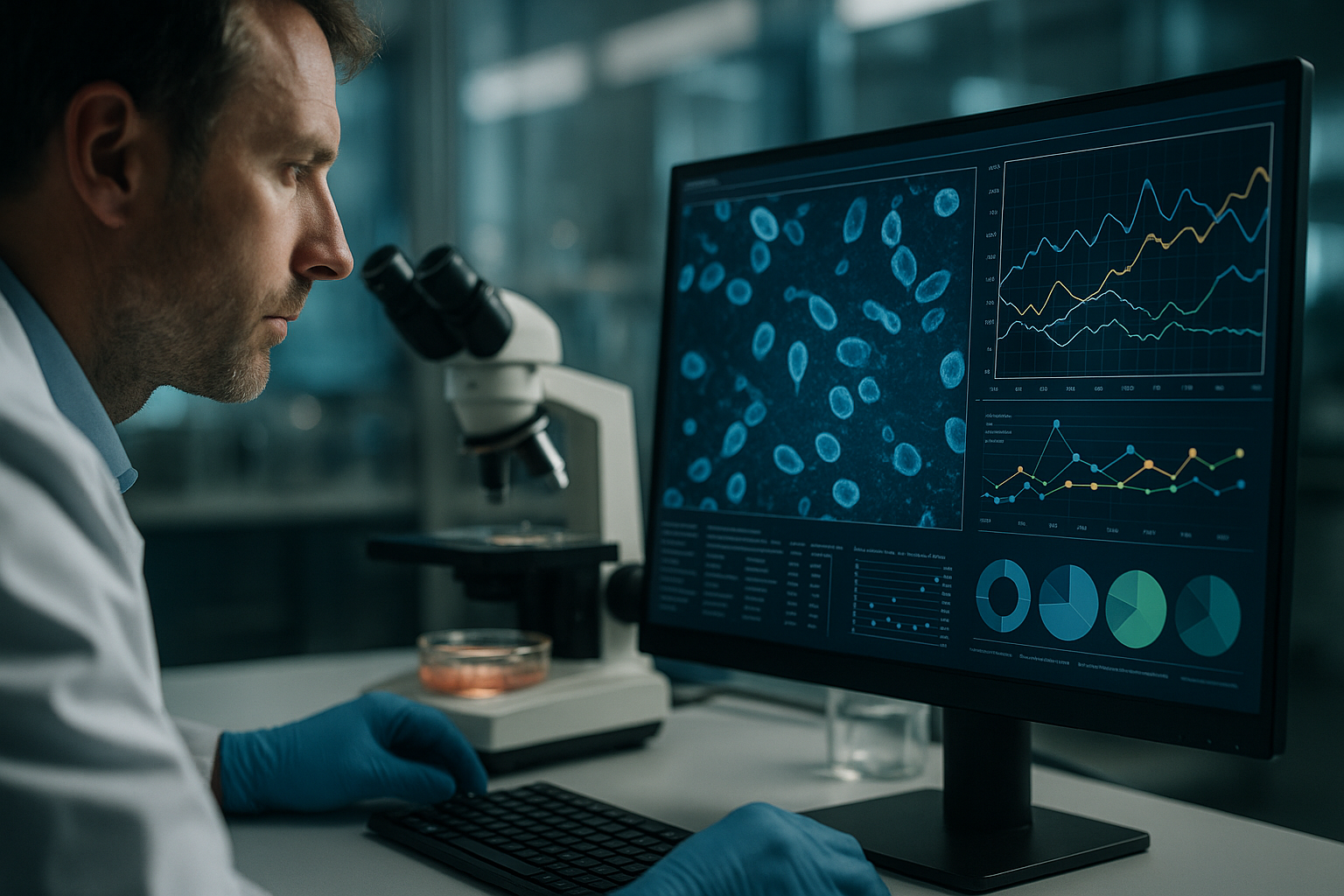
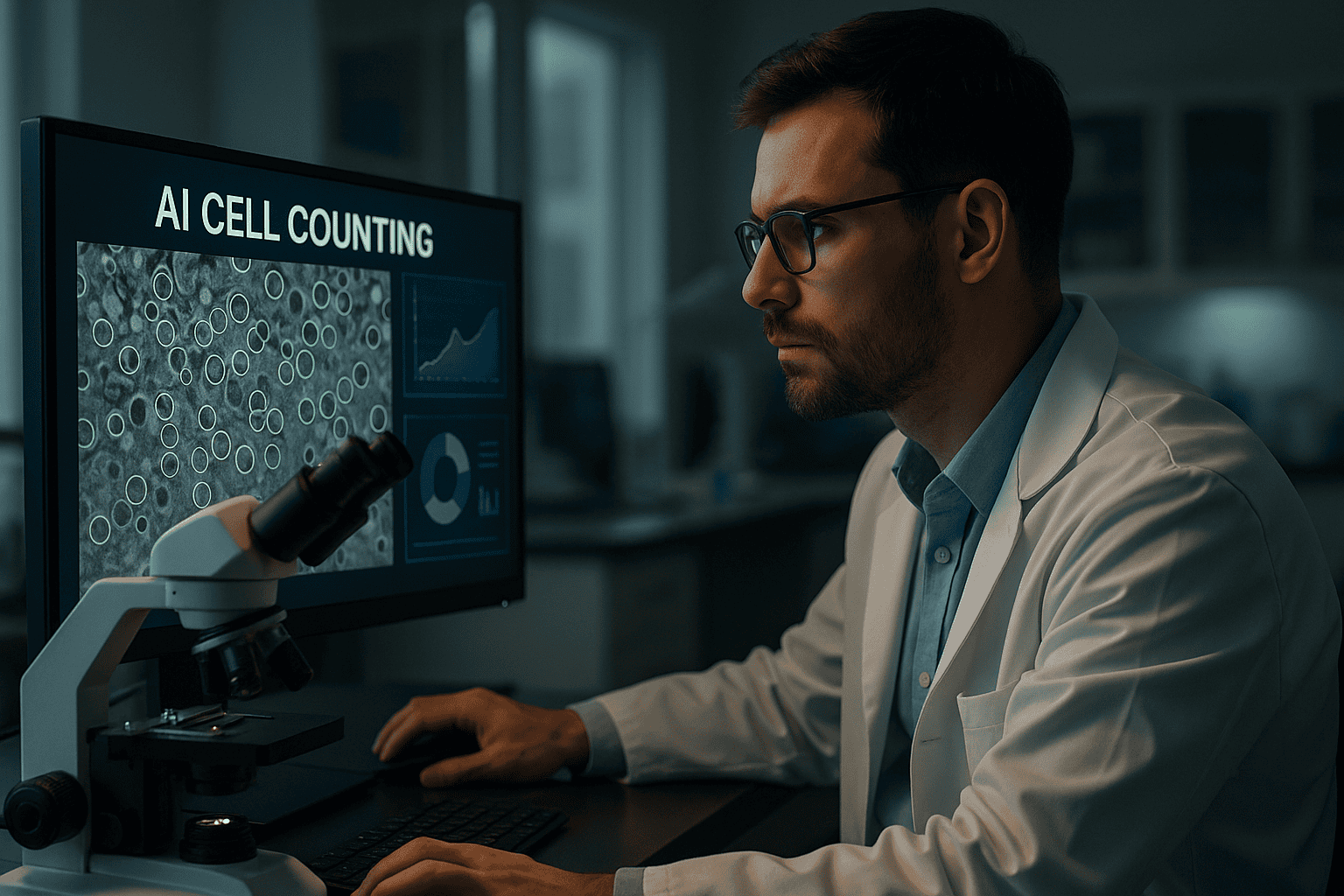
The integration of artificial intelligence in cell counting offers a transformative solution to the shortcomings of manual methods. AI-driven systems enhance precision by eliminating subjective variability and significantly reducing counting time. These technologies are supported by machine learning algorithms, capable of identifying and classifying cells with high accuracy across a variety of assay conditions.
- Consistency in data through automated counting
- Scalability and efficiency in high-throughput applications
- Enhanced reproducibility and reliability
Continue reading to explore more advanced insights and strategies.
Practical Examples and Workflows Using Live-Cell Imaging
Integrating AI with Live-Cell Imaging
Live-cell imaging has become an indispensable tool in cell culture research, offering continuous monitoring of cellular processes. When combined with AI-driven analysis, live-cell imaging systems can provide real-time data that enhance experimental outcomes. A notable example is the zenCELL owl, a compact and incubator-compatible system, which facilitates seamless integration of AI in cell monitoring, thereby reducing potential human errors and improving data consistency.
- Real-time analysis with AI-enhanced imaging
- Reduction in manual intervention and error
- High-quality, reproducible data output
Continue reading to explore more advanced insights and strategies.
How Incubator-Based Imaging Improves Reproducibility and Data Quality
Maintaining Optimal Conditions
Incubator-based imaging allows for continuous observation of cell cultures under controlled environmental conditions, enhancing both data quality and reproducibility. By maintaining optimal temperature, humidity, and CO2 levels, these systems ensure that cells are kept in their ideal physiological state throughout the experiment. This approach minimizes variability caused by environmental fluctuations, presenting a significant advantage over traditional methods.
- Consistent environmental conditions
- Improved experimental reproducibility
- High data integrity and quality
Continue reading to explore more advanced insights and strategies.
Applications in Modern Cell Culture Research
From Migration Assays to Organoids
AI-driven cell counting and incubator-based imaging systems find diverse applications in cell culture experiments, from migration assays to organoid development. The enhanced precision and throughput offered by AI technologies allow researchers to conduct complex assays with greater ease and accuracy. High-throughput screening (HTS) benefits from automated systems that can analyze numerous samples simultaneously, leading to more efficient and comprehensive data acquisition.
- Accurate analyses in migration and proliferation assays
- Efficient study of biological processes in organoids
- Streamlined workflows for high-throughput screening
Continue reading to explore more advanced insights and strategies.
“`
“`html
Leveraging AI in Disease Modeling and Drug Discovery
Accelerating Innovations with AI
A key advantage of AI-driven cell counting is its application in disease modeling and drug discovery. Traditional methods often encountered limitations in data precision and experimental throughput, which could hamper the drug development process. AI systems, with their high-throughput capabilities, allow for the rapid analysis of numerous drug candidates, expediting the identification of promising therapies.
- Facilitates faster identification of therapeutic candidates
- Enhances data precision in disease modeling
- Reduces time to market with accelerated drug discovery processes
Enhancing Precision in Cytotoxicity Assays
AI Tools Delivering Unmatched Accuracy
In cytotoxicity assays, which are crucial for evaluating the effects of potential drug compounds, AI-driven cell analysis ensures precision that manual methods may lack. By automating the process, labs can reduce the risk of human error significantly, leading to more reliable data that can drive impactful research and development decisions.
- Reduces variability inherent in human-dependent methods
- Improves reliability and accuracy of cytotoxicity results
- Facilitates better-informed decision-making in drug trials
Optimizing Cultured Cell Viability Assessments
AI as a Catalyst for Efficient Viability Studies
Cell viability assessments, critical for understanding cellular responses to various conditions, are streamlined by AI technologies. AI-powered imaging platforms quickly and accurately detect viable cells, enhancing the throughput and precision of experiments. For example, automated systems like CellProfiler utilize AI algorithms to deliver precise viability metrics, supporting robust cellular assessments.
- Provides rapid, accurate assessments of cell viability
- Boosts throughput of viability assays
- Enables precise trend detection in cell health data
Case Study: Transforming Stem Cell Research with AI Integration
AI Solutions Revolutionizing Stem Cell Assays
Stem cell research often involves analyzing complex differentiation processes, which AI-driven technologies can monitor with unprecedented precision. In a landmark study, researchers integrated AI-driven imaging in their monitoring of stem cell cultures, achieving enhanced reproducibility and data accuracy compared to traditional approaches. This significant advancement not only saved time but also facilitated the identification of new differentiation pathways.
- Enables high-resolution monitoring of stem cell differentiation
- Increases assay reproducibility and accuracy
- Identifies novel biological pathways through precise data tracking
Scaling Up Lab Operations with Automated Systems
From Bench to Industrial-Scale Applications
Scalability is a critical demand in modern laboratories, where AI-driven cell counting and imaging systems offer a clear advantage. Automation allows labs to transition from small-scale experiments to large, industrial applications with greater ease. This scalability empowers labs to handle larger datasets and more extensive experiments without compromising on quality.
- Facilitates smooth transition to larger scale operations
- Ensures data consistency across expanded research projects
- Reduces operational costs through efficient resource allocation
Integrating AI with Other ‘Omics’ Technologies
Pioneering Integrated Approaches in Biological Research
A growing trend is the integration of AI-driven cell counting with various omics technologies, such as genomics and proteomics. This integration allows for a comprehensive analysis of cellular behavior, providing deeper biological insights. AI facilitates the correlation of cell counting data with genetic or protein expression profiles, offering a 360-degree view of the cellular landscape.
- Enhances data integration in multi-omics studies
- Provides holistic insights into cellular processes
- Facilitates novel discoveries through integrated data analysis
Streamlining Quality Control Processes with AI
Ensuring Consistency and Compliance
Quality control is paramount in cell culture research, ensuring that all procedures meet regulatory standards. AI systems provide a robust framework for enforcing quality control, with automated monitoring and reporting features that enhance compliance. This ensures that data integrity is maintained across all experimental runs, fostering trust and reliability in research outputs.
- Strengthens compliance with industry standards
- Facilitates automated quality monitoring and documentation
- Ensures consistent maintenance of data integrity
Next, we’ll wrap up with key takeaways, metrics, and a powerful conclusion.
“`
“`html
AI-Driven Predictive Analytics in Cellular Research
Forecasting to Stay Ahead
Predictive analytics powered by AI is transforming how researchers anticipate cellular behaviors and disease progressions. Through the analysis of historical data and real-time insights, AI models can forecast trends and outcomes, enabling preemptive action. This foresight is crucial for developing preventive strategies and tailoring interventions with greater precision, ultimately improving patient outcomes and advancing personalized medicine.
- Offers predictive insights into cellular responses
- Supports development of personalized therapeutic strategies
- Improves proactive planning in research and clinical settings
Sustainability in AI-Powered Laboratories
AI and Eco-friendly Practices Coalesce
The integration of AI in laboratories not only enhances operational efficiencies but also promotes sustainability. AI systems can optimize resource usage, reducing unnecessary waste and energy consumption. This sustainable approach aligns with global environmental goals and positions scientific research as a leader in eco-friendly innovations. By minimizing the carbon footprint and encouraging resource efficiency, AI is a vital player in creating environmentally responsible lab environments.
- Optimizes resource allocation for eco-friendly lab practices
- Reduces environmental impact of laboratory operations
- Contributes to global sustainability goals
The Future of AI in Cell Counting and Beyond
Unleashing Potential Through Technological Advancements
Looking to the horizon, the role of AI in cellular research continues to expand with rapidly advancing technologies. Innovations in machine learning algorithms and computational power herald a future where AI-driven cell counting and analysis become indispensable tools in biological research. These enhancements promise to unlock new frontiers in science, from unraveling complex biological puzzles to driving forward transformative medical breakthroughs.
- Pushes the boundaries of scientific inquiry
- Enables continuous innovation in biomedical research
- Drives forward the potential of personalized medicine
Conclusion
The transformative power of AI-driven cell counting lies in its ability to streamline processes, enhance precision, and drive highly impactful scientific research. From accelerating drug discovery and improving the reliability of cytotoxicity assays to optimizing cell viability studies and revolutionizing stem cell research, AI has proven itself to be an invaluable asset in modern laboratories. Furthermore, the integration of AI with other omics technologies and its role in predictive analytics fortify its position as an indispensable tool for comprehensive biological insights.
This evolution underscores the significance of AI in fostering scientific advancements and achieving breakthroughs that once seemed out of reach. The adoption of AI-powered systems not only increases efficiency and precision but also reduces operational costs, strengthens compliance with regulatory standards, and supports sustainable lab operations. Researchers can now explore uncharted territories with greater confidence, driven by the reliable data and predictive capabilities AI provides.
As we stand on the cusp of further AI innovations, the potential for these technologies to shape the future of cellular research continues to grow. This article highlights the limitless possibilities AI offers, urging scientists, researchers, and industry leaders to embrace these tools and integrate them into their workflows for maximum impact. Unite with cutting-edge technology, break through the constraints of traditional methods, and drive the future of science with AI as your ally. The journey towards unprecedented discovery begins here.
“`