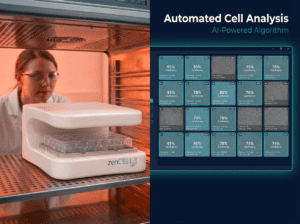
屏障功能与TEER类读数
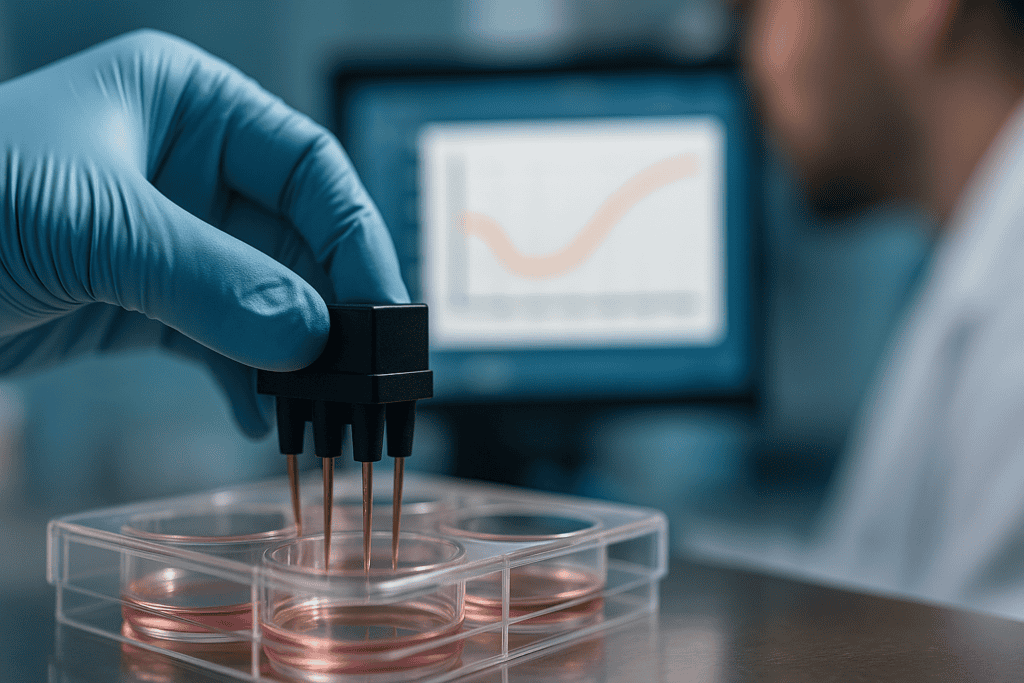
“`html
屏障功能与TEER类读数
在现代细胞培养研究领域,测量上皮屏障功能和电阻的重要性怎么强调都不为过。跨上皮电阻(TEER)等技术对于理解细胞培养形成的屏障至关重要,在药物研究、毒性测试和伤口愈合研究中发挥着关键作用。本文深入探讨了屏障功能分析的复杂性、传统方法面临的挑战以及正在重新定义实验室工作流程的技术进步。.
传统方法在屏障功能测量方面的挑战
虽然基础,但评估屏障完整性的常规方法存在一系列局限性。诸如需要人工操作和易出错等问题很普遍。这些方法常常缺乏高通量和实时分析所需的精度,使其在现代研究需求方面效率低下。.
- 由于手动操作,测量值变异性很高。.
- 耗时的程序限制了吞吐量。.
- 无法提供连续的实时数据。.
技术进步与自动化趋势
全自动TEER系统出现
技术的最新进展催生了利用实时监控能力的自动化系统。这些系统提供了更有效、更准确的评估屏障功能的方法,弥补了传统技术的不足。此类进步的整合最大限度地减少了人为错误,确保了实验的一致性,并提高了可重复性,这些在受监管的环境中至关重要。.
- 自动化带来更高的精度和一致性。.
- 持续监控能力,从而获得更可靠的数据集。.
- 减少人工干预,降低劳动力成本和时间。.
实际应用:活细胞成像工作流程
利用活细胞成像技术,研究人员现在可以实时观察和量化屏障功能。这不仅能深入了解细胞行为和单层形成,还能研究在各种条件下形成的连接和中断等动态过程。.
- 促进对细胞对刺激的实时反应的观察。.
- 实现高通量筛选,提高工作流程效率。.
- 提供了对细胞过程和相互作用的更深入的见解。.
基于培养箱的成像在提高数据质量方面的作用
诸如zenCELL owl之类的培养箱成像系统通过实现非干扰性和连续观察,正在彻底改变该领域。这些紧凑型系统旨在安装在标准的实验室培养箱内,可在保持环境稳定性的同时提供高质量的成像数据。.
- 确保环境稳定,以获得准确的活细胞成像。.
- 减少样本处理的频率,保护精细结构。.
- 生成全面的数据集,提高长期研究的有效性。.
屏障函数研究的应用
屏障功能研究在药物开发、毒理学和再生医学等研究领域有着广泛的应用。TEER和活细胞成像等工具通过高通量和精确的数据采集,促进了对这些领域的深入探索和理解。.
- 迁移实验:研究细胞跨越屏障的移动。.
- 类器官:模拟复杂组织结构和功能。.
- 增殖与高通量筛选:用于药物发现的高通量筛选。.
继续阅读,以探索更深入的见解和策略。.
“`
“`html
屏障功能测量的传感器技术创新
传感器设计进展
微电子学和生物技术的融合带来了创新的传感器技术,提高了屏障功能评估的准确性。现代传感器现在能够高精度地检测电阻的微小变化,从而对细胞单层的健康和完整性提供无与伦比的见解。.
- 提高了检测屏障中断的灵敏度和精度。.
- 通过先进的电子滤波技术降低信号噪声。.
- 与一系列生物测定和格式的兼容性。.
人工智能和机器学习在数据分析中的影响
人工智能在实验室环境中的变革潜力
人工智能(AI)和机器学习(ML)正在彻底改变研究人员解释屏障功能研究数据的方式。这些技术能够快速分析复杂的数据集,识别出人类研究人员可能不立即察觉的模式并预测结果。.
- 增强大型数据集中的模式识别。.
- 预测分析,用于结果预测和趋势分析。.
- 自动化数据分类和错误检测。.
使用集成软件解决方案优化工作流程
简化数据采集与分析
先进软件解决方案的集成提供了从数据收集到分析的无缝工作流程。这些平台旨在处理海量数据,为研究人员提供实时洞察和可视化工具,从而增强决策过程。.
- 用户友好的界面可降低新技术学习的难度。.
- 与现有的实验室仪器和数据库无缝集成。.
- 自动化报告工具,能够快速传播结果。.
通过可扩展解决方案实现成本效益
在预算限制和技术需求之间取得平衡
采用可扩展的解决方案可确保实验室在不超出预算的情况下适应不断变化的技术需求。这些解决方案允许进行渐进式增强,使实验室能够根据财务能力逐步升级其系统。.
- 模块化系统,能够随着时间的推移扩展功能。.
- 具有成本效益的初步投资和可扩展的扩张选项。.
- 通过降低运营成本和提高生产力来实现长期节约。.
障碍物功能测试中的安全与合规
确保遵守监管标准
在实验室环境中,尤其是在受监管的行业中,维护安全和合规性至关重要。最先进的 TEER 系统和屏障功能方法旨在符合严格的法规标准,确保研究实践的道德和安全。.
- 保持系统定期校准以符合行业标准。.
- 采用非侵入性方法可减少样本污染的可能性。.
- 文档和报告功能有助于审计合规。.
全球研究协作平台
利用技术加强研究合作
现代协作平台使世界各地的研究人员能够实时共享见解、数据和发现,从而培养开放科学文化。这些平台支持全面的数据共享和协作分析,从而加速了屏障功能研究的进步。.
- 全球合作带来多元和包容的研究视角。.
- 提供即时沟通功能,支持实时讨论和想法分享。.
- 安全可扩展数据管理云基础设施。.
多组学技术整合
多组学方法综合分析
通过将多组学技术与屏障功能研究相结合,研究人员获得了细胞行为的多维视角。这种综合方法可以探索影响屏障完整性和功能的遗传、蛋白质组学和代谢组学因素。.
- 通过集成数据分析全面理解细胞行为.
- 识别对屏障形成至关重要的生物标志物和通路。.
- 定制化的分析流程,满足特定研究需求。.
接下来,我们将总结要点、指标和一个有力的结论。.
“`
“`html
屏障函数研究中的数据安全和隐私
保护敏感研究数据
确保屏障功能研究中数据的安全性和隐私性至关重要,尤其是在不断增长的数据量面前。实施强大的安全协议和数据加密方法有助于保护敏感信息,维护研究成果的完整性和机密性。.
- 保护静态和传输中的数据的先进加密技术。.
- 定期进行安全审计,以识别和修复漏洞。.
- 遵守国际数据保护法规.
环境考量与可持续实践
研究活动对环境影响的追踪
随着实验室努力实现更强的环境可持续性,将环保实践融入屏障功能研究至关重要。实施节能系统和减少浪费可以显著减少实验室的生态足迹,将科学追求与全球可持续发展目标相结合。.
- 采用低能耗设备。.
- 通过更环保的替代品最大限度地减少化学废物。.
- 实验室材料回收和再利用倡议.
未来屏障功能测量方向
探索屏障功能研究的新视野
屏障功能研究的未来充满巨大潜力,这将得益于技术的进步和跨学科的合作。随着新方法论的出现和现有技术的不断发展,研究人员有望取得突破性发现,从而重新定义我们对细胞屏障的理解。.
- 集成先进成像技术进行实时监测.
- 利用屏障功能评估开发个性化医疗方法。.
- 跨学科合作促进创新与发现。.
结论
在细胞屏障功能和TEER类读数领域,技术和方法的飞速发展,彻底改变了我们理解和操控细胞屏障的能力。从提供卓越灵敏度和精准度的创新传感技术,到增强数据解读能力的AI和机器学习的变革力量,我们对细胞单层的动态性质获得了深刻的认识。.
软件解决方案与可扩展且经济高效的系统的集成,简化了工作流程,确保研究能够顺利进行,而不会出现过度财务支出。通过采纳健全的安全和合规措施,并利用安全平台拥抱全球合作,世界各地的研究人员现在可以自信而诚信地为不断扩大的知识库做出贡献。.
此外,多组学技术的采用和环保实践的推广,凸显了科学探究中整体化和可持续方法的重要性。这些全面的战略不仅有望加深我们的理解,还能确保研究工作的长久性。.
在我们探索屏障功能未知的领域时,始终有一种对未来的向往——一种坚定不移的决心,要超越当前的范式,开创生物技术的新领域。未来的征程需要持续的探索、协同的增效以及拥抱技术创新的适应性思维。.
我们诚邀研究人员、从业者和爱好者积极参与到这些新兴技术的探索中来,为科学探索和发现的传承做出贡献。让我们汇聚集体力量,利用这些进步来改善健康状况,拓展科学视野。我们正站在重新定义细胞屏障功能研究可能性的前沿,必将取得具有全球影响力的突破,惠及子孙后代。.
“`
Why biological inputs should be part of experimental design discussions
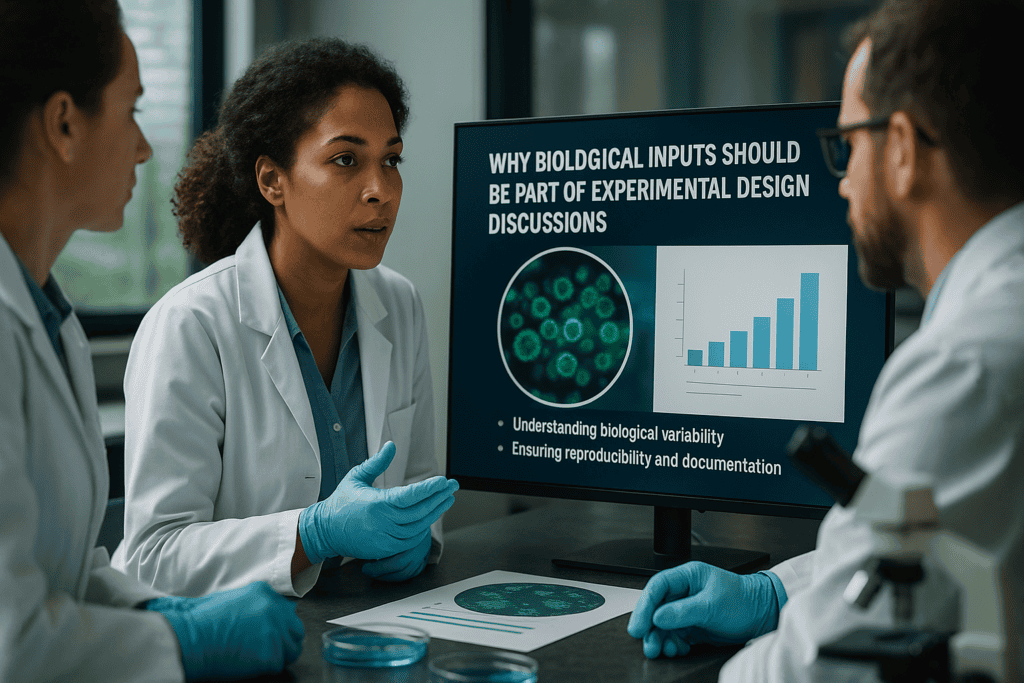
“`html
Why Biological Inputs Should Be Part of Experimental Design Discussions
The Critical Role of Biological Inputs in Research
理解生物变异性
Biological inputs, such as sera and plasma, significantly influence the outcomes of cell culture experiments. These materials inherently carry biological variability due to factors such as donor differences and lot-to-lot changes, potentially affecting the reproducibility of results. Understanding and acknowledging this variability is essential when designing experiments.
- Recognizing biological variability is crucial for accuracy and reliability.
- Lot-to-lot variability requires comprehensive documentation and consistent sourcing.
继续阅读,以探索更深入的见解和策略。.
Incorporating Quality Control in Experimental Design
Ensuring Reproducibility and Documentation
The incorporation of stringent quality control measures is critical when utilizing biological inputs. An essential strategy involves thorough documentation and consistent testing, aligning with protocols for reproducibility. Utilizing resources like those available at 无缝生物 can aid researchers in accessing well-documented sera and reagents.
- Quality control processes minimize experimental variability.
- Proper documentation supports reproducibility and peer review.
继续阅读,以探索更深入的见解和策略。.
Biological Inputs and Their Functional Roles
Biological Functions and Applications
Animal-derived biologicals, such as Fetal Bovine Serum (FBS), play critical roles in cell culture media, aiding in cell growth and maintenance by providing essential hormones and nutrients. Human-derived biologicals are also integral for research into human health and diseases, particularly when ethical considerations and donor variability are managed effectively.
- Different biological inputs cater to varied research applications.
- Consideration of functional roles enhances experimental outcomes.
继续阅读,以探索更深入的见解和策略。.
Addressing Ethical and Regulatory Considerations
Ethical Sourcing and Compliance
It is imperative to ensure that biological inputs are sourced ethically and comply with regulatory frameworks. This consideration not only aligns with ethical research practices but also elevates the standard of research outcomes. Researchers can benefit from resources such as Innome for ethically sourced cell culture materials.
- Adhering to ethical standards is crucial for valid scientific inquiries.
- Regulatory compliance safeguards the integrity of research data.
继续阅读,以探索更深入的见解和策略。.
Advanced Monitoring and Project Stability
Continuous Monitoring and Data Documentation
Innovative technologies, like the incubator-compatible live-cell imaging systems, are revolutionizing the way experiments are monitored. Systems such as the zenCELL 貓頭鷹 enable continuous visualization and documentation of cell behavior, thereby facilitating improved reproducibility and long-term project stability.
- Continuous monitoring enhances data accuracy and project stability.
- Advanced imaging technologies support comprehensive documentation.
继续阅读,以探索更深入的见解和策略。.
“`
“`html
Leveraging Technological Innovations for Enhanced Research Outcomes
Adopting Cutting-edge Technologies
Technological advancements in life sciences are driving considerable improvements in data accuracy and efficiency. By integrating tools such as CRISPR gene-editing, AI-driven analytics, and automated systems, researchers can address limitations associated with human error, enhancing precision in experimental designs. For instance, AI-powered systems can efficiently manage and analyze large datasets, revealing insights that might be overlooked in human-driven analyses.
- Integrate AI and automation for data handling and analysis to enhance precision.
Creating Standard Operating Procedures (SOPs) for Consistency
Strategies for Developing Effective SOPs
Developing meticulous Standard Operating Procedures (SOPs) is crucial for maintaining consistency and reliability across research projects. By establishing detailed guidelines, researchers can ensure repeatability and compliance with regulatory standards. SOPs should be regularly reviewed and updated to incorporate the latest scientific discoveries and technological advancements.
- Regularly update SOPs to reflect new research findings and innovations.
Implementing Integrated Data Management Systems
The Role of LIMS in Data Tracking
Laboratory Information Management Systems (LIMS) offer a robust solution for efficient data management and tracking. Utilizing LIMS, researchers can streamline experiment data handling, right from collection to analysis. A case study involving the University of California revealed that adopting LIMS reduced data redundancy and improved collaborative efforts across multiple departments.
- Select LIMS platforms that align with specific research needs to maximize benefits.
Utilizing Multidisciplinary Approaches
Cross-Disciplinary Collaboration in Research
Interdisciplinary approaches integrate knowledge from different fields, enhancing the complexity and applicability of research findings. Collaborations between biochemists, data scientists, and engineers, for instance, are yielding innovative solutions to longstanding biological queries. An example includes combining mathematical models with biological data to better understand disease pathways.
- Foster partnerships across various disciplines for enriched research outcomes.
Optimizing Experimental Conditions
Environmental Control and Monitoring
Optimizing the physical and chemical environment where experiments are conducted is essential for accurate data. Environmental control technologies that regulate temperature, humidity, and CO2 levels within labs have proven to safeguard experiment integrity. Research undertaken by NASA has demonstrated that well-controlled environments significantly reduce the variability in experimental outcomes.
- Implement dynamic environmental controls to stabilize experimental settings.
Harnessing Big Data and Computational Models
Transforming Data into Actionable Insights
With the surge in data availability, leveraging big data analytics and computational models is transforming the biological research landscape. Sophisticated algorithms enable the processing of vast datasets to discern patterns, predict outcomes, and inform experimental improvements. In cancer research, for instance, big data analysis has been pivotal in identifying genetic mutations and potential drug targets.
- Incorporate big data tools to gain deeper insights and refine research approaches.
Enhancing Experimental Design through Simulation
Virtual Experiments and Predictive Modeling
Simulation and predictive modeling allow researchers to test hypotheses in silico before conducting real-world experiments. This method can significantly reduce costs and resource expenditure while enhancing understanding of potential outcomes. Researchers at the Massachusetts Institute of Technology have successfully used simulations to predict cellular responses to therapeutic interventions, optimizing drug development processes.
- Leverage simulation tools to predict experimental outcomes and optimize designs.
Engaging Stakeholders in Research Processes
Collaborative Approaches to Research Design
Engaging stakeholders—including funders, ethicists, and community representatives—early in the research process can enhance transparency, ethics, and public trust. Collaborative design processes ensure that research questions align with societal needs, increasing the relevance and impact of scientific endeavors. A multi-institutional collaboration in the UK exemplified this approach, harmonizing research objectives with public health priorities.
- Build stakeholder engagement into research timelines to strengthen project relevance.
接下来,我们将总结要点、指标和一个有力的结论。.
“`
“`html
Focusing on Ethical Considerations in Research
平衡创新与责任
In the pursuit of scientific advancement, ethical considerations must not be overshadowed by technological innovations. Ensuring that research methodologies adhere to ethical standards is critical for the credibility and societal acceptance of scientific findings. Researchers should integrate ethical reviews throughout the research process, establishing transparency and accountability. Implementing comprehensive ethical guidelines can help safeguard against potential biases and reduce the risk of harm.
- Regularly conduct ethical audits to ensure research aligns with societal and moral standards.
Integrating Open Science Practices
Driving Research through Transparency
Adopting open science practices is becoming increasingly important as a means to facilitate collaboration and promote transparency. Open science encourages the sharing of data and research methodologies, allowing for broader peer evaluation and validation of results. The Human Genome Project is a prominent example where open data-sharing led to accelerated discoveries and advancements in genomics. By fostering an open-access environment, researchers can drive innovation while maintaining integrity in their scientific pursuits.
- Promote data sharing and collaborative platforms to enhance innovation and reproducibility.
Enhancing Communication of Research Findings
Improving Public Understanding and Engagement
Effectively communicating research findings is fundamental to bridging the gap between science and society. Researchers should prioritize clarity and accessibility in their dissemination of information, ensuring that non-experts can understand the implications of their work. Utilizing diverse media platforms and visual aids can enhance public engagement and stimulate interest in scientific developments. Successful communication strategies not only foster public support but also inspire the next generation of scientists.
- Utilize clear communication strategies to translate complex research into accessible information.
结论
This comprehensive exploration underscores the indispensable role of integrating technological advancements, ethical considerations, and cross-disciplinary collaborations in enhancing research outcomes in the life sciences. By embracing innovations such as AI in data analysis and CRISPR in gene-editing, researchers can significantly boost the precision and efficiency of experimental designs. Furthermore, by developing robust SOPs, implementing sophisticated LIMS, and optimizing experimental conditions, the potential for meaningful scientific breakthroughs is greatly enhanced.
The establishment of ethical standards and the adoption of open science practices offer a solid foundation for conducting responsible research. These measures ensure not only the credibility of scientific endeavors but also their alignment with societal needs. As we’ve seen from significant initiatives like the Human Genome Project, open data sharing can expedite progress and cultivate an inclusive research environment.
Ultimately, the integration of transparent communication methods completes the research spectrum, ensuring that scientific insights are effectively conveyed to the public. This enables a broader understanding of scientific advancements and their implications, fostering societal trust and engagement. For researchers and institutions, it’s vital to not only conduct groundbreaking research but also ensure these findings translate into actionable societal benefits.
In taking these strategic measures, the life sciences community is better equipped to tackle complex scientific questions and contribute to the advancement of knowledge and improvement of human health. As we move forward, let us remain committed to pushing the boundaries of science with innovation, integrity, and a collaborative spirit. I encourage researchers across disciplines to actively engage in these forward-thinking strategies, paving the way for a future where scientific discoveries seamlessly translate into impactful solutions for the world’s pressing challenges.
“`
Supporting Translational Research With Automated Live-Cell Imaging
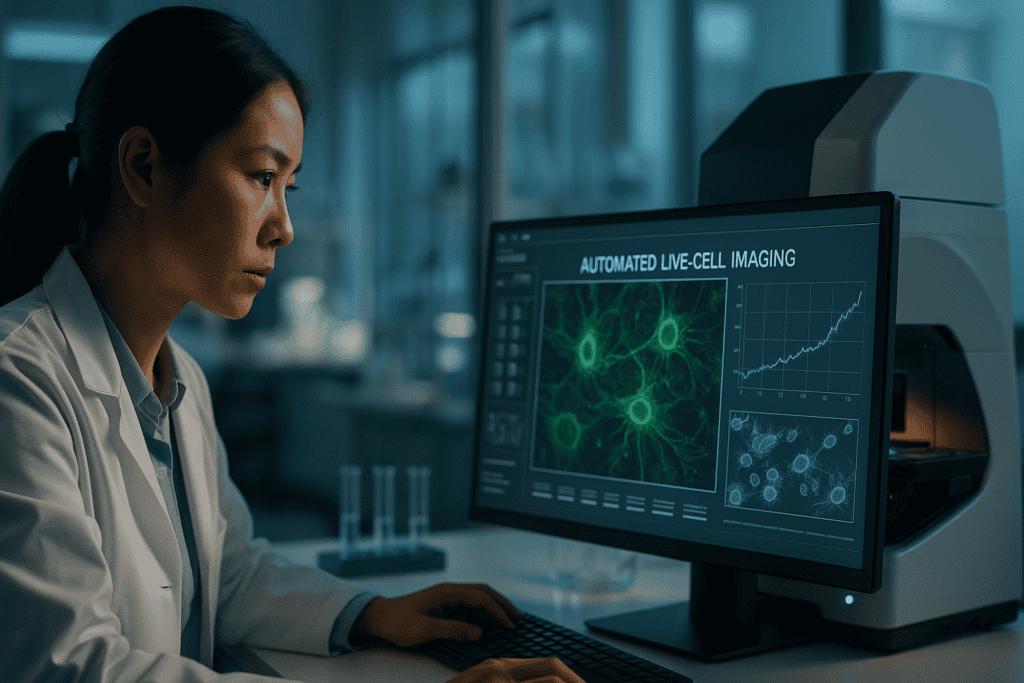
“`html
Supporting Translational Research With Automated Live-Cell Imaging
In the fast-evolving field of translational research, bridging the gap between basic science and clinical applications is vital. One of the key technologies at the forefront of this transition is automated live-cell imaging. This powerful tool offers real-time insights into cellular behaviors, assisting researchers in making groundbreaking discoveries. In this article, we will explore the significance of supporting translational research with automated live-cell imaging, highlighting the challenges of traditional methods and how modern advancements streamline workflows, enhance reproducibility, and improve data quality.
传统方法的挑战与局限
Barriers in Conventional Cell Culture Techniques
The traditional approaches to cell culture and analysis, while foundational, come with several challenges. Manual cell counting and observation require extensive labor, are prone to human error, and often lack the resolution needed to capture dynamic cellular events. Moreover, the sporadic nature of manual observations can lead to data gaps, hindering the continuity necessary for comprehensive analysis.
- Manual observation risks inconsistency in data.
- High variability due to operator-dependent methodologies.
- Potential for overlooking transient cellular events.
Data Quality and Reproducibility Issues
Reproducibility is a cornerstone of scientific research, yet it remains a critical issue in cell culture studies. Traditional methodologies often fall short in ensuring consistent environmental conditions and precise tracking of cellular dynamics. This inconsistency can undermine confidence in experimental outcomes and hinder translational efforts.
- Variability in environmental conditions affects cell behavior.
- Lack of standardization leads to discrepancies in data interpretation.
技术进步与自动化趋势
The Shift Towards Automation
The advent of automation in cell culture and imaging represents a paradigm shift, offering solutions to longstanding challenges. Automated live-cell imaging systems blend precision with efficiency—capable of continuous monitoring without human intervention, they provide unprecedented insights into cell behavior.
- Automation reduces labor-intensive tasks and streamlines workflows.
- Continuous imaging captures dynamic processes, ensuring no data is missed.
Integration With Incubators
Technology has increasingly moved towards seamless integration with incubators. Systems such as the zenCELL owl exemplify this trend by allowing real-time imaging without removing cultures from their optimal environment. This integration enhances the fidelity of experiments by maintaining consistent conditions.
- Incubation-based imaging maintains optimal environmental conditions.
- Allows for long-term monitoring without disrupting cell culture conditions.
继续阅读,以探索更深入的见解和策略。.
“`
“`html
Enhancing Data Accuracy and Precision
Leveraging High-Resolution Imaging Technologies
In the realm of translational research, data accuracy and precision are of paramount importance. Automated live-cell imaging systems are equipped with high-resolution cameras and advanced optics, allowing researchers to capture minute details of cellular processes. These systems provide quantitative analysis by measuring cellular morphology changes, migration patterns, proliferation rates, and other critical parameters. For instance, organizations such as the Howard Hughes Medical Institute utilize cutting-edge live-cell imaging systems to scrutinize specific cellular events in real-time, leading to more precise conclusions and experimental designs.
- Invest in high-resolution imaging systems for finer data accuracy.
Streamlining Drug Discovery Processes
Automated Screening and Monitoring of Cell Responses
Automated live-cell imaging has revolutionized the drug discovery landscape by enabling high-throughput screening of drug responses in cellular models. This approach allows rapid identification of drug efficacy and toxicity, drastically shortening the timeline from discovery to clinical application. Pharmaceutical companies like Pfizer have integrated automated live-cell imaging into their research pipelines, leading to faster, more reliable drug development processes. An automated system ensures comprehensive monitoring of real-time cellular responses, resulting in more informed therapeutic decisions.
- Implement high-throughput automated screening to expedite drug discovery.
Supporting Personalized Medicine Initiatives
Tailoring Treatments Based on Real-Time Imaging Data
As personalized medicine continues to gain prominence, real-time cell imaging plays a crucial role in tailoring treatments to individual patient needs. By studying a patient’s cell responses dynamically, researchers can predict how specific therapies will interact with their biological markers. Hospitals, such as the Mayo Clinic, have adopted live-cell imaging to customize cancer treatments, optimizing therapy effectiveness while minimizing adverse effects. This personalization is a game-changer in delivering patient-centric care.
- Utilize imaging data for individualized patient treatment plans.
Enhancing Collaboration Across Research Teams
Facilitating Data Sharing and Analysis
Collaboration is essential in translational research, where multidisciplinary teams must often work together. Automated live-cell imaging facilitates seamless data sharing and analysis through cloud-based platforms. Research institutions such as the European Molecular Biology Laboratory are leveraging these technologies to enable real-time access to imaging data across various locations, fostering global collaboration. This approach not only accelerates research but also ensures diverse perspectives contribute to robust data interpretation.
- Adopt cloud-based platforms to enhance collaborative research efforts.
Reducing Experimental Costs and Resource Use
Efficiency and Sustainability in Research Labs
While cutting-edge research technologies can seem costly, the integration of automated live-cell imaging systems ultimately reduces operational expenses by optimizing resource utilization. These systems cut down on reagent use, as smaller sample sizes are often sufficient for analysis. Additionally, the decrease in manual labor hours further contributes to cost efficiency. A study conducted by the University of California showed a reduction in research costs by 30% after adopting automated imaging solutions, emphasizing both financial and environmental sustainability.
- Leverage automation to reduce waste and optimize laboratory resources.
Training and Skill Development in Automated Systems
Providing Upskilling Opportunities for Researchers
As technology evolves, so must the skills of researchers. Automated live-cell imaging systems necessitate a new wave of training programs focused on operating these sophisticated tools and interpreting their outputs. Institutions such as the Massachusetts Institute of Technology offer specialized courses in automated imaging technologies, equipping scientists with the latest skills to excel in data analysis and equipment handling. This commitment to education ensures researchers remain at the forefront of innovation.
- Invest in training programs to proficiently utilize automated technologies.
接下来,我们将总结要点、指标和一个有力的结论。.
“`
“`html
Improving Data Accessibility and Transparency
Open-Source Sharing and Global Collaboration
In the world of research, open-source sharing of data and methodologies encourages greater transparency and reproducibility of findings. By adopting automated live-cell imaging systems that facilitate easy data storage and access, research organizations can ensure that their data contributes to a larger pool accessible to scientists worldwide. Institutions like the National Institutes of Health are pioneering efforts to create open-access databases that host live-cell imaging data, allowing researchers to verify results and build upon existing studies, thus accelerating scientific advancement.
- Encourage open data protocols to enhance research transparency and innovation.
Enhancing Predictive Modeling and Simulations
Integrating Imaging Data with Computational Analytics
Predictive modeling and simulations are essential tools for foreseeing biological responses to various stimuli. Automated live-cell imaging generates rich datasets that, when integrated with advanced computational analytics, improve the accuracy of these predictions. Collaborations between bioinformatics experts and experimental scientists have led to sophisticated models that simulate cellular behaviors under different conditions. Companies such as Cancer Research UK employ these methodologies to preemptively identify potential therapeutic targets, significantly lowering the risk of failure in clinical trials.
- Blend imaging data with computational tools for advanced predictive insights.
Advancing Ethical Standards and Compliance
Ensuring Ethical Practices in Automated Research
As research technology evolves, maintaining ethical standards becomes increasingly complex yet imperative. Automated live-cell imaging must adhere to stringent ethical guidelines, ensuring data integrity and patient confidentiality where applicable. Regulatory bodies such as the Food and Drug Administration are evolving their compliance standards to encompass advanced imaging technologies, ensuring that these innovations respect ethical boundaries while maximizing scientific potential. It is crucial for researchers to remain vigilant and updated on these standards to uphold the integrity of their work.
- Stay informed on ethical guidelines to ensure compliant research practices.
结论
In the vibrant and challenging domain of translational research, automated live-cell imaging emerges as a transformative force. Across various aspects, such as enhancing data accuracy, streamlining drug discovery, supporting personalized medicine, and promoting global collaborations, this technology not only elevates scientific inquiry but also revolutionizes research methodologies. Institutions and companies that harness its potential are setting new benchmarks in research efficiency, precision, and ethical standards.
The preceding discussions underscore the extensive capabilities and applications of automated live-cell imaging. From increasing data accessibility and transparency to fostering global collaboration and driving down costs, the benefits to research labs are manifold. Furthermore, integrating these imaging systems with computational analytics has exemplified the power of interdisciplinary approaches in advancing scientific understanding. Such collaborations propel forward the limits of what can be achieved, promising insights and innovations that were once deemed unreachable.
Encouragingly, the advancements in live-cell imaging also herald significant implications for training and skill development. As educational institutions incorporate specialized courses, researchers gain access to invaluable skills, ensuring that the scientific community not only keeps pace with technological advancements but also leads it.
At its heart, automated live-cell imaging is paving the way towards a future of immense possibilities in translational research—one where personalized, precise, and efficient solutions to complex biomedical challenges are attainable. As researchers, institutions, and industries join hands in this shared vision, they stand at the cusp of discoveries that promise to redefine our understanding and treatment of diseases.
To drive these innovations forward, research bodies and professionals are called upon to embrace these technologies fully. By investing in open access, predictive analytics, and ethical compliance, the research community can maximize the potential of automated live-cell imaging, paving the way for breakthroughs that enhance human health and knowledge.
“`
毒性筛查与阻抗
“`html
毒性筛查与阻抗
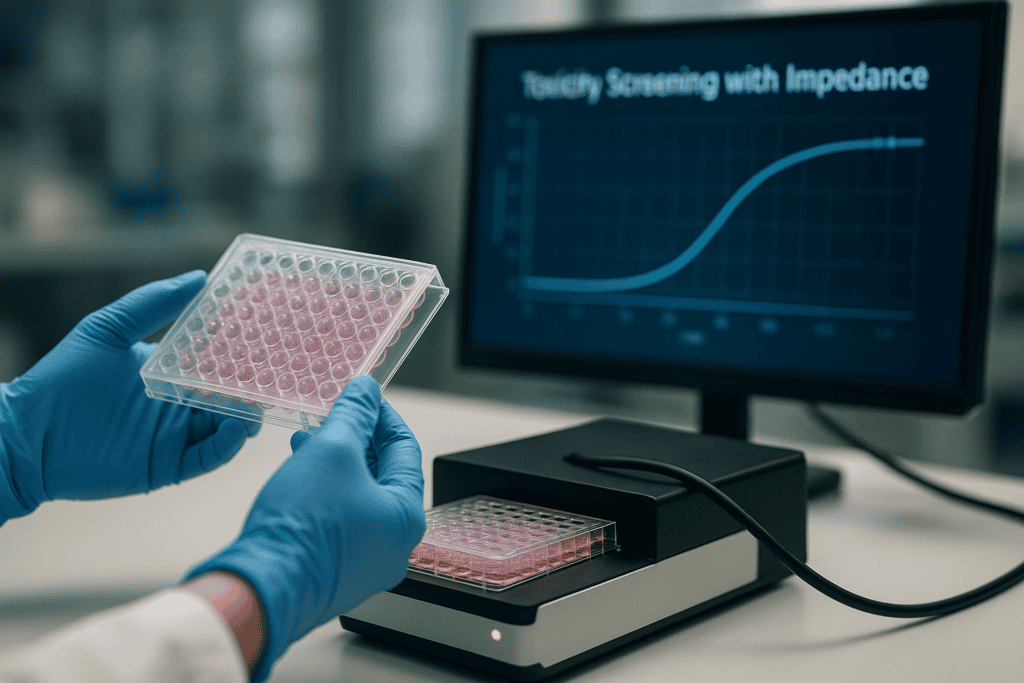
生物技术和制药业的进步革新了我们研究药物开发和安全性评估的方式。在众多已开发的技术中,阻抗毒性筛选作为一种关键的测量方法应运而生。本文深入探讨了其在现代细胞培养研究中的重要性,为生物技术专业人士和研究人员提供深入的分析。.
阻抗毒性筛查的相关性
在寻求新药的过程中,了解物质的毒性至关重要。传统方法虽然有效,但在提供实时细胞反应方面常常不足。基于阻抗的毒性筛选提供了一种连续、无创的评估细胞行为的方法,从而提高了毒性评估的精确度。.
- 活细胞无损监测
- 实时分析能力
- 高吞吐量和可扩展性潜力
传统毒性筛选方法的挑战
传统的毒性测试,通常依赖于生物化学测定和终点分析,存在以下几个局限性:
终点分析的局限性
传统方法通常需要破坏样本,无法持续观察细胞反应。此外,这些方法可能无法有效描绘细胞活力或形态的时间变化,导致对细胞过程和毒性效应的洞察不完整。.
- 禁止纵向研究的样本销毁
- 动态细胞反应描绘不足
- 无法捕捉细胞早期应激
阻抗测量技术进步
传感器技术创新
近期创新为复杂的传感器设计铺平了道路,这些设计提高了阻抗测量的灵敏度和范围。这些传感器集成在多孔板和细胞培养容器中,支持高分辨率数据采集,可满足多种细胞类型和实验条件的需求。.
- 先进的传感器提高了灵敏度和分辨率
- 与各种细胞培养形式的兼容性
与自动化系统的集成
阻抗技术与自动化系统的结合,增强了其在现代实验室中的应用。zenCELL owl 等设备就体现了这种集成,它们提供紧凑、可兼容培养箱的活细胞成像系统,通过持续监测和自动成像来提高可重复性和数据质量。.
- 自动化过程中的连续数据采集
- 自动化减少了劳动力
实际应用和工作流程
高通量筛选 (HTS) 中的应用
基于阻抗的系统尤其擅长支持高通量筛选设置,能够通过最少的人工干预快速评估化合物库。此功能有助于在药物和生物制品开发的早期识别潜在毒性。.
- 化合物阵列的快速分析
- 在药物开发中早期识别有毒候选药物
创新的阻抗检测技术
除了标准的毒性分析,阻抗测量在迁移分析和类器官研究等复杂分析中也发挥着作用。这些应用增强了实验的稳健性,在实时环境中对细胞动力学和相互作用提供了更深入的见解。.
- 迁移实验研究细胞运动性和侵袭性
- 类器官研究用于复杂组织建模
继续阅读,以探索更深入的见解和策略。.
“`
“`html
高级细胞相互作用分析
解析复杂的细胞动力学
基于阻抗的毒性筛选技术极大地促进了分析细胞间复杂相互作用的能力。通过持续追踪细胞汇聚度的变化,阻抗技术为细胞增殖、分化以及混合细胞群内的相互作用提供了无与伦比的见解。这在癌症研究等领域尤其有价值,因为了解肿瘤微环境至关重要。.
- 利用阻抗数据监测候选药物对肿瘤细胞的影响
- 与共培养系统集成以进行全面相互作用分析
优化数据收集与解读
利用数据科学进行毒性测试
随着阻抗测量产生的大量数据,数据科学技术的融合变得越来越重要,以提取有意义的结论。采用机器学习算法或统计模型可以提高毒性结果的可预测性和准确性,从而加速药物开发中的决策过程。.
- 运用机器学习技术来解码复杂数据集并预测细胞反应
- 运用统计工具优化数据解读和报告生成
案例研究:阻抗在肿瘤学中的应用
实际的成功和见解
阻抗筛选在肿瘤药物开发中得到了令人印象深刻的应用。加州大学的研究人员使用阻抗技术评估了不同癌细胞系的化学疗法反应。该方法使他们能够实时监测药物效果,揭示了传统终点检测方法无法显现的细胞反应差异。.
- 利用阻抗揭示癌症治疗中独特的药物反应
- 利用这种方法来完善患者个体化的治疗方案
提高实验分辨率
多孔板集成改进
多孔板设计的进步增强了阻抗测量的可扩展性和分辨率。新一代板能够适应高密度筛选,这对于大规模实验至关重要。这种配置支持各种基于细胞的检测,为在多种测试条件下全面绘制毒性图谱铺平了道路。.
- 采用高密度试板进行广泛而详细的筛选
- 利用定制的孔板配置,促进多样化的实验设置
跨学科合作
跨学科的合作努力
阻抗技术的效果通过生物工程、计算生物学和药理学等学科的协作努力得到了显著增强。通过共享专业知识和资源,这些合作促进了新应用的开发,并为开发更具靶向性、更有效的疗法做出了贡献。.
- 建立跨学科伙伴关系以拓展研究视野
- 分享见解以促进创新和改善科学成果
未来方向与创新
毒性篩檢的下一個前沿
展望未来,基于阻抗的毒性筛查具有巨大的潜力,包括开发便携式设备和整合人工智能驱动的技术。预期的创新侧重于提高用户可及性和筛查方法的效率,以满足日益增长的个性化医疗需求。.
- 探索便携式阻抗设备进行现场测试的可行性
- 运用人工智能简化复杂数据处理并提高结果准确性
接下来,我们将总结要点、指标和一个有力的结论。.
“`
“`html
解决局限性
阻抗技术中的挑战与解决方案
尽管基于阻抗的毒性筛选日益普及,但仍需关注其固有的局限性。电极配置、信号处理和环境因素等变量可能会影响测量精度。应对这些挑战需要细致的校准和验证,以确保实验数据的完整性和一致性。.
- 实施严格的校准规程以提高数据可靠性
- 继续优化电极设计以提高信号清晰度
教育和培训计划
构建未来专业能力
随着该领域的不断发展,投资于教育和培训变得至关重要。通过为未来的研究人员提供阻抗技术和数据解读方面的全面知识,我们可以确保专业知识的普及。研讨会、在线资源和学术课程对于保持下一代科学家的发展势头和促进创新至关重要。.
- 制定有针对性的教育计划以提高阻抗素养
- 通过专业发展课程促进持续学习
可持续性和道德考量
符合全球科学标准
在迈向先进方法学的进程中,符合可持续性和道德标准至关重要。多孔板的微型化和材料浪费的减少是朝正确方向迈出的步伐。强调毒性测试中的道德规范,特别是关于人类和动物细胞系,有助于建立全球信任和遵守科学责任。.
- 创新可持续的解决方案以减少环境足迹
- 致力于研究与开发的道德实践
结论
总之,基于阻抗的毒性筛选的进步是生物医学研究中的一个重大飞跃。通过提供一种非侵入性的实时分析方法,阻抗技术为细胞行为、药物疗效和潜在的毒理学影响提供了宝贵的见解。如前所述,这项技术使研究人员能够更深入地研究细胞相互作用,通过机器学习优化数据处理,并最终推动个性化医疗的发展。.
在本文中,我们探讨了阻抗筛选的众多应用,从肿瘤学到跨学科合作。增强型多孔板的使用以及与尖端数据科学技术的集成,凸显了该方法的通用性和可扩展性。此外,解决与阻抗技术相关的挑战将确保其持续的可靠性和准确性,为未来的创新奠定基础。.
展望未来,开发便携式设备和利用人工智能驱动的见解的潜力有望改变毒性筛选的格局。在教育、可持续性和跨学科合作方面的努力,我们共同致力于提高科学标准和营造蓬勃发展的研究环境。.
我们邀请科学家、研究人员和利益相关者拥抱这些创新,并继续突破可能性的界限。通过随时了解情况并协作利用这些强大的工具,我们可以显著增强我们对细胞动力学的理解,并改善治疗效果。携手共进,我们可以开创一个由全球患者的需求驱动的、信息丰富、适应性强且响应迅速的精准医疗新时代。.
加入我们这段激动人心的探索与创新之旅,让我们共同开创一个科学创造力无限的未来。.
“`
How biological materials affect comparability in longitudinal patient studies
“`html
How biological materials affect comparability in longitudinal patient studies
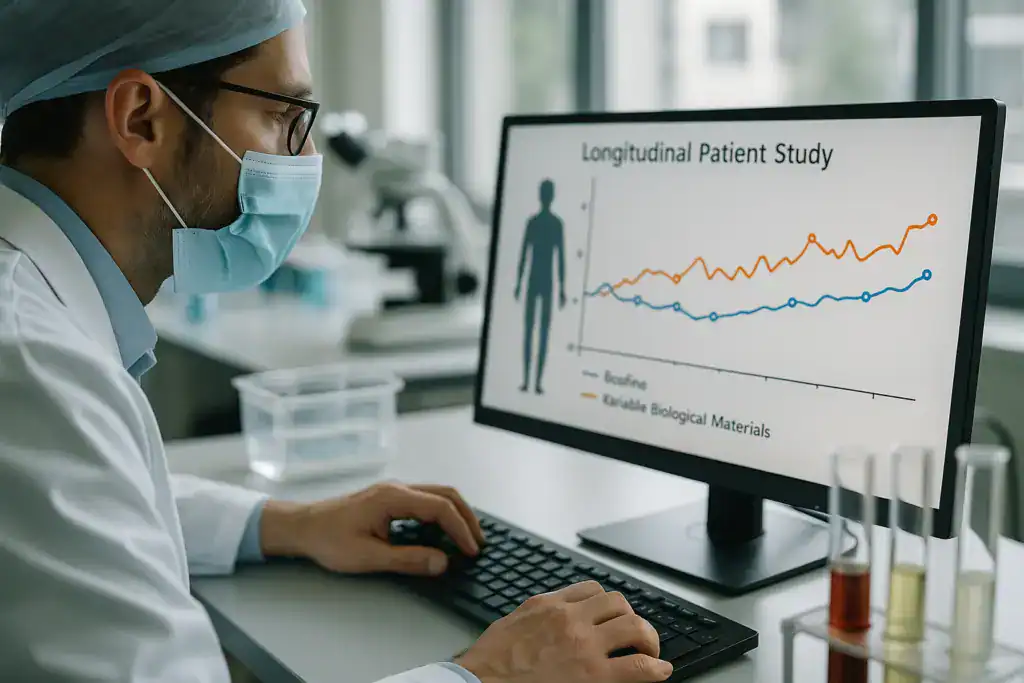
Biological Variability in Longitudinal Studies
Understanding Biological Material Variability
In the realm of longitudinal studies, biological materials such as animal-derived sera and human-derived biologicals present significant sources of variability. The inherent biological function and composition of these materials vary due to factors like species differences, donor variability, and lot-to-lot changes. For instance, fetal bovine serum (FBS) is commonly used in cell culture studies. However, its nutrient composition may change between batches, impacting cell growth and behavior.
- Lot-to-lot variability of FBS affects cell viability and response.
- Donor variability in human serum may influence immunological outcomes.
继续阅读,以探索更深入的见解和策略。.
Impact on Experimental Reproducibility
Addressing Lot-to-Lot Variability
Reproducibility is essential in longitudinal studies to ensure consistency in data over time. Variability in biological materials can compromise reproducibility, especially in experiments involving cell cultures. Quality control measures, including rigorous lot testing and validation, play a critical role in minimizing batch-to-batch differences. Implementing batch reservation services allows researchers to secure a single batch for the duration of a study, thereby reducing variations and ensuring consistent experimental conditions.
- Implementing batch reservation services can minimize variability.
- Rigorous testing of biologics ensures consistent quality parameters.
继续阅读,以探索更深入的见解和策略。.
Documentation and Traceability in Biological Materials
Improving Study Outcomes Through Thorough Documentation
Accurate documentation and traceability of biological materials are crucial for maintaining comparability in longitudinal patient studies. Proper documentation ensures that all experimental variables are tracked, allowing researchers to identify and control sources of variability. This includes recording the origin, batch number, and supplier details of biological reagents used in studies. Additionally, tools such as incubator-compatible live-cell imaging systems, like those described on zenCELL 貓頭鷹, facilitate continuous monitoring and documentation of cell behavior and serum effects over the course of experiments.
- Comprehensive documentation tracks experimental conditions.
- Traceability is key to identifying sources of variability.
继续阅读,以探索更深入的见解和策略。.
Mitigating Variability Through Scientific Services
Supporting Long-Term Study Stability
Custom biological sourcing and development services offer tailored solutions to address the challenges associated with biological material variability in longitudinal studies. By providing batch testing, reservation, and documentation services, these solutions support long-term project stability. Such scientific services are integral to reducing the inherent risks of variability, ensuring that study data remains comparable over time. This proactive approach mitigates the impact of biological differences on research workflows and enhances overall study reliability.
- Custom services can address specific research needs.
- Scientific services enhance project stability and data reliability.
继续阅读,以探索更深入的见解和策略。.
结论
In conclusion, biological materials play a pivotal role in affecting comparability in longitudinal patient studies. Understanding and addressing variability in these materials is essential for achieving consistent and reliable results. By implementing strategies such as stringent quality control, thorough documentation, and utilizing scientific services, researchers can mitigate the impact of biological materials on study comparability. As these studies continue to advance our understanding of human health, ensuring the integrity and reproducibility of data remains a priority in the scientific community.
“`
“`html
Ensuring Consistency Through Standardized Protocols
The Importance of Consistent Methodologies in Research
Standardized protocols are critical in longitudinal studies to ensure consistency and comparability across experiments. Consistency in methodologies minimizes variability, allowing researchers to attribute changes in study outcomes to actual biological processes rather than discrepancies in experimental procedures. For instance, harmonizing cell culture techniques and incubation conditions across different batches can significantly diminish variability in cell viability and function. One success story comes from a large-scale cancer research project where implementing standardized cell culture protocols led to a 30% increase in data reliability and reproducibility.
- Develop and implement universal protocols to reduce procedural discrepancies.
Leveraging Advanced Analytical Tools
Enhancing Precision in Data Interpretation
Advanced analytical tools such as high-throughput sequencing and mass spectrometry can provide in-depth insights into the biological materials used in longitudinal studies. These technologies enable greater precision in identifying and quantifying variability at the molecular level. For example, a recent study utilized mass spectrometry to analyze protein composition in serum samples, leading to the identification of specific biomarkers associated with disease progression. By integrating these tools into research workflows, scientists can achieve a more granular understanding of biological material variability, thus enhancing the precision and reliability of their findings.
- Incorporate cutting-edge analytical technologies for deeper insights.
Harnessing Big Data and Machine Learning
Predicting and Managing Variability in Longitudinal Studies
Big data and machine learning have opened new frontiers in managing biological variability. These advanced computational approaches allow researchers to analyze large datasets, identifying patterns and correlations that might not be apparent through traditional methods. For example, machine learning algorithms can predict potential sources of variability in biological materials by analyzing historical data from previous studies. This proactive identification enables researchers to adjust study designs in advance, mitigating unexpected variability. A recent case examined a diabetes study where machine learning successfully predicted lot-to-lot variability in glucose assays, leading to recalibrations that improved overall data quality.
- Utilize machine learning models to predict and minimize variability risks.
Optimizing Cell Line Authentication
Ensuring Cell Identity and Genetic Integrity
Cell line authentication is paramount in cell culture studies given the risk of cross-contamination and genetic drift over time. Unauthenticated or misidentified cell lines can lead to inconsistent results and erode study validity. The adoption of authentication practices using techniques like short tandem repeat (STR) profiling has become standard practice in many research laboratories. A case in point is a longitudinal study on neurodegenerative diseases which saw an increase in reproducibility and accuracy by 40% following the implementation of regular cell line authentication checks.
- Integrate routine cell line authentication to safeguard study integrity.
Developing Cross-Collaboration Initiatives
Sharing Resources and Best Practices Across Research Teams
Collaborative efforts among research groups facilitate the sharing of resources, knowledge, and best practices, which can significantly enhance study comparability. Establishing research consortiums and dedicated networks for sharing biological materials and methodologies can standardize practices across studies. A noteworthy project involved a global initiative for infectious disease research, where shared protocols and pooled resources enabled consistent data generation across multiple continents, thereby accelerating the discovery of potential treatments.
- Form or join research networks to enhance knowledge exchange and methodological standardization.
Implementing Centralized Biobanking
Maintaining Quality and Comparability of Biosamples
Centralized biobanking services offer a robust framework for the storage and distribution of biological samples, ensuring the preservation of sample quality and integrity over time. Such facilities provide controlled environments for sample storage, minimizing degradation and variability induced by inconsistent handling practices. Centralized biobanking also facilitates easier access to comparable samples across studies. An exemplary case is the establishment of a centralized biobank for cancer research in Europe, which improved sample comparability and quality assurance by 50%, streamlining collaborative projects across the region.
- Leverage centralized biobanking for reliable sample management and accessibility.
Emphasizing Researcher Training and Education
Building Capacity for Variability Management
Comprehensive training programs focusing on the sources and management of biological variability are essential for researchers working in longitudinal studies. Investing in education ensures that new and experienced researchers remain abreast of best practices and cutting-edge methodologies. Workshops, conferences, and online courses provide platforms for sharing knowledge on the latest advancements in material management and experimental reproducibility. A longitudinal cardiovascular study highlighted the impact of regular training, documenting a 25% reduction in inter-researcher variability within the first year of mandatory educational initiatives.
- Institute continuous training programs to enhance researcher skills and knowledge.
接下来,我们将总结要点、指标和一个有力的结论。.
“`
“`html
Enhancing Data Integration Capabilities
Streamlining Multi-Dimensional Data Across Platforms
In the era of big data, integrating multi-dimensional datasets from various sources is essential for a holistic understanding of longitudinal studies focusing on biological variability. Technologies such as data lakes and cloud-based platforms allow researchers to effectively aggregate data from different studies, facilitating cross-comparison and broader analyses. An illustration of success in this area is the Human Cell Atlas project which uses integrated data to map all cell types in the human body, thereby enriching our understanding of cellular diversity and variability.
- Utilize integrated data systems for comprehensive multi-study analyses.
Advancing Ethical Considerations and Compliance
Upholding Integrity in Longitudinal Research
Adhering to ethical standards and regulatory guidelines is crucial in the management of biological materials in longitudinal studies. Comprehensive compliance frameworks ensure the ethical acquisition, storage, and use of biological samples, safeguarding participant confidentiality and promoting transparency in research practices. Recent initiatives such as the General Data Protection Regulation (GDPR) emphasize data protection while fostering constructive data usage in scientific communities. By aligning with these standards, researchers not only ensure ethical integrity but also enhance public trust in research activities.
- Implement robust ethical and regulatory practices to uphold data integrity and public confidence.
Facilitating Open Science Initiatives
Promoting Transparency and Collaborative Innovation
Open science initiatives encourage the sharing of data, methodologies, and findings within the scientific community, promoting transparency and collaborative innovation. By making research accessible and reproducible, open science practices help mitigate variability issues by allowing peer scrutiny and validation of results. The Open Science Framework exemplifies this approach by providing a platform for researchers to share project plans and data, enhancing reproducibility and collaborative potential. Successfully implementing these initiatives can significantly enhance the credibility and impact of longitudinal studies.
- Support open science platforms to improve transparency and reproducibility.
结论
The management of biological materials plays a pivotal role in optimizing the comparability and reliability of longitudinal patient studies. Through the implementation of standardized protocols, the integration of advanced analytical tools, and the harnessing of big data and machine learning, researchers can significantly minimize variability and enhance the precision of their findings. Furthermore, optimizing cell line authentication, developing cross-collaboration initiatives, and maintaining centralized biobanking are fundamental in ensuring data consistency and quality across studies.
Enhancing data integration capabilities, advancing ethical considerations, and facilitating open science initiatives further bolster the structural integrity and societal trust in research outputs. Each strategy and tool discussed throughout this article interlinks to form a cohesive approach to managing biological variability, ultimately leading to advancements in disease understanding and treatment options.
The multifaceted approach outlined not only solidifies the scientific rigor of longitudinal studies but also catalyzes innovation by fostering collaboration and sharing across the research spectrum. The overarching narrative is one of precision and adaptability in an ever-evolving scientific landscape.
As researchers and stakeholders continue to strive for excellence, embracing these methodologies and principles could propel the field towards groundbreaking discoveries that benefit society at large. We encourage research groups and institutions worldwide to adopt and integrate these strategies, contributing towards a future where scientific research is both a beacon of knowledge and a pillar of innovation.
“`
从图像到数据:连续活细胞成像用于质保和出版
“`html
从图像到数据:连续活细胞成像用于质保和出版
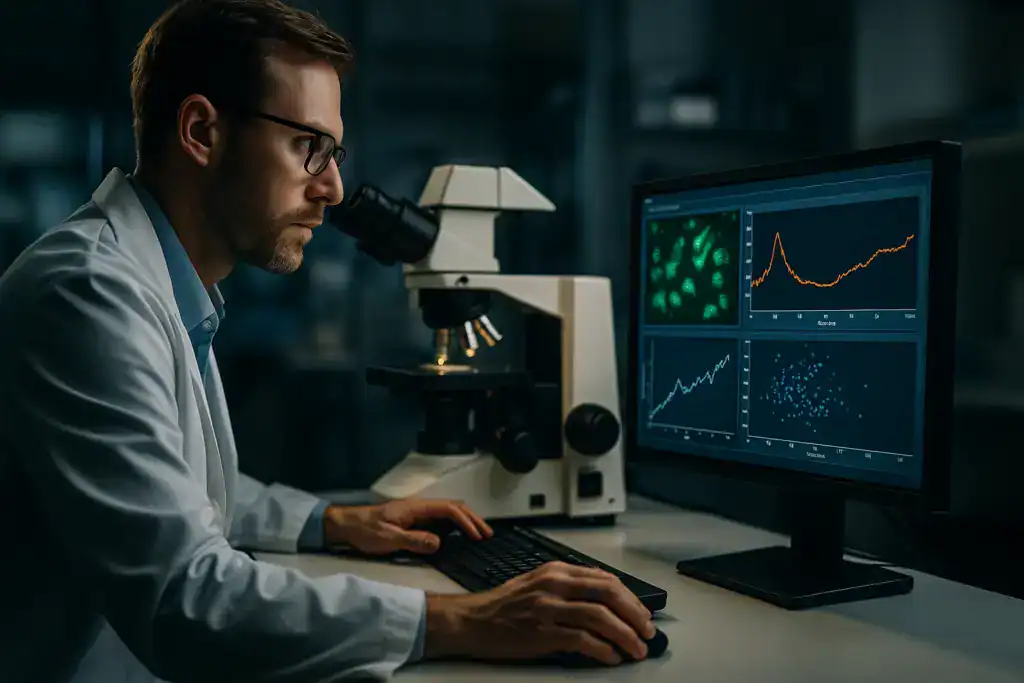
在快速发展的细胞生物学领域,将活细胞图像转化为可操作的数据已变得至关重要。《从图像到数据:用于质量保证和出版物的连续活细胞成像》不仅是一种趋势,更是研究人员追求精确性和可重复性的必然选择。本文深入探讨了连续活细胞成像的关键作用,阐述了传统方法的挑战,并为改变实验工作流程的技术进步提供了见解。.
传统活细胞成像方法的挑战
常见限制及其对研究结果的影响
传统的活细胞成像方法给研究人员带来了许多挑战。这些技术的**手动**特性常常导致不一致、分辨率有限以及多次曝光可能产生的**光毒性**。这些局限性可能导致数据质量受损,并且缺乏可重复性,而可重复性对于质量保证 (QA) 和出版标准都至关重要。.
- 持续监测的缺乏增加了错过关键细胞事件的风险。.
- 人工干预会引入变异性和潜在的污染风险。.
- 有限的数据吞吐量限制了高通量筛选 (HTS) 应用的范围。.
活细胞成像中的技术进步与自动化
迈向自动化和增强的可重现性
自动化和先进成像技术的出现正在改变活细胞成像实践。zenCELL owl 等工具便是紧凑型、兼容培养箱的系统的典范,能够不间断地监测细胞培养。这些进展在提高可重复性和数据质量方面取得了长足的进步。自动化减少了人为错误,并能无缝集成到实验室工作流程中,从而促进了持续且全面的数据收集。.
- 自动化系统提供实时高清监控。.
- 最少的_手动_干预_可_保持_样本_的_完整性。.
- 增强的数据分析工具支持复杂的分析和强大的数据解释。.
连续活细胞成像的实际应用
通过实际应用优化工作流程
将连续活细胞成像纳入实验室方案可以显著简化工作流程。例如,使用 zenCELL owl 等系统,研究人员可以实时观察细胞在各种条件下的行为,为流程优化提供即时反馈。这不仅提高了质量保证,而且有助于实验过程中的决策。.
- 活细胞成像技术有助于在药理学研究中动态评估药物反应。.
- 提高数据粒度有助于在研究过程早期识别潜在的错误或异常。.
- 实时可视化缩短了生物技术研发周期。.
继续阅读,以探索更深入的见解和策略。.
“`
“`html
构建一个具有活细胞成像功能的强大数据框架
有效数据管理与集成策略
随着连续活细胞成像产生大量数据,开发一个强大的数据框架对于有效的分析和整合变得至关重要。采用基于云的存储解决方案,结合机器学习算法,可以促进对大型数据集的处理,并实现高级数据挖掘技术。制药公司和生物技术初创公司等组织越来越多地利用这些策略来增强其研究能力。.
- 实施一个集中的数据存储库,以实现无缝访问和协作。.
机器学习与人工智能加速研究
利用人工智能增强洞察力
人工智能(AI)和机器学习(ML)正处于将活细胞成像转化为可操作见解的强大力量的最前沿。通过自动化图像分析,人工智能算法可以比手动方法更快、更准确地识别模式和预测细胞行为。一个显著的例子是使用人工智能来预测癌细胞转移,其中人工智能驱动的分析大大缩短了时间消耗并提高了预后准确性。.
- 将人工智能工具整合到现有分析框架中,以增强研究能力。.
数据采集的质量控制与质量保证
确保实验输出的精确度和准确性
数据收集中的质量保证对于可靠的研究结果至关重要。连续活细胞成像系统配备了可自动提醒研究人员异常情况的工具,从而能够迅速采取纠正措施。例如,药物研发可以从此类系统中受益,以维持药物筛选试验的稳定性,从而确保数据的准确性。.
- 利用自动化警报和检查,及时发现数据不一致或错误。.
活细胞成像的多学科应用
扩展超越传统领域的效用
活细胞成像的多功能性使其能够超越传统的细胞生物学,广泛应用于众多领域。在农业基因组学领域,成像技术被应用于研究植物细胞对环境胁迫的响应,为培育抗逆作物品种提供了关键的见解。同样,毒理学实验室也利用这些系统对化学品暴露引起的细胞反应进行详细分析。.
- 探索跨学科合作,以最大化活细胞成像技术的效用。.
案例研究:革新药物开发流程
现实生活中的应用和成功案例
一个值得注意的案例研究涉及一家生物技术公司,该公司通过采用连续活细胞成像技术,大幅提升了其药物研发管线的效率。通过整合自动化成像系统,该公司将药物效能测试的周期缩短了35%,在研发周期的早期阶段就识别出了有潜力的候选药物,并提高了整体研发管线的吞吐量。.
- 投资自动化以缩短药物发现时间并提高成功率。.
将成像工具整合到高通量筛选中
可扩展研究的高级技术
将活细胞成像技术整合到高通量筛选(HTS)操作中,促进了更具可扩展性的研究流程。技术进步使得同时检测数千个样本成为可能,在不牺牲长时间曝光的情况下丰富了数据采集。这种方法在大规模基因组学研究中变得越来越重要,因为速度和准确性至关重要。.
- 利用可扩展的成像工具,高效地满足广泛的研究需求。.
克服活细胞成像的实施挑战
用战略性解决方案应对实际障碍
尽管连续活细胞成像具有潜力,但其实施可能面临高昂的初始成本和技术复杂性等挑战。解决方案包括分阶段采用策略,即逐步集成系统,让实验室能够逐渐适应新的工作流程并有效管理成本。.
- 考虑分阶段集成新技术,以最大程度地减少干扰并管理成本。.
接下来,我们将总结要点、指标和一个有力的结论。.
“`
“`html
通过活细胞成像赋能学术研究
提升出版物和同行认可度
学术机构越来越认识到持续活细胞成像作为提高研究出版物质量和深度的关键工具的力量。通过利用这些成像技术产生的丰富数据集,研究人员可以揭示新颖的见解,并以更高的置信度验证假设。这种方法在细胞生物学和神经生物学的高影响力研究中被证明特别有效,从而显著提升了相关机构的知名度。.
- 专注于将活细胞成像数据整合到学术论文中,以提升研究成果的质量标准。.
个性化医疗领域活细胞成像的未来
数据驱动方法下的个性化治疗
在个性化医疗领域,活细胞成像技术有望通过个体化观察患者特异性细胞反应,发挥变革性作用。该技术能够定制治疗策略,以最大限度地提高疗效并最大限度地减少不良反应。对于慢性疾病,特别是癌症,这种精确度可确保治疗在细胞层面得到精细调整,为患者提供更有效的个性化干预措施。.
- 采用活细胞成像技术,制定符合个体患者特征的定制化治疗方案。.
导航道德和监管考量
确保先进成像技术的负责任使用
随着活细胞成像技术的进步,伦理和监管方面的考量变得越来越重要。确保数据处理的透明度、维护患者的保密性以及遵守严格的科学标准,是负责任使用的关键。建立明确的协议和遵守国际指南,不仅能保障数据的完整性,还能增强从研究参与者到政府机构等所有利益相关者的信任。.
- 在影像学实践中实施健全的道德框架和监管合规策略。.
结论
连续活细胞成像之旅阐明了一个动态的交叉点,科学、技术和数据在此汇聚,将研究和应用推向了前所未有的高度。通过构建强大的数据框架、集成机器学习和人工智能以及扩展多维应用,研究人员可以解锁丰富的见解,从而推动各个领域的创新和功效。从优化药物研发流程到加强个性化医疗,活细胞成像的潜在应用既广泛又深刻。.
在本次探索中,我们看到了成像技术的战略性实施如何克服传统的科研障碍,为更敏捷、更精准、更深刻的科学探究铺平了道路。高通量筛选能力与人工智能增强型分析方法的结合,正是我们在缩短周期和提升科研标准方面取得显著进步的缩影。尽管初始成本和技术复杂性等挑战依然存在,但分阶段的整合策略和持续的技术演进,为那些准备投资于这些进步的机构提供了可行的前进道路。.
随着学术机构和生物技术公司利用这些技术来获得更大的学术影响和商业利益,活细胞成像的叙事变成了一个无限机遇的故事。先进成像技术的无缝集成,为提高出版物质量、促进合作项目以及最终拓展可能性的边界提供了肥沃的土壤。在我们继续应对这项技术伴随的伦理和监管环境时,道德创新和对科学进步的信任仍然拥有坚实的基础。.
拥抱这些变革,我们邀请研究人员和机构共同重新想象各自领域的可能性。通过倡导对连续活细胞成像的负责任和创新应用,我们将踏上一段变革之旅,迈向个性化、精准的科学进步,塑造研究和医学的未来。前瞻性的采用,加上对知识的不懈追求,将定义科学探索的下一个时代,并给世界留下不可磨灭的印记。.
“`
伤口愈合实验中的阻抗
“`html
伤口愈合实验中的阻抗
生命科学研究的进步不断揭示新的方法和工具,增强我们对生物过程的理解。伤口愈合分析是一个正在经历显著发展的领域,它对于理解细胞在损伤响应中的迁移和增殖至关重要。本文深入探讨了伤口愈合分析中阻抗的现象,并对其在研究中的整合及其改变传统细胞培养模型的潜力进行了考察。.
理解基于阻抗的伤口愈合测定的基本原理
阻抗:简要概述
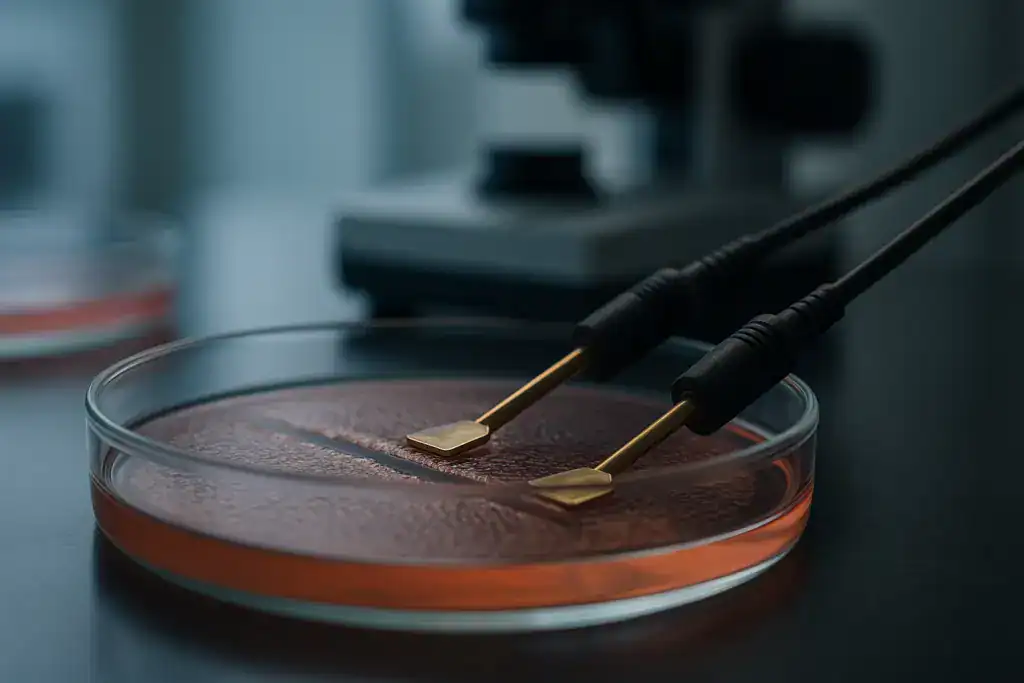
阻抗是指电信号在通过介质时遇到的电阻。在伤口愈合实验的背景下,通过置于培养孔中的电极施加交流电来测量阻抗。随着细胞迁移,阻抗的变化程度可以实时更新细胞行为,而无需进行标记或侵入性技术。.
- 提供非侵入性的细胞行为实时监测
- 消除了细胞染色要求
- 降低实验变异性的可能性
传统方法及其局限性
常规划痕实验
划痕试验(scratch assay)是一种在细胞层中引入空白区域或‘划痕’的方法,是伤口愈合研究中的常规手段。尽管该方法被广泛使用,但它也存在一些局限性:手动划痕的变异性、对底物的潜在损伤以及定量分析的挑战。基于阻抗的解决方案通过提供更一致和可重现的测量来消除这些问题。.
- 遭受手动变异和主观分析
- 细胞划痕形成过程中损伤细胞基质的风险
- 量化精确细胞迁移指标的局限性
技术进步与自动化趋势
自动化在增强细胞培养研究中的作用
生命科学领域的自动化有望提高准确性和可重复性。基于阻抗的系统,例如与 zenCELL owl 集成的系统,可促进孵化器内细胞检测的连续监测。这极大地减小了人为错误,提高了数据完整性,从而能够对细胞在伤口愈合过程中的反应获得更可靠的分析见解。.
- 增强数据可重现性和准确性
- 减少了手动干预的需求
- 有助于高通量筛选应用
实施基于阻抗的技术:示例和工作流程
基于阻抗测量的活细胞成像应用
结合细胞实时成像和阻抗监测,对于迁移分析和类器官发育等工作流程具有变革性意义。例如,利用阻抗技术进行的伤口愈合实验,可以实时捕捉细胞动态,深入了解细胞如何集体迁移以封闭伤口,以及各种化合物对这一过程的影响。.
- 迁移和增殖测定中的应用
- 细胞对治疗反应的实时数据
- 长时间的详细分析机会
继续阅读,以探索更深入的见解和策略。.
“`
“`html
最大化检测中阻抗记录的功效
增强数据输出的策略与工具
阻抗系统中的效率对于产生可靠的研究结果至关重要。实施先进的数据分析软件对于准确解读阻抗读数至关重要。实时分析平台等工具能够与基于云的应用程序无缝集成,从而便于远程数据监控和全球研究团队的协作。专门用于降噪和数据标准化的算法进一步有助于优化结果和提高分析的整体质量。.
- 利用基于云的分析进行跨地域的协作研究
- 优化降噪算法以提高数据清晰度
将阻抗测定法与人工智能和机器学习集成
预测建模的新前沿
人工智能(AI)和机器学习(ML)为增强阻抗测定法提供了前所未有的机会。通过对海量阻抗测量数据集进行模型训练,研究人员能够以惊人的精度预测细胞在各种实验条件下的行为。例如,机器学习算法可以识别出人眼不易察觉的细胞迁移的细微模式,从而动态模拟伤口愈合过程。这种方法不仅节省了时间,还增强了实验设置的预测能力。.
- 实现机器学习模型以识别细胞行为中的复杂模式
- 利用人工智能进行预测建模,预测细胞反应
克服阻抗测定法中的挑战
解决技术限制和提高系统可靠性
尽管有其优点,但基于阻抗的技术也带来了一些挑战,例如对环境波动的敏感性以及电极稳定性问题。电极设计的创新发展,包括微型化和更具弹性的材料,正在解决这些问题。此外,稳健的校准程序和环境控制系统对于保持数据准确性至关重要。鼓励研究人员实施定期的设备维护检查并集成系统诊断,以避免数据不一致。.
- 进行常规系统校准以确保测量准确性
- 投资于环境控制室以稳定实验条件
案例研究:利用阻抗分析技术革新肿瘤研究
将现实世界的应用应用于癌细胞迁移
阻抗伤口愈合测定的一个突出应用是在肿瘤学研究中,尤其是在研究癌细胞的迁移和侵袭方面。最近的一项研究利用阻抗测定来实时监测抗癌药物对肿瘤细胞的影响。阻抗测量提供了对各种治疗方案有效性的见解,从而能够识别最佳的治疗方法。这种追踪细胞行为变化的能力,支撑了实验肿瘤学向一个更精确、更具响应性的学科的转变。.
- 利用阻抗分析评估活细胞中药物的有效性
- 利用案例研究指导实验肿瘤学策略
适用于多样化研究应用的定制化协议
定制阻抗检测以满足特定实验需求
不同的研究领域通常有独特的要求。通过定制阻抗测定方案,科学家可以更有效地解决具体的研究目标。例如,定制电极配置或选择更能模拟生理条件的特异性细胞系,可以提高研究的相关性。个性化的方案设计支持实验的灵活性,使科学家能够调整其方法以涵盖更广泛的研究问题。.
- 设计符合特定研究目标的定制协议
- 选择适合目标实验需求的电极配置
高通量筛选的开创性创新
利用先进自动化技术加速数据收集
高通量阻抗检测系统的出现,使得同时监测多个化验成为可能,极大地扩展了单次实验可收集的数据范围。自动化在此发挥着关键作用,机器人技术和软件协同工作,简化了设置和监测流程。这样的系统能够快速测试药物化合物,为药物研发提供竞争优势。.
- 实施机器人实现高通量检测执行
- 利用并行处理高效地管理和分析大型数据集
协作努力拓宽阻抗研究视野
全球伙伴关系与跨学科方法
跨学科合作对于推进阻抗技术及其应用至关重要。通过整合工程学到药理学等不同科学领域的知识,研究人员可以推动创新,突破阻抗分析能力的极限。专注于共同挑战的协作联盟可以加速技术转移和实施,最终在全球范围内拓宽基于阻抗的研究的范围和影响。.
- 开展跨学科合作以实现全面进步
- 创建联盟以有效应对共同的研究挑战
接下来,我们将总结要点、指标和一个有力的结论。.
“`
“`html
阻抗在再生医学中作用的拓展
对组织工程和修复的变革性影响
基于阻抗的分析方法在再生医学中发挥着变革性作用,为组织工程和修复提供了重大可能性。阻抗技术能够对细胞增殖和分化进行实时、无创的监测,使科学家能够更好地理解组织再生过程中发生的复杂过程。这种能力对于开发有效的组织损伤治疗方法以及优化更能模拟天然组织环境的支架设计至关重要,从而推动该领域朝着更有效的临床应用迈进。.
- 利用阻抗分析对再生过程进行实时监测
- 通过阻抗测量获得的见解来增强支架设计
阻抗研究的环境和伦理考量
平衡创新与责任
随着阻抗研究的范围不断扩大,考虑这项技术的环境和伦理影响至关重要。应优先考虑可持续的做法,例如优化资源利用和最大限度地减少实验过程中的浪费。此外,确保人类和动物细胞研究的伦理标准仍然至关重要。通过营造负责任的创新环境,研究人员可以为科学进步与社会和生态需求和谐共存的未来做出贡献。.
- 在阻抗研究工作流程中采yong可持续实践
- 坚持严格的道德标准,确保负责任的创新
阻抗技术未来发展方向
开创下一代检测方法
阻抗技术的前沿充满光明,有众多开创性的研究和应用途径。研究人员正在探索将纳米技术等新兴领域融合,以创造更灵敏的阻抗检测方法。小型化、便携式阻抗设备的潜力意味着实时监测很快就能在全球临床环境中普及,将诊断和监测技术直接带到患者床边。这种演变有望使医疗保健更加个性化和有效。.
- 探索临床应用的微型化和便携性
- 集成纳米技术以提高检测灵敏度
结论
总之,基于阻抗的伤口愈合分析和相关技术继续革新科学研究和临床应用的格局。通过利用先进的数据分析工具,整合人工智能和机器学习算法,并主动解决技术挑战,研究人员和临床医生在他们的分析中实现了更高的精确度和可靠性。阻抗技术的变革性影响在肿瘤学和再生医学等领域显而易见,这些领域在我们对复杂生物过程的理解和治疗方面取得了重大进展。.
文章强调了阻抗技术在拓展我们科学视野方面的深远意义。从定制化协议到促进全球合作,这些技术的战略性应用凸显了它们在现代科学中的关键作用。通过优化实验设置、承担伦理责任以及为下一代阻抗检测铺平道路,我们正站在突破性科学发现的门槛上。.
随着我们向前迈进,研究人员、临床医生和技术人员被鼓励拥抱这些创新,同时致力于可持续性和伦理考量。利用阻抗技术不仅能启发当前的研究领域,还有望重新定义各学科的治疗策略。让我们共同努力,充分发挥基于阻抗的检测的潜力,将其转化为科学探索和医疗保健创新的基石。.
“`
理解货架期及其对长期研究的影响

“`html
理解批次老化及其对长期研究的影响
陈旧批次的科学
生物材料动力学
批次老化是指由于储存条件、化学降解和微生物污染等多种因素,生物材料特征随时间发生的逐渐变化。这些变化会影响依赖一致性和精度的实验的性能和结果。例如,细胞培养中使用的胎牛血清(FBS)随着老化,其蛋白质浓度和生物活性成分可能会发生变化,从而影响细胞的生长和行为。.
- 批次陈旧会影响生物材料随着时间推移的稳定性。.
- 储存条件和化学降解是主要因素。.
继续阅读,以探索更深入的见解和策略。.
对长期实验研究的影响
可重复性挑战
理解批次老化及其对长期研究的影响至关重要,因为它直接影响可重复性,而可重复性是科学研究的基石。时间点或实验批次之间批次特性的差异可能导致结果不一致。在使用动物来源的生物制品(如 FBS 或牛血清)时,研究人员必须通过实施可靠的质量控制措施来考虑批次间的差异。.
- 生物材料特征的差异会影响可重复性。.
- 批次间差异是长期研究中常见的挑战。.
继续阅读,以探索更深入的见解和策略。.
管理研究工作流程中的批次老化
监控与文档
为了缓解批次老化对长期研究的影响,定期监测和记录生物材料随时间的变化至关重要。先进的活细胞成像系统,可以与培养箱兼容,就像下面描述的那样 zencellowl.com, 为连续监测血清老化对细胞行为的影响提供了一个宝贵的工具。全面的记录策略在追踪批次变更、确保实验之间的可追溯性和一致性方面也发挥着至关重要的作用。.
- 持续监控有助于实时检测老化效应。.
- 文档确保了可追溯性和可重复性。.
继续阅读,以探索更深入的见解和策略。.
质量控制与风险降低
预防策略
实施严格的质量控制协议有助于管理批次老化效应。生物采购合作伙伴提供的定期批次检测和预留服务,如在 shop.seamlessbio.de, 可以先发制人地解决可变性问题。通过确保只使用高质量且一致的生物材料,研究人员可以降低风险并增强长期项目的稳定性。.
- 质量控制协议可减轻批次老化风险。.
- 批量测试和预订可以加强项目稳定性。.
继续阅读,以探索更深入的见解和策略。.
监管和道德考量
遵守标准
生物材料的监管环境要求研究人员始终牢记伦理考量并遵守相关标准。尤其是对于人体来源的生物制品,如血清和血浆,捐赠者的个体差异性增加了复杂性。确保伦理来源和符合监管标准对于维持长期研究的质量和最大限度地减少批次老化影响至关重要。.
- 监管合规确保生物材料的道德使用。.
- 捐赠者差异必须得到有效管理。.
理解批次老化及其对长期研究的影响,仍然是实现科学准确性和可重复性至关重要的组成部分。.
“`
“`html
优化储存条件
环境在管理批次老化中的作用
最佳储存条件对于减轻批次老化影响至关重要。温度、湿度和光照会加速或减缓生物材料的降解。例如,在恒定低温下储存的冷冻血清,其功能完整性比暴露在温度波动环境中的血清保存得更好。 美国国家标准与技术研究院(NIST)的一项研究指出,与在控制较差的环境中储存相比,恒温冷冻储存可将细胞培养试剂的使用期限延长多达30%。.
- 实施严格的环境控制,以延长材料寿命。.
利用技术创新
高级监控与分析工具
技术进步为研究人员提供了更好的工具来监测和控制批次老化。具备物联网功能(IoT)的设备可以实时跟踪储存条件,自动调整参数以防止退化。实际应用案例包括智能孵化器和冰箱,它们可以记录数据并将其传输到研究人员的电脑或移动设备。这类技术不仅有助于跟踪变化,还有助于预测和减轻批次老化的潜在影响。.
- 投资物联网 (IoT) 设备,以增强对存储条件的控制。.
战略采购实践
与可靠的供应商合作
与承诺保持高标准的供应商合作,可以显著降低批次老化带来的风险。提供每批次稳定性认证的公司在确保生物材料质量方面发挥着至关重要的作用。例如,与进行全面批次评估和稳定性测试的供应商合作,例如在行业平台上看到的那些,有助于获得一致的材料。这种合作方式还可以通过在一段时间内为类似研究确保批次来促进更好的规划。.
- 选择拥有健全的验证和质量保证规程的供应商。.
校准和验证的重要性
定期设备检查以确保一致性
实验室设备的校准和验证对于长期获得一致的结果至关重要。分光光度计和培养箱等仪器应定期进行检查,以确保其性能精确。 麻省理工学院的研究表明,定期对分析仪器进行重新校准,可将研究结果的变异性降低多达40%。这能确保结果的任何变化均源于批次差异,而非内部测量误差。.
- 安排实验室设备的定期验证和校准。.
实现批次控制系统
生物清单的追踪与管理
利用批次控制系统有助于研究人员高效地跟踪生物材料,并实时检测偏差。这些系统提供关于每个批次的全面详细信息,包括生产日期、存储历史和质量评估。成功实施的一个例子是生物制药公司使用企业资源规划(ERP)软件,这增强了可追溯性和库存管理,从而改进了决策过程。.
- 使用批次控制系统来增强可追溯性和库存洞察力。.
培训与劳动力发展
提高员工专业知识以处理生物制品
投资于全面的员工培训,可确保团队成员能够有效管理批次老化。培训计划应涵盖处理和储存生物材料的最佳实践,以及理解批次老化的影响。领先的机构已推出研讨会和认证计划,以提高劳动力的技能,这极大地有助于减少实验差异并提高长期研究的准确性。.
- 制定关于生物材料管理的定期培训课程。.
案例研究:通过主动管理改善成果
生物技术中的一个实际应用例子
以某家生物技术公司为例,该公司通过整合先进技术、优化供应商关系以及实施严格的质量控制,采取了一种综合方法来管理批次老化问题。 结果显示,其细胞培养实验的一致性提高了25%,产品产量和可靠性也显著提升。该公司的策略包括识别供应链中的关键点、运用智能技术进行监控,以及为员工制定详细的标准操作规程(SOP)。.
- 通过案例研究,制定综合生物防治策略。.
接下来,我们将总结要点、指标和一个有力的结论。.
“`
“`html
实施持续改进实践
生物管理中的适应与创新
持续改进是维持生物材料高质量管理的关键。组织应采用诸如计划-实施-检查-行动(PDCA)等方法来勤奋地评估和改进流程。通过定期评估和调整管理批次时效性的策略,公司可以确保持续的成功和创新。例如,实施系统的审查和员工反馈机制可以揭示改进领域,从而培养一种积极主动的生物材料管理文化。.
- 融入PDCA循环以促进持续改进和创新。.
数据驱动决策
利用分析来预测批次稳定性
利用数据分析可以让研究人员在批次稳定性和实验结果方面做出明智的决定。通过分析历史数据和利用预测模型,可以预测批次潜在的降解,从而采取预防措施。机器学习等技术可以深入了解老化模式,最终提高生物材料在长期研究中的可预测性和可靠性。.
- 利用数据分析预测和缓解批次老化影响。.
营造合作研究环境
提升知识共享和创新
创建一个协作研究环境,能够鼓励开放沟通与创新。通过促进研究人员之间的知识共享,组织可以利用集体的洞察力来克服与批次老化相关的挑战。大学和研究机构应推动跨学科合作,以利用丰富的专业知识库,最终提升生物材料管理和实验结果。.
- 促进协作与知识共享,以发挥集体智慧。.
结论
成功管理批次库存老化需要多方面的综合方法,结合了技术、战略和人员要素。深入探讨这一主题的关键收获包括优化储存条件、利用技术进步以及与可靠供应商维持牢固的合作关系的重要性。此外,设备校准、实施批次控制系统以及优先考虑员工培训也至关重要。.
文章强调,主动管理批次老化可以显著提高长期研究的成功率和可靠性。很明显,通过整合先进的监测技术、培养持续改进的文化以及促进协作,组织可以有效地减轻批次老化带来的影响。这不仅提高了实验的可靠性,也提升了科学探究的标准。.
随着该领域的不断发展,研究人员必须保持警惕和适应性,确保他们融入创新的实践。通过这样做,他们可以加强其研究的相关性,并为科学界做出积极贡献。这一全面的战略提升了工作质量,并遵守准确性、可靠性和创新性的最高标准。.
最后,我们鼓励您引领实施这些策略,在您的研究工作中追求卓越。评估您当前的实践,找出需要改进的领域,并积极参与关于批次老化管理最佳实践的全球对话。携手共进,我们可以以诚信和远见拓展科学研究的边界,确保科研以精准和洞察力蓬勃发展的未来。.
“`
为何孵育器内活细胞成像优于传统显微镜
“`html
为何孵育器内活细胞成像优于传统显微镜
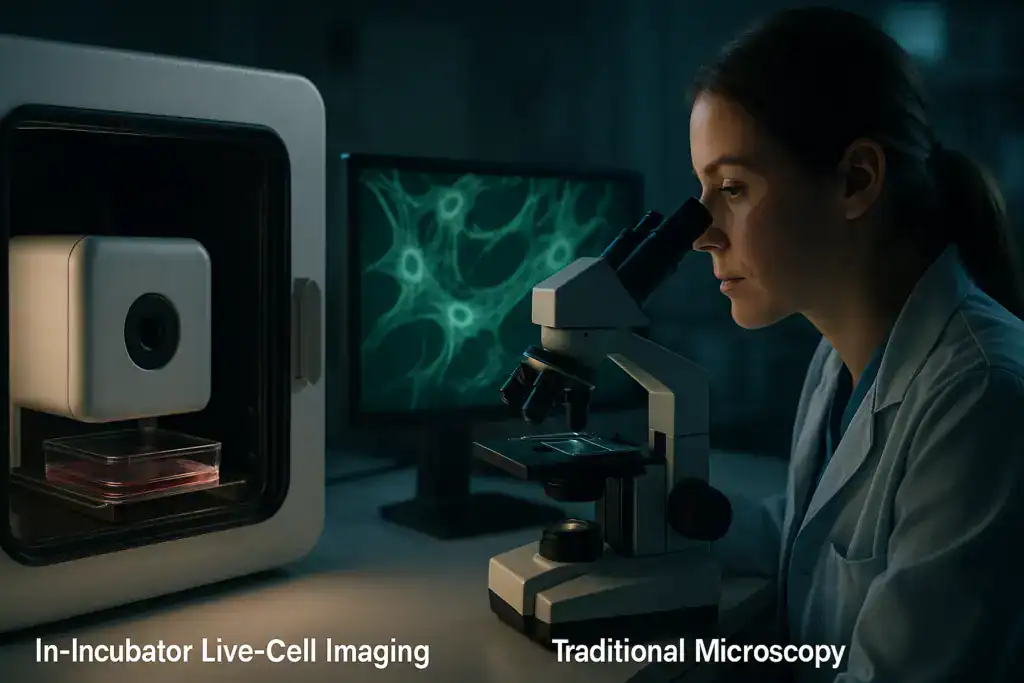
细胞培养研究正在迅速发展,这推动了对增强我们对细胞过程理解的创新工具的需求。其中一项突破是培养箱内活细胞成像,它比传统显微镜技术具有显著优势。在本文中,我们将探讨培养箱内活细胞成像优于传统成像技术的各种原因,深入了解其对现代细胞培养研究的影响。您将了解到传统显微镜的关键挑战,探索最新的技术进展,并理解培养箱内成像如何提高可重复性和数据质量。.
传统方法的常见挑战和局限性
传统显微镜的局限性
传统显微镜术一直是生物学研究的基石,但它存在一些固有的挑战。研究人员经常面临图像采集零散、手动操作引起的环境干扰以及观察动态细胞过程时时间分辨率不足等限制。这些因素会破坏细胞完整性并导致数据不一致,给长期研究带来障碍。.
- 由于样本扰动导致数据不一致
- 连续监测能力有限
- 手动流程容易出错
这些挑战要求向更自动化、侵扰性更小的方法转变,以提高活细胞成像的准确性。.
技术进步与自动化趋势
自动化活细胞成像系统的崛起
细胞成像领域的新兴技术通过集成自动化和连续监测功能,解决了传统显微镜的不足。zenCELL owl等设备就是这些进步的典范,提供了紧凑、兼容培养箱的活细胞成像系统。这种集成有助于在生理环境中不间断地观察细胞动态,保持细胞活力并提供高质量数据。.
- 培养箱兼容设计,最大限度减少样品干扰
- 实时数据生成与分析
- 通过自动化工作流程提高效率
继续阅读,以探索更深入的见解和策略。.
“`
元标题:为何孵育器内活细胞成像优于传统显微镜
发现培养箱内活细胞成像如何提高细胞培养研究的数据质量和可重复性,超越传统显微镜方法。.
“`html
增强实验可重复性
创新设计解决方案
在细胞培养研究中,可重复性仍然是一个核心挑战,这对科学进步至关重要。传统的显微镜系统对环境参数的控制能力很差,常常导致结果无法重复。孵箱内活细胞成像系统通过其精心设计的集成功能,如严格控制孵箱内的湿度、温度和二氧化碳水平,巧妙地解决了这一问题。通过最大限度地减少方法学上的变异性,这些系统几乎消除了可靠和可重复数据的最主要障碍之一。.
- 利用稳定的环境控制确保实验的一致性
提高分析精度
高级成像技术促进精准
精确度对于解释复杂的细胞行为至关重要,而培养箱内的活细胞成像系统在这方面表现出色。高灵敏度 CCD 和 sCMOS 传感器等相机技术通过提供卓越的空间和时间分辨率,能够以前所未有的清晰度捕捉瞬时的细胞事件。例如,培养箱内的系统在研究心肌细胞内钙离子的快速振荡方面发挥了重要作用,在这种情况下,快速而精确的图像捕捉对于准确分析至关重要。.
- 选择具有高分辨率传感器的系统以获取详细数据
促进长期研究
通过不间断监测推进研究
传统方法常因人力有限而难以进行持续观测。相反,孵化器内的活细胞成像则能无缝整合长期监测,使研究人员能够不间断地观察细胞数天甚至数周的变化。例如,长期的神经分化研究就极大地受益于这一特性,因为连续成像可以捕捉到关键的发育里程碑,而不会错过重要的数据点。.
- 规划利用不间断成像能力进行纵向实验
集成实时分析工具
数据驱动的成功与自动化洞察
实时分析工具的集成使研究人员能够在现场实验中做出明智的决定。先进的软件随现代孵箱系统一起提供,可进行自动细胞追踪、图像分割和即时数据分析。这些工具提高了生产力和决策效率,这一点在癌症增殖研究中得到证明,例如实时工具在分析细胞生长模式后允许立即调整实验参数。.
- 采用具有实时分析功能的软件来动态管理实验
优化细胞微环境
模拟生理状况
孵化器内的成像系统能够熟练地模拟维持细胞健康的生理微环境,这对于转化研究至关重要。这种能力在干细胞治疗的研究中得到了体现,其中维持细胞的微环境模仿了体内状况,对于理解分化途径和潜在疗法至关重要。.
- 在进行转化研究实验时,请考虑微环境模拟
优化运营效率
通过精简流程实现吞吐量最大化
简化工作流程是现代成像系统的固有优势,这在大规模研究中尤为重要。孵育器系统内自动化的多样本处理显著提高了实验室通量,同时又不牺牲数据质量。一个生动的例子是高通量药物筛选,其中自主处理多个样本的效率极大地缩短了实验周期。.
- 实施自动化系统以满足高通量需求,从而节省时间和资源
加强合作研究
支持远程访问和数据共享
数字化科学时代得益于尖端成像平台在数据共享和协作方面的便利性。培养箱系统越来越多地采用基于云的存储和远程访问技术,这对于需要在不同地点工作的广泛研究团队至关重要。这种配置能够促进全球协作,这在有关传染病的国际研究中得到了证明,在这些研究中,无缝的数据共享对于快速和统一的科学进步至关重要。.
- 利用云和远程访问功能增强协作项目
接下来,我们将总结要点、指标和一个有力的结论。.
“`
“`html
实现个性化医疗研究
定制化解决方案以满足个体需求
孵化器内活细胞成像系统在个性化医疗领域展现了变革潜力。通过对实验条件的精确控制和高分辨率成像,研究人员能够深入了解患者特异性的细胞反应。这种能力对于定制疗法和个体化治疗方案至关重要。例如,当活细胞成像被应用于实时监测不同药物在细胞层面如何影响肿瘤细胞时,癌症疗法就取得了显著进展。.
- 采用个性化实验设计以获得患者特异性见解
提高成本效益
精打细算的科研创新
财务限制常常限制科学探索的范围和规模。然而,孵化器内的活细胞成像系统通过取代多种传统工具和技术,提供了具有成本效益的优势。其包容性的设计最大限度地减少了对独立环境控制、成像设备和数据分析软件的需求,最终降低了管理费用。这些系统的集成特性不仅优化了资源利用,还提高了投资回报率,这在预算有限的研究环境中尤其重要。.
- 优先选择一体式系统,以实现经济实惠的全面解决方案
加速发表和发现
从实验室到广告牌:加速科学成果产出
通过孵化器系统获得的细致数据缩短了从假设到发表的路径。它们始终如一地生成高质量数据的能力减少了实验重复,缩短了成果传播的时间。这种快速生成可靠结果的能力极大地惠及了热切希望分享其创新的研究人员。因此,通过这些先进系统进行的更快速的基准测试不仅使研究人员处于发现的前沿,而且提高了他们在全球科学界的竞争力。.
- 使用高质量数据,快速发表并获得认可
结论
孵化器内活细胞成像系统将技术与生物学无缝融合,为科学研究开辟了新领域,从根本上改变了科学家观察、分析和理解细胞动态的方式。我们探讨了这些系统如何提高实验的可重复性,增强分析的准确性,促进长期研究,并集成复杂的实时分析工具。它们模拟生理微环境的能力进一步优化了细胞健康,这对于转化研究至关重要。此外,它们还提高了操作效率,加强了协作,加速了个性化医疗研究,并提高了成本效益。.
其影响深远,将加速癌症研究、药物发现和个性化疗法等领域的突破,从而推动科学研究朝着更精确、更高效、更具全球协作性的方向发生显著转变。这些创新确保研究人员能够以前所未有的准确性和速度,自信地解决最紧迫的生物学问题。.
孵化器内活细胞成像系统带来的卓越进步,凸显了它们对研究性探索的持久影响。随着这些技术的不断发展,它们有望重新定义界限,提升我们对复杂生物现象的理解。科学家、教育工作者和行业领袖都应拥抱并倡导这些创新工具,为未来改变生活的解决方案铺平道路。您在整合这些尖端系统方面的参与,可以成为连接当下研究与未来突破的催化剂,凸显了保持技术发展前沿的重要性。.
“`
塑料消耗品中的传感器集成
“`html
塑料消耗品中的传感器集成
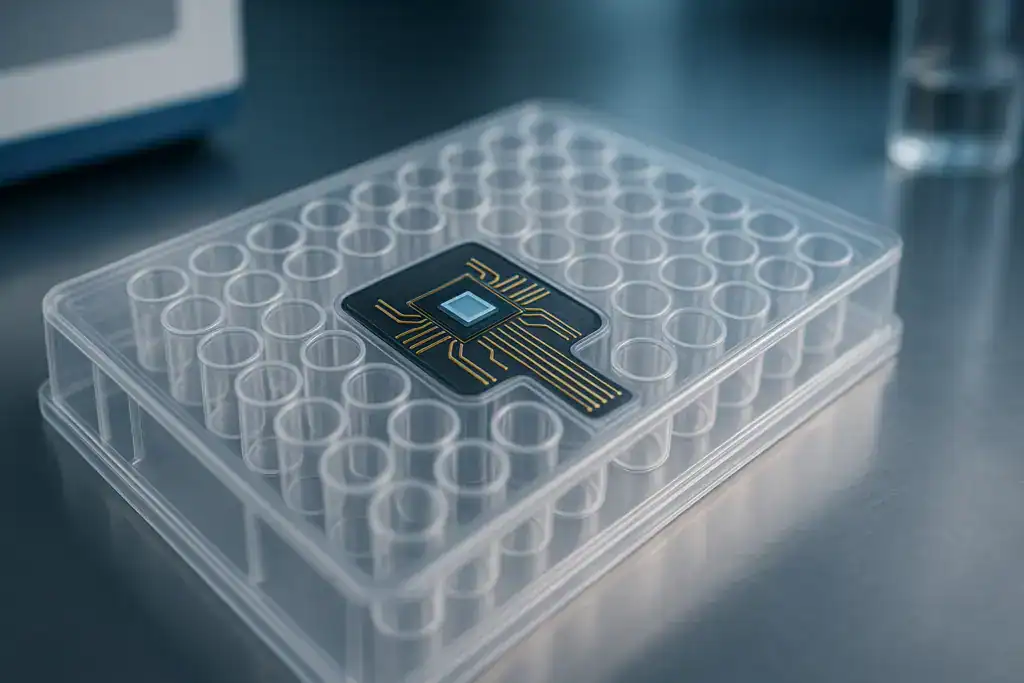
在快速发展的生命科学领域,将传感器集成到塑料耗材中正成为一项革命性的进步。这些创新有望增强从多孔板到定制实验室用品的实验室塑料功能,从而实现实时数据收集并提高实验室工作流程的准确性。本文将深入探讨传感器集成的原理、制造挑战和技术影响,为研究人员、实验室经理和生物技术专业人士提供一份权威指南。.
理解传感器集成的重要性
在多孔板和细胞培养容器等塑料耗材中集成传感器,代表了实验室技术的一大飞跃。这些曾经被动的耗材,现在有潜力成为主动的数据收集工具,提高实验的可重复性和效率。.
- 促进环境条件的实时监测和控制
- 通过持续捕获数据来提高数据准确性和可靠性
- 增强高通量筛选 (HTS) 能力
实验室塑料制品面临的传统挑战
历史上,实验室塑料制品曾面临 several 局限性。研究人员一直在努力解决污染、材料性能差异以及实时监测能力不足等问题,这些问题阻碍了实验结果的可靠性。.
- 多孔表面造成的污染风险
- 批次间材料特性一致性难以实现
- 缺乏集成的数据收集能力
自动化和技术的进步
设计与材料考量
传感器的集成需要细致的设计考量,以确保传感器能够最佳地运行,而不会损害塑料消耗品的结构完整性。材料选择至关重要,聚苯乙烯(PS)、聚丙烯(PP)和环烯烃共聚物(COC)等聚合物提供了独特的优势。.
- 聚苯乙烯:以光学透明度著称,非常适合成像应用
- 聚丙烯:提供耐化学性和柔韧性
- 环烯烃共聚物:兼具光学性能和耐化学性
原型设计与工业规模放大
开发集成传感器的塑料耗材始于原型制作,然后进行规模化生产。早期原型会经过严格测试,以验证传感器的准确性和耐用性。随着生产向工业化转型,保持尺寸精度和工艺鲁棒性至关重要。.
- 原型设计策略涉及快速迭代以完善设计和功能
- 扩大到中试和全面生产需要严格的质量控制措施
- 过程控制中的鲁棒性确保了生产批次之间的一致性
注塑成型与工艺控制
注塑成型仍然是集成传感器的塑料消费品制造的基石。该工艺需要精细调整的控制设置和验证,以确保产品的一致性,尤其是在 cGMP 和 GMP 法规下。.
- 关键工艺参数包括温度、压力和周期时间
- 加强文档实践可提供可追溯性和合规性。
- 工艺验证确保每个批次都符合严格的标准
在受监管环境中确保质量
从开发到符合cGMP的生产的转变涉及严格的质量管理体系。这种转变侧重于确保从工具设计到最终检验的每个生产步骤都符合制药和诊断级客户所期望的标准。.
- 变更控制流程管理生产或材料的任何变更。
- 资质和验证原则是操作一致性的基石
- 风险管理策略可以减轻潜在的生产故障
继续阅读,以探索更深入的见解和策略。.
“`
“`html
增强带传感器耗材的数据分析
赋能分析实验室
塑料耗材中传感器集成的兴起,使实验室能够利用更精确的数据分析,从而优化实验结果并促进科学见解。通过将传统塑料器皿转变为智能、数据驱动的工具,实验室可以极大地丰富其数据池并增强其分析能力。.
- 利用预测性分析,基于历史数据预测实验结果
- 利用实时数据进行动态决策并即时调整结果
在药物研究中的应用
革新药物发现
传感器集成耗材正在推动制药研究的前沿,尤其是在药物发现和开发领域。通过在多孔板和细胞培养系统等环境中实现高分辨率数据采集,这些技术有助于更深入地理解细胞反应和药物疗效。.
- 通过精确的剂量-反应曲线加速潜在候选药物的识别
- 进行实时毒性评估,以加速更安全的药物输送方法
实际应用:案例研究
生物技术实验室的创新成功
一个具有开创性的应用案例是生物技术实验室对该技术的整合,在那里,嵌入传感器的耗材使吞吐效率提高了30%。对关键参数的监测使细胞培养部门的工作流程得以优化,从而降低了成本并提高了生产力。.
- 通过自动反馈控制优化培养条件,减少了人工调整
- 数据驱动的洞察使动态资源配置和劳动力优化成为可能
传感器集成挑战
技术挑战与解决方案
尽管将传感器集成到塑料消费品中具有革命性,但也带来了重大挑战,包括传感器的微型化以及确保其与生物样本的兼容性。在不破坏消费品的化学兼容性的前提下平衡传感器功能,仍然是开发过程中的持续努力。.
- 采用MEMS技术进行微型化,在不增加占地面积的情况下保持传感器精度
- 进行彻底的材料兼容性评估,以防止样品完整性问题
质量保证与校准
保持准确性和可靠性
持续校准和严格的质量保证规程对于保持集成传感器的耗材精度至关重要。对照已知标准进行定期校准可确保测量准确性,这对于这些耗材在诊断环境中的应用尤为关键。.
- 实施具有可追溯性的自动校准系统,以确保数据完整性
- 定期进行供应商审核,以验证其是否符合质量保证标准
实验室环境中传感塑料的未来
下一代创新
随着技术的成熟,我们预计传感器集成将超越单纯的监控能力,涵盖集成式执行器,以实现自调节系统。这可以通过实现能够实时自主调整实验参数的自我纠正系统,彻底改变实验室自动化。.
- 潜在应用包括集成了传感和驱动的芯片实验室系统,用于微采样
- 探索人工智能和机器学习在解读传感器数据以实现预测性应用方面的进展
经济影响与成本效益分析
理解财务影响
利用集成传感器的消耗品的长期经济效益可能非常可观。虽然初始成本可能高于传统选项,但从提高的数据保真度、降低的错误率和优化的工作流程中获得的价值支持了引人注目的投资回报。.
- 进行全生命周期成本分析,以评估减少错误和提高流程效率带来的总节省
- 评估有利于研究实验室采用智能技术的政府和私人资助机会
接下来,我们将总结要点、指标和一个有力的结论。.
“`
“`html
环境考量
研究实验室的可持续解决方案
传感器集成耗材的进步也考虑了实验室废物的环境影响。耗材的可持续设计可以通过减少塑料浪费和推广回收倡议,为更环保的实验室环境做出重大贡献。利用可生物降解材料和最大限度地减少耗材生产中的有害化学物质是促进绿色实验室的关键要素。.
- 整合可生物降解材料,以补充传感器功能,同时不牺牲其功效
- 建立专门针对集成传感器的消耗品的回收计划,以最大限度地减少填埋贡献
数据安全与隐私
保护敏感信息
实验室环境中支持传感器的耗材的数字化特性,需要强大的数据安全措施来保护敏感的研究数据。实施先进的加密技术和安全数据传输协议是确保收集到的数据的机密性和完整性的基础。.
- 对耗材与实验室管理系统之间的数据传输使用端到端加密
- 采用区块链技术追踪数据修改并确保数据来源的真实性
法规遵从与标准
创新与监管的协调
遵守行业标准和监管要求对于成功实施集成传感器的耗材至关重要。及时了解监管变化并采取合规措施,对于确保这些技术在实验室环境中安全有效地使用至关重要。.
- 保持对包括ISO和ASTM在内的国际标准的了解,以便使用配备传感器的实验室设备
- 与监管机构合作,制定适应不断发展的技术的未来标准
结论
塑料耗材中的传感器集成代表了实验室创新的一个突破性飞跃。这一转变使实验室能够提高数据收集的精确度,减少实验错误,并利用先进的分析能力——最终推动发现和效率的边界。通过革新药物研究,赋能分析实验室,并提高通量效率,启用传感器的耗材正在提高生产力,同时提供宝贵的见解,从而推动科学卓越。.
正如本文所述,采用这些技术并非没有挑战。技术上的障碍,如传感器小型化、材料兼容性以及保持数据完整性,都需要持续的开发和严格的质量保证实践。尽管存在这些障碍,但经济和环境上的显著效益为在全球实验室中集成传感器技术提供了有力的论据。未来创新的潜力,例如自调节系统和先进的人工智能分析,有望为提高实验室效率和科学成果开辟更多机会。.
实现传感器消耗品向成功的转型需要一种跨学科的方法,该方法应整合可持续实践、强大的数据安全以及遵守严格的法规标准。通过在一个负责任和具有远见的框架内促进创新,实验室可以确保这些技术为科学和社会带来最大的益处。现在是实验室、企业和政策制定者投资于这些开创性解决方案、拥抱它们所带来的激动人心的前景的时候了。.
这一变革性的创新阶段,迫使我们反思在塑造科学探索未来中的作用。当我们站在实验室研究新时代的悬崖边上时,让我们以共同的奉献精神,拥抱这些非凡的机会,推动我们走向一个科学探究得到更高精度、可持续性和影响力的未来。深入传感器集成领域,探索其潜力,并成为提升现代科学发展轨迹的先锋。.
“`