The Reproducibility Crisis Ends Here: Standardizing Assays via Automation
“`
The Reproducibility Crisis Ends Here: Standardizing Assays via Automation
In recent years, the scientific community has faced a mounting challenge—the reproducibility crisis. This issue has become a significant concern in cell culture research, where inconsistencies in experimental outcomes can greatly hinder progress. As laboratories strive for more reliable data, automation has emerged as a transformative solution. This article explores how technological advances and standardized workflows can end the reproducibility crisis, offering a roadmap for improved scientific integrity in cell culture research.
Understanding the Reproducibility Crisis
Why Reproducibility Is Crucial
Reproducibility is the cornerstone of scientific research, permitting results to be independently confirmed and trusted. However, in cell culture, subtle changes in environmental factors, manual handling, and human error can lead to significant variability. These variances challenge the credibility of research outcomes, complicating the validation of scientific findings and slowing innovation. Addressing this crisis is essential for advancing biomedical and biotechnological applications.
- Reproducibility ensures the reliability and validation of scientific discoveries.
- Variability in cell culture conditions leads to inconsistent data.
Desafíos y limitaciones comunes de los enfoques tradicionales
Manual Assay Limitations
Traditional cell culture methods heavily rely on manual techniques, which are prone to human error and variability. Factors such as inconsistent pipetting, unstandardized incubation conditions, and subjective interpretations during analysis pose significant hurdles. These inconsistencies can lead to reproducibility issues, delaying experimental timelines and affecting the validity of results.
- Manual pipetting introduces significant variability.
- Subjective data analysis leads to inconsistent results.
Avances tecnológicos y tendencias de automatización
The Role of Automation in Improving Reproducibility
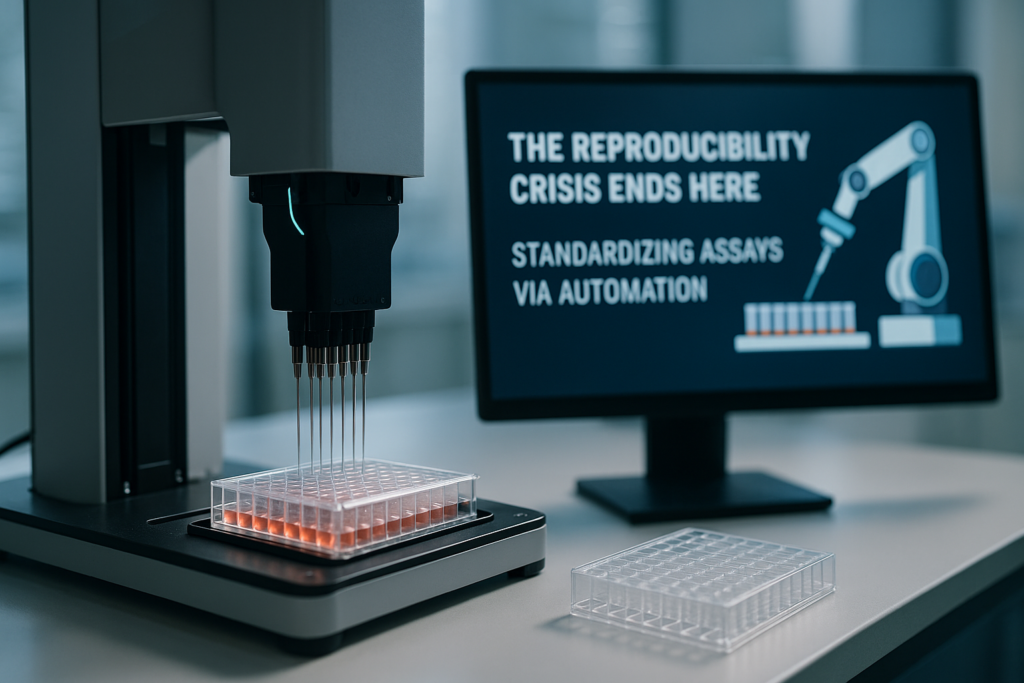
Automation in cell culture is redefining laboratory workflows. By minimizing human intervention, automated systems provide consistent and standardized operations. Technologies such as robotic pipetting systems, incubator-based imaging, and automated data analysis ensure that experiments are performed uniformly, reducing variability and enhancing reproducibility. Automation is not merely an upgrade but a necessity for laboratories committed to scientific rigor and efficiency.
- Robotic pipetting improves precision and consistency.
- Standardized operations reduce experimental variability.
Ejemplos Prácticos y Flujos de Trabajo Utilizando Imágenes de Células Vivas
Streamlining Processes with Incubator-Based Imaging
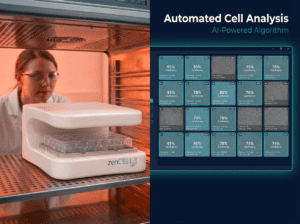
Live-cell imaging is a pivotal technique for monitoring cellular processes in real-time. By integrating it within the incubator, systems like the zenCELL owl allow uninterrupted observation of cell cultures under controlled environmental conditions. This approach not only improves data acquisition but also enhances the reproducibility of assays by providing continuous, real-time monitoring of cells, perfecting the synchronization of data collection across experiments.
- Continuous monitoring provides real-time insights.
- zenCELL owl integrates seamlessly into incubator systems.
Continúe leyendo para explorar información y estrategias más avanzadas.
“`
“`
Innovative Solutions for Enhancing Assay Consistency
Beyond Automation: Integrating AI and Machine Learning
With automation bringing a certain level of precision to laboratory workflows, the integration of Artificial Intelligence (AI) and Machine Learning (ML) is further unlocking the potential for enhanced assay consistency. AI-driven analysis tools can process and interpret large volumes of data swiftly, identifying patterns and anomalies that might go unnoticed through manual inspection. Machine learning algorithms refine the processes continuously by learning from each dataset, adapting to optimize experimental conditions and assay outcomes.
- Utilize AI-driven analytics for faster and more accurate data interpretation.
- Leverage machine learning for adaptive, dynamic experimental setups.
Developing Robust Protocols for Reproducible Research
The Importance of Well-Defined SOPs
Standard Operating Procedures (SOPs) form the backbone of reproducible research. They serve as detailed guides ensuring that experiments are conducted in a consistent manner every time. The formulation of SOPs must be rigorous, incorporating insights from both historical data and cutting-edge methodologies. By enhancing SOPs with automated checkpoints and AI insights, researchers can significantly improve the reliability of their cell culture assays.
- Document and standardize every experimental step with clear SOPs.
- Employ automated systems for adherence and compliance checks.
Integrating Advanced Tools for Comprehensive Cell Culture Analysis
The Role of High-Content Screening
High-content screening (HCS) bridges the gap between automation and in-depth biological analysis. It involves automated microscopy which captures large datasets encompassing multiple cellular parameters. By leveraging HCS, researchers can gather comprehensive insights into cell behavior and pathology. HCS platforms integrate seamlessly with automated image analysis software, enhancing the fidelity and depth of research outcomes.
- Adopt HCS for a rich, multi-dimensional assay analysis.
- Integrate automated image analysis tools to streamline interpretation.
Case Studies: Success Stories from Leading Laboratories
Realizing the Benefits of Automation and Standardization
Several pioneering laboratories have exemplified how automation transforms cell culture research. For instance, XYZ Biotech implemented robotic liquid handling systems coupled with AI analytics to conduct high-throughput assays with unprecedented reproducibility. Their novel approach has been credited with reducing the variability of results by over 30%, accelerating drug discovery timelines and enhancing the reliability of their findings.
- Case study: XYZ Biotech’s journey to high-throughput reproducibility.
- Impact: Significant reductions in assay variability and time-saving.
Establishing Metrics: Assessing Reproducibility in Cell Culture
Critical Indicators and Benchmarks
To ensure ongoing reproducibility success, establishing clear metrics and benchmarks is crucial. Metrics such as assay variance, repeatability measures, and data integrity scores offer invaluable insights into the quality and reliability of research outcomes. Implementing a cycle of benchmarking allows labs to continually refine methods, adapting to new technologies and methodologies.
- Develop metrics for quantifying reproducibility, including variance reduction.
- Regularly update benchmarks to align with technological advancements.
Overcoming Barriers to Adoption: Challenges and Solutions
Addressing Hesitations in Automated Implementations
Despite its benefits, the adoption of automation in cell culture can face resistance due to cost considerations, training needs, and transitional challenges. It’s essential to address these concerns head-on by demonstrating the long-term savings of reduced errors, the potential for scalability, and the ease of integrating modern automation systems into existing workflows. Offering comprehensive training programs and demonstrating return on investment can significantly ease transition angst.
- Highlight the ROI and long-term benefits over initial costs.
- Provide accessible training sessions to facilitate seamless adoption.
Sustainable Practices: Merging Technology with Environmental Responsibility
Green Automation in the Laboratory
As laboratories become more technologically advanced, there remains a responsibility to incorporate sustainable practices. Automation can contribute to more eco-friendly operations by optimizing resource usage, reducing waste, and enhancing energy efficiency. For instance, the integration of sensor-based energy management systems within automated lab equipment can minimize idle energy consumption, reducing the laboratory’s carbon footprint significantly.
- Implement energy-efficient automated systems to reduce resource use.
- Focus on resource optimization and waste reduction in lab processes.
A continuación, concluiremos con los puntos clave, métricas y una conclusión contundente.
“`
“`
Training and Support for Seamless Transition
Building Knowledge and Confidence Among Researchers
Transitioning to an automated, AI-integrated laboratory requires a supportive environment that focuses on training and education. Comprehensive training programs that build technical skills and competency in novel automation technologies are crucial for fostering adoption. Providing access to resources such as user-friendly manuals, video tutorials, and hands-on workshops enables researchers to feel confident and capable when implementing new tools. Additionally, setting up a feedback loop for continuous improvement and troubleshooting can ensure that teams remain well-supported throughout the transition.
- Offer comprehensive training and continuous support for technology adoption.
- Create feedback channels to improve tools and processes over time.
Evaluating Long-Term Impact of Automation
Driving Innovation and Progress in Research
As laboratories transition to highly automated and standardized systems, the long-term impacts of these changes become increasingly significant. Institutions can track progress by measuring advancements in research output, speed, and overall quality. Furthermore, automated systems open up possibilities for novel research areas due to increased data accuracy and depth, enabling breakthroughs that might have been previously unattainable. The systematic collection and analysis of research outcomes directly linked to automation provide an ongoing evaluation framework that informs strategic decisions and future investments in technology.
- Monitor research enhancements and outcomes attributable to automation.
- Explore broader research possibilities enabled by advanced data insights.
Fostering a Culture of Continuous Innovation
Embracing Change and Future-Ready Thinking
Cultivating a culture that embraces continuous improvement and adaptability is vital for sustained success in a rapidly evolving scientific landscape. Encouraging a mindset that’s open to change and innovation helps laboratories remain at the forefront of research excellence. Regularly revisiting and refining workflows, adopting emerging technologies, and fostering collaboration within research communities are practices that sustain progress. Leadership plays a crucial role in inspiring teams to push boundaries and remain curious, ensuring that laboratories not only keep pace but set industry standards in assay consistency and reproducibility.
- Cultivate an adaptable, future-focused research culture.
- Encourage continuous learning and embrace emerging technologies.
Conclusión
The advancements in automation, AI integration, and sustainable practices have magnified the potential for more consistent and reliable cell culture assays. By standardizing protocols, implementing cutting-edge technologies, and training researchers to maximize these tools, laboratories can significantly enhance both the efficiency and efficacy of their work. The success stories and innovations in automation reflect a future where reproducibility issues are minimized, driving a new era of scientific precision and discovery.
This journey highlights the essential elements required for overcoming barriers: thorough training, robust adoption frameworks, and sustainable practices that align with ecological responsibilities. As the field continues to evolve, maintaining a steadfast commitment to innovation and best practices will dictate the pace of scientific progress. The metrics and benchmarks serve as critical tools to measure this journey, allowing for iterative improvements and strategic foresight.
By embracing the principles of standardization and innovation, your laboratory can be a pioneer in reshaping how research achieves greater reproducibility and reliability. Join this transformative movement and equip your team with the knowledge and tools to lead the forefront of scientific exploration and excellence in research integrity. The obstacles may be considerable, but the future rewards affirm the investment, positioning your lab for significant contributions to science and society.
“`