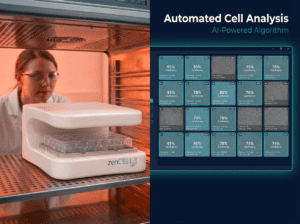
Desk-Side Discovery: The Rise of Compact, Incubator-Integrated Systems
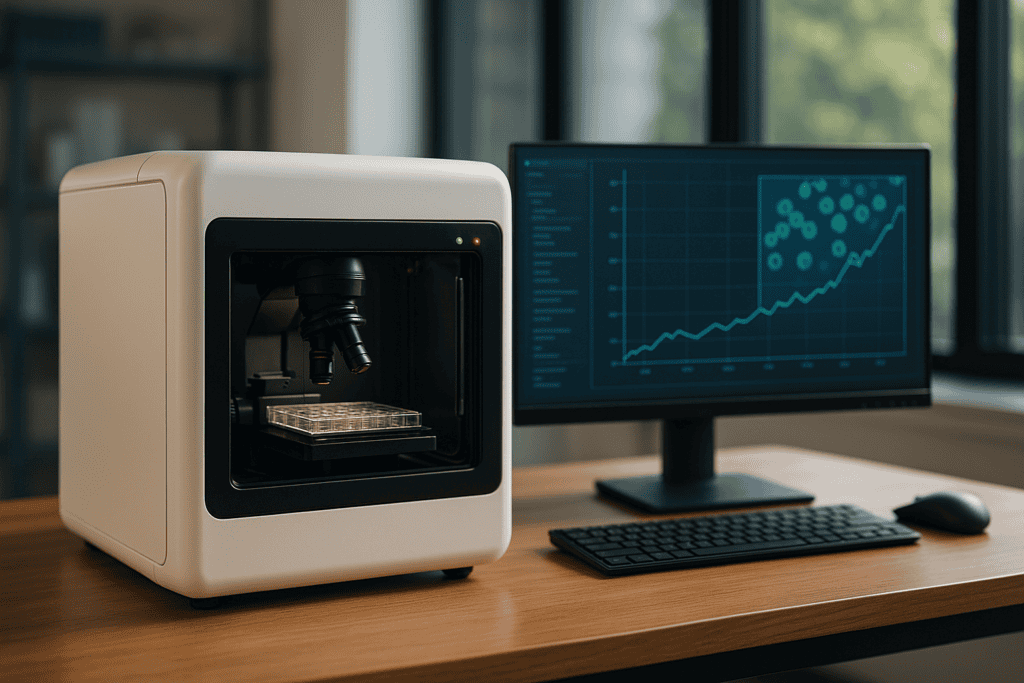
“`html
Desk-Side Discovery: The Rise of Compact, Incubator-Integrated Systems
In the ever-evolving landscape of cell culture research, innovations in technology continually reshape the laboratory environment. Today, more than ever, researchers seek efficient, space-saving solutions to meet the demanding needs of modern life science investigations. Enter desk-side discovery — the innovative world of compact, incubator-integrated systems that revolutionize how we approach cell culture and live-cell imaging. This post delves into the significance of these technological advancements, examining how they surmount common laboratory challenges and pave the way for enhanced data quality and reproducibility. Readers will uncover the transformative potential these systems harbor and how they streamline workflows across various applications.
Challenges of Traditional Approaches in Cell Culture
Navigating Limitations and Inefficiencies
Despite being a cornerstone of biological research, traditional cell culture methods are fraught with challenges. Researchers often grapple with limited bench space and the need for multiple separate devices, increasing the risk of contamination and human error. Frequent manual interventions interrupt continuous monitoring, leading to inconsistencies in data quality.
- Contamination risk due to handling and open environments
- Inconsistent monitoring frequency affecting data integrity
- Space constraints and logistical inefficiencies
The need for a paradigm shift is evident, as conventional workflows struggle to keep up with the demands of high-content screening and real-time analysis.
Embracing Technological Advances
The Rise of Automation in Modern Labs
To address traditional cell culture challenges, technological advances have introduced automation and compact integration as game changers in laboratory practices. Automation minimizes human intervention, thereby reducing error rates while also optimizing the use of space and time. This has heralded a shift towards systems that support hands-off operation, further heightened by the integration of imaging capabilities directly within incubators.
- Enhanced efficiency through automated workflows
- Seamless integration within existing lab infrastructure
- Reduced contamination through minimized human contact
As labs embrace these advancements, they pave the way for more consistent, reliable data, empowering researchers to focus their expertise on complex analysis rather than routine tasks.
Innovations in Live-Cell Imaging
Practical Examples and Streamlined Workflows
Live-cell imaging has emerged as a critical component of cell culture analysis, offering real-time insights into cellular processes. By embedding imaging capabilities within the incubator environment, systems such as the zenCELL owl provide unique advantages. These compact solutions deliver continuous monitoring without disrupting cells’ optimal growth conditions, markedly improving experimental accuracy and repeatability.
- Allows real-time tracking of cellular processes
- Ensures consistent growth conditions, enhancing data robustness
- Streamlined workflows due to reduced equipment handling
Through practical examples, it’s clear how these innovations facilitate a more holistic approach to understanding complex biological phenomena.
Continue reading to explore more advanced insights and strategies.
“`
“`html
Seamless Integration with Existing Systems
Leveraging Compatibility for Enhanced Performance
One of the most significant advantages of compact, incubator-integrated systems is their compatibility with existing laboratory infrastructure. These systems are designed to fit seamlessly into labs without requiring extensive renovations or additional space. For example, devices like the Celesta CL3000 can be easily integrated with existing lab equipment, enhancing their overall utility and eliminating the need for separate, bulky apparatus.
- Supports plug-and-play integration with minimal setup time
- Quick adaptability to different research settings and objectives
- Cost-effective due to less dependency on additional resources
Compatibility ensures that laboratories can upgrade their capabilities without a complete overhaul, making pioneering technologies accessible to facilities both large and small.
Boosting Productivity with Compact Designs
Efficiency Meets Functionality
Compact incubator-integrated systems are designed to optimize both space and functionality, which addresses one of the most practical challenges faced by laboratories: limited real estate. The nimble design of these devices allows researchers to maximize their available workspace while still accommodating the tools necessary for cutting-edge research. The CellCraft Compact series exemplifies this trend by offering robust features in a streamlined form that fits on a conventional lab bench.
- Maximizes lab space without compromising on essential functionalities
- Facilitates multi-user environments by decluttering lab spaces
- Optimizes workflow efficiency with thoughtful ergonomic enhancements
This convergence of compact design and functionality not only boosts productivity but also fosters a more collaborative and innovative research environment.
Empowering User Autonomy and Expertise
Interactive Systems for Enhanced Research Potential
Modern incubator-integrated systems offer interactive, user-friendly interfaces that empower researchers to tailor experiments to their specific needs. Take, for instance, the adaptive user interface of the BioFlex Incubator, which provides real-time analytics and customizable protocols. These systems allow researchers to harness sophisticated data collection tools without requiring extensive technical know-how.
- Optimizes user engagement through intuitive design
- Supports customization to meet diverse experimental requirements
- Reduces learning curves with clear, interactive guidance
By promoting user autonomy, these systems encourage researchers to explore new experimental modalities and push the boundaries of what is possible in cell culture research.
Data Management and Analysis Tools
Enhancing Decision-Making Through Advanced Analytics
As cell culture technologies evolve, so too do their data management and analysis capabilities. Many modern integrated systems, such as the dataXpert Pro, incorporate sophisticated software solutions that streamline data handling and provide advanced analytics. These tools enable researchers to interpret complex data sets more efficiently, facilitating rapid decision-making and hypothesis testing.
- Automates data collection for consistent, reliable results
- Comes equipped with tools for statistical analysis and visualization
- Promotes collaborative research through shareable insights and reports
The integration of advanced data tools empowers laboratories to not only generate high-quality data but also to share insights effectively within and beyond their research communities.
Improving Reproducibility in Research
Standardized Systems for Reliable Outcomes
Reproducibility remains a cornerstone of scientific research, and incubator-integrated systems play a pivotal role in enhancing it. Consistent environmental control and precise operation minimize the variables that can cause experimental variance. The SteriCell line exemplifies how consistent temperature and humidity controls can markedly improve the reproducibility of cell culture experiments.
- Ensures standardization across multiple experiments
- Eliminates variability caused by human error or environmental fluctuations
- Facilitates large-scale studies with scalable precision
By supporting reproducible research protocols, these systems bolster the credibility of scientific findings and their practical applications.
Streamlining Collaborative Projects
Facilitating Interdisciplinary Research and Innovation
The efficient, all-encompassing nature of incubator-integrated systems lends itself well to collaborative research ventures, where complex projects benefit from diverse expertise. Shared use capabilities mean that multiple researchers or departments can utilize the same system without logistical conflicts, as demonstrated by the CoLab Pro system, which has been instrumental in facilitating joint ventures across fields such as pharmacology and bioengineering.
- Optimizes resource sharing to support interdisciplinary projects
- Facilitates research initiatives spanning multiple departments or institutions
- Advances innovation through collective problem-solving approaches
As scientific endeavors become more interconnected, such systems will be essential in driving innovative research and bringing transformative solutions to fruition.
Next, we’ll wrap up with key takeaways, metrics, and a powerful conclusion.
“`
“`html
Future-Proofing Laboratory Setup
Expanding Capabilities with Scalable Solutions
In a constantly evolving scientific landscape, laboratories must remain adaptable to new advancements. Compact, incubator-integrated systems are designed with foresight, offering scalability that ensures longevity in laboratory investments. As exemplified by the ExpandBio series, these systems are built with modular components, allowing labs to expand their capabilities without incurring additional costs or requiring significant reconfiguration.
- Adaptable to emerging technologies through modular upgrades
- Reduces long-term expenses by diminishing the need for complete system replacement
- Enables lab flexibility and readiness for evolving research demands
Such scalability ensures that laboratories can swiftly adapt to future scientific trends, ensuring that their research facilities remain at the forefront of innovation.
Environmental and Economic Considerations
Sustainability in Scientific Research
As the world moves towards more green and sustainable practices, laboratories are also adopting eco-friendly technologies. Compact incubator-integrated systems excel in energy efficiency, which benefits both environmental and economic outcomes. The EcoLab Compact range sets the benchmark with reduced energy consumption without sacrificing performance, aligning with laboratories’ goals to become more sustainable while minimizing operational costs.
- Utilizes advanced technology to lower energy output and resource consumption
- Results in reduced carbon footprint with similar or enhanced performance
- Supports cost-saving measures through decreased utility expenses
By embedding sustainability into their core designs, these systems reflect a commitment to responsible and efficient scientific progress.
Conclusion
The advent of compact, incubator-integrated systems marks a transformative shift in laboratory research, delivering unparalleled benefits across multiple aspects of scientific inquiry. Compatibility with existing laboratory infrastructure ensures seamless integration, while compact designs boost productivity by optimizing limited workspace. User-friendly interfaces and advanced data management tools empower researchers to push boundaries, while standardized systems enhance the reproducibility of scientific findings.
Streamlining collaborative projects and providing scalable solutions, these systems address both current and future needs, guaranteeing that laboratories are equipped to adapt to rapidly changing scientific landscapes. At the core of these innovations is an inherent focus on sustainability, marrying high performance with eco-friendly practices to reduce environmental impacts and operational costs alike.
The value of these compact systems resonates deeply within today’s research community. They not only magnify the potential of scientific endeavors but also foster an environment where innovation thrives. By embracing these integrated systems, laboratories are not just investing in equipment; they are forging pathways to new frontiers of discovery and understanding.
As we reflect on the capabilities and potential of these transformative systems, it becomes evident that the groundwork is laid for a new era in scientific research. Laboratories are encouraged to explore, innovate, and collaborate. Now is the time to invest in these versatile systems that elevate science to its highest potential. Let us propel research forward, nurturing a world where innovation and discovery know no bounds.
“`