Improving Reproducibility in Cell Culture Using Incubator-Integrated Imaging
Improving Reproducibility in Cell Culture Using Incubator-Integrated Imaging
In the rapidly evolving field of cell culture research, ensuring reproducibility and data quality is more critical than ever. As researchers, lab managers, and biotech professionals strive to uncover new biological insights, traditional methods often fall short in consistency and reliability. This article delves into the modern challenges of cell culture, explores technological advances like incubator-integrated imaging, and highlights practical strategies to enhance reproducibility. Whether you’re managing a lab or advancing biotech innovations, uncover how cutting-edge tools are reshaping cell culture research.
Challenges in Traditional Cell Culture Approaches
Inherent Limitations and Varied Outcomes
Traditional cell culture techniques face several challenges that impede reproducibility. Variability in cell growth conditions, human error during handling, and the manual nature of data collection often lead to inconsistent results. Environmental fluctuations, such as changes in temperature, humidity, and CO2 levels, can further disrupt cell viability and data integrity. These variables result in significant gaps between experimental and theoretical reproducibility, undermining research findings.
- Environmental variability affects cell growth consistency.
- Manual data collection increases the risk of human error.
- Inconsistent handling leads to varied experimental outcomes.
Continuez votre lecture pour explorer des perspectives et des stratégies plus avancées.
Advancements in Technology and Automation
Revolutionizing Cell Culture Practices
The integration of innovative technologies and automation into cell culture practices marks a pivotal shift toward enhanced reproducibility. Automated systems minimize human involvement, thus reducing the likelihood of error and improving data reliability. Equipment such as incubator-integrated imaging systems facilitates continuous monitoring under controlled conditions, ensuring a consistent environment for cell growth. These technological advancements not only streamline workflows but also enhance data accuracy and reproducibility.
- Automation reduces human-related inaccuracies in data collection.
- Continuous monitoring ensures stable environmental conditions.
- Advanced imaging techniques offer real-time data insights.
Continuez votre lecture pour explorer des perspectives et des stratégies plus avancées.
Live-Cell Imaging in Practice: Workflow Enhancements
Real-World Applications and Integration
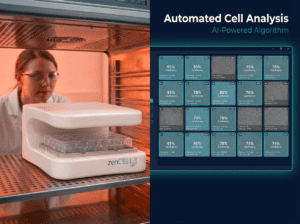
Incorporating live-cell imaging into everyday research workflows offers significant benefits. Researchers can now observe cellular processes in real-time, enabling a deeper understanding of dynamic biological activities. By integrating incubator-based imaging systems, laboratories witness improved workflow efficiency and data fidelity. The zenCELL owl, as an incubator-compatible live-cell imaging solution, provides compact, robust functionality, showcasing an exemplary model of contemporary imaging technology.
- Real-time observation enhances understanding of dynamic processes.
- Incubator-integrated imaging solutions improve workflow efficiency.
- Compact systems like zenCELL owl offer space-saving benefits without sacrificing quality.
Continuez votre lecture pour explorer des perspectives et des stratégies plus avancées.
Incubator-Based Imaging: Elevating Reproducibility
Consistent Monitoring and Enhanced Data Quality
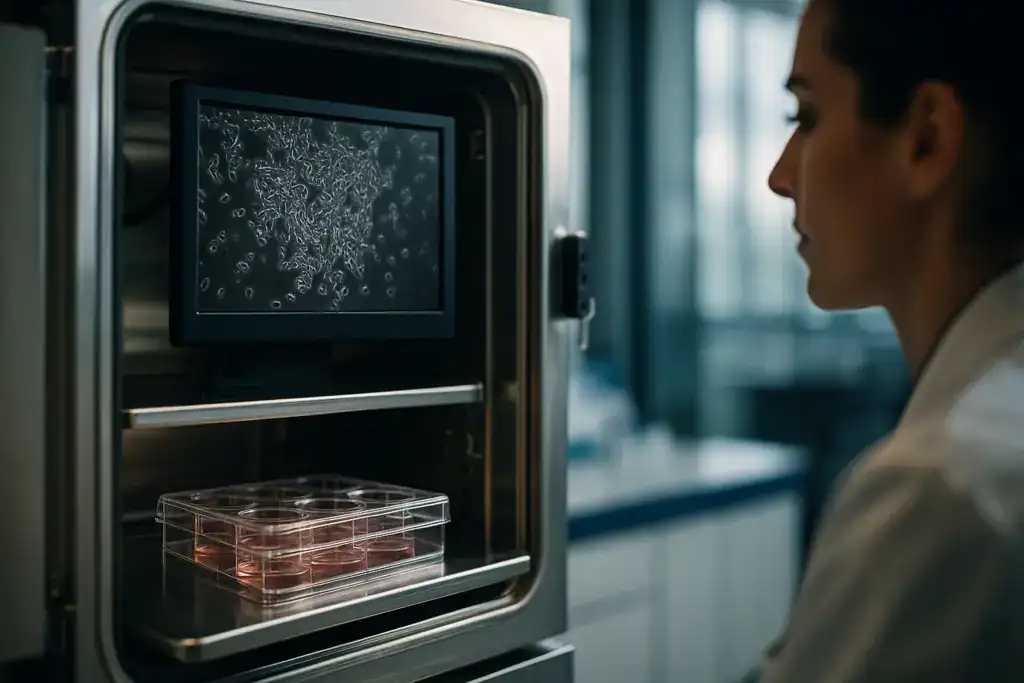
Incubator-integrated imaging is a cornerstone for improving reproducibility in cell culture. By maintaining stable environmental conditions and allowing continuous observation, these systems ensure that cells are not disturbed during critical experiments. This approach not only preserves cell integrity but also provides high-resolution, time-lapse imaging that aids in tracking subtle cellular changes over time. The result is data with higher reproducibility, enabling researchers to draw more accurate and reliable conclusions.
- Maintained stability of culture conditions supports cell integrity.
- Continuous monitoring prevents experimental disturbances.
- High-resolution imaging captures subtle cellular changes.
Continuez votre lecture pour explorer des perspectives et des stratégies plus avancées.
Adopting Scalable Technologies for Enhanced Efficiency
Building Capacity with Scalable Imaging Systems
As research projects grow in complexity and scale, the need for scalable solutions in cytological imaging becomes evident. Scalable technology allows laboratories to quickly adapt to increasing demands without sacrificing quality. Incubator-integrated imaging systems such as the Livecyte and Clarity by Phasefocus exemplify scalable solutions. These systems offer modular configurations, enabling researchers to customize their setup according to specific needs and project requirements. The flexibility provided by scalable systems ensures that research can progress without the friction typically associated with upgrading or expanding traditional equipment.
- Opt for imaging systems that allow for modular expansion to align with laboratory needs.
Leveraging Data Analytics for Improved Decision Making
Turning Complex Data into Usable Insights
Integrating advanced data analytics into cell culture research transforms raw data into actionable insights. High-resolution images generated by incubator-integrated systems contain a wealth of information that, when properly analyzed, can reveal patterns and trends otherwise undetectable. By employing software tools for image analysis and data management, researchers can gain deeper insights into cellular behavior, identify anomalies, and make informed decisions more rapidly. Automation of data interpretation helps to limit human bias, reinforcing the reproducibility of results.
- Implement data analytics software to process and analyze imaging data efficiently.
Implementing Standardized Protocols for Consistency
Ensuring Uniformity Across Research Workflows
One of the significant challenges in cell culture research is maintaining uniformity across various experimental runs. Developing and implementing standardized protocols helps mitigate variability, thus enhancing reproducibility. These protocols should encompass all aspects of cell maintenance, from seeding to imaging and data analysis. Moreover, adherence to standardized procedures ensures that all team members are aligned, facilitating consistency in methodology and technique application. Sharing successful protocols can also contribute to the standardization of practices across research groups globally.
- Create and distribute clear, comprehensive protocols to ensure consistency in workflows.
Utilizing Real-Time Monitoring for Immediate Adjustments
Responsive Adjustments to Enhance Experimental Success
Real-time monitoring offered by incubator-integrated imaging systems empowers researchers to make informed adjustments during the experimental process. This capability allows for immediate modifications in response to environmental shifts or unexpected changes in cell behavior, minimizing potential disruptions. By correcting course in real-time, researchers can enhance the accuracy of their experiments, reduce wastage of precious resources, and improve overall success rates.
- Use real-time monitoring to quickly address issues as they arise, thereby optimizing experimental outcomes.
Supporting Collaborative Research with Cloud-Based Integration
Enhancing Connectivity and Data Sharing
Cloud-based integration in imaging systems promotes collaboration by enabling researchers to access and share data seamlessly across different locations and platforms. This technology facilitates the efficient exchange of information and insights, leading to more cohesive and collaborative research efforts. In multicenter studies, streamlined data sharing via cloud technologies ensures that collaborators contribute to and benefit from collective datasets, driving forward progress in a unified manner. This interconnected approach is essential in today’s globalized research environment.
- Implement cloud-based solutions for efficient data sharing and collaboration across research teams.
Incorporating Training and Skill Development
Building Expertise with Ongoing Education
A critical factor in utilizing advanced imaging technologies effectively lies in the skills and expertise of the personnel operating them. Therefore, investing in regular training and development programs ensures that lab personnel remain proficient with evolving technologies and methodologies. Such initiatives not only improve operational competence but also empower team members to drive innovation within their projects. Regular workshops, certification programs, and peer-based learning sessions can be beneficial in maintaining a high level of expertise across research teams.
- Regularly update and enhance lab staff skills through dedicated training programs on new technologies.
Enhancing Experimental Design Through Integrated Solutions
Strategizing Research with Comprehensive Tools
Integrating incubator-based imaging solutions within a wider suite of experimental design tools provides researchers with a comprehensive approach to study planning and execution. Comprehensive experimental design includes clearly defining objectives, selecting appropriate methodologies, and incorporating technological tools for accurate data collection and analysis. The strategic deployment of integrated solutions allows researchers to identify potential issues in advance, optimize resource allocation, and streamline the entire research process, resulting in a higher likelihood of achieving desired outcomes.
- Approach experimental design holistically by integrating advanced imaging tools from the outset.
Ensuite, nous conclurons avec les points clés à retenir, les métriques et une conclusion percutante.
“`html
Facilitating Scalability with Flexible Equipment
Preparing for Future Expansion
Scalability is a hallmark of modern research laboratories, adapting them to the ever-evolving demands of science and technology. Flexible equipment solutions, such as adjustable imaging platforms and modular lab furnishings, play a critical role in facilitating this scalability. They allow research spaces to be efficiently reconfigured as project requirements change, ensuring that laboratories remain not only functional but also future-proof. The ability to scale up or down swiftly, with minimal disruption, supports dynamic research agendas and fosters an environment where innovation can flourish.
- Invest in flexible laboratory equipment to accommodate future growth and technological advancements.
Ensuring Data Integrity with Robust Management Systems
Enhancing Reliability Through Structured Frameworks
In research, ensuring the integrity of data is paramount for achieving reproducible and credible outcomes. Utilizing comprehensive data management systems enables researchers to maintain high standards of data quality and security. These systems offer structured frameworks for data entry, storage, and retrieval, along with comprehensive audit trails that document every interaction with the data. As a result, researchers can trust their datasets, streamline the replication of studies, and facilitate seamless information sharing with collaborators, thereby enhancing overall research quality.
- Develop and implement robust data management systems to ensure data integrity and traceability.
Harnessing the Power of Artificial Intelligence in Research
Automating Processes for Enhanced Outcomes
Artificial Intelligence (AI) is revolutionizing how research is conducted, opening doors to unparalleled analytical capabilities. By incorporating AI algorithms into imaging and data analysis processes, researchers can automate tasks previously prone to human error and labor-intensive outcomes. AI-driven tools can dynamically analyze imaging data, predict trends, and suggest potential pathways for exploration. This intelligent automation not only accelerates research timelines but also enhances the depth and accuracy of insights, empowering scientists to make groundbreaking discoveries with confidence and precision.
- Leverage AI technologies to automate and enhance research processes, increasing efficiency and accuracy.
Conclusion
Adopting scalable technologies in cell culture research encompasses integrating advanced imaging systems, embracing cloud-based solutions, and incorporating AI and data analytics. These strategies ensure laboratories are equipped to handle increasing demands and complexity without compromising on quality or efficiency. By fostering environments where adaptability and technological advancement go hand in hand, researchers can push the boundaries of discovery and innovation.
Scalable technologies not only enhance research capabilities but also promote collaboration and reproducibility, which are essential in the modern scientific landscape. Effective data management systems ensure that critical insights are preserved and shared effectively across research teams globally. Meanwhile, standardized protocols and ongoing staff training play a vital role in maintaining consistency, reducing variability, and improving overall research outcomes.
Incorporating these scalable solutions provides laboratories with the ability to adapt, grow, and thrive in an ever-changing field. Researchers are empowered to strategize efficiently, leveraging comprehensive toolsets that optimize their experimental design and execution. Through the integration of real-time monitoring and advanced AI-driven analytics, they can achieve more reliable and insightful results than ever before.
As research continues to evolve, so too must the tools and practices we employ. By adopting these innovations now, laboratories can stay at the forefront of discovery and remain prepared for the challenges of tomorrow’s scientific inquiries. Let us embrace scalability and technology with open minds and a forward-thinking attitude, ensuring our research not only survives but thrives. Take the first step by evaluating current processes and systems, and make strategic decisions to integrate scalable solutions, thus paving the way for a successful and productive future.
“`
Multiwell Plates for Automation Labs
“`html
Multiwell Plates for Automation Labs
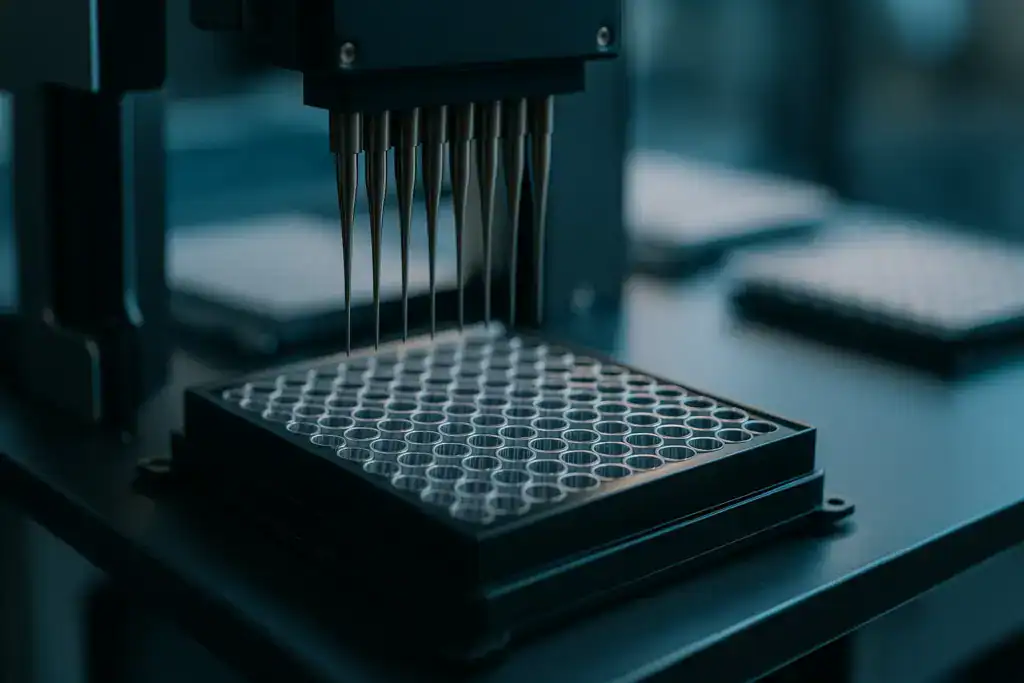
The landscape of modern laboratories is rapidly transforming with the integration of automation technologies. Central to this shift are multiwell plates, crucial in facilitating high-throughput screenings and precise data collection. For researchers, lab managers, and biotech professionals, understanding the nuances of developing and utilizing these plates can greatly enhance workflow efficiency and research outcomes. This article delves into the development, production, and application of multiwell plates in automation laboratories, providing an authoritative guide for advanced lab settings.
Challenges with Traditional Multiwell Plate Approaches
The Limitations of Conventional Practices
Historically, traditional multiwell plates have posed several challenges: from issues with reproducibility to limitations in the scalability of experiments. Variability in materials and surface treatments often led to inconsistent results, impacting the reliability of data required for critical research decisions.
- Material Inconsistencies: Impact on data reliability and experiment replication.
- Surface Treatment Challenges: Incapable of supporting diverse assays uniformly.
- Scalability Limitations: Hindrances in expanding high-throughput screening (HTS) capabilities.
Avancées technologiques et tendances d'automatisation
Integrating Innovation in Lab Environments
The advent of automation in laboratory settings has necessitated the development of advanced multiwell plates tailored for robotic handling and high-speed data collection. Innovations in material science and engineering design have led to enhanced optical clarity, enabling more precise detection and analysis through techniques such as live-cell imaging.
- Advanced Material Selection: Using PS, PP, and COC for enhanced performance.
- Design for Manufacturing (DFM): Optimizing for automation compatibility and robustness.
- Optical Enhancements: Improved clarity for high-sensitivity detections.
Prototyping and Scale-Up for Precision and Reproducibility
From Prototypes to Industrial Production
To effectively transition from conception to production, a structured approach is vital. Initial prototyping involves selecting the right materials and testing surface treatments to meet specific research requirements. Scaling up involves meticulous process validation to ensure batch-to-batch consistency and compliance with regulated production standards.
- Prototyping Strategies: Iterative testing and refinement phases for optimal design.
- Scale-Up Process: Ensuring robust reproducibility and dimensional accuracy.
- Regulation Compliance: Emphasizing cGMP and GMP principles for quality management.
Continuez votre lecture pour explorer des perspectives et des stratégies plus avancées.
“`
“`html
Customization in Multiwell Plate Design
Tailoring Plates for Specific Laboratory Needs
In the ever-evolving landscape of lab automation, customization of multiwell plates is paramount. Custom plate designs allow laboratories to cater to specific assay requirements, from specialized coating needs to unique well geometries. Companies like Greiner Bio-One and Corning have expanded their customization options, offering tailored solutions that enhance the adaptability of multiwell plates to diverse scientific applications. For example, the integration of specialized coatings, such as low-binding or tissue culture treatments, can significantly enhance the quality of cell-based assays.
- Consult with manufacturers to explore customization options.
Automation-Compatible Plate Readers and Handling Equipment
Ensuring Seamless Integration with Robotics
The integration of multiwell plates with automation systems hinges on compatibility with plate readers and handling equipment. Companies must ensure that their equipment can handle variations in plate design without compromising performance. For instance, BMG LABTECH and BioTek Instruments offer advanced plate readers optimized for various plate formats, providing consistent performance metrics essential for high-throughput screenings. These technologies support seamless data collection and synchronization with laboratory information management systems (LIMS).
- Regularly update lab equipment to ensure compatibility with the latest plate formats.
Data Management and Analytics in Automated Systems
Leveraging Software for Enhanced Data Interpretation
Harnessing the power of automated systems extends beyond hardware into sophisticated software solutions. Data management software is essential for collating, analyzing, and securely storing the vast amounts of data generated from high-throughput methods. Platforms such as LabWare and Thermo Fisher’s SampleManager LIMS provide robust analytics capabilities, enabling researchers to conduct detailed analysis and generate actionable insights quickly. This accelerates research timelines and ensures that data integrity is maintained across all stages of experimentation.
- Implement LIMS for streamlined data tracking and reporting.
Environmental Considerations and Sustainable Practices
Innovating with Eco-Friendly Materials and Processes
As laboratories aim to reduce their environmental impact, sustainable practices in the production and disposal of multiwell plates are gaining prominence. Many manufacturers are now focusing on the use of recyclable and biodegradable materials, such as compostable plastics or bio-based polymers. Furthermore, innovations in manufacturing processes, such as using solar energy and reducing water consumption, are aligning production methodologies with global sustainability goals.
- Opt for suppliers committed to sustainability initiatives and certifications.
Quality Control and Assurance in Production
Maintaining Consistency and Compliance
Quality control is a critical component in the production of multiwell plates, ensuring that each plate meets stringent standards. This involves comprehensive testing of material properties, dimensional accuracy, and surface treatment effectiveness. The adherence to ISO standards and the incorporation of automated inspection systems can significantly improve product consistency. For instance, using high-resolution cameras and AI-driven analysis helps in detecting defects or variations at early stages, minimizing wastage and ensuring high-quality outputs.
- Implement regular audits and employ AI for enhanced quality assessments.
Global Market Trends and Future Directions
Navigating Trends in a Evolving Landscape
The global market for multiwell plates is poised for robust growth driven by advancements in drug discovery and personalized medicine. Emerging markets in Asia-Pacific and increased funding for biotech research are further fueling this expansion. Companies investing in R&D for novel plate materials and formats stand to gain a competitive edge. Boston-based MatTek Corporation is an exemplar, having developed innovative multiwell platforms that support advanced tissue models, proving instrumental in toxicology screenings and disease modeling.
- Stay updated on market trends and align R&D efforts with emerging needs.
Case Study: Revolutionizing Cellular Assays
A Real-World Application of Multiwell Plates
In a collaborative project between a leading pharmaceutical company and a biotech startup, advanced multiwell plates played a pivotal role in revolutionizing a high-throughput drug screening process. By utilizing plates with custom coatings and tailored geometries, the teams achieved significant reductions in reagent usage and increased assay sensitivity. This resulted in a 30% improvement in overall throughput, leading to faster identification of potential drug candidates. This case demonstrates the transformative impact of well-chosen multiwell plate designs in critical research endeavors.
- Document and analyze case studies to uncover best practices and insights.
Ensuite, nous conclurons avec les points clés à retenir, les métriques et une conclusion percutante.
“`
“`html
Multiwell Plate Innovations in Education
Empowering the Next Generation of Scientists
The integration of multiwell plates is not limited to high-level research labs and pharmaceutical companies but is also gaining traction in educational institutions. As educators strive to provide hands-on learning experiences, multiwell plates have become invaluable teaching tools in biology and chemistry curriculums. They offer students the opportunity to engage with real-world laboratory techniques, enhancing their understanding of assay development and data analysis. By introducing students to these tools early on, institutions can foster a generation of scientists who are adept in modern lab practices.
- Incorporate multiwell plates in educational curriculums to enhance practical learning experiences.
Cost-Effectiveness and Economic Impact
Balancing Innovation with Budget Constraints
While multiwell plates present numerous advantages in innovation and customization, their economic impact cannot be ignored. Institutions are constantly balancing the need for advanced technology with budgetary constraints. Cost-effective solutions, such as investing in durable, reusable plates and opting for bulk purchasing, can mitigate expenditure while maintaining quality and functionality. Moreover, companies providing scalable solutions or subscription models offer laboratories economically viable options to access cutting-edge tools without significant upfront costs.
- Evaluate bulk purchasing and subscription models for cost savings.
The Role of Multiwell Plates in Clinical Research
Accelerating Clinical Trials and Diagnostics
Multiwell plates play a crucial role in clinical research by streamlining processes, particularly in drug testing and diagnostic applications. Their capacity for high-throughput screening accelerates the identification of therapeutic candidates and enhances the precision of diagnostic testing. The versatility of multiwell plates allows for extensive testing on a microliter scale, reducing reagent consumption, and ensuring reproducibility—critical factors in fast-paced clinical environments. As personalized medicine continues to grow, multiwell plates will be indispensable in the nuanced requirements of individual patient data and treatment strategies.
- Utilize multiwell plates for efficient, high-throughput diagnostics in clinical settings.
Conclusion
The journey through the evolving landscape of multiwell plates underscores their transformational role across a spectrum of scientific applications. From customization in design to their seamless integration into automated systems, multiwell plates have redefined laboratory processes, empowering both research advancements and educational paradigms. As laboratories pivot towards eco-friendly practices, multiwell plates reinforce their significance through sustainable manufacturing solutions.
The versatility of multiwell plates, as demonstrated through real-world applications and market trends, portrays a promising horizon for scientific innovation. By accommodating unique laboratory needs, ensuring compatibility with robotic handlers, and facilitating superior data management, these plates not only enhance experimental efficiency but also drive down operating costs by minimizing resource usage. Furthermore, the burgeoning markets and ongoing research in plate technology accentuate the dynamic future of multiwell plates, ensuring their relevance and indispensability in modern science.
In closing, embracing the advancements in multiwell plate technology is not merely an option but a strategic imperative for laboratories aiming to remain at the forefront of scientific discovery. By investing in this critical tool, laboratories can achieve unparalleled precision and efficiency, paving the way for accelerated discoveries and breakthroughs. We urge scientists, educators, and industry leaders to continue exploring and implementing the insights and innovations offered by multiwell plates, ensuring we are equipped for the challenges of tomorrow's scientific endeavors.
“`
How serum filtration methods influence protein composition
How Serum Filtration Methods Influence Protein Composition
The Science Behind Serum Filtration
Understanding Filtration Techniques
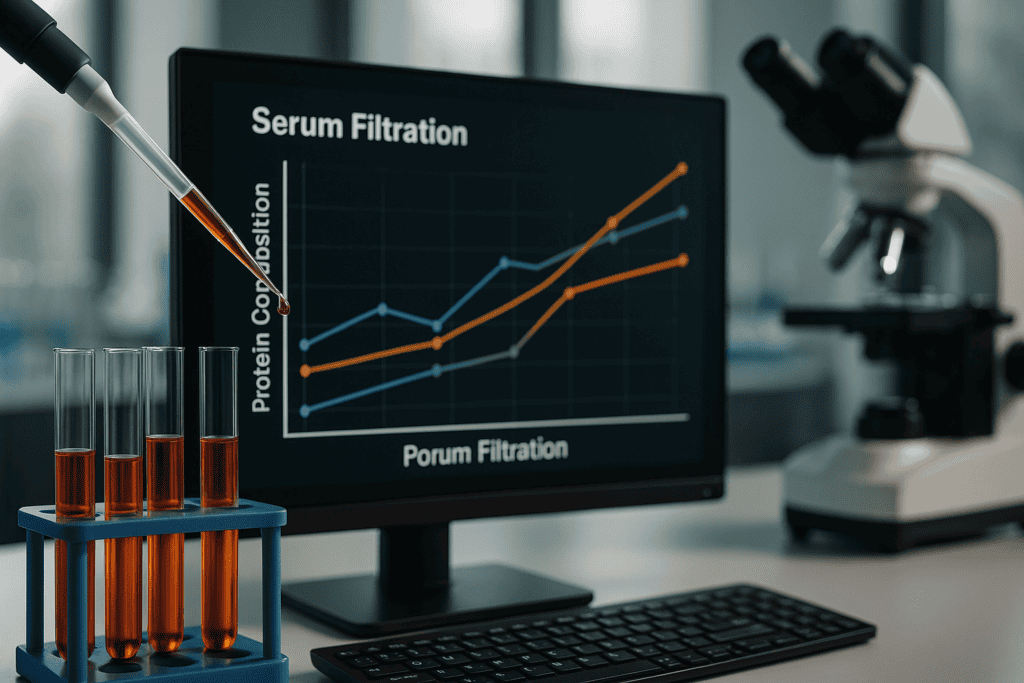
Serum filtration is primarily implemented to remove unwanted particulates, microbes, and possible contaminants that could interfere with cell culture experiments. Common filtration methodologies include membrane filtration, depth filtration, and tangential flow filtration. Each of these methods employs different mechanisms and pore sizes to achieve varying levels of filtration efficiency, which can, in turn, impact the serum’s protein composition through shear forces, protein binding, and size exclusion.
- Membrane filtration: Utilizes a porous membrane to physically separate materials based on size.
- Depth filtration: Incorporates a thick medium that captures particles throughout its matrix.
- Tangential flow filtration: Allows fluid to smear across the surface, using cross-flow dynamics for more effective separation.
Continuez votre lecture pour explorer des perspectives et des stratégies plus avancées.
Influence on Protein Composition
Impact of Shear Forces
Shear forces exerted during filtration processes can contribute to protein denaturation and degradation, leading to a change in the protein profile of the serum. This is particularly relevant for filters with decreased pore sizes, where increased pressure and turbulence come into play. These mechanical forces can alter sensitive proteins, such as cytokines and growth factors, impacting the biological function of cell cultures reliant on precise protein signaling pathways.
- Proteins critical to cell growth may be selectively filtered out.
- Changes in cytokine levels could influence immune response studies.
Serum Filtration and Quality Control
Ensuring Consistency and Reliability
Filtration processes necessitate stringent quality control measures to maintain consistency across batches. The protein composition of serum products can fluctuate due to different filtration techniques or conditions, including temperature and flow rates. Batch testing and comprehensive documentation are essential for identifying variances and ensuring product consistency, which are crucial for experimental reproducibility in laboratories.
- Perform regular protein assays post-filtration to assess changes.
- Utilize batch records to trace filtration parameters and outcomes.
Continuez votre lecture pour explorer des perspectives et des stratégies plus avancées.
Applications in Cell Culture and Immunology
Tailoring Filtration for Specific Applications
In cell culture and immunological studies, the intended use of serum dictates the specification of filtration methods. For instance, primary cultures might demand a filtration regime that retains critical growth factors, whereas antibody production might prioritize the removal of specific immune mediators. Tailors filtration strategies based on the application ensures that the serum retains the appropriate protein composition for the desired biological outcomes.
- Determine the required protein profile for specific cell types or studies.
- Adapt filtration processes to preserve functional protein integrity.
Continuez votre lecture pour explorer des perspectives et des stratégies plus avancées.
Advancements in Filtration Technology
Continuous Monitoring and Documentation
Advancements in technology, such as the use of incubator-compatible live-cell imaging systems like the zenCELL owl, enable real-time monitoring of cell behavior and the documentation of serum or reagent effects. These systems provide visual documentation of cell culture conditions and help improve the reproducibility of biological workflows through continuous observation, offering significant advantages in the evaluation of serum filtration impacts.
- Improved insight into cell behavior under different filtration conditions.
- Enhanced documentation for traceability and reproducibility.
Continuez votre lecture pour explorer des perspectives et des stratégies plus avancées.
“`html
Innovative Filtration Solutions
Exploring Emerging Technologies
As scientific needs evolve, so too do the technologies supporting them. Innovations in serum filtration are aligning with broader trends in biotechnology, aiming to improve both efficacy and precision. Recent advancements focus on minimizing protein loss while enhancing selectivity through the application of specialized membrane materials and smart filtration designs. Consider, for example, the use of asymmetric membranes that provide a gradient of pore sizes, enhancing the separation of molecules based on size while preserving sensitive proteins typically vulnerable to shear forces or denaturation.
- Leverage specialized membranes to customize protein retention and filtration efficiency.
Impact on Protein Signaling Pathways
Maintaining Integrity in Key Proteins
The consequences of filtration are particularly pronounced in protein signaling pathways, which play pivotal roles in cellular communication. When key proteins such as cytokines or chemokines are inadvertently altered or removed, the effects can ripple across experimental results, leading to misconstrued data. Effective filtration protocols must therefore balance filtration between the elimination of unwanted components and the preservation of essential protein structures critical for accurate signaling.
- Map protein signaling networks to identify and preserve critical proteins during filtration.
Optimizing Filtration through Customization
Tailored Approaches for Diverse Needs
Every research setting may demand unique filtration requirements based on distinct experimental objectives. By employing a customized approach to serum filtration, researchers can align their methods with specific goals. This may involve coalescing different filtration stages or using combinatory processes such as integrating centrifugation with filtration to heighten purity and protein retention. An example might involve modifying flow rates or pressures in tangential flow filtration, ensuring the retention of larger protein molecules that are crucial for a given culture’s proliferation.
- Customize flow parameters to maximize critical protein retention.
Leveraging Data Analytics for Filtration
Enhancing Accuracy through Digital Insights
With the advent of digital tools, data analytics are increasingly employed to optimize and monitor filtration efficacy. By using high-resolution analytics, such as spectroscopy or chromatography, researchers can gain comprehensive insights into protein activity within serum post-filtration. These tools facilitate a better understanding of protein landscape variance, equipping scientists with data that inform more precise adjustments to filtration conditions.
- Incorporate data analytics to refine filtration processes based on empirical protein composition data.
Strategies for Consistent Batch Production
Ensuring Uniformity Across Experimental Batches
A critical challenge in laboratory serum use is maintaining consistency across different batches. Variability can stem from natural differences in source material or fluctuations in filtration processes. To ensure reproducibility, it is vital to implement statistical process control measures, routinely evaluating batches against defined protein content benchmarks. This can be achieved through regular batch sampling and comparison against standardized reference profiles using tools like ELISAs or mass spectrometry.
- Develop stringent benchmarks for protein content based on historical data.
Case Study: Filtration Optimization in Serum Manufacturing
Real-world Applications and Outcomes
Consider a biopharmaceutical company specializing in serum products tailored for stem cell research. By employing a strategic filtration review and applying the insights gathered from data analytics, the company enhanced the retention of essential growth factors by 20%. This was achieved by optimizing the tangential flow filtration stage to minimize protein shear forces. Consequently, product efficacy improved, leading to a 15% increase in product reliability among research clients, illustrating the business and scientific benefits of optimized filtration processes.
- Audit and refine filtration stages to enhance critical protein retention.
Future Directions in Serum Filtration
Pioneering Paths Toward Greater Control
The future of serum filtration sees a convergence with nanotechnology and bioengineering. New methodologies are set to provide even finer control over protein components, offering unprecedented specificity. Expected advances include filtration matrices engineered at the nanoscale for targeting particular molecular signatures, adapting to fluid dynamics in real-time for optimal separation, and integrating AI for predictive adjustments. Such innovations are paving the way for exponential advances in biomedical research fidelity and effectiveness.
- Explore nano-engineered filters for superior selectivity and precision.
Ensuite, nous conclurons avec les points clés à retenir, les métriques et une conclusion percutante.
“`
“`html
Advancements in Quality Control
Ensuring High Standards in Filtration
Quality control measures in the context of serum filtration are being enhanced with cutting-edge technologies to ensure that the highest standards are upheld. This includes implementing automated monitoring systems that use real-time data to ensure that every stage of the filtration process adheres to predefined quality benchmarks. Innovative quality assurance tools, such as process analytical technology (PAT) frameworks, allow for continuous scrutiny, helping to promptly identify and rectify any deviations from the norm, thus safeguarding the integrity of the filtration process.
- Integrate real-time monitoring systems to ensure adherence to quality standards.
Ethical Considerations in Serum Filtration
Balancing Scientific Advancement with Responsibility
While serum filtration technologies offer immense potential for scientific advancement, they also necessitate careful ethical consideration. Ensuring that the source materials for serum are collected, processed, and utilized responsibly is paramount. Compliance with ethical standards not only addresses humanitarian concerns but also enhances the credibility and acceptance of scientific findings. Transparency in sourcing, along with rigorous adherence to bioethical standards, ensures that these innovative techniques contribute positively and sustainably to scientific progress.
- Prioritize ethical sourcing and processing in filtration protocols.
The Road Ahead: Collaborative Innovation
Synergizing Efforts for Greater Impact
The future of serum filtration will be shaped by collaborative efforts that unite researchers, technology developers, and policymakers. These collaborations are critical for transforming innovative filtration technologies into reliable tools that can meet diverse scientific needs worldwide. By fostering an environment where interdisciplinary exchange is encouraged, stakeholders can collectively overcome current challenges, drive technological breakthroughs, and ensure that the benefits of advanced serum filtration are widely accessible.
- Promote interdisciplinary collaborations for technological advancements.
Conclusion
In exploring the evolution of serum filtration technologies, several key takeaways emerge. The significance of innovative filtration solutions in preserving essential proteins, enhancing experimental reliability, and improving overall research outcomes stands out prominently. Emerging trends in biotechnology, coupled with sophisticated digital tools, are revolutionizing how we approach serum filtration, ensuring greater precision and efficacy in scientific experiments.
As we delve into the impact of serum filtration on protein signaling pathways, the importance of maintaining the integrity of key proteins becomes evident. Customization of filtration processes provides tailored solutions that align with unique experimental requirements, emphasizing that one size does not fit all in biotechnological research. Consistent batch production and ethical sourcing further underscore the commitment to scientific rigor and societal responsibility.
The importance of leveraging data analytics for refined filtration processes cannot be overstated, as it provides empirical insights that drive fine-tuning and optimization of these processes. The case studies and forward-looking advancements highlight the tangible benefits and promising future of serum filtration.
This article sought to illuminate the intricate dynamics and forward-thinking approaches that define serum filtration today. By maintaining high ethical standards, adopting innovative technologies, and fostering collaborative networks, the scientific community is poised to unlock new possibilities in research and application.
For researchers, healthcare professionals, and industry experts, the imperative now is to continue championing these advanced methodologies. Let this be a call to action: embrace the cutting-edge innovations in serum filtration with an eye toward ethical practices and collaborative progress. Together, we can propel the field of biotechnology towards even greater achievements.
“`
Live-Cell Imaging in Cell & Gene Therapy: Managing Critical Culture Phases

“`html
Live-Cell Imaging in Cell & Gene Therapy: Managing Critical Culture Phases
In the rapidly evolving fields of cell and gene therapy, maintaining precise control over cell culture conditions is paramount. Among these, live-cell imaging stands out as an indispensable tool, offering unparalleled insights into cellular dynamics. This article delves into the role of live-cell imaging in optimizing critical culture phases, providing a comprehensive guide for researchers and biotech professionals committed to advancing their work in cell and gene therapies.
Traditional Challenges in Cell Culture and Monitoring
Limitations of Conventional Observation Techniques
Standard methods of cell culture observation have included periodic manual inspections and end-point assays, which are fraught with several limitations. These methods can introduce variability and inconsistency, primarily due to the intermittent nature of data acquisition. Additionally, manual handling increases the risk of contamination, and the discontinuous observations may miss transient cellular events critical to understanding cellular mechanisms.
- High risk of contamination from frequent manual handling
- Potential for missing significant but transient cellular events
- Variability in data due to inconsistent observation intervals
Continuez votre lecture pour explorer des perspectives et des stratégies plus avancées.
Technology and Automation Trends in Live-Cell Imaging
Advancements Facilitating Workflow Efficiency
Recent technological advancements have revolutionized live-cell imaging, making it a cornerstone for effective cell and gene therapy research. Automated systems now allow for the continuous monitoring of cultures, thereby ensuring the consistent acquisition of high-quality data. Automation reduces manual intervention, mitigating contamination risks and improving the reproducibility of experiments. These enhancements are crucial for studies ranging from basic cell biology to complex therapeutic applications.
- Automation ensures consistent and high-quality data capture
- Reduction in manual intervention diminishes contamination risks
- Enhanced reproducibility and reliability of experimental outcomes
Continuez votre lecture pour explorer des perspectives et des stratégies plus avancées.
Integrating Live-Cell Imaging into Culture Workflows
Practical Applications and Benefits
Integrating live-cell imaging into culture workflows offers numerous practical advantages. It allows for real-time monitoring of cell health, morphology, and behavior under various conditions. For instance, in high-throughput screening (HTS), where speed and accuracy are crucial, live-cell imaging provides critical kinetic data that can guide decision-making and facilitate the fast identification of potential therapeutic candidates.
- Real-time monitoring of cellular health and morphology
- Critical for accurate data collection in high-throughput screening
- Enhances decision-making processes and candidate identification
Continuez votre lecture pour explorer des perspectives et des stratégies plus avancées.
Innovations with Incubator-Based Imaging Solutions
Improving Data Quality and Experimental Reproducibility
Incubator-based imaging, such as the zenCELL owl system, represents a significant innovation in live-cell imaging technology. These systems are designed to integrate seamlessly into cell culture environments, providing uninterrupted data collection while maintaining optimal culture conditions. Such platforms support continuous monitoring, minimize disturbances, and ensure high-quality and reproducible data, thus accelerating research outcomes in cell and gene therapy.
- Seamless integration with cell culture environments
- Maintains optimal conditions for continuous data collection
- Enhances reproducibility and accelerates research outcomes
Continuez votre lecture pour explorer des perspectives et des stratégies plus avancées.
“`
“`html
Leveraging Image Analysis Software for Enhanced Data Interpretation
Automating Data Processing for Better Insights
One of the most compelling advancements in live-cell imaging is the integration of sophisticated image analysis software. These tools automate the processing of vast datasets generated by continuous monitoring, transforming complex biological data into actionable insights. Automated image analysis enhances the precision of measurements related to cell count, proliferation rates, and morphological changes, thus reducing human error and subjective interpretation.
- Utilize image analysis software to automate and standardize data processing.
Confocal and Multiphoton Imaging: A Deeper Look
Advanced Imaging Techniques for In-Depth Analysis
Confocal and multiphoton imaging technologies provide an invaluable depth of field, which is particularly beneficial for examining thicker biological samples. These techniques enable researchers to capture high-resolution images of cells in three dimensions, offering an unparalleled perspective on cellular architecture and interactions within their microenvironment. This method has been instrumental in observing live-cell dynamics in intricate gene therapy models.
- Adopt advanced imaging techniques for exploring complex cell structures.
Real-Time Imaging in Stem Cell Research
Monitoring Differentiation and Development
In stem cell research, real-time live-cell imaging offers a decisive edge, allowing scientists to monitor the differentiation and development of stem cells as they occur. This capability is essential for understanding the pathways of cellular differentiation and for optimizing protocols to increase the efficiency and safety of stem cell therapies. For example, researchers can track changes in cell morphology and gene expression over time, providing crucial data for therapeutic advancements.
- Implement real-time monitoring to track stem cell differentiation over time.
High-Content Screening (HCS) in Drug Discovery
Accelerating Drug Development with Live-Cell Imaging
High-content screening combines live-cell imaging with automated analysis, expediting the drug discovery process by facilitating the simultaneous analysis of complex cellular processes across thousands of wells. This approach has been pivotal in identifying new drug candidates for cell and gene therapies, allowing researchers to analyze cell viability, proliferation, and apoptosis in reaction to potential therapeutic compounds in real-time.
- Use high-content screening methods to enhance the efficiency of drug discovery.
Personalized Medicine and Precision Therapies
Customizing Treatments through Cellular Insights
In the realm of personalized medicine, live-cell imaging provides the ability to closely monitor how individual patient-derived cells respond to specific treatments, enabling the tailoring of therapies to maximize efficacy and minimize adverse effects. For instance, oncologists can use live-cell imaging to assess cancer cell response to chemotherapy, adjusting treatments to better suit individual patient needs.
- Leverage live-cell imaging to customize and optimize patient-specific treatments.
Challenges and Solutions in Live-Cell Imaging
Overcoming Technical and Biological Obstacles
While live-cell imaging is a powerful tool, it is not without challenges. Imaging live cells can be complicated by factors such as phototoxicity, photobleaching, and the sheer volume of data produced. However, innovative tools and techniques are continually being developed to address these issues. For example, the use of low-light imaging techniques and advanced data management systems can mitigate these challenges, enabling more sustainable and manageable imaging processes.
- Employ advanced imaging methodologies to reduce phototoxicity and manage data volume effectively.
Case Study: Enhancing CAR-T Cell Therapy
Utilizing Live-Cell Imaging to Transform Immunotherapy
In a groundbreaking case study, researchers leveraged live-cell imaging to optimize Chimeric Antigen Receptor (CAR) T-cell therapy. By observing CAR-T cell interactions in real-time, they could refine genetic modifications to enhance efficacy and reduce side effects. Live-cell imaging allowed for the observation of CAR-T cells’ ability to target and kill cancerous cells effectively, leading to protocol optimizations that significantly improved patient outcomes.
- Apply live-cell imaging to immunotherapy to improve treatment protocols and outcomes.
Ensuite, nous conclurons avec les points clés à retenir, les métriques et une conclusion percutante.
“`
“`html
Integrating Live-Cell Imaging with Artificial Intelligence
Enhancing Data Interpretation through Machine Learning
The integration of artificial intelligence with live-cell imaging is revolutionizing data interpretation by employing sophisticated algorithms to identify and analyze patterns beyond human perception. Machine learning models can predict cellular behavior, automate image analysis, and streamline data processing, making it possible to manage and interpret the voluminous data generated. By learning from vast datasets, AI can improve the accuracy of predicting cell development pathways, assessing drug efficacy, and even contributing to personalized treatment plans.
- Incorporate machine learning models to enhance data analysis and prediction capabilities.
Ethical Considerations in Live-Cell Imaging
Addressing Privacy and Data Security Challenges
As with any technology that deals with sensitive data, live-cell imaging must be managed with care to ensure privacy and data protection. With the integration of patient-derived cells in the therapeutic process, safeguarding patient information becomes crucial. Developing robust data encryption methods and adhering to strict ethical standards are necessary steps to maintaining trust and ensuring the secure handling of biological and imaging data within live-cell imaging frameworks.
- Develop strict ethical protocols to safeguard data integrity and privacy.
The Future of Live-Cell Imaging in Biotechnology
Pushing Boundaries and Shaping New Horizons
The future of live-cell imaging is poised to unlock unprecedented opportunities in biotechnology and medicine. Emerging technologies such as nanoscopy, super-resolution microscopy, and AI-driven models continue to push the frontiers of what is possible in cellular research. As these innovations evolve, the potential to unravel the complexities of cellular mechanisms further will pave the way for novel therapeutic approaches and a deeper understanding of disease pathology and prevention.
- Explore emerging technologies to drive advancements in cell and gene therapy.
Conclusion
The advancements in live-cell imaging have presented transformative opportunities in cell and gene therapy, offering a granular view into cellular landscapes and their dynamics. Key takeaways from this exploration highlight the importance of leveraging sophisticated image analysis software, real-time monitoring, and high-content screening techniques to enhance research accuracy and efficiency. The integration of advanced methodologies such as confocal and multiphoton imaging, alongside AI and machine learning, further accentuates the way we process and interpret massive datasets for better insights.
In a world increasingly tailored towards personalization, live-cell imaging stands at the forefront of customized medicine, providing invaluable insights that guide patient-specific treatments. Challenges such as phototoxicity and data management are being addressed through innovative techniques, underscoring the field’s dynamic nature and its commitment to overcoming existing barriers.
As the potential of live-cell imaging continues to unfold, its role in pioneering cutting-edge therapies is indisputable. Researchers and clinicians are better equipped than ever to optimize treatment protocols, reduce adverse effects, and push the boundaries of healthcare. The integration of ethical considerations ensures that, while transformative, these advancements are executed responsibly and sustainably.
As we venture further into an era characterized by precision medicine, live-cell imaging will remain pivotal. The relentless pursuit of knowledge and improvement in imaging technologies promises a horizon of breakthroughs in understanding cellular behavior and developing innovative therapies. Let us embrace these advancements, ensuring that we continue to explore and harness the full potential of live-cell imaging, driving progress in biotechnology and medicine.
Stay at the cutting edge, engage with emerging technologies, and make impactful contributions to the fascinating field of live-cell imaging and its vast applications.
“`
Gold vs. ITO Electrodes Comparison
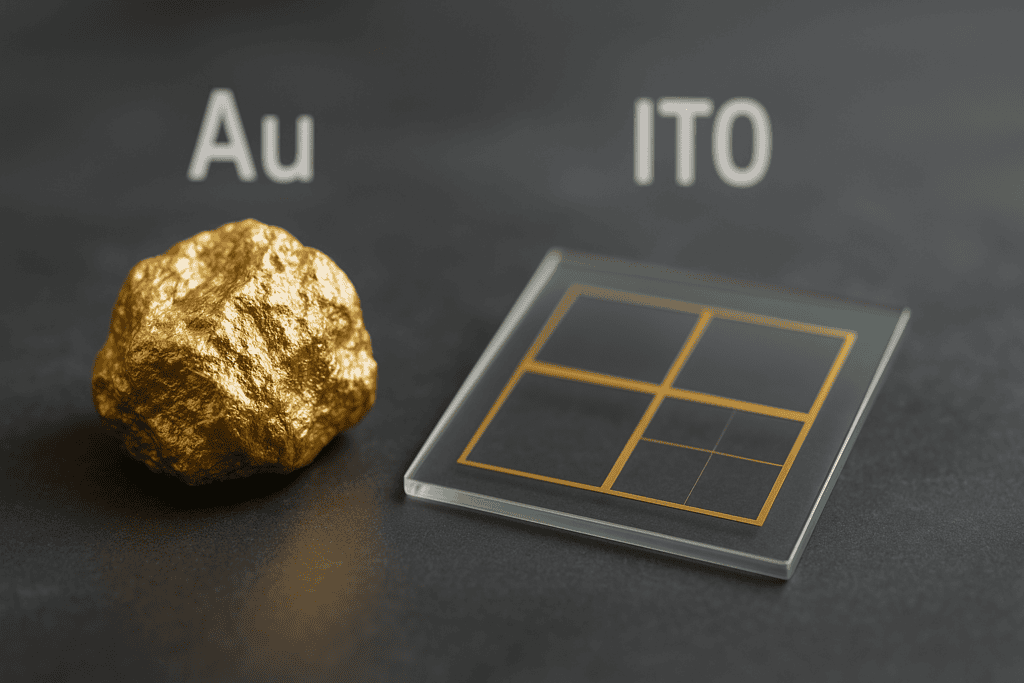
“`html
Gold vs. ITO Electrodes Comparison
In the rapidly evolving field of biosensors and electronics, choosing the right substrate for electrodes is crucial. Among the most debated comparisons is between gold (Au) and indium tin oxide (ITO). Both materials have unique attributes that cater to specific applications, making the Gold vs. ITO electrodes comparison a vital consideration in design for applications ranging from diagnostics to consumer electronics. This article aims to provide an in-depth analysis of these materials, focusing on their properties, applications, and the challenges faced by professionals in biotech and related fields.
Material Characteristics and Properties
Conductivity and Transparency
Both gold and ITO have distinct conductive properties that make them suitable for various applications. Gold is a noble metal known for its excellent electrical conductivity and resistance to oxidation. Conversely, ITO, a transparent conductive oxide, provides a unique combination of electrical conductivity and optical transparency.
- Gold offers superior conductivity, invaluable in high-frequency applications.
- ITO is highly transparent, making it ideal for touch screens and optical devices.
Stability and Surface Chemistry
The stability and surface chemistry of electrode materials are pivotal in determining their suitability for specific applications. Gold, renowned for its chemical inertness, provides a stable environment conducive to biological assays. ITO, although less stable, excels in applications where transparency is critical, but may require surface treatment for biological compatibility.
- Gold’s resistance to corrosion makes it a preferred choice for long-term applications.
- ITO requires careful handling and often needs surface modifications to enhance bioactivity.
Applications in Diagnostics and Electronics
Gold Electrodes in Biosensors and Electrochemical Assays
Gold electrodes are widely utilized in biosensors due to their high conductivity and stable surface chemistry. They play a crucial role in electrochemical assays where sensitivity and specificity are paramount.
- Highly effective in enzyme-linked immunosorbent assays (ELISA).
- Commonly used in glucose sensors where high conductivity is required.
ITO Electrodes in Optoelectronic Devices
ITO’s dual functionality as a conductive and transparent material makes it a backbone material in optoelectronic devices. It is extensively employed in applications such as OLED displays and solar cells.
- ITO’s transparency is critical for touch-sensitive applications.
- Used in light-emitting devices where the aesthetic and functional transparency is crucial.
Technological Advances and Material Innovations
Nanostructuring and Surface Modifications
Recent advances in nanostructuring have opened new avenues for both gold and ITO electrodes, enhancing their functionalities. Gold nanoparticles can increase surface area, improving sensitivity in biosensors. Meanwhile, ITO can benefit from nanostructuring for improved adhesion and conductivity.
- Nanostructured gold surfaces increase specificity and sensitivity.
- ITO nano-coatings can improve both conductivity and surface roughness.
Flexible and Printed Electronics
The move towards flexible and printed electronics has spurred innovations in both gold and ITO electrodes. Ink formulations of these materials allow for low-cost, scalable production methods suitable for modern electronic applications.
- Gold inks facilitate high-resolution, low-temperature printing.
- ITO is being explored in flexible substrates for use in wearable technology.
Continuez votre lecture pour explorer des perspectives et des stratégies plus avancées.
“`
“`html
Cost and Economic Considerations
Balancing Quality and Expense
When selecting electrode materials, cost-effectiveness is a major factor driving decision-making in various industries. Gold, while offering superior performance, comes at a higher price due to its scarcity and demand in the market. On the other hand, ITO, though more abundant, presents cost challenges due to the intricate production processes involved in its manufacture.
- Gold’s high cost often limits its use to applications where its unique benefits outweigh expense.
- ITO provides a cost-saving alternative for large-scale implementations despite initial processing costs.
Sustainability and Environmental Impact
Evaluating Long-Term Consequences
Both gold and ITO have environmental ramifications that must be considered. Gold mining has significant ecological consequences, prompting a need for recycling and recovery efforts. Conversely, the extraction and disposal of indium, a component of ITO, also presents environmental challenges. Innovations in sustainable sourcing and recycling are crucial for minimizing ecological impact.
- Opt for recycled gold whenever possible to reduce environmental impact.
- Pursue advancements in indium recycling to enhance ITO sustainability.
Performance in Hybrid Systems
Synergizing Material Strengths
The combination of gold and ITO in hybrid systems can exploit the advantageous properties of both materials, creating superior electrode systems for multifaceted applications. For instance, gold-ITO hybrids can enhance both the electrical conductivity and transparency necessary for advanced optoelectronic devices.
- Utilize gold-ITO hybrids to maximize efficiency in complex electronic systems.
Regulatory and Standardization Challenges
Navigating Worldwide Compliance
Implementing electrodes in sensitive industries such as healthcare requires adherence to stringent regulatory standards. Both gold and ITO need to meet compliance criteria concerning purity, consistency, and safety across global markets. Understanding these regulations is essential for successful product commercialization.
- Ensure thorough understanding of international standards for electrode materials.
- Regularly update compliance knowledge to adhere to evolving industry regulations.
Technological Disruptions and Future Prospects
Exploring Cutting-edge Innovations
The future of electrode materials is heavily influenced by technological advancements. Emerging disruptions, such as the development of biodegradable gold or advances in ITO alternatives, like graphene, hold promise for the next generation of electronics and biosensors. Keeping abreast of these innovations is key to staying competitive.
- Monitor emerging technologies to leverage new materials in future projects.
- Consider investing in research for novel electrode alternatives.
Comparative Longevity and Maintenance
Ensuring Durability and Reliability
The longevity of electrode materials is vital for ensuring reliability and reducing maintenance costs. Gold’s corrosion resistance generally offers a longer lifespan, but ITO electrodes can also be robust when combined with protective encapsulation techniques.
- Choose gold for applications where minimal maintenance is necessary.
- Use encapsulation strategies to boost the longevity of ITO electrodes.
Customization and Scalability in Manufacturing
Tailoring Solutions for Diverse Needs
Both gold and ITO can be customized for specific applications, but scalability often dictates the choice. Gold, with its excellent malleability, is often easier to work with for custom design work, while ITO offers scalability for larger production runs, such as those needed for consumer electronics.
- Opt for gold when detailed, small-batch customization is required.
- Choose ITO for scalable production where economies of scale are crucial.
Ensuite, nous conclurons avec les points clés à retenir, les métriques et une conclusion percutante.
“`
“`html
Market Trends and Consumer Preferences
Adapting to Evolving Requirements
The demand for electrode materials has witnessed considerable shifts with the continuous evolution of consumer preferences and technological advancements. As smart devices proliferate, there is an increasing need for materials that can deliver both performance and cost-efficiency. Users and manufacturers alike prioritize materials that provide a combination of durability, energy efficiency, and environmental sustainability.
- Pay attention to industry reports to understand market trends influencing material demand.
- Factor consumer preferences in product offerings to gain competitive advantage.
Integration in Developing Technologies
Aligning with Future Innovations
For researchers, engineers, and manufacturers, anticipating technological shifts is crucial for the integration of electrodes in future developments. As industries pivot toward smarter, more connected technologies, materials like gold and ITO must be assessed for compatibility with emerging systems, such as wearables and IoT devices, where reliability and performance are paramount.
- Investigate potential applications in emerging fields like bioelectronics and flexible devices.
- Collaborate with tech innovators to align material developments with upcoming technological needs.
Investment and R&D Considerations
Backing Futuristic Solutions
Investing in research and development is vital for driving the future use of gold and ITO in innovative applications. By funding cutting-edge projects, companies can stay ahead in the competitive landscape. The pursuit of novel manufacturing processes and resource-efficient production methods will pave the way for the next generation of electrode materials that meet diverse industry demands.
- Encourage investments in R&D to discover new applications for gold and ITO.
- Focus on innovations that enhance material performance and environmental sustainability.
Conclusion
In the exploration of gold versus ITO electrodes, a comprehensive understanding of their unique characteristics, benefits, and constraints has been achieved. Gold continues to be highly valued for its excellent conductivity and corrosion resistance, ideal for high-end applications where quality justifies the cost. Meanwhile, ITO represents a cost-effective alternative with a beneficial role in large-scale electronics due to its transparency and conductivity. By integrating both materials, industries can capitalize on their strengths to drive innovation, particularly in optoelectronic and advanced hybrid systems.
This article underscores the critical considerations beyond mere material selection, including sustainability, regulatory compliance, and market trends, which are pivotal in modern manufacture and application. As environmental impact becomes an increasing concern, efforts in recycling and sustainable sourcing for materials like gold and indium are paramount. Furthermore, staying abreast of technological disruptions, such as biodegradable alternatives and graphene, is necessary to keep pace with the fast-evolving landscape.
The future of electrode technology lies at the intersection of performance, economic viability, and environmental responsibility. As industries move forward, the strategies to combine superior conductivity, cost efficiency, and ecological considerations become essential for seizing new opportunities. Companies are encouraged to invest in research and strategize for customization and scalability that align with global market demands.
To those in the field or considering a venture into electrode technologies, the need to continue learning and adapting cannot be overstressed. Whether it’s pushing the boundaries of innovation or achieving stringent compliance standards, the ultimate goal should be to enhance the overall impact of materials on technology and society. As the landscape changes, proactive adaptation will ensure success and sustainability. Now is the time to delve into these issues, ensuring that chosen solutions meet future needs and contribute positively to both the industry and the environment.
“`
Serum-related considerations when moving from 2D to 3D cell culture
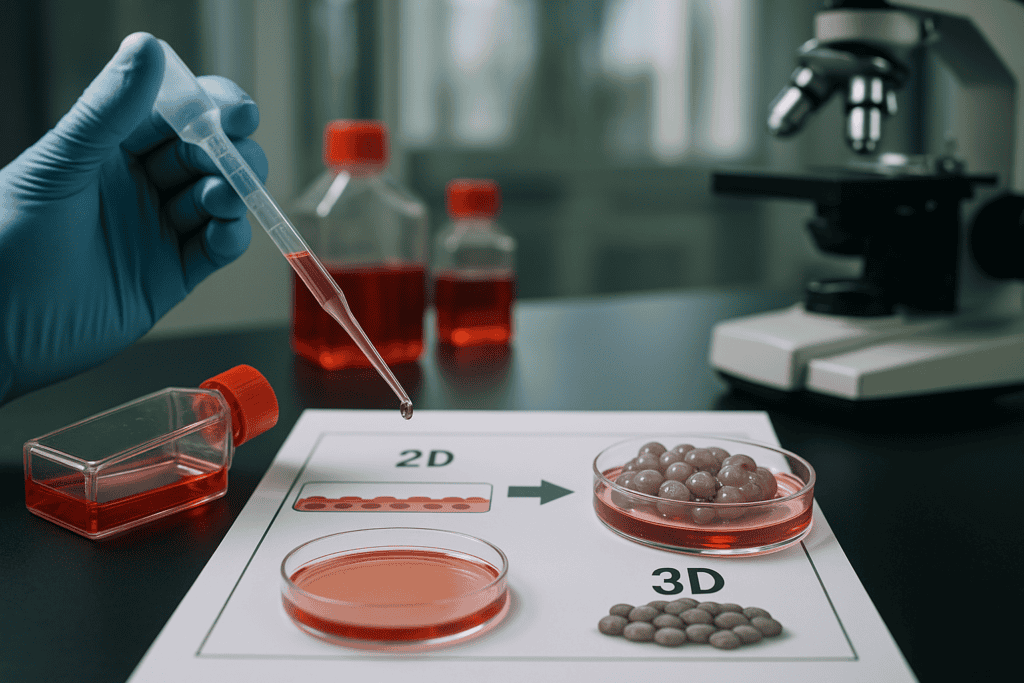
“`html
Serum-related considerations when moving from 2D to 3D cell culture
As cell culture techniques evolve, the transition from 2D to 3D cell culture systems presents researchers with unique opportunities and challenges. One critical factor in this transition is the selection and management of serum components. Understanding serum-related considerations is essential for achieving reliable and reproducible results, particularly when shifting from the simplicity of 2D monolayers to the complex environments of 3D cell cultures. This article delves into the key serum-related aspects that need attention, including lot-to-lot variability, quality parameters, and compatibility with various cell types.
Understanding Serum’s Role in Cell Culture
Biological Function and Importance
Serum provides vital nutrients, hormones, and growth factors that are crucial for cell survival and proliferation in vitro. In traditional 2D cultures, fetal bovine serum (FBS) is commonly used due to its rich composition. However, the transition to 3D systems, which more closely mimic physiological conditions, necessitates a reevaluation of serum components. Understanding the functional role of serum in supporting complex 3D environments is critical for experimental success.
- FBS is commonly utilized for its rich nutritional profile.
- Serum provides essential growth factors and hormones.
- The transition to 3D cultures may require adjustments in serum composition.
Continuez votre lecture pour explorer des perspectives et des stratégies plus avancées.
Challenges of Serum Variability
Lot-to-Lot Variability and Its Impact
One of the biggest concerns with serum is the lot-to-lot variability that can affect experimental outcomes. This is particularly crucial in 3D cell cultures where the consistency of the biological environment is paramount. Variability in serum can lead to discrepancies in cell growth rates and behavior, which can significantly impact the reproducibility of results. Researchers must implement strategies to manage this variability effectively.
- Document serum batch details and characteristics for reproducibility.
- Consider batch reservation services to ensure consistent supply.
- Regular testing and validation of serum batches are recommended.
Continuez votre lecture pour explorer des perspectives et des stratégies plus avancées.
Mesures de contrôle de la qualité
Ensuring High-Quality Standards
The integrity and quality of serum are paramount in complex 3D cell culture experiments. Implementing rigorous quality control measures can mitigate risks associated with contamination and variability. Utilizing services like batch testing and documentation can enhance the reliability of biological experiments, promoting successful research outcomes.
- Sterility and endotoxin levels should be regularly monitored.
- Batch documentation aids in traceability and quality assurance.
- Custom biological sourcing can provide tailored serum options.
Continuez votre lecture pour explorer des perspectives et des stratégies plus avancées.
Optimizing Serum for Different Cell Types
Compatibility and Suitability Considerations
As different cell types have unique requirements, selecting the appropriate serum is vital. The complex nature of 3D environments can amplify discrepancies caused by incompatible serum components. Tailoring serum selection based on the specific cellular requirements can enhance cell viability and functionality in 3D systems.
- Different cell types may require specific serum components.
- Comparative testing of different sera can identify optimal formulations.
- Consider the physiological mimicry when transitioning to 3D cultures.
Continuez votre lecture pour explorer des perspectives et des stratégies plus avancées.
Leveraging Technology for Monitoring and Documentation
Incubator-Compatible Live-Cell Imaging
Advanced technologies, such as the zenCELL owl, an incubator-compatible live-cell imaging system, offer real-time monitoring of cell behavior in 3D cultures. These systems can provide valuable data regarding serum or reagent effects, aiding in documentation and enhancing reproducibility. Continuous monitoring helps researchers dynamically adjust parameters, ensuring optimal experimental outcomes.
- Live-cell imaging supports continuous observation of culture dynamics.
- Real-time data can be invaluable for adaptability and precision.
- Documentation of serum effects aids in achieving reproducible results.
Continuez votre lecture pour explorer des perspectives et des stratégies plus avancées.
“`
“`html
Developing Effective Serum-Free Alternatives
Reducing Dependency on Traditional Serum
The complexity and variability associated with animal-derived serum have driven significant interest in serum-free culture systems. Reducing serum dependency can enhance experimental reproducibility and align with ethical considerations regarding animal use. Serum-free media, supplemented with defined growth factors and nutrients, present a viable solution for many 3D culture applications. The shift towards serum-free alternatives supports more controlled experimental setups and can streamline the transition from research to clinical applications.
- Evaluate commercially available serum-free media tailored for specific cell types.
- Customize media formulations to meet unique experimental needs.
- Ensure that the transition does not compromise the integrity of cell morphology and function.
Integration of Hydrogels for Serum Support
Simulation des conditions physiologiques
Hydrogels, used in combination with or as alternatives to traditional serum, can enhance the 3D culture environment by providing a more physiologically relevant matrix. These biomaterials offer a scaffold that mimics the extracellular matrix, supporting cellular functions such as proliferation, differentiation, and migration. Integrating hydrogels with cell culture systems allows for precise modulation of mechanical and biochemical properties, fostering better simulation of in vivo conditions for 3D cultures.
- Select hydrogels based on mechanical properties compatible with specific cell types.
- Combine hydrogels with defined growth factors to replace traditional serum components.
- Test various hydrogel concentrations and compositions to optimize cell behavior and performance.
Advanced Biofabrication Techniques
Utilizing 3D Bioprinting for Serum Optimization
3D bioprinting innovatively addresses the challenges in serum component distribution within 3D cultures. By using precision deposition techniques, researchers can fabricate complex tissue constructs that maintain optimal growth environments, bypassing some variability issues inherent to traditional serum use. This technology enables the precise placement of cells and biomaterials, creating more uniform and functional tissue analogs.
- Incorporate bioprinting to design scaffold geometries that improve nutrient flow.
- Experiment with combinations of bio-inks and biochemical supplements.
- Leverage bioprinting to minimize serum use by directly embedding essential factors into the scaffold.
Establishing Protocols for Serum Banking
Maintaining Consistent Experimental Conditions
Serum banking and management are critical for maintaining consistency across experimental runs. Proper protocols for serum collection, storage, and usage help mitigate the effects of variability and ensure that researchers have access to reliable and consistent materials. Setting up an in-house serum banking system allows for better control and traceability, contributing to more reproducible results across multiple studies.
- Create a standardized protocol for serum collection and storage conditions.
- Implement labeling systems for traceability, including batch number and date.
- Regularly evaluate stored serum for quality indicators such as sterility and nutrients.
Naviguer dans les paysages réglementaires
Ensuring Compliance and Quality Standards
Understanding the regulatory requirements surrounding serum use in 3D cell cultures is crucial for research and commercial applications. Complying with guidelines from authorities such as the FDA and EMA helps maintain high-quality standards and facilitates the transition from lab to market. Adhering to these regulations not only supports ethical and safe research practices but also builds trust with stakeholders by ensuring that experimental conditions meet stringent quality control measures.
- Familiarize with relevant guidelines and implement compliance checks.
- Document all procedures and materials used in serum preparation.
- Engage with regulatory bodies early in the research process to streamline approval paths.
Case Studies: Successful Transitions from 2D to 3D
Real-World Applications and Outcomes
Analyzing case studies from various laboratories can offer valuable insights into the successful transition from 2D to 3D cell cultures. For instance, a notable study involved the use of serum-free hydrogels in creating a human liver model, significantly enhancing cell viability and function compared to traditional methods. These results underscore the potential for advanced serum strategies to improve experimental outcomes reliably.
- Review case studies to identify successful strategies and common pitfalls.
- Apply learnings from peer research to inform your experimental design.
- Adapt successful methodologies to cater to your specific research goals and cell types.
Collaborative Platforms for Serum Research
Harnessing Collective Knowledge for Innovation
Joining collaborative platforms and networks facilitates the sharing of insights and strategies concerning serum use in 3D cultures. These networks foster innovation by bringing together interdisciplinary expertise, allowing researchers to collectively address challenges and develop novel solutions. By pooling resources and knowledge, collaboration can accelerate progress in optimizing serum components for complex cell culture systems.
- Engage with professional networks and forums focusing on cell culture advancements.
- Participate in workshops and conferences dedicated to tissue engineering and biomaterials.
- Contribute to collaborative research initiatives and publications.
Ensuite, nous conclurons avec les points clés à retenir, les métriques et une conclusion percutante.
“`
“`html
Technological Innovations in Serum-Free Media
Pioneering Tools and Techniques
Recent technological advancements have significantly propelled the development of next-generation serum-free media. Utilizing cutting-edge tools such as metabolomics and high-throughput screening, researchers can now finely tune the composition of cell culture media. This precision enables the facilitation of more accurate mimicking of in vivo conditions, enhancing the physiological relevance of 3D cultures.
- Leverage metabolomics to analyze cellular metabolic requirements for tailored media solutions.
- Implement high-throughput screening to rapidly evaluate the efficacy of various media formulations.
- Adopt bioinformatics approaches to predict optimal growth conditions based on cellular genetic profiles.
Ethical Considerations in Serum Research
Balancing Scientific Goals with Ethical Standards
As the scientific community moves towards more advanced 3D cell culture systems, ethical considerations must remain at the forefront. The use of animal-derived products, such as traditional serum, in research is under scrutiny. Adopting serum-free alternatives aligns with the growing emphasis on reducing animal testing while advancing scientific innovation.
- Adhere to ethical guidelines that minimize the use of animal-derived components in research.
- Educate researchers and stakeholders about the benefits of serum-free and ethically sourced media.
- Promote transparency in research methodologies to foster trust and acceptance.
Future Directions in Serum Optimization
Exploring Uncharted Territories
The journey toward optimizing serum use in 3D cell cultures is an evolving frontier. As technologies and methodologies continue to innovate, the future holds promising directions for these efforts. The integration of artificial intelligence and machine learning could revolutionize the customization of culture systems, predicting cellular responses with unprecedented accuracy and efficacy.
- Explore the potential of AI-driven solutions for designing serum-free media.
- Investigate next-generation biomaterials that may serve as more effective serum substitutes.
- Encourage interdisciplinary research to push the boundaries of 3D culture applications.
Conclusion
Throughout this exploration of serum-related considerations in transitioning from 2D to 3D cell culture systems, several pivotal insights have emerged. The shift towards serum-free alternatives not only enhances reproducibility and ethical alignment but also supports improved experimental control and application in clinical settings. The integration of hydrogels and advanced biofabrication techniques, such as 3D bioprinting, exemplifies the innovative spirit driving these advancements. Furthermore, established protocols for serum banking and understanding of the regulatory landscapes ensure that the research maintains not only consistency and reliability but also compliance with high-quality standards.
The rapid progression of technological tools and collaborative platforms has further empowered the research community, enabling the pooling of collective knowledge to confront complex challenges with creativity and rigor. Case studies of successful transitions and the emphasis on empathizing ethical considerations highlight the potential for serum-free and optimized media to revolutionize cell culture practices. This paradigm shift underscores a future where scientific innovation and ethical responsibility synergistically thrive.
As we move forward, the opportunities for groundbreaking discoveries in 3D cell cultures continue to expand. By embracing interdisciplinary collaboration, leveraging cutting-edge methodologies, and maintaining a commitment to ethical research practices, we stand at the cusp of transforming fundamental scientific approaches. Let this journey inspire a reimagined perspective on serum use and advancements in cell culture technologies, motivating continued exploration and innovation in a rapidly evolving field. In this era of biotechnological advancement, our collective efforts will undoubtedly pave the way for more precise, ethical, and impactful scientific outcomes.
“`
Pourquoi la microscopie de bout de chaîne échoue : L'évolution vers la surveillance continue des cellules
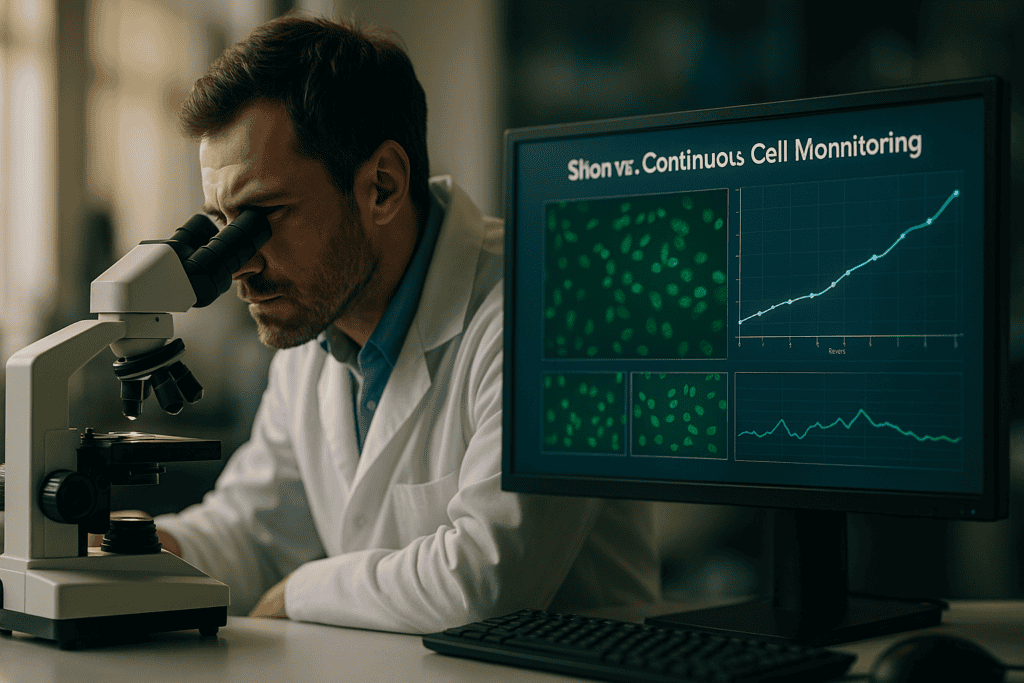
Pourquoi la microscopie de bout de chaîne échoue : L'évolution vers la surveillance continue des cellules
Le paysage de la recherche en culture cellulaire a considérablement évolué au cours des dernières décennies, sous l'impulsion du besoin de données plus précises, à haute résolution, et d'une reproductibilité expérimentale améliorée. La microscopie par point final traditionnelle, autrefois la référence pour l'analyse cellulaire, s'avère de plus en plus inadéquate pour les exigences de recherche qui nécessitent des informations en temps réel sur la dynamique cellulaire. Le passage à la surveillance continue des cellules remodèle les flux de travail des cultures cellulaires, offrant aux chercheurs un accès sans précédent à des données quantitatives et dynamiques. Cet article examinera les lacunes de la microscopie par point final, les avancées technologiques qui stimulent la surveillance continue et les mises en œuvre pratiques au sein des laboratoires modernes.
Défis et limites de la microscopie traditionnelle des points d'extrémité
Instantanés statiques et processus cellulaires dynamiques
La microscopie par points terminaux implique traditionnellement la prise d'instantanés fixes d'événements cellulaires à des moments précis. Bien qu'utile pour une vue d'ensemble, cette approche ne parvient pas à capturer la nature dynamique des cellules vivantes. Les cellules ne fonctionnent pas de manière statique ; leur comportement — migrations, mitoses et réponses aux stimuli — nécessite une observation dans le temps pour véritablement comprendre les complexités des mécanismes cellulaires. Par conséquent, se fier uniquement aux données de points terminaux peut conduire à des interprétations erronées et à des résultats potentiellement biaisés.
- Événements cellulaires transitoires manqués
- Résolution temporelle limitée
- Potentiel d'artefacts dû à la préparation de l'échantillon
Fonctionnement manuel et erreur humaine
Les méthodes de microscopie traditionnelles dépendent fortement de l'opération manuelle, ce qui introduit des opportunités importantes d'erreurs humaines. Les variabilités dans la coloration, la mise au point et la capture d'images peuvent entraîner des données incohérentes, réduisant la reproductibilité entre les expériences. Le manque d'acquisition automatique d'images peut également entraîner des lacunes dans les données et un manque de continuité, ce qui est particulièrement important pour les études à long terme.
- Variabilité selon l'opérateur
- Processus chronophages
Avancées technologiques et tendances d'automatisation
Adopter l'automatisation en imagerie cellulaire
Les innovations technologiques en microscopie ont permis des avancées significatives en matière d'automatisation, facilitant le passage à la surveillance continue des cellules. Les systèmes automatisés améliorent non seulement la reproductibilité, mais aussi la cohérence des données en minimisant l'interaction humaine. De plus, l'acquisition de données en temps réel permet aux chercheurs d'observer les processus cellulaires au fur et à mesure qu'ils se déroulent, réduisant ainsi la probabilité de manquer des événements critiques.
- Mise au point et imagerie automatisées
- Collecte de données cohérente et impartiale
Impact des systèmes d'imagerie basés sur les incubateurs
Les systèmes d'imagerie basés sur incubateur, tels que le zenCELL owl, sont à la pointe de cette transition technologique. Conçus pour fonctionner au sein de l'environnement contrôlé d'un incubateur, ces systèmes permettent une imagerie continue sans perturber les conditions de culture cellulaire. Cette capacité de surveillance en temps réel est cruciale pour fournir des informations sur le comportement cellulaire qui pourraient autrement être perdues avec les méthodes traditionnelles à point final.
- Non invasif et en temps réel
- Maintient des conditions cellulaires optimales
Continuez votre lecture pour explorer des perspectives et des stratégies plus avancées.
“`html
Avantages de la surveillance continue des cellules
Acquisition de données temporelles à haute résolution
La surveillance continue des cellules fournit des données temporelles granulaires et à haute résolution, cruciales pour percer les dynamiques complexes des processus cellulaires. Contrairement à la microscopie d'extrémité qui capture les cellules à un seul point dans le temps, les systèmes de surveillance continue peuvent enregistrer l'activité au fur et à mesure qu'elle se produit, permettant aux chercheurs de visualiser et de quantifier les réponses cellulaires en temps réel. Par exemple, la compréhension des stades de la prolifération ou de l'apoptose cellulaire devient plus accessible et précise ; les chercheurs peuvent identifier les moments exacts où les changements se produisent, offrant ainsi une compréhension plus approfondie de la cinétique de ces processus.
- Utilisez des données continues pour suivre précisément les changements cellulaires.
- Améliorer la modélisation prédictive du comportement cellulaire.
Intégration avec l'intelligence artificielle
Utiliser l'IA pour une analyse de données améliorée
L'intégration de l'intelligence artificielle (IA) aux systèmes de surveillance continue des cellules a révolutionné l'analyse des données. Les algorithmes d'IA peuvent traiter de vastes quantités de données temporelles, mettant en évidence des tendances et des anomalies qui pourraient être manquées par l'analyse humaine. Par exemple, les modèles d'apprentissage automatique peuvent être entraînés pour détecter automatiquement des changements structurels dans les cellules, identifier des schémas dans les trajectoires de migration cellulaire, ou prédire la réponse cellulaire aux traitements, améliorant ainsi considérablement le pouvoir analytique des chercheurs.
- Implémentez l'analyse pilotée par l'IA pour améliorer l'interprétation des données.
- Réduisez considérablement le temps de traitement manuel des données.
Applications dans la découverte de médicaments
Accélérer le pipeline grâce aux informations en temps réel
Dans la découverte de médicaments, il est essentiel de comprendre comment les cellules réagissent aux composés au fil du temps. Le suivi en continu fournit des informations précieuses sur l'efficacité et la toxicité des médicaments dans des environnements cellulaires dynamiques. Par exemple, les chercheurs peuvent évaluer comment un médicament anticancéreux influence la morphologie et la prolifération des cellules tumorales sur plusieurs jours, un processus fastidieux avec les méthodes d'analyse en fin de point. Cette capacité peut rationaliser les processus de criblage de médicaments et améliorer les taux de réussite des essais précliniques.
- Acelérez les délais de développement de médicaments grâce à l'observation en temps réel.
- Améliorer la précision des évaluations d'efficacité et de sécurité.
Améliorer la reproductibilité dans la recherche
Réduire la variabilité grâce à la normalisation
La reproductibilité est une pierre angulaire de la recherche scientifique, pourtant la microscopie traditionnelle atteint souvent ses limites en raison de la variabilité manuelle. Les systèmes de surveillance continue offrent des flux de travail automatisés qui standardisent la collecte de données, réduisant ainsi les écarts entre les expériences. De plus, ces systèmes permettent le stockage de vastes ensembles de données, fournissant des sauvegardes robustes qui facilitent le partage des données et la transparence entre les équipes de recherche, un facteur essentiel pour vérifier les résultats expérimentaux.
- Adoptez des protocoles standardisés pour garantir la cohérence.
- Utilisez une archive de données complète pour une meilleure reproductibilité.
Étude de cas : Surveillance continue en recherche sur le cancer
Innover au volant avec des données en temps réel
Un exemple marquant de l'impact de la surveillance continue peut être observé dans la recherche sur le cancer à l'Institut de dynamique cellulaire. Les chercheurs ont utilisé des systèmes d'imagerie basés sur des incubateurs pour suivre en temps réel l'invasion des cellules cancéreuses dans des modèles de culture 3D. Cette approche a fourni des informations sans précédent sur les mécanismes de métastase, révélant des fenêtres critiques de susceptibilité aux médicaments qui avaient été précédemment négligées avec les méthodes d'imagerie statique.
- Exploiter les données en temps réel pour découvrir de nouvelles cibles thérapeutiques.
- Améliorer les stratégies d'intervention grâce à une surveillance dynamique.
Considérations pratiques pour la mise en œuvre
Adapter l'infrastructure de laboratoire pour les systèmes continus
La transition vers la surveillance continue des cellules nécessite une planification minutieuse et une adaptation de l'infrastructure. Les chercheurs doivent s'assurer que leurs laboratoires sont équipés de la technologie nécessaire, telle que des incubateurs stables compatibles avec les systèmes d'imagerie comme zenCELL owl. De plus, la formation du personnel aux nouveaux logiciels et flux de travail est essentielle pour maximiser l'efficacité de la technologie. La collaboration avec les fournisseurs de technologie peut également aider à personnaliser les systèmes pour répondre aux besoins spécifiques de la recherche.
- Investissez dans une technologie compatible et des mises à niveau d'infrastructure.
- Prioriser la formation pour optimiser l'utilisation du système.
Préparer les développements futurs
Anticiper les innovations en matière de surveillance en temps réel
Le domaine de la surveillance cellulaire évolue rapidement, avec des avancées continues anticipées à mesure que de nouvelles technologies émergent. Les développements dans le matériel de microscopie, l'IA et la biologie computationnelle repousseront davantage les limites de l'analyse cellulaire en temps réel. Rester informé de ces avancées et être prêt à les intégrer peut maintenir les laboratoires à la pointe de l'innovation en recherche, garantissant ainsi leur contribution efficace aux découvertes de pointe.
- Restez informé des avancées technologiques.
- Soyez adaptable pour intégrer de nouveaux outils et méthodologies.
Ensuite, nous conclurons avec les points clés à retenir, les métriques et une conclusion percutante.
“`
“`html
Surmonter les défis de la surveillance continue
Gérer la surcharge de données et les goulots d'étranglement de l'analyse
La surveillance continue des cellules offre de nombreux avantages, mais elle soulève également des défis, notamment en matière de gestion des données. Avec une acquisition continue, le volume de données générées peut être écrasant, ce qui peut entraîner des goulets d'étranglement en matière de stockage et de traitement. Pour atténuer ces problèmes, les laboratoires devraient investir dans des solutions de stockage évolutives et adopter des stratégies de gestion de données efficaces qui garantissent un flux de données transparent de l'acquisition à l'analyse. L'utilisation de plateformes basées sur le cloud et d'outils de traitement de données automatisés peut améliorer considérablement l'efficacité, permettant aux chercheurs de se concentrer davantage sur les aperçus interprétatifs plutôt que sur les obstacles logistiques.
- Implémentez des solutions de stockage de données évolutives pour gérer de grands volumes de données.
- Utilisez des plateformes basées sur le cloud pour une meilleure gestion et analyse des données.
L'aspect financier de l'adoption de la surveillance continue
Justification de l'investissement dans les technologies innovantes
L'intégration de technologies de surveillance continue des cellules dans la recherche peut nécessiter un investissement financier substantiel. Néanmoins, les avantages à long terme dépassent souvent les coûts initiaux. Une précision accrue des données, une meilleure reproductibilité expérimentale et des cycles de recherche plus rapides peuvent entraîner des économies et une augmentation du débit de recherche. Pour justifier l'investissement, les laboratoires peuvent effectuer une analyse coûts-avantages, en soulignant comment ces technologies peuvent permettre des recherches révolutionnaires qui attirent le financement et les partenariats.
- Mener une analyse coûts-avantages pour évaluer les gains à long terme.
- Poursuivre les collaborations et le financement pour compenser les coûts initiaux.
Regard vers l'avenir : l'évolution de la surveillance cellulaire
Prévoir les tendances et opportunités futures
Alors que la technologie continue d'évoluer, le domaine de la surveillance cellulaire devrait connaître des avancées transformatrices. Nous prévoyons une convergence de technologies telles que l'IA, l'apprentissage automatique et les techniques d'imagerie avancées qui fourniront des informations encore plus sophistiquées sur les processus cellulaires. L'intégration de ces innovations affinera probablement les méthodologies de recherche, créant des opportunités de découverte sans précédent dans des domaines allant de la recherche sur le cancer à la médecine régénérative.
- Adoptez la convergence des technologies émergentes pour l'amélioration de la recherche.
- Explorez de nouvelles frontières dans l'analyse cellulaire pour des découvertes révolutionnaires.
Conclusion
En conclusion, la surveillance continue des cellules marque une avancée significative par rapport à la microscopie traditionnelle à point final, offrant des avantages considérables sur de multiples dimensions de la recherche cellulaire. Qu'il s'agisse d'obtenir des données temporelles à haute résolution offrant des aperçus en temps réel, ou de l'intégration de l'intelligence artificielle pour une analyse améliorée des données, le passage à la surveillance continue est à la fois percutant et nécessaire pour la recherche scientifique moderne.
Comme on le voit dans diverses applications telles que la découverte de médicaments et la recherche sur le cancer, la surveillance continue non seulement accélère les délais de recherche, mais améliore également la reproductibilité et la précision. Cette approche systématique réduit la variabilité manuelle, soutenant finalement la fiabilité et la validité des résultats expérimentaux. Bien que des défis tels que la gestion des données et les investissements financiers initiaux doivent être abordés, le potentiel d'innovation et de percées dans la recherche rend ces défis qui valent la peine d'être surmontés.
Alors que le domaine progresse, l'importance de rester informé des nouvelles avancées technologiques devient encore plus pressante. En s'adaptant continuellement et en intégrant les outils et méthodologies émergents, les laboratoires peuvent rester à la pointe de l'innovation scientifique, contribuant ainsi de manière significative à notre compréhension des processus cellulaires complexes.
Pour les chercheurs, les responsables de laboratoire et les parties prenantes, il est temps d'adopter le passage à la surveillance continue des cellules. Ce faisant, vous positionnez votre recherche pour tirer parti de tout le spectre d'informations que cette technologie offre, ouvrant ainsi la voie à des découvertes et des avancées révolutionnaires. Restez informés, soyez adaptables et visez l'excellence dans chaque expérience. Ensemble, imaginons un avenir où la surveillance cellulaire atteindra son plein potentiel, transformant non seulement la compréhension scientifique, mais aussi le tissu même des soins de santé et du développement de thérapies.
“`
Critères de conception pour les plaques multipuits à impédance
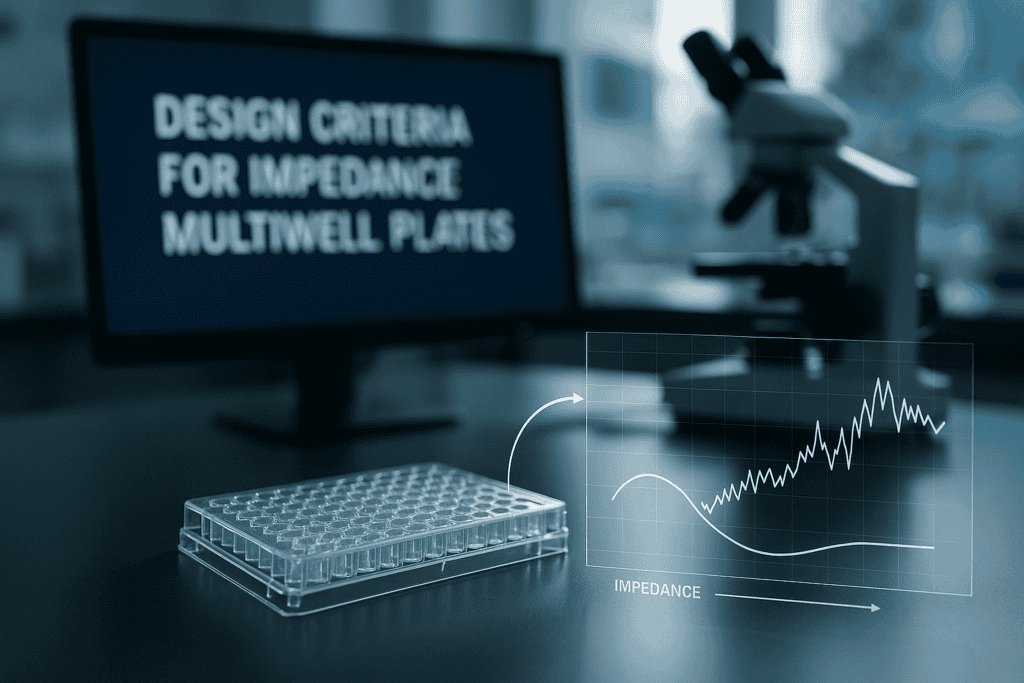
“`html
Critères de conception pour les plaques multipuits à impédance
Dans le paysage en évolution rapide des sciences de la vie, la demande de pratiques de laboratoire précises, reproductibles et efficaces ne cesse de croître. Les plaques multipuits à impédance représentent une avancée technologique clé, offrant des solutions robustes pour le criblage à haut débit, les études de prolifération cellulaire et les essais d'électrophysiologie. Comprendre les critères de conception de ces plaques avancées est essentiel pour les chercheurs, les gestionnaires de laboratoire et les professionnels de la biotechnologie qui cherchent à améliorer la précision et la productivité expérimentales.
Cet article aborde les aspects essentiels de la conception des plaques multi-puits d'impédance, de la sélection des matériaux et du traitement de surface aux processus de fabrication conformes aux normes cGMP et GMP. Les perspectives fournies ici visent à permettre aux professionnels de prendre des décisions éclairées qui correspondent à leurs besoins expérimentaux et réglementaires.
Développement de produits plastiques de laboratoire
Considérations relatives à la conception des plaques multipuits
Le développement de produits plastiques de laboratoire, en particulier les plaques multipuits à impédance, nécessite une approche méticuleuse de la conception pour la fabrication (DFM). Les considérations clés comprennent la sélection de formats de puits appropriés, tels que 6 à 384 puits, et l'adaptation des spécifications de conception pour prendre en charge diverses applications de culture cellulaire.
- Concentrez-vous sur les formats multi-puits pour répondre aux divers besoins des essais.
- Assurer la compatibilité avec les systèmes de manipulation automatisés et manuels.
Sélection des matériaux et traitements de surface
La sélection des matériaux joue un rôle essentiel dans la définition des performances des plaques multi-puits pour impédance. Le polystyrène (PS), le polypropylène (PP) et le copolymère d'oléfine cyclique (COC) sont couramment utilisés pour leur clarté optique et leur résistance chimique. Les traitements de surface, y compris le traitement pour culture tissulaire (TC) ou des revêtements spécialisés, améliorent davantage l'adhésion cellulaire et les performances des essais.
- Choisir les matériaux en fonction des exigences optiques et biologiques.
- Considérez les modifications de surface pour une meilleure interaction cellulaire.
Stratégies d'outillage et de développement
Du prototypage à la production
La transition des premiers prototypes à la production à grande échelle nécessite une planification stratégique et de la précision. Le prototypage initial est essentiel pour affiner les attributs de conception et garantir la fonctionnalité. L'outillage pilote facilite la production en petites séries pour valider les paramètres de conception avant de passer à l'outillage de pré-série et à l'échelle industrielle.
- Itérer les conceptions par la création de prototypes pour optimiser les performances.
- Utiliser des outils pilotes pour vérifier les métriques de conception.
Assurer la reproductibilité et la précision dimensionnelle
La cohérence entre les lots est un critère non négociable dans la fabrication des plaques multi-puits d'impédance. Cela exige un processus de production robuste et évolutif qui maintient la précision dimensionnelle et la reproductibilité. La mise en œuvre d'une validation approfondie du processus garantit que ces paramètres sont respectés, conformément à des normes de qualité strictes.
- Concentrez-vous sur l'obtention d'une reproductibilité élevée entre les exécutions de production.
- Implémentez des procédures de validation de processus rigoureuses.
Moulage par injection et contrôle de processus
Techniques de fabrication clés
Le moulage par injection est au cœur de la fabrication des plaques multipuits à impédance, offrant précision, évolutivité et rentabilité. Les stratégies de contrôle de processus utilisées sont cruciales pour garantir que chaque lot répond aux critères de qualité prédéfinis, soutenant ainsi les exigences strictes des environnements réglementés.
- Adoptez des pratiques de moulage par injection cohérentes pour l'assurance qualité.
- Exploitez des systèmes de contrôle de processus avancés pour de meilleurs résultats.
Validation des Processus et Documentation
Dans les environnements axés sur la réglementation, l'accent mis sur la validation des processus et la documentation ne saurait être surestimé. Un système de documentation robuste capture chaque aspect du processus de fabrication, de l'inspection des matières premières aux contrôles de qualité finaux, assurant la traçabilité et la conformité aux normes cGMP et GMP.
- Maintenir une documentation complète des lots pour la conformité réglementaire.
- Implémenter des protocoles de gestion du changement et de gestion des risques.
Continuez votre lecture pour explorer des perspectives et des stratégies plus avancées.
“`
“`html
Considérations environnementales dans la fabrication
Pratiques durables dans la production de plaques
Alors que le secteur des sciences de la vie évolue vers une plus grande durabilité, les fabricants de plaques multipuits à impédance intègrent des pratiques et des matériaux respectueux de l'environnement. Ce changement répond non seulement aux pressions réglementaires, mais aussi à la demande croissante des consommateurs soucieux de l'environnement. L'utilisation de matériaux recyclables et la minimisation des déchets lors du processus de moulage par injection jouent un rôle crucial dans cette transition.
- Choisissez des matériaux durables et recyclables dans la mesure du possible.
- Mettre en œuvre des stratégies de réduction des déchets pendant la production.
Efficacité énergétique dans le processus de fabrication
La consommation d'énergie est un élément essentiel du processus de fabrication, en particulier pour les procédures énergivores comme le moulage par injection. Les fabricants peuvent réduire considérablement leur empreinte carbone en employant des machines à haut rendement et en optimisant les calendriers de production pour réduire le temps d'inactivité. Par exemple, certaines installations ont intégré avec succès des sources d'énergie renouvelable, améliorant ainsi leur profil de durabilité.
- Investissez dans des équipements de moulage par injection économes en énergie.
- Intégrer des sources d'énergie renouvelable pour alimenter la production.
Techniques avancées d'assurance qualité
Mise en œuvre de systèmes automatisés de contrôle qualité
Le contrôle qualité est primordial pour garantir la fiabilité et la sécurité des plaques multipuits d'impédance. Les systèmes automatisés équipés de vision artificielle et d'intelligence artificielle (IA) peuvent détecter les défauts et les incohérences avec une plus grande précision. Ces technologies permettent des inspections en temps réel, réduisant la probabilité d'erreurs humaines et améliorant la cohérence globale de la production.
- Déployer des outils d'inspection pilotés par l'IA pour une détection améliorée des défauts.
- Utilisez l'analyse de données en temps réel pour surveiller en continu les indicateurs de qualité.
Mesures de Contrôle Statistique des Processus (MSP)
La maîtrise statistique des procédés (MSP) est une méthodologie précieuse appliquée pour surveiller et contrôler les processus de production grâce à des techniques statistiques. En représentant graphiquement les variations et les tendances des données de fabrication, la MSP permet des ajustements rapides qui empêchent les écarts potentiels par rapport aux normes de qualité, garantissant ainsi que chaque lot de plaques répond aux exigences rigoureuses des applications des sciences de la vie.
- Adopter le CEP pour surveiller activement la qualité de la production.
- Former le personnel à l'interprétation des données de maîtrise statistique des procédés (MSP) pour le contrôle proactif des processus.
Gestion de la chaîne d'approvisionnement et optimisation logistique
Optimisation des flux de matières et de la gestion des stocks
Une gestion efficace de la chaîne d'approvisionnement est essentielle pour maintenir la qualité et la disponibilité des produits de laboratoire. Des stratégies telles que les systèmes de gestion des stocks juste-à-temps (JAT) et les principes de chaîne d'approvisionnement allégée (lean) réduisent les déchets et assurent la livraison rapide des matières premières et des produits finis. Ces pratiques sont de plus en plus adoptées pour optimiser le flux des matériaux et minimiser les coûts de possession.
- Implémenter le Juste-à-Temps (JAT) pour une gestion efficace des stocks.
- Appliquer les principes du lean pour rationaliser les opérations de la chaîne d'approvisionnement.
Améliorer l'efficacité de la distribution
La portée mondiale de la recherche scientifique nécessite des canaux de distribution efficaces pour livrer des plaques multipuits d'impédance dans le monde entier. Des solutions logistiques avancées, y compris des logiciels d'optimisation d'itinéraires, garantissent une livraison rapide et sûre des produits. Ces systèmes peuvent également réduire les coûts de transport et les émissions, conformément aux engagements environnementaux.
- Utiliser un logiciel de logistique pour optimiser les itinéraires de livraison.
- Collaborez avec des distributeurs fiables pour assurer l'intégrité de la chaîne d'approvisionnement.
Conformité réglementaire et certification
Naviguer dans des paysages réglementaires complexes
La conformité aux normes régionales et internationales est essentielle pour la fabrication de plaques multipuits d'impédance. Cela inclut le respect des réglementations ISO et le maintien de certifications telles que le marquage CE pour les produits distribués dans l'Espace économique européen. Les fabricants doivent se tenir au courant des lignes directrices évolutives pour assurer une conformité continue.
- Restez informé des changements réglementaires internationaux et locaux.
- Obtenir et maintenir les certifications qualité pertinentes.
Maintenir des pratiques de documentation robustes
Documenter chaque étape de la production n'est pas seulement une exigence réglementaire, mais aussi une pratique essentielle pour le dépannage et l'amélioration continue. Les fabricants utilisent des systèmes de documentation électronique pour conserver des dossiers détaillés des matériaux, des processus et des inspections, ce qui permet de rationaliser les audits et d'assurer la traçabilité.
- Adopter une documentation électronique pour une tenue de dossiers complète.
- Examinez régulièrement les pratiques de documentation pour identifier les améliorations.
Développement de produits axé sur le client
Intégrer les commentaires aux améliorations de conception
Les commentaires des clients sont essentiels pour affiner la conception et la fonctionnalité des plaques multipuits d'impédance. En recherchant et en analysant activement les points de vue des utilisateurs finaux, les fabricants peuvent prioriser les améliorations qui correspondent aux attentes des utilisateurs et aux besoins du marché, augmentant ainsi l'adoption des produits et la satisfaction des clients.
- Collecter et analyser les retours des utilisateurs pour guider les améliorations de produits.
- Engagez-vous auprès des clients pendant le processus de développement du produit.
Solutions de plaques personnalisées pour diverses applications
Pour répondre aux divers besoins des professionnels des sciences de la vie, les plaques multipuits à impédance personnalisées offrent des solutions sur mesure pour des applications spécifiques. La flexibilité de la conception permet des adaptations des formats de puits, des revêtements et des intégrations de capteurs. Par exemple, les chercheurs qui étudient de nouveaux modèles de croissance cellulaire bénéficient de plaques spécialement conçues pour accueillir leurs tests uniques.
- Proposer des options de plaques personnalisables pour répondre à des besoins spécifiques.
- Collaborer avec les clients pour développer des solutions sur mesure.
Ensuite, nous conclurons avec les points clés à retenir, les métriques et une conclusion percutante.
“`
“`html
Fabrication axée sur l'innovation
Adopter l'automatisation dans la production
L'avènement de l'automatisation dans la fabrication présente des opportunités significatives pour améliorer l'efficacité et la productivité dans la production de plaques multipuits à impédance. En intégrant la robotique et les technologies d'automatisation avancées, les fabricants peuvent atteindre une précision et une qualité uniforme tout en réduisant les coûts de main-d'œuvre humaine. Les systèmes automatisés permettent également d'adapter rapidement les opérations pour répondre à une demande croissante sans compromettre la qualité ou les performances.
- Intégrer la robotique pour améliorer la vitesse et la précision de la production.
- Utiliser des systèmes automatisés pour des processus de fabrication évolutifs.
Investir dans la recherche et le développement (R&D)
L'investissement continu dans la recherche et le développement est essentiel pour rester à la pointe de l'innovation dans le secteur des sciences de la vie. En finançant des initiatives de R&D, les fabricants peuvent explorer de nouveaux matériaux, technologies et méthodologies qui améliorent les performances et l'applicabilité des plaques multipuits d'impédance. Cet engagement envers l'innovation favorise non seulement un avantage concurrentiel, mais enrichit également la communauté scientifique avec des outils avancés.
- Dédier des ressources à la R&D continue pour le perfectionnement des produits.
- Explorer de nouveaux matériaux et de nouvelles technologies pour améliorer les performances des plaques.
Conclusion
En résumé, la fabrication et le développement de plaques multipuits d'impédance se situent au confluent de la durabilité, de l'innovation et des priorités centrées sur le client. En exploitant des pratiques durables telles que l'utilisation de matériaux recyclables et de machines économes en énergie, les fabricants réduisent leur empreinte environnementale, répondant ainsi aux attentes des consommateurs et aux exigences réglementaires. Les systèmes avancés d'assurance qualité, tels que les inspections basées sur l'IA et le contrôle statistique des processus, maintiennent des normes rigoureuses tout en facilitant l'amélioration continue grâce à des retours d'information en temps réel.
Simultanément, l'optimisation de la logistique de la chaîne d'approvisionnement et l'adoption de protocoles de conformité réglementaire robustes garantissent que les fabricants restent compétitifs sur un marché mondial en constante évolution. En alignant les pratiques opérationnelles sur les attentes environnementales et sociétales évolutives, l'industrie favorise une atmosphère propice à l'innovation et à l'excellence. L'engagement des clients tout au long du cycle de vie du développement des produits adapte davantage les efforts de fabrication aux applications du monde réel, permettant des solutions personnalisées qui répondent à divers besoins scientifiques.
Alors que nous nous projetons vers l'avenir, l'intégration de l'automatisation et de la recherche de pointe promet des avancées sans précédent. Les fabricants engagés dans ces priorités stratégiques ne stimuleront pas seulement la découverte scientifique, mais contribueront également de manière significative aux objectifs mondiaux de développement durable. Ce faisant, ils se positionneront comme des leaders dans l'industrie des sciences de la vie, fournissant des outils essentiels qui permettront aux chercheurs du monde entier de repousser les limites du savoir.
Pour les fabricants comme pour les chercheurs, l'occasion se présente de participer à cette évolution dynamique. En adoptant l'innovation, la durabilité et la collaboration, nous ouvrons collectivement la voie à un monde plus sain et plus durable. Que cela soit un appel retentissant à investir dans des technologies et des pratiques de transformation qui façonneront l'avenir de la science. Ensemble, faisons progresser et créons un impact durable, une plaque multipuits à la fois.
“`
Gérer le risque lié aux matières premières lors d'une montée en puissance rapide de projet

“`html
Gérer le risque lié aux matières premières lors d'une montée en puissance rapide de projet
Comprendre la variabilité des matières premières
Variabilité d'un lot à l'autre dans les matériaux biologiques
Les matières premières biologiques, telles que le sérum bovin fœtal (SBF) et le sérum bovin, sont intrinsèquement variables en raison de leur origine biologique. Cette variabilité pose des défis importants lors de la mise à l'échelle des projets, où des performances constantes sont essentielles. Chaque lot de SBF peut différer en termes de facteurs de croissance, de cytokines et d'autres composants du sérum essentiels au succès de la culture cellulaire.
- Assurer des tests de lots rigoureux et une documentation pour vérifier la cohérence entre les lots.
Continuez votre lecture pour découvrir des perspectives et des stratégies plus avancées concernant la gestion des matières premières.
Mesures de contrôle de la qualité
Établir des protocoles de test robustes
La mise en œuvre de mesures de contrôle qualité rigoureuses permet d'atténuer les risques associés aux matières premières. Les protocoles de test doivent être normalisés pour évaluer les attributs critiques tels que la stérilité, les niveaux d'endotoxines et la performance de croissance. L'utilisation de systèmes d'imagerie de cellules vivantes compatibles avec les incubateurs, tels que ceux référencés sur zencellowl.com, peut surveiller en continu le comportement des cellules et documenter les effets du sérum, améliorant ainsi la reproductibilité et la précision de la documentation.
- Adopter des processus d'assurance qualité cohérents pour identifier les variations de lots à un stade précoce.
Continuez votre lecture pour découvrir des perspectives et des stratégies plus avancées concernant la gestion des matières premières.
Traçabilité et documentation
Le rôle de la tenue de registres complète
La tenue de registres détaillés des sources et des caractéristiques des matières premières est essentielle pour identifier les sources de variabilité. Une traçabilité adéquate permet aux chercheurs de déceler les différences dans les résultats expérimentaux corrélées à des lots de matières premières spécifiques. Par exemple, lors de l'utilisation de produits biologiques dérivés de l'homme, la variabilité des donneurs ajoute une couche de complexité supplémentaire.
- Assurer la traçabilité des matières premières pour faciliter l'analyse des causes profondes et l'optimisation des processus.
Continuez votre lecture pour découvrir des perspectives et des stratégies plus avancées concernant la gestion des matières premières.
Stratégies de minimisation des risques
Réservation et services de test par lot
Les services de réservation par lots et de tests proactifs offrent une approche stratégique pour gérer le risque lié aux matières premières lors d'une mise à l'échelle rapide. En sécurisant et en testant des quantités plus importantes d'un même lot, les chercheurs peuvent minimiser les variables qui affectent la reproductibilité expérimentale. Ces services s'alignent sur une planification complète visant à contrer les perturbations potentielles.
- Planifier des réservations par lots pour assurer une disponibilité continue et une prévisibilité des performances.
Continuez votre lecture pour découvrir des perspectives et des stratégies plus avancées concernant la gestion des matières premières.
Stabilité à long terme du projet
Rôle de l'approvisionnement personnalisé dans la stabilité
Approvisionnement biologique personnalisé, comme on le voit avec des fournisseurs tels que SeamlessBio, permet aux laboratoires d'adapter les matériaux aux besoins expérimentaux spécifiques, soutenant ainsi la stabilité des projets à long terme. Les solutions personnalisées peuvent répondre à des exigences uniques en termes de composition biologique et de conformité réglementaire.
- Optez pour un approvisionnement biologique personnalisé afin d'adapter les matériaux à des applications spécifiques.
Continuez votre lecture pour découvrir des perspectives et des stratégies plus avancées concernant la gestion des matières premières.
“`
“`html
Intégration de solutions numériques pour une visibilité accrue
Exploiter la technologie pour suivre et gérer les matières premières
L'intégration de solutions numériques, telles que les systèmes de planification des ressources d'entreprise (ERP) et les systèmes de gestion des informations de laboratoire (LIMS), peut révolutionner la gestion de la logistique et de la qualité des matières premières. Ces technologies offrent un accès complet aux données, permettant un suivi plus efficace des conditions et de l'origine des matières premières grâce à des tableaux de bord et des rapports avancés. Par exemple, les plateformes basées sur le cloud peuvent offrir des alertes en temps réel pour les problèmes potentiels, réduisant ainsi le temps de résolution et améliorant la transparence entre les départements.
- Implémenter des outils numériques intégrés pour centraliser les données matérielles et faciliter la collaboration.
Gestion de la relation fournisseur
Bâtir des partenariats stratégiques pour des chaînes d'approvisionnement fiables
Développer des relations solides avec les fournisseurs de matières premières est essentiel pour la gestion des risques. En considérant les fournisseurs comme des partenaires stratégiques, les organisations peuvent collaborer pour améliorer la qualité et résoudre rapidement les problèmes. Un exemple notable est la mise en place de tableaux de bord fournisseurs qui évaluent les indicateurs de performance et responsabilisent. De plus, favoriser des canaux de communication ouverts peut aider les deux parties à aborder de manière préventive les préoccupations communes, assurant une chaîne d'approvisionnement cohérente.
- Établir des lignes de communication claires et des indicateurs de performance avec tous les fournisseurs.
Conformité réglementaire et meilleures pratiques
Conformité aux normes pour atténuer les risques juridiques
Le secteur des sciences de la vie est fortement réglementé, exigeant une conformité rigoureuse aux normes telles que les BPFc et les certifications ISO. L'adoption d'une position proactive en matière de conformité réglementaire permet de renforcer la crédibilité et de minimiser les risques juridiques lors des phases d'expansion. Les organisations devraient effectuer des audits réguliers et intégrer des cadres de conformité pour maintenir leur respect. Par exemple, des contrôles de conformité préventifs peuvent permettre d'économiser les coûts associés à d'éventuelles pénalités et rappels.
- Examinez et auditez régulièrement les processus pour vous aligner sur les exigences réglementaires évolutives.
Optimisation de la gestion des stocks
Atteindre un équilibre entre les niveaux de stock et la demande
Une gestion efficace des stocks est cruciale lors de la mise à l'échelle pour éviter à la fois les pénuries et les surstocks. La mise en œuvre de stratégies juste-à-temps (JAT) ou de calculs de stocks de sécurité peut optimiser les niveaux de stock, réduire le gaspillage et libérer du capital. Cette approche a été adoptée avec succès par des entreprises comme Tesla, qui utilise l'inventaire JAT dans sa chaîne d'approvisionnement pour répondre aux demandes élevées de mise à l'échelle de la production sans compromettre l'efficacité.
- Utilisez des outils de gestion des stocks pour prédire la demande et ajuster les niveaux de stock en conséquence.
Analyse prédictive en gestion des risques
Utiliser les données pour éclairer la planification future
L'analytique prédictive est un outil puissant pour anticiper les besoins en matières premières et identifier les facteurs de risque potentiels. En analysant les données historiques, les organisations peuvent prévoir les tendances et se préparer aux fluctuations de la disponibilité des matériaux. Cette approche a été utilisée par Unilever pour prédire les changements de coûts des matières premières et ajuster les stratégies d'approvisionnement en conséquence, démontrant ainsi son efficacité dans l'atténuation des risques financiers.
- Mettre en œuvre des plateformes d'analyse de données pour exploiter les informations au service de la prise de décision stratégique.
Formation et développement des employés
Donner aux équipes les moyens de gérer efficacement les défis de la mise à l'échelle
Investir dans la formation des employés garantit que le personnel est bien équipé pour gérer les complexités de la gestion des matières premières lors de la mise à l'échelle. La formation continue sur les dernières pratiques et technologies de l'industrie favorise une culture d'innovation et d'adaptabilité. Un excellent exemple est Johnson & Johnson, qui met régulièrement à jour sa main-d'œuvre sur les meilleures pratiques et les nouvelles technologies, améliorant ainsi les performances globales des projets.
- Établir des programmes de formation réguliers pour tenir le personnel informé et qualifié.
Amélioration Continue et Systèmes de Retour d'Information
Promouvoir une approche agile grâce à des processus itératifs
Adopter un état d'esprit d'amélioration continue peut mener à une réussite durable des projets dans des environnements en évolution rapide. Encourager les boucles de rétroaction et les améliorations itératives des processus permet d'identifier les goulets d'étranglement et de mettre en œuvre des changements rapidement. Des entreprises comme Toyota ont prospéré en utilisant l'approche Kaizen, instillant l'amélioration continue à tous les niveaux de l'organisation.
- Intégrez des mécanismes de retour d'information réguliers pour affiner les processus et améliorer l'efficacité.
Ensuite, nous conclurons avec les points clés à retenir, les métriques et une conclusion percutante.
“`
“`html
Tirant parti de l'approvisionnement stratégique
Amélioration des stratégies d'approvisionnement en matières premières
L'approvisionnement stratégique est essentiel pour naviguer efficacement dans les complexités de l'approvisionnement en matières premières lors d'une mise à l'échelle rapide. En analysant les données de dépenses et les marchés des fournisseurs, les organisations peuvent identifier les opportunités de réduction des coûts et consolider leur base de fournisseurs. Cette méthode rationalise les processus d'approvisionnement et améliore les capacités de négociation, favorisant de meilleures relations avec les fournisseurs et assurant une efficacité des coûts. Une bonne pratique consiste à mettre en œuvre une approche de gestion par catégorie, qui alloue les ressources en fonction de l'importance stratégique des matériaux.
- Adopter des méthodologies d'approvisionnement stratégique pour optimiser l'efficacité et la rentabilité des achats.
Technologies Avancées de la Chaîne d'Approvisionnement
Révolutionner les opérations de la chaîne d'approvisionnement avec des innovations
Les technologies émergentes telles que la blockchain et les appareils de l'Internet des objets (IdO) transforment les chaînes d'approvisionnement en offrant des niveaux de transparence et de contrôle sans précédent. La blockchain peut fournir des informations détaillées sur les parcours des matières premières, améliorant ainsi la traçabilité et réduisant la fraude. Pendant ce temps, les appareils IdO facilitent la surveillance en temps réel des conditions de stockage, aidant à maintenir l'intégrité des matériaux. En intégrant ces technologies avancées, les entreprises peuvent améliorer la résilience et l'agilité de leur chaîne d'approvisionnement, des facteurs critiques pour soutenir une mise à l'échelle rapide.
- Intégrer les technologies de blockchain et d'IoT pour améliorer la transparence et l'efficacité de la chaîne d'approvisionnement.
Cadres de gestion des risques
Mise en œuvre d'approches structurées pour naviguer dans les incertitudes
Les cadres de gestion des risques efficaces sont essentiels pour anticiper les perturbations potentielles. Ces cadres impliquent d'identifier les risques possibles, d'en évaluer l'impact et d'élaborer des stratégies d'atténuation. Par exemple, la planification par scénarios permet aux organisations de se préparer à diverses conditions de marché, assurant ainsi la continuité. En intégrant la gestion des risques dans la culture organisationnelle, les entreprises peuvent renforcer leur résilience et s'adapter plus rapidement aux changements, ce qui leur confère un avantage concurrentiel dans des environnements en évolution rapide.
- Développer des cadres de gestion des risques complets pour anticiper et atténuer les risques de la chaîne d'approvisionnement.
Conclusion
En résumé, la gestion réussie des risques liés aux matières premières lors de la mise à l'échelle rapide des projets nécessite une approche multidimensionnelle, combinant l'intégration numérique, des partenariats stratégiques avec les fournisseurs, la conformité réglementaire, une gestion optimisée des stocks, l'analyse prédictive et le développement proactif des employés. L'amélioration des stratégies d'approvisionnement grâce à un sourcing stratégique, l'exploitation des technologies avancées de la chaîne d'approvisionnement et la mise en œuvre de cadres de gestion des risques solides sont des étapes essentielles pour atténuer les risques et assurer une croissance harmonieuse.
Cet article a exposé des pistes d'action concrètes pour les organisations désireuses d'exceller dans la gestion des défis liés aux matières premières. En adoptant ces stratégies, les entreprises peuvent non seulement protéger leurs opérations contre les perturbations, mais aussi réaliser de plus grandes efficacités et des économies de coûts, favorisant ainsi une croissance durable. Chaque section de ce guide a mis en lumière des outils et des méthodologies pratiques qui sont essentiels pour maintenir et améliorer l'intégrité de la chaîne d'approvisionnement.
Alors que le rythme des affaires continue de s'accélérer, il est crucial de saisir ces opportunités pour affiner et améliorer la gestion des matières premières. Nous encourageons les organisations à intégrer judicieusement ces stratégies dans leurs opérations, favorisant ainsi une infrastructure de chaîne d'approvisionnement résiliente et adaptable. Avec les bons outils, technologies et équipes en place, votre organisation peut aborder l'avenir avec confiance, transformer les défis en opportunités et prospérer dans le paysage concurrentiel de l'industrie des sciences de la vie.
Que ceci soit le catalyseur de votre voyage vers l'excellence dans la gestion des risques liés aux matières premières. Adoptez l'innovation et la prévoyance, et prenez des mesures décisives dès aujourd'hui. Votre engagement envers ces principes permettra non seulement d'atténuer les risques, mais aussi de propulser votre organisation vers un succès durable et un leadership dans votre domaine.
“`
Early Detection of Cell Culture Contamination Through Continuous Live-Cell Imaging
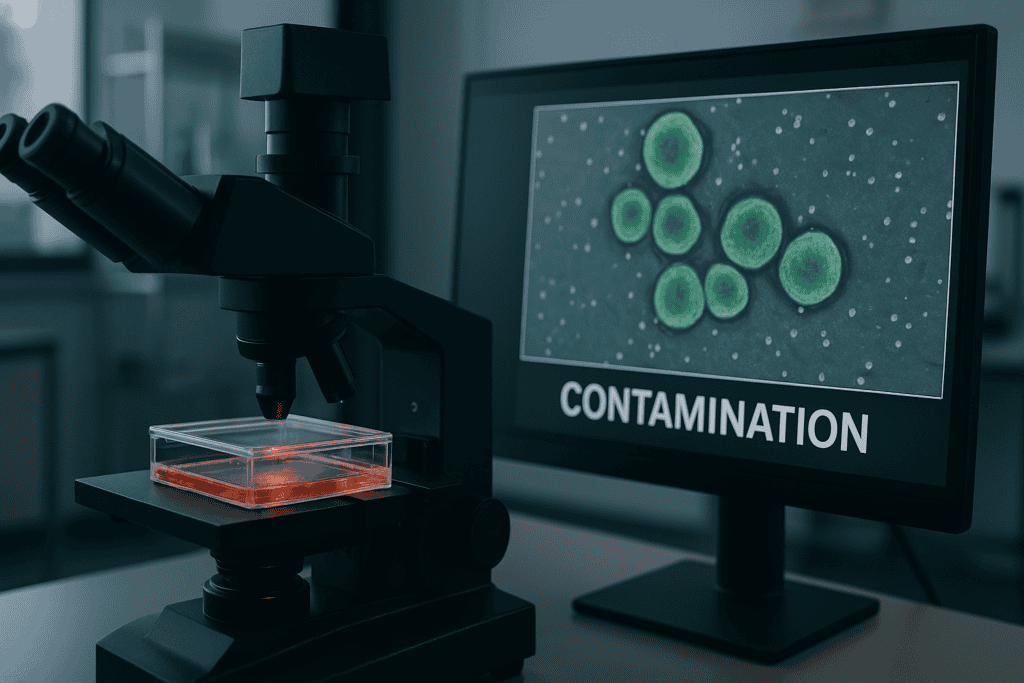
“`html
Early Detection of Cell Culture Contamination Through Continuous Live-Cell Imaging
In the realm of cell culture research, maintaining uncontaminated and healthy cultures is paramount for accurate experimental outcomes. However, the detection of contamination, whether microbial or cross-contamination, remains a persistent challenge. Early detection of cell culture contamination through continuous live-cell imaging offers a cutting-edge solution that promises to enhance research reliability and efficiency. This article delves into the significance, challenges, and technological advances of live-cell imaging, providing researchers, lab managers, and biotech professionals with an in-depth understanding of its applications and benefits in modern laboratories.
Challenges in Traditional Cell Culture Monitoring
Limitations of Conventional Methods
Traditional methods of assessing cell culture health often rely on intermittent inspections and dated techniques such as manual microscopy and pH indicator tests. These approaches, while foundational, are fraught with limitations that hinder timely detection of contaminants. Manual inspections are time-consuming and subjective, leading to inconsistencies in detection efficiency. Additionally, the use of endpoint assays restricts researchers to periodic observations, potentially missing critical early signs of contamination, which can compromise experimental integrity.
- Inconsistent results due to human error and subjective analysis.
- Delayed detection of contamination impacting experimental timelines.
- Constraints in continuous monitoring with periodic manual inspections.
Advances in Live-Cell Imaging Technology
Revolutionizing Detection with Automation
The advent of sophisticated live-cell imaging technologies is bridging the gap left by traditional methods. Automated, continuous live-cell imaging systems facilitate real-time monitoring of cell cultures, allowing researchers to identify contamination much earlier than previously possible. This technological advancement transforms how cells are observed, as continuous imaging captures dynamic changes that static imaging could overlook.
- Real-time imaging enhances early detection of contamination.
- Reduced manual intervention increases reproducibility.
- Automation allows for capturing subtle and rapid cellular changes.
Implementing Live-Cell Imaging in Laboratory Workflows
Practical Integration and Benefits
Integrating live-cell imaging into laboratory workflows requires adaptation but offers substantial benefits. For instance, the zenCELL owl, a compact and incubator-compatible live-cell imaging system, exemplifies how embedding such technology can streamline cell culture monitoring. It allows for real-time observation within the incubator environment, maintaining optimal conditions for cell growth and minimizing disruptions. This results in higher data quality and reproducibility, essential for robust scientific findings.
- Seamless integration into existing workflows with minimal disruption.
- Continuous monitoring ensures high-quality data capture.
- Incubator-friendly design maintains stable culture conditions.
Continuez votre lecture pour explorer des perspectives et des stratégies plus avancées.
“`
“`html
Unlocking the Potential of Real-Time Data Analytics
Enhancing Cell Culture Monitoring with Data-Driven Insights
The integration of continuous live-cell imaging technologies in laboratories goes hand in hand with advanced data analytics. Real-time data analytics enables the transformation of raw imaging data into actionable insights. By leveraging AI and machine learning algorithms, researchers can identify patterns and predict potential contamination events even before they become apparent through visual inspection. This analytical approach adds a new dimension to cell culture monitoring, allowing for predictive maintenance and preventive interventions.
- Utilize AI-powered analytical tools to enhance the reliability of contamination detection.
- Implement predictive models to anticipate contamination and adjust protocols proactively.
Case Study: Enhancing Research Precision with Live-Cell Imaging
Real-World Application Demonstrates Improved Outcomes
A leading biotech firm implemented continuous live-cell imaging to enhance its stem cell research. By integrating this technology, they achieved a 40% reduction in experimental downtime caused by contamination. The system facilitated early detection, allowing for timely intervention and preserving valuable research integrity. This case study emphasizes the importance of adopting innovative imaging solutions to maintain high standards of research quality.
- Consider real-world success stories to guide technological investments in laboratory settings.
- Implement imaging systems with proven track records to ensure continuity and efficiency in research.
Maximizing Efficiency with Scalable Solutions
Adjustable Imaging Systems for Diverse Laboratory Needs
Not all laboratories are identical, and scalability is a significant factor when considering live-cell imaging solutions. Modular systems, such as the Olympus Scan^R or the IncuCyte S3, offer flexibility to accommodate various research scales and complexities. These systems can easily be expanded or tailored to meet specific laboratory requirements, offering the adaptability needed to tackle diverse research challenges.
- Opt for modular imaging systems that can grow with your lab’s needs.
- Evaluate the potential for future scalability when selecting imaging technologies.
Ensuring Data Security and Compliance
Safeguarding Research Integrity in the Digital Age
As laboratory workflows become increasingly digital, ensuring data security and regulatory compliance becomes paramount. Live-cell imaging systems store vast amounts of data, which needs to be protected against unauthorized access and loss. Adopting robust cybersecurity measures and complying with regulations such as GDPR or HIPAA is critical to maintaining the integrity and confidentiality of research data, thus safeguarding scientific findings.
- Enforce strong encryption and access control policies for data generated by imaging systems.
- Stay informed about the latest compliance requirements relevant to your research area.
Training and Skill Development for Research Personnel
Empowering Researchers with the Necessary Skills
The successful implementation of live-cell imaging relies heavily on the competency of the research personnel. Investing in comprehensive training programs helps laboratory staff to effectively use these advanced technologies. Workshops, online courses, and collaborative projects provide opportunities for skill enhancement, ensuring researchers can maximize the potential of live-cell imaging tools while minimizing operational errors.
- Encourage continuous learning and professional development among laboratory personnel.
- Partner with technology providers for hands-on training and support.
Evaluating TCO (Total Cost of Ownership)
Understanding the Investment Value in Imaging Systems
When considering live-cell imaging systems, evaluating the total cost of ownership (TCO) is crucial. Beyond the initial purchase price, laboratories should account for installation costs, ongoing maintenance, software updates, and potential downtime. A comprehensive TCO analysis helps in making informed decisions, demonstrating the long-term value and financial viability of adopting continuous live-cell imaging systems.
- Conduct a detailed TCO analysis to understand the financial commitment of imaging systems.
- Consider both direct and indirect costs associated with the technology adoption.
Fostering Collaborative Research with Imaging Platforms
Enabling Cross-Disciplinary Collaboration Through Shared Access
Live-cell imaging platforms can also serve as a catalyst for cross-disciplinary collaboration. By providing shared access to imaging data and cloud-based platforms, researchers from multiple disciplines can collaborate and contribute insights, fostering a more cohesive and integrated research environment. This collaborative approach enhances innovation and accelerates the pace of discovery.
- Promote a culture of openness and collaboration across different research teams.
- Utilize shared platforms to integrate findings and perspectives from diverse fields.
Ensuite, nous conclurons avec les points clés à retenir, les métriques et une conclusion percutante.
“`
“`html
Leveraging Automation in Live-Cell Imaging
Streamlining Workflows for Enhanced Productivity
Automation in live-cell imaging presents a transformative opportunity for laboratories seeking to improve efficiency and accuracy. By automating repetitive and time-consuming tasks, researchers can focus more on data analysis and interpretation. Advanced imaging systems now include automated features, such as image acquisition and analysis scripts, which minimize human error and ensure consistency in data collection. Moreover, integrated software platforms simplify image processing and interpretation, further enhancing productivity in research settings.
- Adopt imaging systems with built-in automation capabilities to simplify workflows.
- Explore software solutions that integrate with existing laboratory platforms for seamless operation.
Integrating Live-Cell Imaging into Existing Workflows
Navigating Compatibility and Flexibility Challenges
The integration of live-cell imaging systems into pre-existing laboratory workflows can pose challenges, especially regarding compatibility and adaptability. However, these challenges can be addressed through careful planning and selection of versatile imaging technologies. By opting for solutions that offer seamless integration with current lab equipment and data systems, researchers can ensure minimal disruption to ongoing projects. Additionally, ensuring flexibility in imaging systems allows labs to adapt to evolving research needs while maintaining workflow cohesiveness.
- Evaluate imaging systems for compatibility with current laboratory infrastructure.
- Choose flexible solutions that can be tailored to fit unique research demands.
Advancements and Future Directions in Live-Cell Imaging
Embracing Innovation for Next-Generation Research
The field of live-cell imaging continues to evolve rapidly, with advancements enhancing the resolution, speed, and scope of data acquisition. Future directions point towards integrating more sophisticated AI algorithms and machine learning techniques, allowing for real-time pattern recognition and data interpretation. Additionally, as quantum and digital imaging technologies advance, researchers can anticipate new levels of image clarity and detail, further unlocking insights into cell behavior and biology.
- Stay updated on emerging technologies that could redefine live-cell imaging applications.
- Invest in ongoing research and development to pioneer new methodologies in imaging.
Conclusion
From real-time monitoring to enhanced collaboration and predictive analytics, continuous live-cell imaging presents myriad possibilities for modern scientific research. The integration of automation and advanced data analytics within imaging platforms allows researchers to transcend traditional boundaries, driving efficiency, and innovation.
This comprehensive approach to live-cell imaging undeniably elevates research standards, ensuring high levels of data accuracy and process reliability. As laboratories continue to embrace digital transformation within their workflows, the importance of securing data and maintaining regulatory compliance remains paramount, offering peace of mind while exploring groundbreaking discoveries.
Investing in live-cell imaging systems is not merely an enhancement of existing infrastructures but a vital step toward empowering researchers with unprecedented observational capabilities. As the scientific community strives towards more ambitious goals, leveraging high-resolution imaging technologies to elucidate complex biological processes is critical.
The journey of continuous improvement in live-cell imaging techniques is ongoing, spurred by rapid technological progress and inter-disciplinary collaboration. Laboratories that adopt this mindset position themselves at the forefront of scientific advancement, nurturing an environment where innovation thrives.
As we stand at the cusp of a new era in biological research, let us continue to embrace and explore these sophisticated imaging technologies. May our collective endeavors in uncovering cellular mysteries inspire future generations of scientists, paving the way towards revolutionary discoveries that redefine our understanding of life itself. Seize the potential of live-cell imaging and allow its technologies to transform the trajectory of your research.
“`