“`html
Silent Killers: Identifying Media Degradation Before it Ruins Your Data
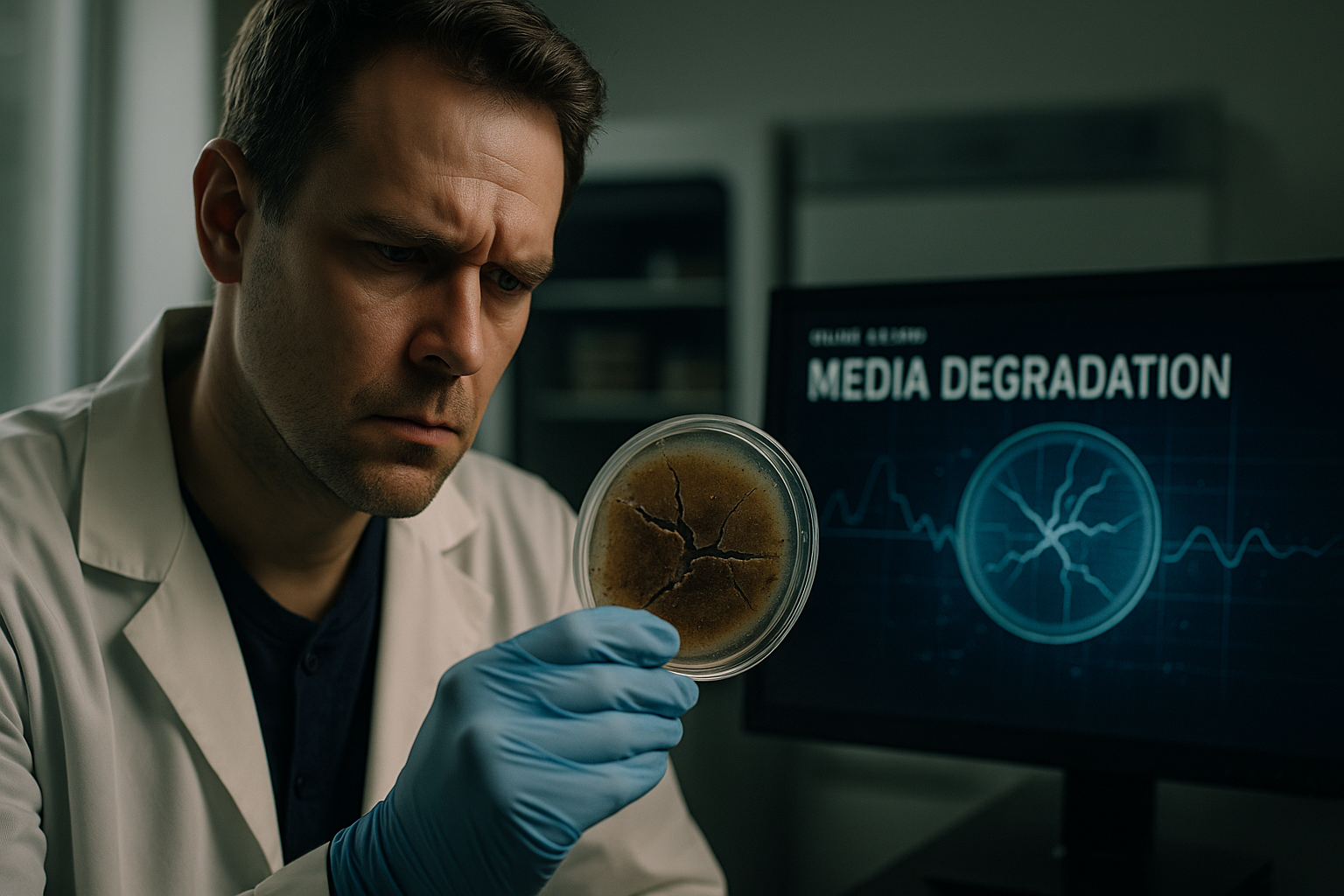
In the intricate world of cell culture research, the health of your cell media is paramount. Yet, often tucked away in the background, media degradation stealthily undermines experimental outcomes. Such undetected degradation can lead to inconsistent results, impacting the reliability and reproducibility of your research data. This article delves into the hidden dangers of media degradation, sheds light on modern solutions for identifying these silent killers, and equips you with strategies to safeguard your cell culture experiments.
Common Challenges and Limitations of Traditional Approaches
Understanding Media Degradation
Media degradation is a challenging issue in cell culture research due to several factors, including variations in pH, depletion of nutrients, and accumulation of metabolic waste. Traditional approaches often involve manual monitoring and periodic media replacement. However, these methods are fraught with challenges, such as timing inaccuracies and the potential for human error, leading to compromised data quality.
- Manual monitoring is time-intensive and may miss critical changes.
- Batch-to-batch variability can introduce inconsistencies.
- Environmental fluctuations impact media stability.
Impact on Data Integrity
Without early detection, media degradation can significantly undermine data integrity. Cells exposed to suboptimal conditions may exhibit altered growth patterns or physiological responses, which can skew results and reduce the reliability of biological assays.
- Results may become irreproducible due to undetected changes.
- Experimental findings could be misleading if media conditions are compromised.
Continue reading to explore more advanced insights and strategies.
Technological Advances and Automation Trends
Rise of Automation in Cell Culture Monitoring
With advancements in technology, automation has become a cornerstone of modern laboratory practices, addressing the pitfalls of traditional methodologies. Incubator-based imaging systems and automated monitoring tools now deliver continuous oversight without human intervention, allowing for more accurate and reliable data collection.
- Reduces manual errors and labor-intensive tasks.
- Provides real-time updates on media condition and cell health.
The Role of Live-Cell Imaging
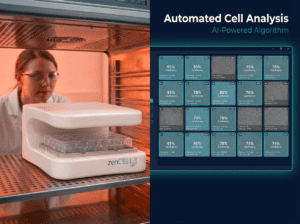
Live-cell imaging technology, such as the zenCELL owl, plays a pivotal role in transforming cell culture workflows. This compact system is placed directly in the incubator, enabling non-invasive and continuous monitoring of cell cultures. By providing real-time insights into cell activity and health, it markedly enhances the reproducibility and reliability of experiments.
- Real-time visualization aids in understanding dynamic biological processes.
- Minimizes disruption to cell environments during observation.
Continue reading to explore more advanced insights and strategies.
“`
—
**Meta Title:** Silent Killers: Identify Media Degradation in Cell Culture
**Meta Description:** Discover how to detect media degradation early and protect your cell culture data quality with insights into live-cell imaging and automation solutions.
“`html
Understanding and Implementing Automation Tools
Streamlining with State-of-the-Art Technologies
Automation tools have revolutionized the management of media degradation in cell cultures. By integrating these tools, researchers can significantly improve data accuracy and prolong the viability of cultures. Technologies like sensor-augmented incubators provide continuous feedback on temperature, humidity, and nutrient levels, enabling real-time adjustments to maintain optimal conditions.
- Immediate alerts decrease response time to critical changes.
Advanced Sensors: A Deep Dive
Precision Monitoring with Real-Time Data
Advanced sensor technologies, such as biosensors and optical sensors, are harnessed to detect subtle changes in media composition. These tools offer unparalleled sensitivity, capable of identifying even minute fluctuations in pH and gas levels that traditional methods might overlook. For instance, biosensors can provide real-time kinetic analyses of cell metabolism, leading to precise media corrections.
- Integrate biosensors for continuous monitoring and quick diagnostic insights.
Data Analytics in Automated Systems
Harnessing Big Data for Predictive Insights
As automation tools gather vast amounts of data, advanced analytics becomes essential. Machine learning algorithms can be applied to predict potential media degradation patterns and optimize maintenance schedules. These predictive insights foster proactive decision-making, ensuring experiments proceed without interruptions due to unforeseen media degradation incidents.
- Utilize analytics software to anticipate maintenance needs and reduce downtime.
Real-World Application and Case Studies
Learning from Successful Implementations
In a recent case study from a leading biotech firm, incorporating a fully automated cell culture system reduced experimental variability by 35%. The system’s real-time feedback loop allowed for immediate corrective actions, preserving media integrity and increasing the repeatability of results. Similar success stories highlight how automation and real-world applications translate to improved laboratory outcomes.
- Analyze case studies to identify best practices tailored to your lab’s needs.
Integrating Live-Cell Imaging and AI
Cutting-Edge Synergy for Enhanced Results
Combining live-cell imaging with artificial intelligence permits high-throughput screening and precision monitoring. AI algorithms can analyze visual data from live-cell imaging to automatically detect and quantify cell morphology changes, offering insights that guide media adjustments and enhance experimental consistency.
- Invest in AI-driven solutions for nuanced, high-accuracy cell analysis.
Cost-Benefit Analysis of Automation in Labs
Balancing Initial Investments with Long-Term Gains
While the upfront cost of automation technologies can be significant, many labs experience a swift return on investment. By reducing labor costs, increasing throughput, and minimizing errors, these systems ultimately enhance efficiency. Financial modeling exercises often reveal the break-even point within one to two fiscal years, depending on lab size and output.
- Assess both short-term expenditures and long-term financial benefits to inform purchasing decisions.
Next, we’ll wrap up with key takeaways, metrics, and a powerful conclusion.
“`
“`html
Implementing Automation: Best Practices for Laboratories
Strategies for Seamless Integration
Successfully integrating automation requires a well-planned approach. Begin with a comprehensive assessment of your lab’s current infrastructure and identify areas where automation can have the greatest impact. Engage with stakeholders, including researchers and technicians, to ensure alignment on goals and expectations. Consider starting with pilot programs to evaluate processes on a smaller scale before committing to a full-scale implementation.
- Conduct thorough training for all team members to optimize the use of new technologies.
- Set measurable goals to track the effectiveness of automation solutions in your laboratory.
Training and Skill Development
Empowering Teams for Technological Advancement
To leverage the full potential of automation tools, continuous skill development is imperative. Equip your team with the necessary knowledge and skills through targeted training programs. This includes understanding the technical aspects of the tools and interpreting the data they generate. Encouraging a culture of adaptability and learning promotes innovation and increases the chances of successful technology adoption.
- Invest in ongoing education, workshops, and access to technical support for staff.
- Encourage collaboration and knowledge-sharing among team members to foster innovation.
Future Trends in Laboratory Automation
Innovations on the Horizon
As technology continues to evolve, laboratories are poised to benefit from even more sophisticated automation solutions. Emerging trends such as the integration of quantum computing, advanced AI, and blockchain technology hold promise for further enhancing data security, processing speed, and accuracy. Staying abreast of these developments will enable labs to remain competitive and leverage new opportunities for efficiency and innovation.
- Explore upcoming technologies to stay ahead in the rapidly advancing field of laboratory automation.
- Participate in scientific conferences and forums to network and gain insights into future trends.
Conclusion
In exploring the realm of automation, we’ve uncovered numerous methods by which scientists can mitigate and manage the ever-present threat of media degradation. Utilizing state-of-the-art technologies such as sensor-augmented systems, advanced analytics, and AI-driven solutions significantly enhances the quality and reliability of experimental outcomes. These tools not only streamline laboratory processes but also pave the way for in-depth research capabilities by maintaining optimal conditions, thus reducing the margin for error.
The essential value of investing in automation is clear. It not only translates to cost efficiency in the long run but also empowers scientists to focus more on analysis and innovation rather than procedural setbacks. Through real-world applications and success stories, we can see how automation is transforming labs into more dynamic and adaptive entities.
Moreover, by staying attentive to future trends and fostering a culture of continuous improvement and learning, labs can further harness automation’s potential. This growth mindset will allow for rapid adaptation to advancing technologies and ensure your lab remains at the cutting-edge of scientific discovery.
As you embark on the journey of integrating these powerful tools, remember that the evolving landscape of laboratory automation stands as a testament to human ingenuity and our relentless pursuit of excellence. The time to act is now—embrace automation and witness firsthand the transformation it brings to your research outcomes.
We encourage you to start with small steps, evaluating specific needs and opportunities within your lab. Stay informed, stay inspired, and don’t hesitate to invest in the future of your scientific endeavors, for automation is not just a tool but a catalyst for unlocking new realms of potential.
“`