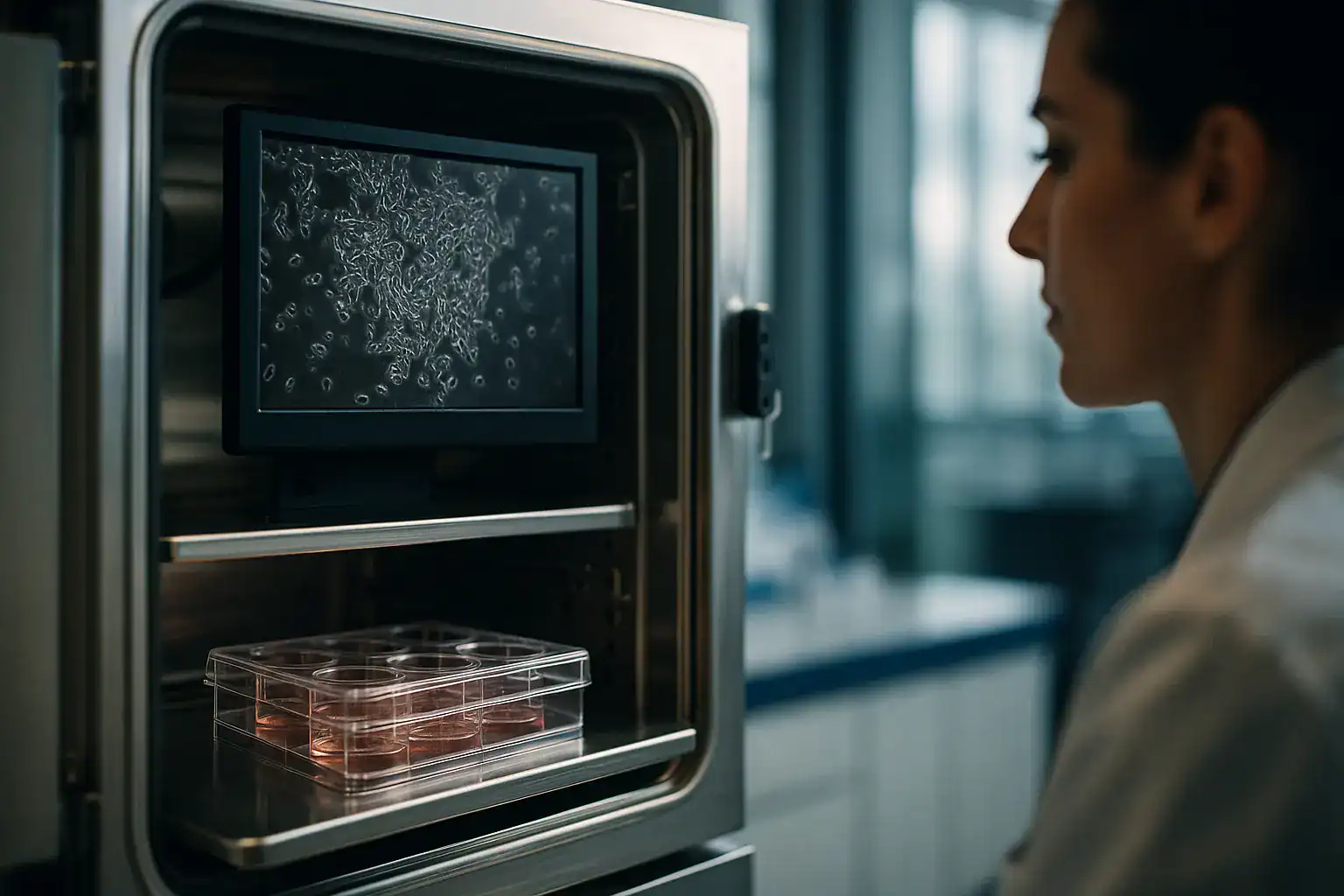
Improving Reproducibility in Cell Culture Using Incubator-Integrated Imaging
In the rapidly evolving field of cell culture research, ensuring reproducibility and data quality is more critical than ever. As researchers, lab managers, and biotech professionals strive to uncover new biological insights, traditional methods often fall short in consistency and reliability. This article delves into the modern challenges of cell culture, explores technological advances like incubator-integrated imaging, and highlights practical strategies to enhance reproducibility. Whether you’re managing a lab or advancing biotech innovations, uncover how cutting-edge tools are reshaping cell culture research.
Challenges in Traditional Cell Culture Approaches
Inherent Limitations and Varied Outcomes
Traditional cell culture techniques face several challenges that impede reproducibility. Variability in cell growth conditions, human error during handling, and the manual nature of data collection often lead to inconsistent results. Environmental fluctuations, such as changes in temperature, humidity, and CO2 levels, can further disrupt cell viability and data integrity. These variables result in significant gaps between experimental and theoretical reproducibility, undermining research findings.
- Environmental variability affects cell growth consistency.
- Manual data collection increases the risk of human error.
- Inconsistent handling leads to varied experimental outcomes.
Continue reading to explore more advanced insights and strategies.
Advancements in Technology and Automation
Revolutionizing Cell Culture Practices
The integration of innovative technologies and automation into cell culture practices marks a pivotal shift toward enhanced reproducibility. Automated systems minimize human involvement, thus reducing the likelihood of error and improving data reliability. Equipment such as incubator-integrated imaging systems facilitates continuous monitoring under controlled conditions, ensuring a consistent environment for cell growth. These technological advancements not only streamline workflows but also enhance data accuracy and reproducibility.
- Automation reduces human-related inaccuracies in data collection.
- Continuous monitoring ensures stable environmental conditions.
- Advanced imaging techniques offer real-time data insights.
Continue reading to explore more advanced insights and strategies.
Live-Cell Imaging in Practice: Workflow Enhancements
Real-World Applications and Integration
Incorporating live-cell imaging into everyday research workflows offers significant benefits. Researchers can now observe cellular processes in real-time, enabling a deeper understanding of dynamic biological activities. By integrating incubator-based imaging systems, laboratories witness improved workflow efficiency and data fidelity. The zenCELL owl, as an incubator-compatible live-cell imaging solution, provides compact, robust functionality, showcasing an exemplary model of contemporary imaging technology.
- Real-time observation enhances understanding of dynamic processes.
- Incubator-integrated imaging solutions improve workflow efficiency.
- Compact systems like zenCELL owl offer space-saving benefits without sacrificing quality.
Continue reading to explore more advanced insights and strategies.
Incubator-Based Imaging: Elevating Reproducibility
Consistent Monitoring and Enhanced Data Quality
Incubator-integrated imaging is a cornerstone for improving reproducibility in cell culture. By maintaining stable environmental conditions and allowing continuous observation, these systems ensure that cells are not disturbed during critical experiments. This approach not only preserves cell integrity but also provides high-resolution, time-lapse imaging that aids in tracking subtle cellular changes over time. The result is data with higher reproducibility, enabling researchers to draw more accurate and reliable conclusions.
- Maintained stability of culture conditions supports cell integrity.
- Continuous monitoring prevents experimental disturbances.
- High-resolution imaging captures subtle cellular changes.
Continue reading to explore more advanced insights and strategies.
Adopting Scalable Technologies for Enhanced Efficiency
Building Capacity with Scalable Imaging Systems
As research projects grow in complexity and scale, the need for scalable solutions in cytological imaging becomes evident. Scalable technology allows laboratories to quickly adapt to increasing demands without sacrificing quality. Incubator-integrated imaging systems such as the Livecyte and Clarity by Phasefocus exemplify scalable solutions. These systems offer modular configurations, enabling researchers to customize their setup according to specific needs and project requirements. The flexibility provided by scalable systems ensures that research can progress without the friction typically associated with upgrading or expanding traditional equipment.
- Opt for imaging systems that allow for modular expansion to align with laboratory needs.
Leveraging Data Analytics for Improved Decision Making
Turning Complex Data into Usable Insights
Integrating advanced data analytics into cell culture research transforms raw data into actionable insights. High-resolution images generated by incubator-integrated systems contain a wealth of information that, when properly analyzed, can reveal patterns and trends otherwise undetectable. By employing software tools for image analysis and data management, researchers can gain deeper insights into cellular behavior, identify anomalies, and make informed decisions more rapidly. Automation of data interpretation helps to limit human bias, reinforcing the reproducibility of results.
- Implement data analytics software to process and analyze imaging data efficiently.
Implementing Standardized Protocols for Consistency
Ensuring Uniformity Across Research Workflows
One of the significant challenges in cell culture research is maintaining uniformity across various experimental runs. Developing and implementing standardized protocols helps mitigate variability, thus enhancing reproducibility. These protocols should encompass all aspects of cell maintenance, from seeding to imaging and data analysis. Moreover, adherence to standardized procedures ensures that all team members are aligned, facilitating consistency in methodology and technique application. Sharing successful protocols can also contribute to the standardization of practices across research groups globally.
- Create and distribute clear, comprehensive protocols to ensure consistency in workflows.
Utilizing Real-Time Monitoring for Immediate Adjustments
Responsive Adjustments to Enhance Experimental Success
Real-time monitoring offered by incubator-integrated imaging systems empowers researchers to make informed adjustments during the experimental process. This capability allows for immediate modifications in response to environmental shifts or unexpected changes in cell behavior, minimizing potential disruptions. By correcting course in real-time, researchers can enhance the accuracy of their experiments, reduce wastage of precious resources, and improve overall success rates.
- Use real-time monitoring to quickly address issues as they arise, thereby optimizing experimental outcomes.
Supporting Collaborative Research with Cloud-Based Integration
Enhancing Connectivity and Data Sharing
Cloud-based integration in imaging systems promotes collaboration by enabling researchers to access and share data seamlessly across different locations and platforms. This technology facilitates the efficient exchange of information and insights, leading to more cohesive and collaborative research efforts. In multicenter studies, streamlined data sharing via cloud technologies ensures that collaborators contribute to and benefit from collective datasets, driving forward progress in a unified manner. This interconnected approach is essential in today’s globalized research environment.
- Implement cloud-based solutions for efficient data sharing and collaboration across research teams.
Incorporating Training and Skill Development
Building Expertise with Ongoing Education
A critical factor in utilizing advanced imaging technologies effectively lies in the skills and expertise of the personnel operating them. Therefore, investing in regular training and development programs ensures that lab personnel remain proficient with evolving technologies and methodologies. Such initiatives not only improve operational competence but also empower team members to drive innovation within their projects. Regular workshops, certification programs, and peer-based learning sessions can be beneficial in maintaining a high level of expertise across research teams.
- Regularly update and enhance lab staff skills through dedicated training programs on new technologies.
Enhancing Experimental Design Through Integrated Solutions
Strategizing Research with Comprehensive Tools
Integrating incubator-based imaging solutions within a wider suite of experimental design tools provides researchers with a comprehensive approach to study planning and execution. Comprehensive experimental design includes clearly defining objectives, selecting appropriate methodologies, and incorporating technological tools for accurate data collection and analysis. The strategic deployment of integrated solutions allows researchers to identify potential issues in advance, optimize resource allocation, and streamline the entire research process, resulting in a higher likelihood of achieving desired outcomes.
- Approach experimental design holistically by integrating advanced imaging tools from the outset.
Next, we’ll wrap up with key takeaways, metrics, and a powerful conclusion.
“`html
Facilitating Scalability with Flexible Equipment
Preparing for Future Expansion
Scalability is a hallmark of modern research laboratories, adapting them to the ever-evolving demands of science and technology. Flexible equipment solutions, such as adjustable imaging platforms and modular lab furnishings, play a critical role in facilitating this scalability. They allow research spaces to be efficiently reconfigured as project requirements change, ensuring that laboratories remain not only functional but also future-proof. The ability to scale up or down swiftly, with minimal disruption, supports dynamic research agendas and fosters an environment where innovation can flourish.
- Invest in flexible laboratory equipment to accommodate future growth and technological advancements.
Ensuring Data Integrity with Robust Management Systems
Enhancing Reliability Through Structured Frameworks
In research, ensuring the integrity of data is paramount for achieving reproducible and credible outcomes. Utilizing comprehensive data management systems enables researchers to maintain high standards of data quality and security. These systems offer structured frameworks for data entry, storage, and retrieval, along with comprehensive audit trails that document every interaction with the data. As a result, researchers can trust their datasets, streamline the replication of studies, and facilitate seamless information sharing with collaborators, thereby enhancing overall research quality.
- Develop and implement robust data management systems to ensure data integrity and traceability.
Harnessing the Power of Artificial Intelligence in Research
Automating Processes for Enhanced Outcomes
Artificial Intelligence (AI) is revolutionizing how research is conducted, opening doors to unparalleled analytical capabilities. By incorporating AI algorithms into imaging and data analysis processes, researchers can automate tasks previously prone to human error and labor-intensive outcomes. AI-driven tools can dynamically analyze imaging data, predict trends, and suggest potential pathways for exploration. This intelligent automation not only accelerates research timelines but also enhances the depth and accuracy of insights, empowering scientists to make groundbreaking discoveries with confidence and precision.
- Leverage AI technologies to automate and enhance research processes, increasing efficiency and accuracy.
Conclusion
Adopting scalable technologies in cell culture research encompasses integrating advanced imaging systems, embracing cloud-based solutions, and incorporating AI and data analytics. These strategies ensure laboratories are equipped to handle increasing demands and complexity without compromising on quality or efficiency. By fostering environments where adaptability and technological advancement go hand in hand, researchers can push the boundaries of discovery and innovation.
Scalable technologies not only enhance research capabilities but also promote collaboration and reproducibility, which are essential in the modern scientific landscape. Effective data management systems ensure that critical insights are preserved and shared effectively across research teams globally. Meanwhile, standardized protocols and ongoing staff training play a vital role in maintaining consistency, reducing variability, and improving overall research outcomes.
Incorporating these scalable solutions provides laboratories with the ability to adapt, grow, and thrive in an ever-changing field. Researchers are empowered to strategize efficiently, leveraging comprehensive toolsets that optimize their experimental design and execution. Through the integration of real-time monitoring and advanced AI-driven analytics, they can achieve more reliable and insightful results than ever before.
As research continues to evolve, so too must the tools and practices we employ. By adopting these innovations now, laboratories can stay at the forefront of discovery and remain prepared for the challenges of tomorrow’s scientific inquiries. Let us embrace scalability and technology with open minds and a forward-thinking attitude, ensuring our research not only survives but thrives. Take the first step by evaluating current processes and systems, and make strategic decisions to integrate scalable solutions, thus paving the way for a successful and productive future.
“`